
Maintenance Applications
Machine Learning in Predictive Maintenance
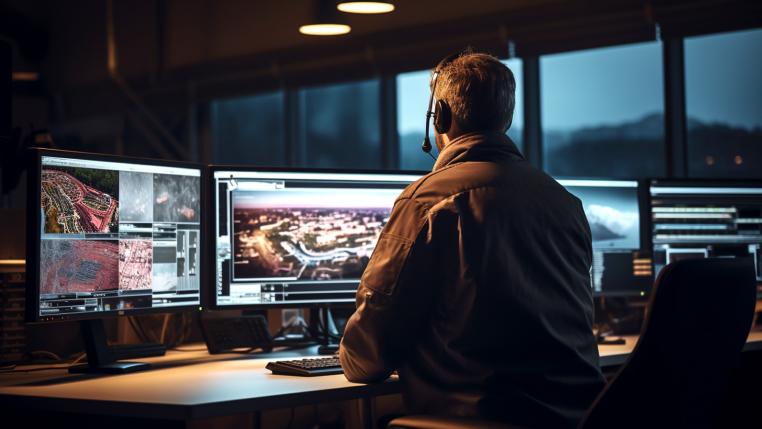
Computer vision technology can be used for predictive maintenance by helping to consistently and accurately monitor logistics assets and alert maintenance teams so that they can intervene before any issues arise. By analyzing data from various types of equipment, AI can also predict when critical assets will require maintenance. This allows managers to schedule repairs and upkeep to prolong asset life and prevent failure.
Providing visibility into asset health, the Delaware-based computer vision startup Clarified offers solutions that capture AI-based risk predictions. These not only give early warning of potential problems and reduce unscheduled repairs, but also help to delay capital expenditure, minimize human inspections, and ensure business continuity. The company claims that implementing AI-based predictive maintenance can reduce maintenance costs by 25% and downtime by 35%, and users can achieve 10x return on the initial technology investment.
Using AI in Maintenance to Identify Defects
Before widespread deployment of computer vision, detecting defects was a labor-intensive, manual operation. It required round-the-clock employee availability and was also prone to human error.
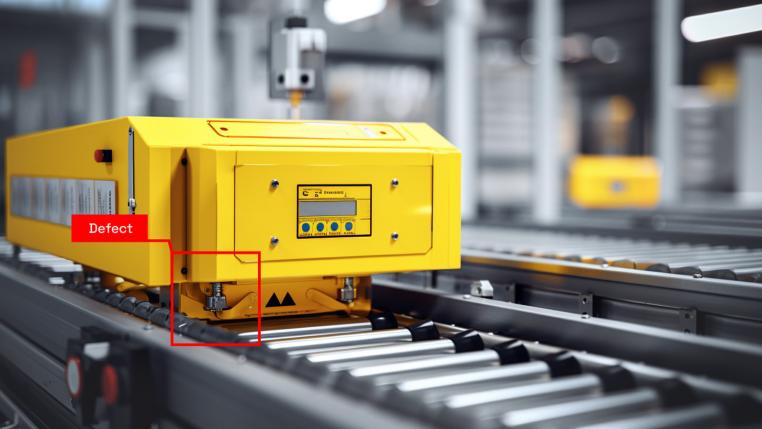
Today, probable asset flaws, mistakes, anomalies, and problems can be automatically identified when computer vision is used for predictive maintenance. An effective complement to warehouse Gemba Walks, this technology provides valuable additional data when managers walk through the premises gathering observational and interactional information. It can also identify the cost of asset damage and repair, streamlining maintenance processes by providing the asset management system with this data.
Ivisys, a pioneering startup, has created an innovative defect identification solution named Pallet AI, which can be used for predictive maintenance. This technology is specifically designed for enhancing the quality inspection process of pallets, effectively identifying defects, and concurrently improving productivity and employee safety. By employing a sophisticated neural network, the system utilizes a network of cameras to not only identify cracks and holes but also to detect mold and discoloration using advanced pattern recognition techniques. Remarkably, this AI-based predictive maintenance system can inspect a range of 250 to 450 pallets per hour.
Challenges of Implementation

Challenge 1: Computer vision systems cannot capture everything regarding predictive maintenance. Asset performance could be impacted by qualitative factors – such as how a worker interacts with a device – and this may require human observation.
Challenge 2: Typical warehouse computational power may not be sufficient to cater for the complex requirements of AI algorithm analysis. New IT investments may be needed to get the most out of machine learning in predictive maintenance.
Asset Management Applications
AI in Asset Management: Utilization & Capacity Assessment
When planning capacity to optimize asset utilization, computer vision can be implemented in asset management to deliver quicker insights than the human eye and those of human experience.
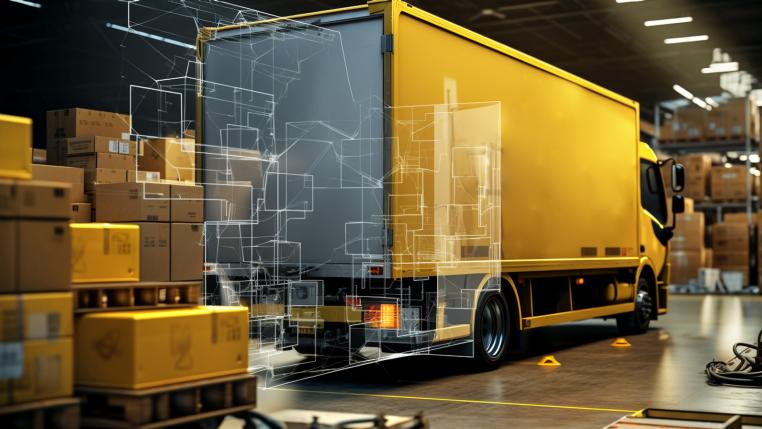
This AI-based technology can assess the overall space inside trucks and containers to calculate available volume prior to loading – information that helps determine the optimal arrangement of items to maximize loads and minimize wasted space. Measurements can be taken throughout the loading process, enabling real-time data-driven decision making that saves time, improves efficiency, increases sustainability, and reduces cost.
In the warehouse, computer vision can be used to analyze the dimensions and orientation of pallets and roller cages. This data helps ensure these assets are positioned for optimal load distribution and peak efficiency.
Danish startup Sentispec uses computer vision to manage assets, as it tracks every point of contact with stock in and out of the warehouse. Instead of allowing partially filled trailers and containers to leave the premises, Sentispec Inspector helps record the densities and fill rates of every load, so the planning office can optimize fill rates.

Using Computer Vision for Asset Counting and Localization
A familiar occurrence inside the warehouse is pallets, cages, trolleys, and other assets going missing. It costs time and money to find and return or replace them. Computer vision AI can be used to count and locate assets, assessing their status in real time to provide visibility and improve efficiency even in warehouse dark zones, where the network signal is weak and tracking sensors may lack connectivity
For object counting, deep-learning algorithms detect and classify objects in an image or video stream, identifying and analyzing image focus points and repeating this process to count all instances of a specific object. Assets can be identified by type (roller cage, rack, forklift) or by a unique identification code linked either to a single asset or to multiple assets within the camera’s same field of view.
A multi-target tracking system using the ‘handshake method’ is effective for localization. As an asset leaves one camera’s field of view, it reappears in the view of another. A backend algorithm analyses this input to estimate and trace the asset’s path throughout the warehouse. The computer vision platform from startup Kibsi uses existing camera networks to track assets in this way and monitor activity within a warehouse. Assets can be georeferenced on a virtual map and warehouse operators can locate assets with accuracy to within an inch.
The Role of AI in Fleet Management
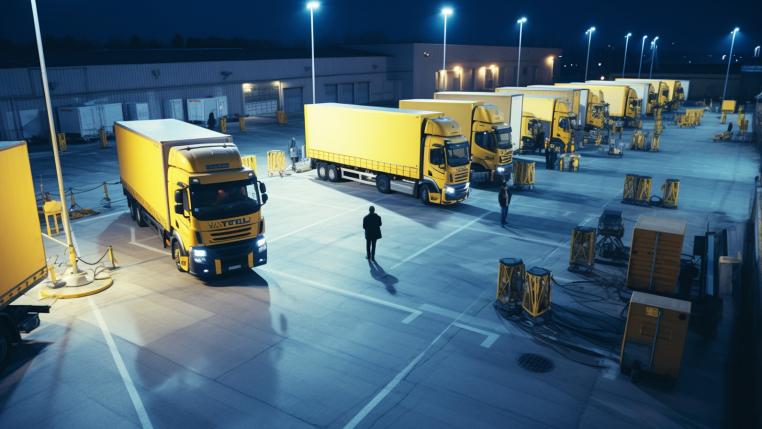
Assets outside the warehouse can be monitored 24/7 by an integrated system combining computer vision with surveillance. To restrict yard access to registered vehicles only, cameras can identify each truck and log its entry time, exit time, and number of daily trips. The system can also measure asset usage patterns, including idle time, and use this data to help optimize fleet operations.
With its real-time monitoring solution, ThinkIQ claims to eliminate the need for a guard to log trucks into and out of a facility. This AI fleet management system is trained to work in all types of lighting and atmospheric conditions, delivering actionable insights to improve fleet management.
AI is not only useful in asset management, but machine learning can also be used in asset maintenance in asset maintenance since it facilitates predictive maintenance by streamlining processes and scheduling repairs that prolong asset life.
Challenges of Implementation

Challenge 1: A camera’s field of view can be obstructed. For example, if items are temporarily stacked just inside the truck, this stack may block visibility further in the back.
Challenge 2: Huge data throughput is required for computer vision asset tracking.
Challenge 3: Technical glitches and breakdowns in the AI system would likely cause significant difficulties with asset management, especially in a busy warehouse.


