Cybersecurity Importance in Freight Forwarding
Avoid financial loss, privacy violations, and reputation damage
Back in the days before digitalization, business threats typically involved tangible assets and workforce processes – in other words, problems and losses caused by human error, physical theft, accident, fraud, labor and material shortages, and power outages. But today, every company is additionally impacted by threats that involve digital vulnerabilities.
Jump to
What is Cybersecurity and How it Affects Organizations
While digitalization brings enormous benefits, including improved accessibility, efficiency, and connectivity, it also introduces cybersecurity risks, specifically exposure to threats such as data breaches, hacking, ransomware attacks, and phishing scams. And in the context of the supply chain, cybersecurity is only as strong as the weakest link. Bear in mind, this weakest link could be a single rogue Internet-of-Things (IoT) sensor. If just one of the suppliers, partners, or contractors in your network is compromised, everyone is vulnerable.
Cybersecurity refers to the practices, policies, and technologies that are intended to proactively protect data, systems, and networks from digital attack, unauthorized access, and other damage.
Companies respond to these cyberthreats with measures like encryption, firewalls, threat detection, and employee training – all designed to ensure the ongoing confidentiality, integrity, and availability of information.

Typically, ransomware attacks and other cyberattacks lead to financial loss, privacy violations, and reputation damage. As your company increasingly relies on digital systems and interconnection with other parties, the need grows for robust cybersecurity.
Failure to protect the organization comes at potentially a huge cost. IBM research in 2024 revealed the average cost of a single data breach affecting the transportation sector is US$4.18 million1.
An intense example of this is the ransomware attack on Japan’s Port of Nagoya in July 2023, which resulted in a two-day suspension of operations and disrupted 10% of Japan’s total trade2. Later that same year, a cyberattack meant operations at four major DP World port terminals in Australia were suspended for three days, resulting in a backlog of more than 30,000 containers and up to 10 days of delay3.
Are Cyberattacks on the Rise?
Over the past five years, cybersecurity threats have been steadily increasing. For example, ransomware attacks on the supply chain increased by 66%4 between 2019 and 2022. A ransomware attack is likely to have sudden, systemic impacts on the organization and wider ecosystem, lasting longer than most business continuity plans.
In addition, cyberattacks have become more targeted and sophisticated, incorporating advanced techniques powered, for example, by artificial intelligence (AI). Attackers themselves are highly organized, often with specialist roles, and many undertake actions on an almost industrial scale, identifying and attacking every weakness they can find in cloud systems, supply chains, and remote work infrastructures.
For shippers, a particular vulnerability is the increasing number of phishing emails sent by cybercriminals posing as freight forwarders. Having negotiated shipment rates with the unsuspecting shipper and complete pickup, these people then demand a ransom to release the goods.
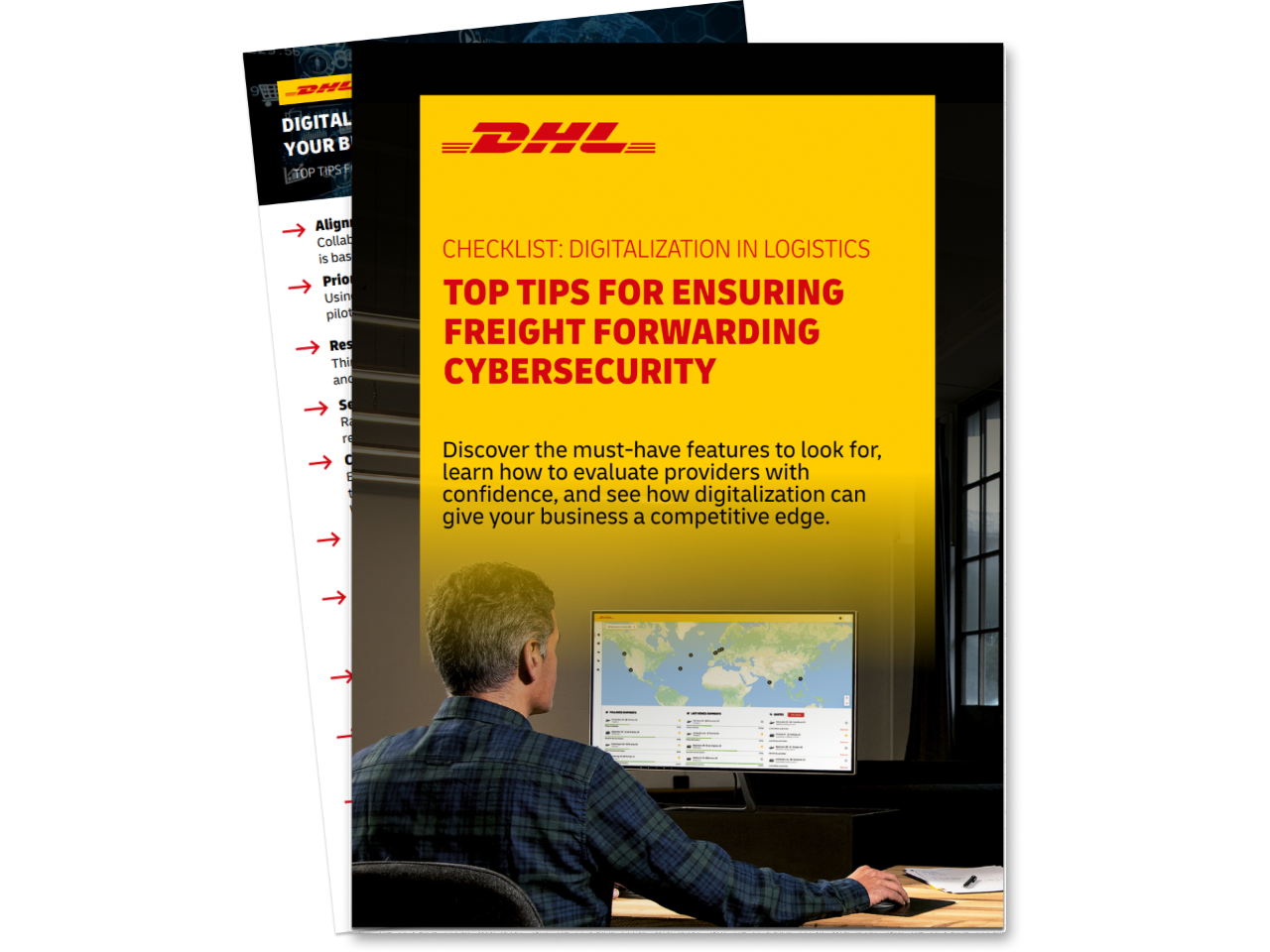
Checklist: Top Tips for Ensuring Freight Forwarding Cybersecurity
Discover the key certifications, practices, and resilience measures to look for when choosing a secure freight forwarding partner. Stay ahead of risks and safeguard your supply chain.
Can Freight Forwarders Defend Shippers from Cyberattacks?
Choosing a freight forwarder that prioritizes cybersecurity is essential to supply chain security. As professional services multinational EY5 describes it, “A resilient supply chain is characterized by transparency, flexibility, collaboration, and safety.” Robust security – including data protection and threat detection – must be in place when any organization exchanges data with external parties, and this should be regularly stress tested to reveal any weakness and manage every risk.
How to Assess your Logistics Partner's Cybersecurity
Freight forwarders should have ISO/IEC 27001 certification, a clear indicator of supply chain security. This is the world's best-known standard for information security management systems (ISMS), guiding all companies to establish, implement, maintain, and continually improve cybersecurity.
Another clear indicator of cybersecurity prioritization is a Bitsight security rating. This tool is used by security and risk leaders to understand cyber risk, providing an objective, data-driven lens to view the health of an organization’s cybersecurity program. DHL’s most recent Bitsight security rating of 790 shows the group outperforms logistics peers as a reliable and trustworthy supplier that is serious about data protection, threat detection and supply chain security, keeping its information secure and its business well protected.

Get Logistics Insights by Email
Subscribe to our monthly market updates and get invited to exclusive webinars where our Freight Forwarding Experts answer all your questions on global trade.
In What Ways Does DHL Ensure Cyber Resilience?
With the aim of being the most cyber resilient logistics provider globally, DHL takes a holistic approach to cybersecurity with strong governance and processes. We also empower employees to identify threats and take corrective action – creating, in effect, a human firewall – and we are on guard 24/7, 365 days of the year. Our key response to the evolving threat landscape is an integrated defense strategy covering information technology, operational technology, and data. Ours is an in-depth multilayer defense model, and we seek continuous improvement in our attack detection and response in a fast-changing threat landscape with new risk parameters.
The DHL Cyber Defense Center acts as a cybersecurity sentinel – a state-of-the-art facility that keeps us always prepared to effectively counteract potential threats. Various specialist teams work within and beyond this center to maintain a seamless defense line, with round-the-clock monitoring, engineering, and incident response and threat hunting. These teams also create an iron-dome prevention shield which includes gathering cyber threat intelligence. Together we ensure the highest levels of supply chain security.
In addition to ISO/IEC 27001 certification and a high Bitsight security rating, DHL offers support to customers with specific additional standards (for example, automotive companies must comply with the TISAX assessment and exchange mechanism) by enabling independent cybersecurity audits.

Cost for Shippers to Benefit from DHL’s Cybersecurity
All these capabilities are included free of charge when you ship with DHL. These high standards protect our own organization and – understanding how cybersecurity affects the entire ecosystem – we extend them to our suppliers, partners, and contractors. And if your organization has a security app, we can set up automated data interchange between this app and our own security systems.
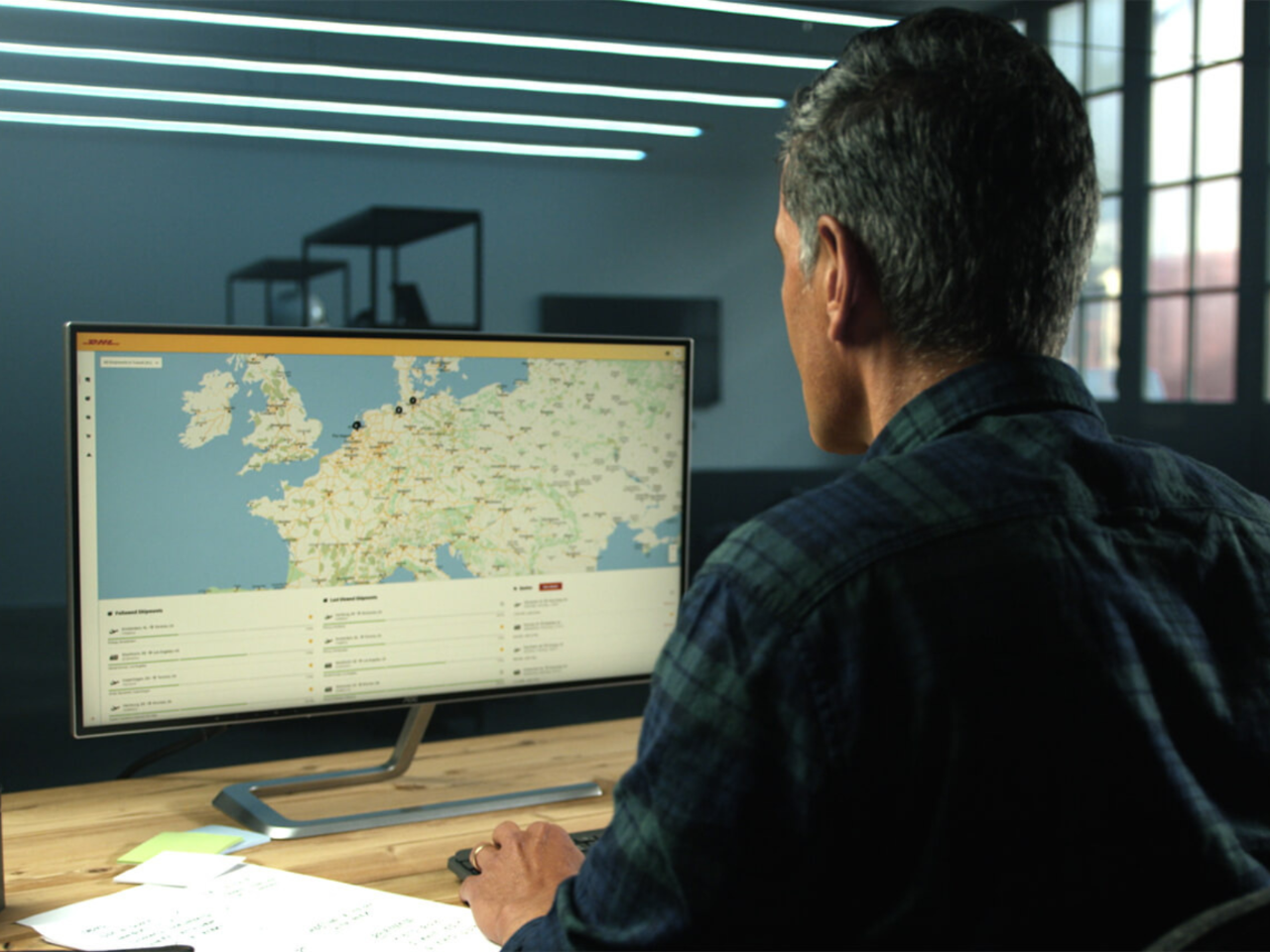
Try myDHLi Out Now
Interested to learn more about myDHLi by watching a demo?
Want to Read More Freight Forwarding Stories?
Get the latest on Air, Ocean and Rail Freight Forwarding in your inbox every month, along with regular invitations to our webinars.



1Cost of a Data Breach Report 2025, IBM Security, 2025
2OT Cybersecurity Breach Disrupts Operations at the Port of Nagoya, Japan, Jacob Benjamin, July 2023
3Media Statement: Update on Cybersecurity Incident, DP World, November 2022
4Overcoming Supply Chain And Cyber Vulnerabilities Through Digital Trust, Mark Brown, October 2022
5How to use smart technology to support a resilient supply chain, EY - Belgium, 2024