


Thinking about shipping internationally? Great choice! It’s one of the smartest ways to grow your business, even if figuring out where to start can feel a bit overwhelming at first.
Whether you’re shipping your very first international order or growing a busy e-commerce business, getting the basics right really makes a difference. This guide walks you through everything you need to know in a simple, easy-to-follow way, so you can ship with confidence and avoid those classic beginner mistakes from day one.
How to ship internationally: 7 key steps to remember

1. Prepare the documentation
When shipping internationally, you’ll often need to provide specific information and documentation to get your goods through customs. For small businesses and start-ups – already juggling countless priorities – this can feel overwhelming. However, taking the time to ensure your shipment information and documents are accurate is essential to avoid delays, extra fees, or rejected shipments at the border.
A few examples of the documents you’ll need to provide include:
Commercial Invoice: This provides information about the international transaction and goods being shipped, including (but not limited to) a detailed line-item goods description with the respective Tariff Classification Code (see point 2, “Classify your commodity”), the goods’ value and currency, weight, terms of sales, and other key information. Customs brokers use the Commercial Invoice information to prepare the Customs Declaration which is submitted to Customs Authorities during the Customs Clearance process. It’s important to ensure that the Commercial Invoice information is complete and accurate, to avoid potential customs delays, or even fines and penalties by Customs Authorities.
Air Waybill: This provides information about the shipment. The Air Waybill is attached to the exterior of the shipment, so that anyone handling it has easy access to the information.
Certificate of Origin: As the name suggests, this indicates the goods’ nationality to customs authorities. It indicates where the goods were manufactured – for example, “Made in China”. Not all international shipments require a Certificate of Origin, so it’s important that you verify the export and import requirements before shipping. The necessity for a Certificate of Origin can depend on the destination country, the type of goods, and trade agreements, which should be verified before shipping.
To better understand the key documentation required for international shipments, explore this detailed guide.

2. Classify your commodity
Every product shipped internationally must be assigned a specific commodity code that describes exactly what it is. This is officially called a Tariff Classification Code – a globally recognized system used by customs authorities around the world.
For example:
A cotton T-shirt has a different Tariff Classification Code than a polyester one.
A lithium battery will have a different Tariff Classification Code than a mobile phone, even if they ship together.
These Tariff Classification Codes determine:
- Duties and taxes (how much you or your customer pays at the border)
- Import/export restrictions (some goods require special licenses)
- Statistical data (used by governments to track trade)
You will need to provide your goods’ Tariff Classification Code(s) to the Commercial Invoice for each of the items being shipped, ideally both the Export and Import Tariff Classification codes. Getting it right is imperative – incorrect tariff classification can lead to potential customs delays, or even fines and penalties. Using outdated or incorrect Tariff Classification Codes can result in miscalculated duties and taxes, which can have financial implications.

3. Package your goods correctly
Getting your packaging right is a big deal when it comes to international shipping. Cut corners here, and you might end up with delays, damaged goods, or even packages that get sent right back to you. Not ideal. Also, keep in mind that some items, like hazardous materials, have specific packaging rules you’ll need to follow to stay compliant.
Here’s how to pack like a pro and keep your shipments safe and smooth:
Pick the right box
Go for sturdy, double-walled cardboard if you’re shipping heavier or fragile items. Choose a box that fits your products snugly. Too much empty space can lead to damage (and higher costs), while overpacking can cause the box to burst. Goldilocks rules apply here, not too big, not too small.
Protect what’s inside
Use bubble wrap, foam peanuts, or air pillows to cushion your items, especially if they’re delicate or valuable. Give the box a gentle shake test. If things are moving around, add more padding.
Label it clearly
Stick the shipping label on top of the box where it’s easy to see and securely attached. Try not to cover the barcode or address with tape, scanners are not fans of that.
Shipping multiple packages? Stay organized
If you’re sending several packages under one Air Waybill, attach the original to one box and copies to the others. Don’t forget to label each box clearly, like “1 of 3”, “2 of 3”, and “3 of 3”, so everything stays together on its journey.
Pack it well now, and your future self (and your customer) will thank you later.
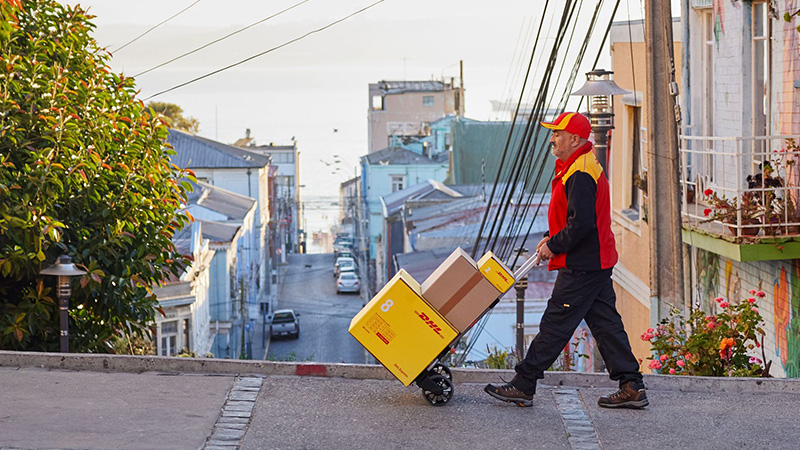
4. Choose your DHL import or export service
DHL Express offers reliable, time-definite delivery services for both documents and goods – whether you're shipping internationally or bringing items into your country. With secure, door-to-door delivery to and from over 220 countries and territories worldwide, you can choose the option that best fits your schedule – whether that’s early morning delivery or by the end of the business day.
You’ll also benefit from full tracking visibility, so you always know where your shipment is, from pickup to delivery.

5. Research denied parties
An essential part of shipping internationally is ensuring you're compliant with applicable trade laws that prohibit/restrict shipping to specific persons or destinations. As a matter of policy DHL Express does not accept Controlled Military Items into its network nor shipments sent by/to restricted persons listed by the UN Security Council, European Union, U.S. and any other applicable governmental denied or restricted party list under Trade Laws.
If you're new to global trade, this might not be something you've considered – but overlooking it can result in serious consequences, including shipment delays, fines, and even legal action. You must ensure you conduct your own due diligence and stay updated on international trade sanctions and embargoes (Trade Laws).

6. Understand restricted and prohibited commodities
Certain items are restricted (or even prohibited) from international shipping due to safety, legal, or regulatory reasons.
- Know the prohibition and restrictions: Items like lithium batteries, perfumes, and certain electronics may have specific shipping requirements or restrictions.
- Obtain necessary documentation: For restricted items, ensure you have the required documentation or approvals before shipping, to ensure compliance with the regulatory requirements.
- Consult regulations: Refer to your shipping provider's guidelines and the origin and/or destination country's regulations to ensure compliance.
You should also be aware of dual-use goods, which can be subject to additional regulatory requirements. This is particularly relevant for items that can be used for both civilian and military applications.

7. Calculate costs
Understanding the true cost of international shipping is essential if you want to stay on budget and keep your customers happy. It’s not just about the shipping fee, there are a few moving parts, and missing any of them can quickly eat into your profits.
Here’s what to keep in mind when calculating your shipping costs:
Shipping rates
These depend on your package’s size, weight, origin, destination, and how fast you want it delivered. Bigger, heavier, and faster usually means pricier.
Duties and taxes
These are set by the destination country’s customs authorities and are based on things like the product type, declared value, and tariff classification. With DHL Express, you can choose to pay these upfront (DTP – Duties & Taxes Paid) or let the receiver handle them (DTU – Duties & Taxes Unpaid). No surprises is usually a good strategy.
Extra charges
Some shipments come with added costs, like delivery to remote areas, fuel surcharges, oversized packages, or special handling. They don’t always show up at first glance, so it’s good to plan for them.
A little planning here goes a long way, helping you avoid unexpected costs and keep your shipping process running smoothly.
DHL’s MyGTS platform (see below) supports businesses in calculating the estimated cost of importing goods. This total – known as the landed cost – includes not only the product price and shipping charges, but also customs duties, taxes, insurance, and additional charges, giving an estimated picture of what it takes to bring a product across borders.
By calculating these estimated costs upfront, you can price your products appropriately and offer your customers transparent international shipping options.
MyGTS: your gateway to international shipping
The above article summarizes some of the key requirements of shipping internationally. To simplify customs transactions further, DHL Express has developed MyGTS (My Global Trade Services).
This free, user-friendly platform will help you navigate many international shipping regulations seamlessly. You can log in with your existing DHL Express Business Account or register a new MyGTS account to access:
- Pre-shipment Planner: a dedicated tool to help your business understand some of the applicable import/export regulations and calculate the estimated Landed Cost.
- Support with Tariff Classification Codes: MyGTS provides potential Tariff Classification Codes for you to select based on your goods’ characteristics. Search for Tariff Classification Codes using keywords or the code directory.
- Landed Cost calculator to enhance your pricing strategy and give your customers transparency over the estimated shipping costs – which builds trust with your business.
- Guidance on import and export requirements: understand some of the country's import and export requirements before you ship – to avoid goods being held up at borders!
- Customs documentation and templates: effortlessly gather examples of the customs documentation and templates that might be required, to avoid potential delays. It’s important to conduct your own due diligence and ensure that all documents are submitted in the correct format and language, as required by the export and/or import country’s customs authorities.
- A product catalog feature: maintain a readily accessible record of your commodities within DHL MyGTS, where you can save past searches, product details, and tariff codes for quicker repeat shipping.
It’s essential that you keep up to date with the import and export regulatory requirements of the countries where you ship from/to, and consult with customs experts or legal advisors when necessary to ensure compliance with the regulations.
Enjoy fast and easy international shipping with DHL Express.


 Share
Share