


Looking to grow your business internationally? Then you’ll need insights into the top emerging markets for global trade. Read on for the latest developments…
The recent edition of DHL’s Global Connectedness Report (2024) highlighted the strength of globalisation today, even despite disruptions from the Covid-19 pandemic and the war in Ukraine.
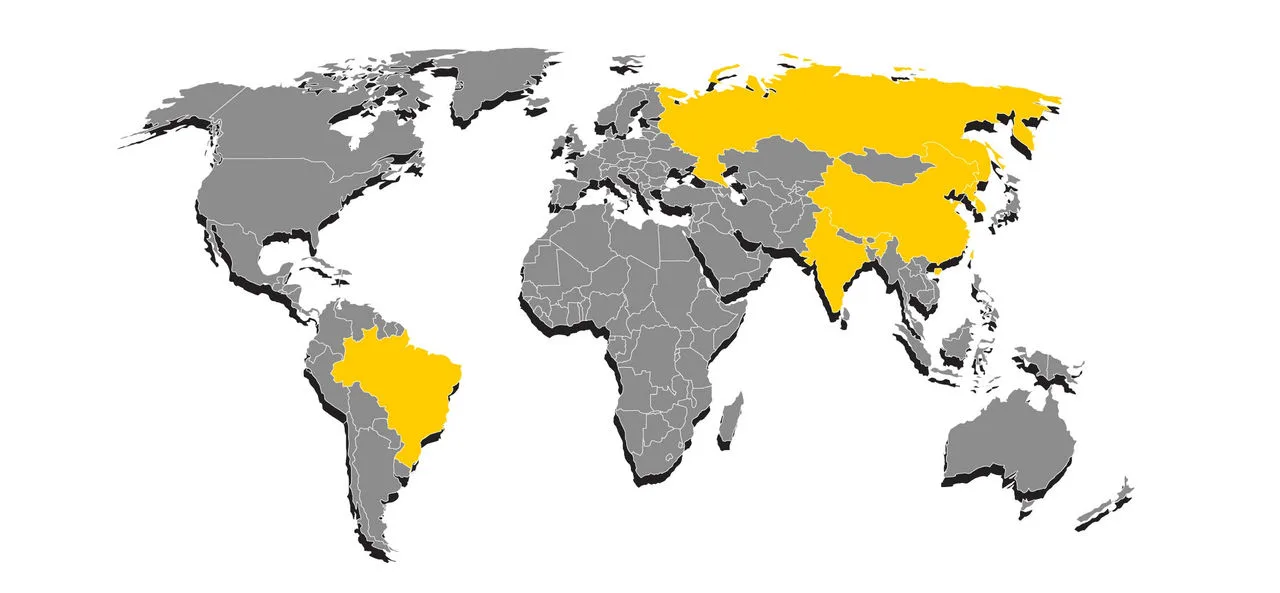
To understand the dynamics of the new globalised economy, certain countries are often grouped together based on common traits, like growth rate, population, and political circumstances. We all know about the G7 (Canada, France, Germany, Italy, Japan, the UK and the US), but what about the emerging market business opportunities with BRIC and N-11?
What are the BRIC countries?
Coined by former Goldman Sachs economist Jim O’Neill in 2001, “BRIC” countries were identified as the world’s most important developing countries with the potential to overthrow the economic hegemony of the G7 nations.
- Brazil
- Russia
- India
- China
In 2009, the leaders of the BRIC countries held their first summit, making it a formal institution and more than just an economist's shorthand. Then, in 2010, at China’s invitation, the term was expanded to “BRICS” to include South Africa (although it’s worth noting that O’Neill was highly critical of this move.)
Pre-Covid, PwC forecast that the emerging markets could grow, on average, twice as fast as the G7 over the next few decades1, making international business expansion to BRICS an enticing prospect. Currently, China is 2nd, India 5th, Russia 8th, Brazil 11th, and South Africa 37th in global GDP rankings2. If they’re not already on your international growth radar, they should be…
The BRICS today: expanding membership and a Saudi Arabian “power move”
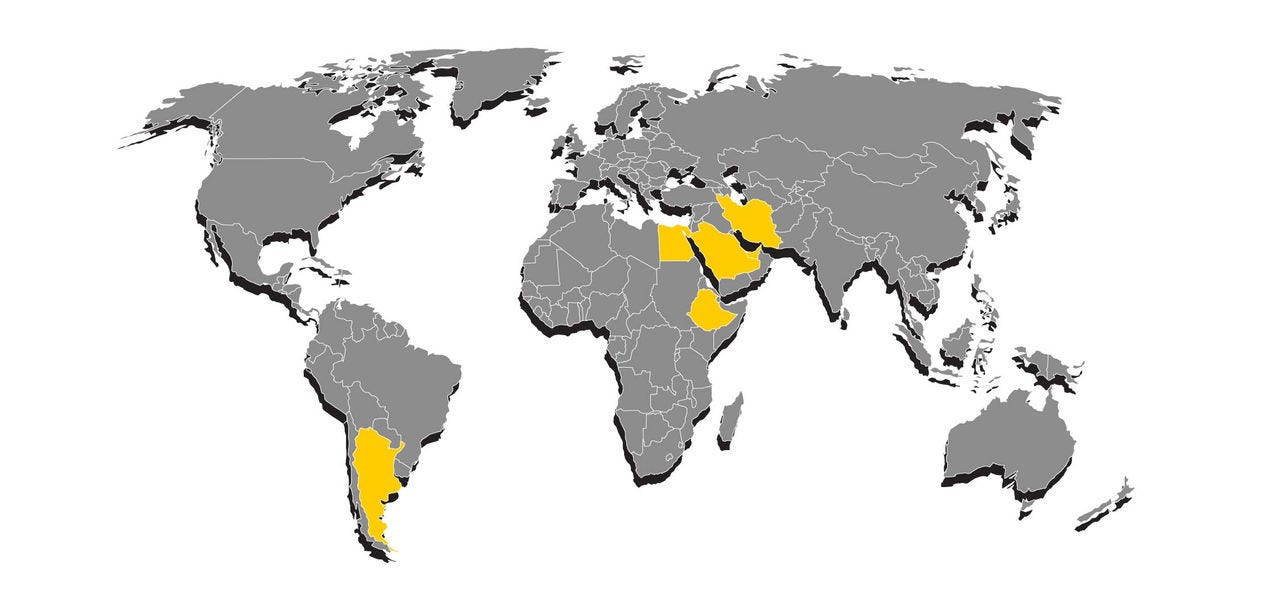
In early 2024, BRICS will formally welcome six new member states:
- Saudi Arabia
- Iran
- Ethiopia
- Egypt
- Argentina
- United Arab Emirates (UAE)
These additions will boost the group’s combined population to a whopping 3.5 billion – around 45% of the world’s inhabitants3.
Whilst impressive, the real barometer – GDP – is more modest. Because the new BRICS members are considered to be developing economies, their addition to the bloc will not have a major impact on its overall share of GDP.
However, there’s a powerful advantage to global trade with BRICS nations in the form of “liquid gold”, or rather, crude oil. With the addition of Saudi Arabia, the UAE, and Iran, BRICS more than doubles its members’ share of global oil production to 43%4. China has been pushing for oil trade to be denominated in yuan, which would significantly shift the spotlight from the US dollar and the West’s dominance of global financial markets. If BRICS starts accepting local currencies for oil payments, many countries will be swayed to join the group.
16 countries have already applied for membership to the BRICS, including Cuba, Indonesia and Vietnam. A group designed to bring together the world's most important developing countries, and bolster their position on the world’s political and economic stages, is doing just that.
Meet the “Next 11” emerging market economies
The Next Eleven – or “N-11” – was coined by Jim O’Neill and his Goldman Sachs colleagues in 2005 and consists of eleven emerging markets with huge economic potential:
- Bangladesh
- Egypt
- Indonesia
- Iran
- Mexico
- Nigeria
- Pakistan
- Philippines
- Turkey
- South Korea
- Vietnam
Though on a slower growth trajectory than the BRIC countries, O’Neill & co still predicted that the Next Eleven could reach two-thirds of the size of the G7 economies by 20505. This theory was based on macroeconomic stability, technological capabilities, human capital, and political conditions.
And finally: the MINT countries economic growth potential
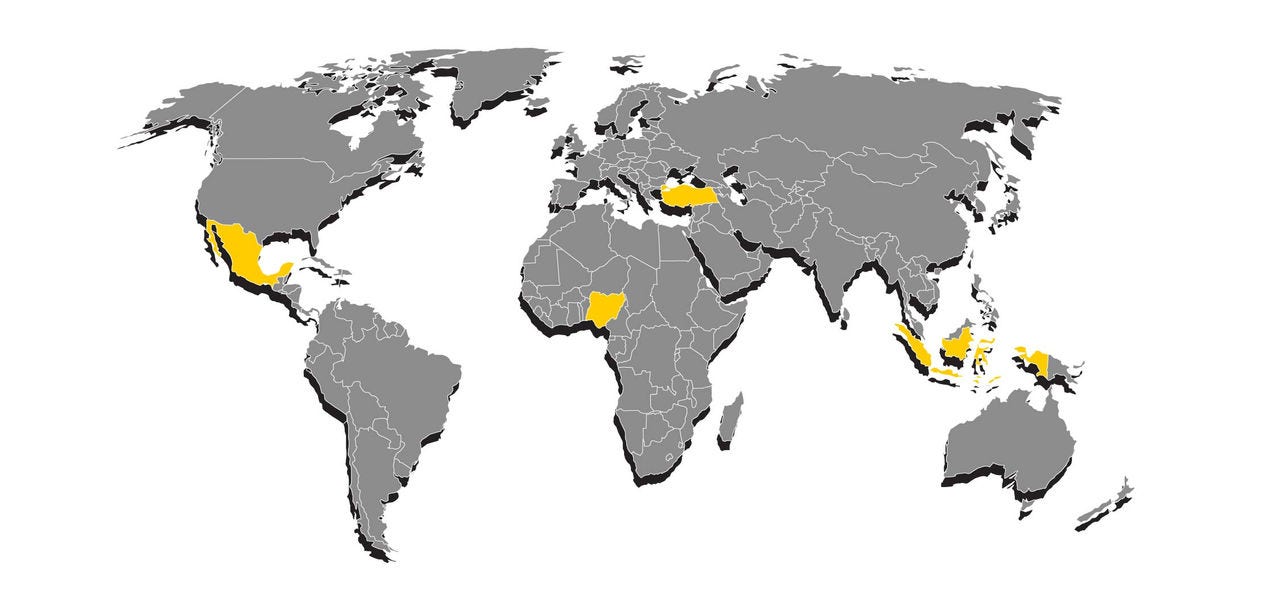
Introducing the ‘MINTs':
- Mexico
- Indonesia
- Nigeria
- Turkey
You’ll notice that all four of these appeared in the Next Eleven category – think of MINT as an update to N-11. The economic outlook for MINT countries is bright: Goldman Sachs predicts that all four nations could be inside the top 20 economies by 2050, with Indonesia and Mexico breaking into the top 10.
The opportunity for your business
BRIC, N-11, MINT – they’re just acronyms used by economists, but they can guide your businesses with international ambitions to identify which markets have the best potential. DHL’s Global Connectedness Report can help with that, too. Drawing on nearly 9 million data points, with a detailed ranking and analyses of 181 countries, it’s packed full of key global trends to empower your cross-border trade strategies for emerging markets.
Whichever markets you identify as having the most potential for your business, DHL Express has the international expertise and local market knowledge to get you there, seamlessly.


 Share
Share

Similar Stories