Is your company prepared for international growth? To expand globally, you need to understand the world – specifically, which markets promise the most lucrative opportunities. And that’s why the all-new DHL Trade Atlas 2025 is an invaluable tool…
Produced in collaboration with the New York University Stern School of Business, the Atlas analyzes a wealth of global statistics to map the shifting landscape of global trade.
To help readers identify commercial opportunities, the DHL Trade Atlas 2025 features data-backed insights.
This edition arrives at a pivotal time, with international trade tensions dominating the headlines. Yet, the Atlas highlights positive signals on the horizon.
Global trade is projected to grow at a modestly faster pace over the next five years than during the preceding decade. Furthermore, President Trump’s proposed tariff increases are not likely to reverse the growth of global trade. Even if all proposed U.S. tariff increases enter into force and other countries retaliate in turn, global trade is still expected to grow over the next five years – albeit at a significantly reduced pace.
Some trends remain largely unchanged from the previous edition of the Atlas: trade flows continue to stretch out over longer distances, and the superpowers of China, the U.S. and India are set to retain their leading trade growth positions. But fresh corridors of opportunity are emerging – with Viet Nam, Indonesia and the Philippines expected to rank highly for speed and scale of growth over the next 5 years.
The resilience of trade in a turbulent global business environment is evident. The results highlighted in this report suggest that stakeholders should prepare to seize opportunities and manage risks in an increasingly complex global trade environment.
Utilizing maps, charts and other data visualizations to bring the facts to life, the report serves as a unique resource for emerging trade opportunities – helping your business align its international growth strategy toward the most promising and prosperous markets.

Outline your cross-border growth strategy with the DHL Trade Atlas 2025.
If you’re hoping to – or already execute – ship internationally, this document is indispensable. Presented to you by the planet’s most international company, it illustrates DHL's standing at the center of global trade and our resolve to help clients discover the most lucrative markets for expansion.
Download the report nowDHL Trade Atlas 2025: 10 Essential Insights

1. Accelerated forecast growth, greater uncertainty
Global trade is forecast to expand at a modestly quicker pace over the next five years than seen during the past decade. That said, historic levels of volatility surrounding forthcoming trade policies obscure the outlook.

2. The influence of Trump's tariffs
Should every tariff hike introduced by the Trump administration go into effect and trigger counter-measures from trading partners, global trade is still projected to expand – though at a significantly more moderate speed.

3. Chinese-manufactured goods discovering alternative routes to the U.S.
The proportion of U.S. imports coming directly from China continues to fall, but U.S. reliance on Chinese-produced components has not declined substantially. U.S. imports from alternative countries now incorporate more secondary inputs from China, and U.S. direct imports from China may be underreported.

4. Global geopolitical shifts limited
Global geopolitical driven shifts in global trade patterns remain limited and seem to have stalled in 2024. While trade between coalitions of close allies declined relative to trade within these blocs in 2022 and 2023, no additional reductions were recorded throughout the first nine months of 2024.

5. Recent growth leaders
A trio of nations secured positions among the top 30 worldwide for both the velocity (growth rate) and the scale (absolute amount) of their commercial merchandise expansion throughout the last half-decade: the United Arab Emirates, Viet Nam, and Ireland.

6. Forecast future growth leaders
Over the coming half-decade, India, Viet Nam, Indonesia, and the Philippines are forecast to rank among the top 30 for both velocity and scale of trade growth. India also distinguishes itself as the nation with the third-highest absolute volume of projected commerce gains (6% of new international trade), following only China (12%) and the United States (10%).

7. Standout regions
South Asia, Sub-Saharan Africa, and Southeast Asia are projected to experience significantly more rapid commercial expansion than all other regions from 2024 to 2029. However, the more decelerated European market is forecast to generate a larger share (30%) of the world’s total trade growth. Wealthier countries are forecast to generate 58% of trade growth, while low- and middle-income economies generate 42%.

8. Long distance trade going strong
Contrary to expectations that recent market shocks would result in localized commerce networks, commercial exchanges spanned the longest average distance on record during the first nine months of 2024 (5,000 km). The proportion occurring within prominent geographic regions declined to a new low (51%).

9. Trade leaders by sector
The majority of trade involves manufactured goods, but escalating prices have boosted the value of trade in mineral fuels. From 2017 to 2022, the categories with the most substantial expansion in the value of exchanged commodities were mineral fuels, electrical machinery and equipment, industrial machinery, and pharmaceuticals.

10. Ample room for trade growth
Even after decades of expanding global economic integration, only 21% of the value of all goods and services produced globally is ultimately distributed to a country outside of its origin. Consequently, there remains immense potential for future trade growth.
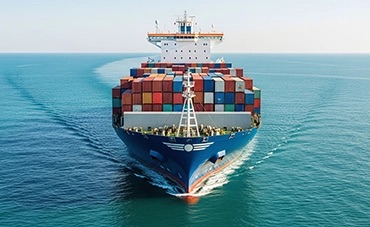
Design your cross-border growth strategy with the DHL Trade Atlas 2025.
If you’re planning to – or already do – ship internationally, this document is crucial material. Delivered to you by the planet’s most international company, it reflects DHL's standing at the core of global trade and their pledge to help clients pinpoint the most lucrative markets for growth.
Download the report now


 Share
Share