#eCommerceAdvice

Exporting to South Africa: How to maximize every sales opportunity

Zanele Malaza
Zanele Malaza
Marketing Specialist, South Africa
8 min read
woman smiling at laptop screen

South Africa remains one of the strongest and most sophisticated economies in Africa and its digital commerce market has transformed since our last guide. Amazon has landed, instant payments have gone mainstream, and mobile-first shoppers in townships are the new growth frontier. This refreshed guide gives you the latest market data, buying habits, and customs updates to help your business succeed.

South Africa offers great potential for international businesses, and this guide provides you with insights, customer buying habits, and export and customs tips to help your business succeed within this key market.

63 million people

63 million people

South Africa's population has grown to roughly 63 million a significant and expanding consumer base.

8.5% annual growth

8.5% annual growth

The e-commerce market is valued at about US$42 billion in 2026 and projected to reach US$63 billion by 2031.

$644 revenue per user

$644 revenue per user

Average revenue per online shopper is forecast at US$644 still the highest of Africa's large markets, up from US$258 in 2022.

77% shop on mobile

77% shop on mobile

Over three quarters of South Africans shop online via mobile one of the most mobile-dependent e-commerce markets globally.

Where South Africa imports from

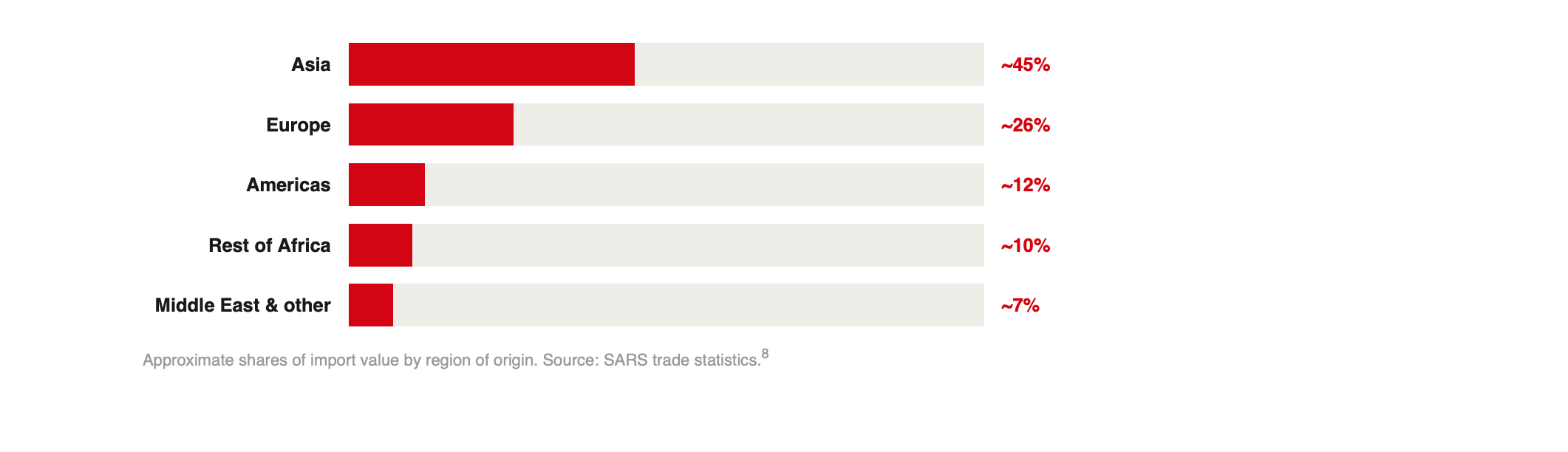
Asia, led by China remains South Africa's dominant source of imports, followed by Europe. Leading single-country partners are China, Germany, the United States and India.

E-commerce and shopping trends

These are the platforms connecting South African buyers and sellers today make sure your products have a presence where your customers already shop.

Takealot

Still the largest local marketplace. Launched a same-day delivery guarantee across Johannesburg and Cape Town in January 2026, and recruited 2,500 township personal shoppers to reach first-time online buyers.

 Amazon.co.za 

Launched May 2024 and expanding rapidly, bringing third-party seller tools, aggressive pricing and international marketplace standards to the local market.

Shein & Temu

Together hold 37% of online apparel revenue, forcing domestic fashion retailers to rethink pricing and supply chains — even after customs tightened low-value import duties.

Checkers Sixty60 & Pick n Pay asap!

On-demand grocery leaders. Sixty60's micro-fulfilment centres sit within 10km of 85% of urban households; asap! grew sales 40% after its 2025 app redesign.

This graph shows the most visited online marketplaces that connect South African buyers with sellers, so you need to ensure you have a presence on these e-commerce sites.6

Popular online payment methods

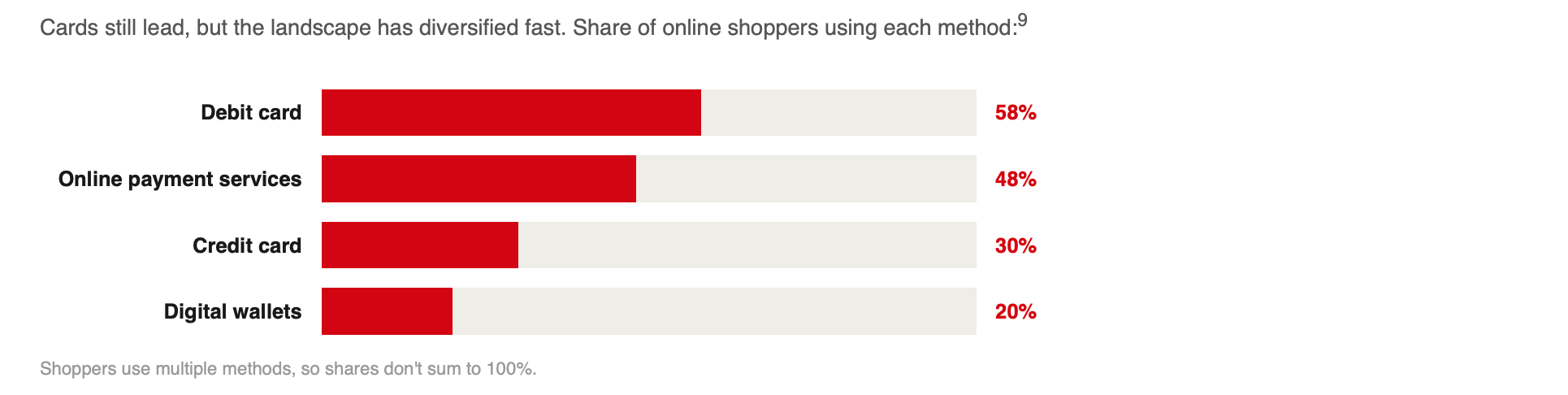
Credit and debit cards are widely used for online purchases in South Africa. Instant EFT (Electronic Funds Transfer/bank transfer) lets customers make real-time bank transfers directly from their online banking platforms. Digital wallets like PayPal and PayFast are gaining popularity in South Africa. Integrating these payment methods can provide a secure and convenient option for customers. 

Shopping trends in South Africa 

Mobile-first, township-driven growth

Mobile-first, township-driven growth

Entry-level smartphones under R1,500 have brought first-time shoppers online in Soweto, Khayelitsha and Umlazi. Mobile-first users generated over 71% of B2C transactions in 2025.

Value-seeking & flexible credit

Value-seeking & flexible credit

Under sustained cost-of-living pressure, consumers chase discounts and stretch budgets with BNPL especially Gen Z and millennials, whose spending power is widening the addressable market.

WhatsApp & social commerce

WhatsApp & social commerce

WhatsApp catalogs are flourishing as informal sales channels where peer recommendations carry more weight than brand advertising. Social platforms drive discovery and trust.

Delivery expectations have risen

Delivery expectations have risen

Sub-60-minute grocery delivery and same-day marketplace delivery are resetting expectations. 67% of shoppers cite free delivery as the top reason for completing a purchase.

Local & sustainable products

Local & sustainable products

Support for local businesses and demand for eco-friendly, socially responsible products keeps growing a durable trend that survived the post-pandemic reset.

Cart abandonment is the battleground

Cart abandonment is the battleground

SA's cart abandonment rate of ~83% is well above the ~70% global average. Payment failures, late-revealed delivery fees and clunky mobile checkouts are the main culprits.

Holidays and shopping events to look out for

Mandela Day (Jul 18) & Africa Day (May 25)

Mandela Day invites 67 minutes of community service a natural moment for corporate social responsibility. Africa Day carries pan-African significance for diverse audiences.

Youth Day (Jun 16) & Heritage Day (Sep 24)

Culturally significant holidays Youth Day commemorates the 1976 Soweto uprising; Heritage Day celebrates the nation's diverse cultures. Engage thoughtfully.

Black Friday & Cyber Monday late November

Now the single biggest online shopping event of the South African year, with retailers stretching promotions across the whole of November.

Festive season  Dec 16 to early Jan

The traditional summer-holiday shopping period. Plan stock and delivery capacity early; major malls stay open on public holidays.

Customs regulations in South Africa 

South Africa has been a WTO member since 1995, so importers and exporters can rely on a customs process aligned with global standards. Import taxes and duties are managed by the South African Revenue Service (SARS).

New since 2024: low-value parcel rules

SARS closed the "de minimis" loophole used by cross-border fast-fashion platforms: imported clothing parcels under R500 are now charged the full 45% customs duty plus VAT, instead of the previous flat 20%. Factor this into landed-cost calculations for low-value consignments.

Regulated items: check the SARS Prohibited, Restricted and Counterfeit goods list before shipping. South Africa participates in many trade agreements including the African Continental Free Trade Area (AfCFTA) so always check preferential terms in advance.

Registration: individuals or organisations importing goods worth more than R150,000 in a South African financial year (1 March – 28/29 February) must be registered with SARS.

DHL’s insider tips for trading in South Africa

  • Do the research. Confirm your receiver is registered with SARS and holds the correct licences, and share shipment information upfront to avoid clearance delays.
  • Design for mobile and payment failure. With 77% of shoppers on mobile and ~71% abandoning after a failed payment, a fast mobile checkout with multiple payment options (card, Instant EFT, BNPL, wallets) directly protects revenue.
  • Decide whether to charge for returns. Many international retailers have introduced return fees to protect margins. Be deliberate about your returns policy and be aware of return fraud, which retailers counter with shorter return windows and restocking fees.
  • Be transparent on delivery costs. Late-revealed fees are a leading cause of South Africa's high cart abandonment. Show the full landed cost including duties on cross-border orders as early as possible.
Thinking of exporting to South Africa?

Thinking of exporting to South Africa?

Our complete international shipping service helps you ship quickly and reliably.

Find out more