


Looking to step into the thriving and lucrative world of online retail? Our ultimate guide covers all the essential elements you should know for success – including the distinct types of transactions, upcoming market trends, and how to execute effective e-commerce website optimization for Brazilian businesses to transform your logistics operations into a competitive advantage.
Definition of e-commerce
E-commerce is the buying and selling of physical goods, digital products, and specialized services over the internet. It differs from traditional commerce, which focuses on exchanging products and services face-to-face inside a physical storefront.
Digital commerce provides small enterprises with the distinct benefit of 24/7 availability and an immediate global scope that bypasses geographic boundaries.
Thanks to rapid digitalization across Latin America, shopping online has become a permanent habit for millions of modern consumers. Historical trade reports highlight that over 2.14 billion people purchased something online globally in a single year – representing roughly 27% of the total global population!
Types of e-commerce
There are four primary types of e-commerce models that define how modern digital transactions occur:
B2C – Business-to-Consumer: This is the retail model you are likely most familiar with. It involves online businesses – typically digital merchants – selling finished products and daily services directly to individual consumers. Examples include local grocery apps, digital fashion stores, small niche brands managing their own webstores, and subscription platforms like Netflix.
B2B – Business-to-Business: This involves secure electronic transactions of goods and services between separate corporate entities. A common example is wholesale e-commerce, where a commercial buyer secures bulk inventory online to sell to an end customer down the line (B2B to B2C). B2B digital trade is a fast-growing sector; while negotiations traditionally happened face-to-face, rapid platform digitization has shifted bulk purchasing entirely online.
C2C – Consumer-to-Consumer: This model covers electronic transactions of used or handmade items between individual consumers. Typically, these peer-to-peer sales are facilitated by a third-party online platform or marketplace, such as Mercado Livre, Shopee BR, Olx, or Facebook Marketplace.
C2B – Consumer-to-Business: This occurs when individual consumers sell their own creations, media, or specialized services to corporate entities. Common examples include digital influencers selling sponsored ad space on their blogs, freelance developers contract programming, or photographers licensing their creative images to corporate buyers via platforms like Shutterstock.
Benefits of e-commerce for growing brands
Any small business owner looking to expand their revenue should make digital commerce a central pillar of their corporate growth strategy. Launching an online store has never been more accessible or cost-effective, offering several unique advantages:
Exponential market growth: Digital consumption patterns are scaling rapidly. Data from ABCOMM (Associação Brasileira de E-commerce) demonstrates that Brazil's e-commerce market surpassed R$185 billion in annual revenue, maintaining a steady double-digit growth rate. As smartphone penetration and mobile internet infrastructure expand into every region, your potential customer reach becomes practically limitless.
Low entry and operational costs: Setting up a digital storefront is significantly more affordable than launching a traditional brick-and-mortar retail outlet. You completely eliminate steep upfront capital expenses like physical storefront rent, commercial interior design, and large on-site floor staff. Budding entrepreneurs can start small by utilizing localized ERP systems like Bling or Tiny to manage inventory while listing products on established digital marketplaces with minimal financial risk.
Immediate international reach: Thanks to specialized cross-border logistics networks, opening your digital store to international buyers is seamless. Capitalizing on this requires targeted market research to identify which foreign countries have high demand for your products, alongside localizing your checkout for foreign buyers (such as offering multi-currency support).
Access to rich customer data: You cannot optimize a business model without deeply understanding your target audience, and this is where e-commerce outpaces traditional retail. Online merchants gain real-time access to detailed customer analytics: exactly how users land on your site, what search queries they type, where their digital engagement drops, and what causes them to abandon a cart. You can leverage these behavioral insights to optimize your platform and maximize total conversions.
How does the Brazilian market impact e-commerce website optimization?
To successfully optimize an e-commerce platform for the Brazilian market, you must specifically align your checkout infrastructure with local fiscal regulations, regional tax substitution laws (Substituição Tributária), and native mobile payment preferences.
Failing to adapt your website to these specific domestic realities triggers severe cart abandonment because local shoppers expect a highly customized transaction process that matches their daily banking habits.
Fiscal Compliance: Integração automática com Bling/Tiny para emissão instantânea de Nota Fiscal Eletrônica (NF-e) e cálculo automatizado de impostos.
Localized Payments: Checkout otimizado com Pix via API (aprovação imediata) e parcelamento no cartão de crédito em várias vezes sem fricção.
Logistics Mapping: Cálculo dinâmico de frete e prazos integrando Correios, transportadoras locais e opções de entrega expressa.
Data from SEBRAE indicates that small businesses that integrate their storefronts directly with localized back-office tools experience significantly higher survival rates during digital expansion. To align your website with local requirements, your tech team should implement three core structural updates:
Automate fiscal note (NF-e) generation: Every commercial sale requires an official electronic invoice. You must link your e-commerce platform (such as Nuvemshop, VTEX, or Shopify) directly to an agile ERP like Bling, Tiny, or Omie to generate invoices automatically the moment a payment clears.
Embed a localized payment gateway: Global checkouts that only accept upfront credit card payments fail locally. Your checkout must feature an instant Pix API containing a dynamic QR code alongside a clear installment plan (parcelamento) configuration through local providers like Mercado Pago or PagBank.
Optimize regional shipping calculations (frete): Due to the complex geography, shipping costs can vary drastically between metropolitan hubs in the Southeast and growing cities in the North or Northeast. Implement an automated shipping calculator directly on your product pages to display transparent delivery windows and landed costs before checkout.
Challenges in the e-commerce sector
Sustaining long-term digital growth requires you to recognize common structural hurdles and implement proactive solutions to outpace competitors.
Escalating consumer expectations
Consumer expectations surrounding delivery speed and digital convenience are rising rapidly, requiring ongoing technological investments to maintain brand loyalty.
For instance, a clear majority of modern buyers actively seek free shipping options on their orders, while a significant percentage demand that brands adopt eco-friendly business practices. Prioritizing customer experience optimization is a cost-effective necessity because retaining a loyal buyer is up to five times cheaper than acquiring a new one.
Saturated competitive spaces
The e-commerce sector is intensely competitive, meaning that whatever niche products you sell, thousands of other digital stores are likely offering similar variations. Performing a structured competitor analysis allows your team to evaluate rival marketing strategies, identify gaps in product availability, and refine your unique brand value proposition to win market share.
Website conversion barriers
The baseline global e-commerce conversion rate often sits around 3.65%, meaning only a fraction of site traffic converts into paid sales. To optimize this metric, you must analyze your website analytics to pinpoint exactly where users drop out of your checkout sequence.
If data shows high abandonment during the registration phase, introducing a streamlined "Guest Checkout" model can dramatically increase your total completed transactions.
Future trends shaping digital commerce
To protect your market position, your business growth plan must align with the core technological trends transforming the digital landscape.
Omnichannel retail integration
The modern consumer journey is non-linear and spans multiple independent channels. A typical customer might discover your product on an Instagram reel, compare prices on a major digital marketplace, and ultimately complete the transaction inside your dedicated mobile app.
The challenge for your business is to link these touchpoints seamlessly; roughly 87% of buyers demand a completely consistent, personalized experience across every single channel.
AI-driven logistics automation
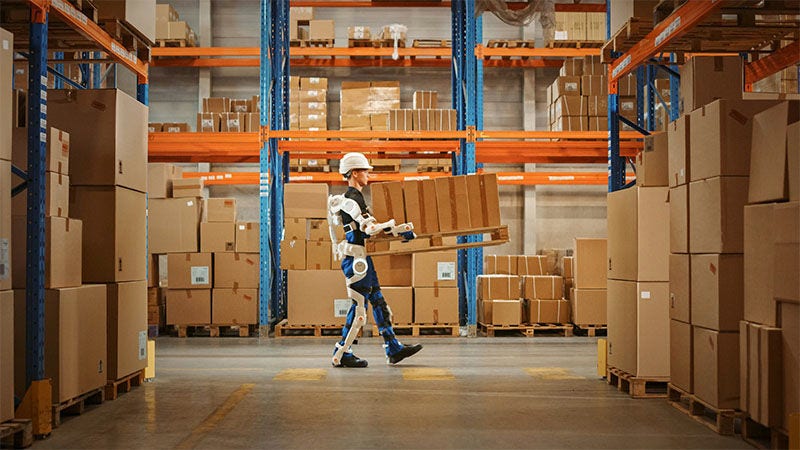
Online brands are increasingly adopting artificial intelligence to automate complex supply chain tasks. This innovation scales from autonomous mobile warehouse robots that optimize picking and packing speeds to smart, natural-language chatbots that provide instant 24/7 customer support.
Tracking these technical advancements allows your team to reduce overhead and enhance processing capabilities.
The sustainability mandate
Eco-friendly commerce has evolved from an optional marketing angle into a core consumer demand. Forward-thinking brands are actively adopting biodegradable packaging materials and partnering with logistics networks that offer verified carbon-offsetting initiatives.
This operational transition drives measurable growth; studies show that sustainability-focused digital stores experience faster growth rates and better conversion metrics than traditional competitors.
E-commerce FAQs
What are the three main types of e-commerce?
The three dominant e-commerce transaction models are B2C (Business-to-Consumer), B2B (Business-to-Business), and C2C (Consumer-to-Consumer).
What is a practical example of e-commerce?
A clear example of e-commerce is an independent local lifestyle brand selling specialized goods directly to global buyers via its own optimized website. The brand can simultaneously list inventory on international digital marketplaces and enable social commerce checkout tags on social networks to maximize sales flexibility.
What is the goal of e-commerce marketing?
E-commerce marketing is a data-driven strategy engineered to guide high-intent traffic through the conversion funnel: from building initial brand awareness and attracting visitors to your storefront to ultimately converting them into repeat paying customers.
This process utilizes a structured mix of search engine optimization (SEO), targeted content marketing, paid social media advertising, and automated email workflows.
Is the e-commerce market expanding?
Yes, digital commerce is experiencing continuous growth globally. Now is the ideal time to scale your business operations and capture international market share.
While managing a digital storefront involves multiple moving parts, securing a reliable logistics specialist allows you to focus entirely on growth while ensuring your packages arrive on time and in perfect condition.
Open a DHL Express Business Account today to connect your e-commerce operations with an international express delivery network built to accelerate your global expansion.
AI for automation
With online businesses facing increasing customer expectations, technologies are emerging to automate several areas of their logistics – from indoor mobile robots to optimize picking and packing within warehouses, to smarter chatbot technologies that can better engage website visitors. Discover the full breadth of exciting innovations transforming the e-commerce industry with our exclusive Logistics Trend Radar.


 Share
Share

Similar Stories