


From the neon-lit skyline of Victoria Harbour to the street markets of Mong Kok, Hong Kong has long been a global trade hub. Today, that tradition continues online, offering opportunities for e-commerce businesses expanding cross-border.
If you’re planning to ship to Hong Kong, this guide breaks down the key consumer and customs insights you need to know.
E-commerce opportunities in Hong Kong

E-commerce revenue is projected to reach US$5.22bn in 2026
In a city known for its dense retail landscape and fast-paced lifestyle, digital channels allow shoppers to compare global brands and access wider product ranges. For international sellers, this creates a highly lucrative market.1
There will be 7.1m e-commerce users in Hong Kong by 2030(2)
With a population of 7.5 million3, that represents a very high level of adoption. Online shopping is firmly embedded in everyday life, supported by high smartphone usage and strong familiarity with digital payments and mobile commerce.
Cross-border sales represent 56% of total e-commerce transactions
Hong Kong consumers are highly accustomed to purchasing from overseas retailers, often seeking out competitive prices and product variety that may not be available locally.4
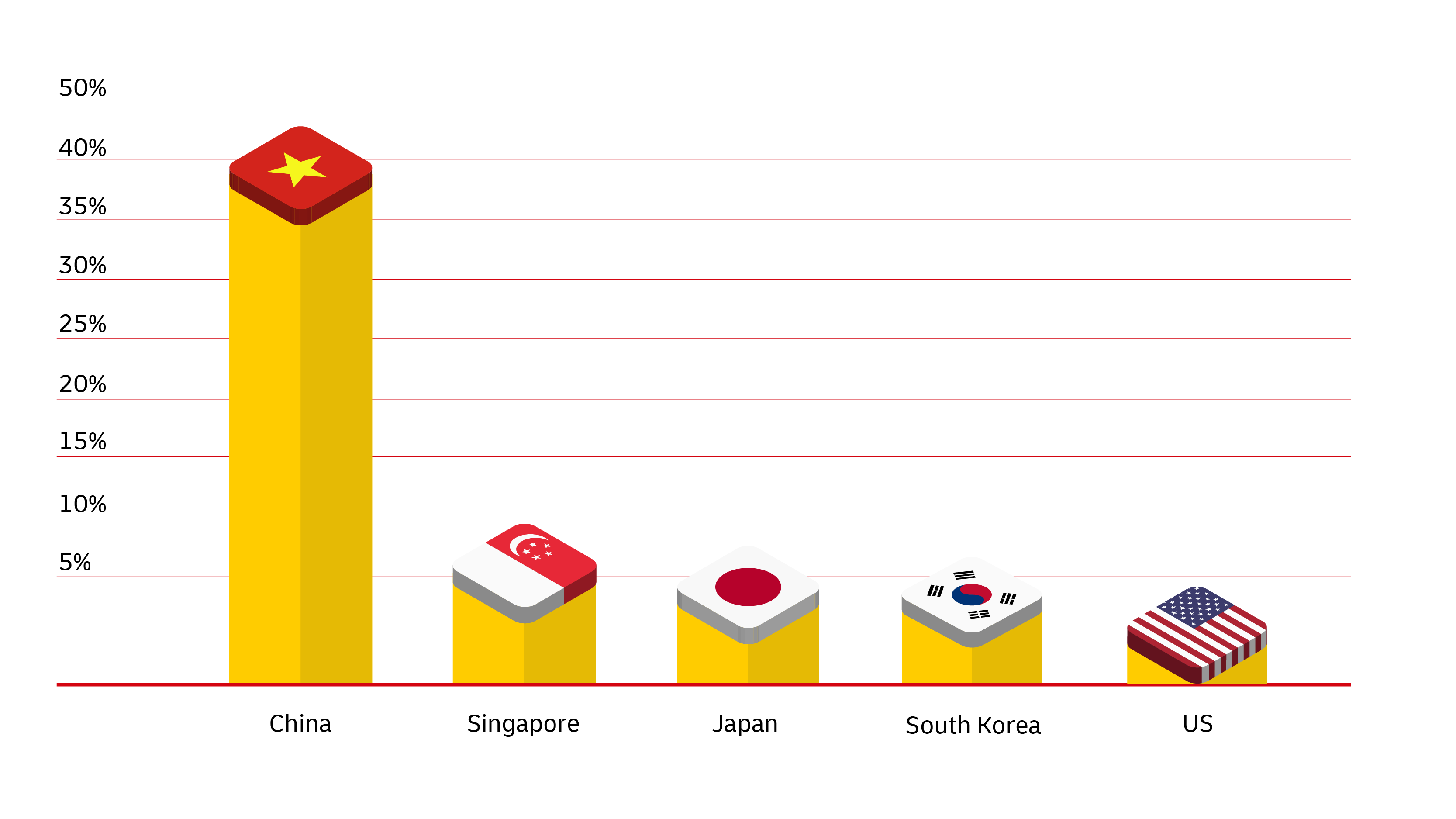
The countries Hong Kong imports from the most5
Hong Kong consumer habits
Knowing what drives Hong Kong shoppers will allow your business to tailor offerings and stand out in a competitive online market.

Fashion and electronics lead online sales
The largest share of Hong Kong’s e-commerce spending goes to fashion, followed by electronics, and food and beverage⁶. These sectors are particularly well suited to e-commerce, where consumers benefit from wide choice and easy price comparison.
Shoppers rely on marketplaces for variety
Online marketplaces such as Amazon are widely used, giving shoppers easy access to a vast range of products. For cross-border brands, these platforms can act as a convenient gateway to reach Hong Kong consumers without needing a local retail presence.

Mobile commerce dominates
Smartphones are central to Hong Kong’s e-commerce landscape, with the majority of online purchases made via mobile devices7. For cross-border sellers, a mobile-optimized store and seamless checkout experience are essential to capture this highly connected audience.
Digital wallets lead payments
Digital/mobile wallets are the most popular payment method, accounting for 45% of online purchases in Hong Kong8. Many international payment providers allow overseas merchants to accept widely used wallets such as Alipay and WeChat Pay, helping to boost conversions at checkout.
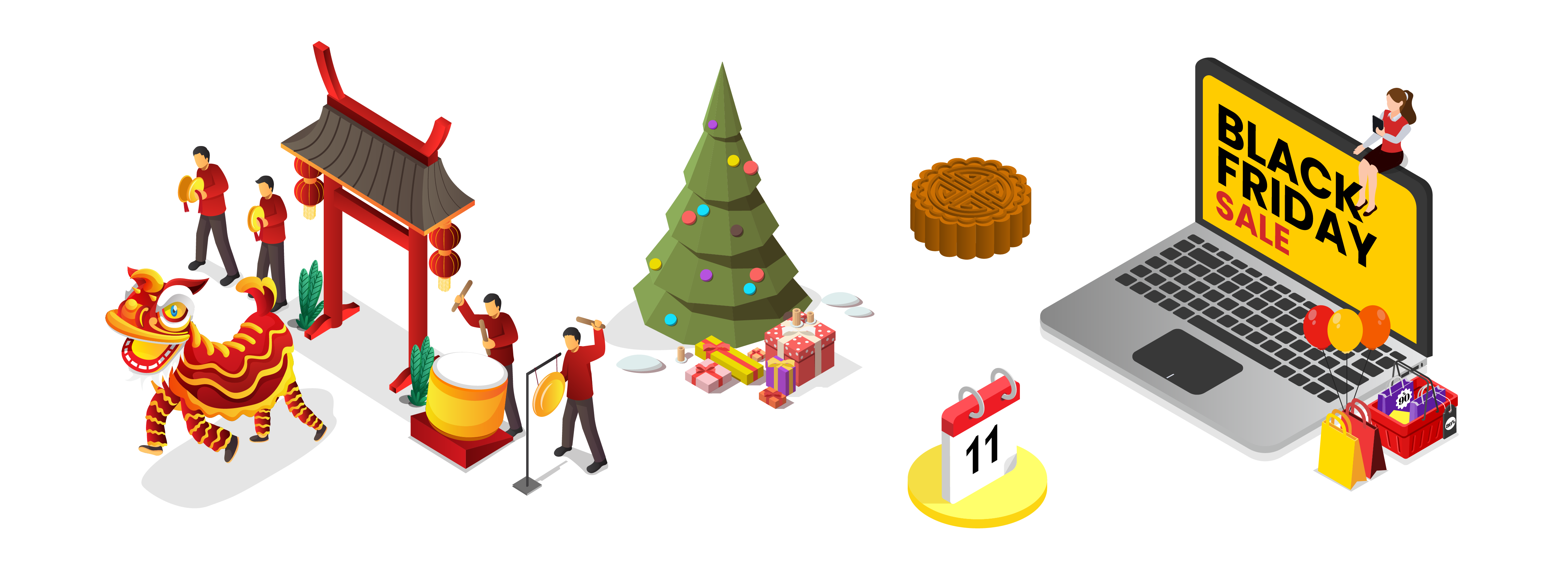
Hong Kong shopping holidays and cultural events
Add these key retail moments to your marketing calendar to help your business cash in on the buzz!
- Chinese New Year (Lunar New Year) – Usually falling between late January and mid-February. The most important holiday in Hong Kong, driving strong spending on gifts, food, fashion and home items in the weeks prior.
- Mid-Autumn Festival – Usually in September or early October. A major cultural holiday centered around family gatherings and gift-giving, particularly mooncakes and premium food hampers.
- Singles’ Day (11.11) – 11 November. Originating in China, this has become one of the region’s biggest online shopping events, with major discounts across fashion, electronics, beauty and more.
- Black Friday / Cyber Monday – Late November. Increasingly popular with Hong Kong’s digitally savvy consumers, with many international brands and online retailers running promotions.
- Double 12 (12.12) – 12 December. Another major online sales event following Singles’ Day, with many marketplaces and retailers offering additional year-end discounts.
- Christmas and New Year – 25 December and 1 January. Widely celebrated in Hong Kong, with strong seasonal promotions and gift purchases across retail and e-commerce.
Import regulations and customs procedures
Duty-free import environment
Importing into Hong Kong is relatively straightforward. The territory operates as a free port, meaning most goods can enter duty-free, and there is no VAT or general sales tax applied to imports.
As most goods are already duty-free, Hong Kong does not operate a formal de minimis threshold, making it one of the most accessible markets in Asia for cross-border trade.
Excise duties and regulated goods
A small number of product categories are subject to excise duties, including alcohol and tobacco. These goods require additional declarations and may incur duties on import.
Certain regulated products require import licences or permits from the relevant authorities, so businesses should confirm requirements in advance.
Prohibited and controlled goods
Some items are banned outright, while others require permits or licenses from the relevant authorities. Examples include pharmaceuticals, food and agricultural products, and strategic technology items.
For full details, visit the Hong Kong Customs and Excise Department’s Prohibited and Controlled Goods page.
Customs declarations and documentation
Businesses importing goods for commercial purposes are generally required to submit electronic import declarations. It is important to ensure product classifications are accurate to avoid clearance delays.
Shipments typically require an Air Waybill and a Commercial Invoice showing the goods description, declared value, HS code, and country of origin.
DHL Express’ insider tips for exporting to Hong Kong
1. Get your customs documentation in order
Accurate documentation is essential for smooth clearance. Properly prepared documents speed up customs processing, reduce the risk of delays, and help ensure shipments reach their destination on time.
2. Find your USP
In Hong Kong’s crowded e-commerce market, standing out is key. Highlight your unique selling points, such as product quality, craftsmanship, or origin – e.g., “Made in the UK”. Local consumers are willing to pay a premium for trusted, well-made brands.
3. Offer sustainable delivery
Hong Kong shoppers are increasingly eco-conscious, and many consider environmental impact when choosing where to shop online9. Offering sustainable delivery options, such as DHL’s GoGreen Plus, allows businesses to offset the carbon footprint of shipments while demonstrating commitment to sustainability.
For fast international shipping, open a DHL Express Business Account.


 Share
Share

Similar Stories