#eCommerceAdvice

A handbook for managing foreign exchange risk

Vivien Christel Vella
Senior Global Digital Marketing Manager
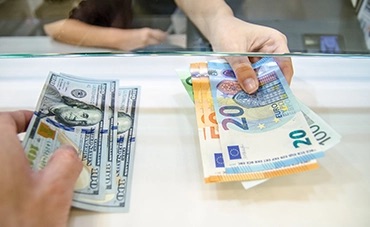
Billetes de distintas divisas están uno sobre otro, hay un fajo de dólares con una liga
This article covers
The definition of foreign exchange risk
Strategies companies can implement to safeguard their profits-including Forex hedging

Seeking to expand your enterprise globally? If so, grasping foreign exchange risk is essential. This handbook outlines all the vital details.   

Within modern interconnected markets, companies of all sizes are increasingly engaging in cross-border transactions to expand their reach and target new  consumer segments. With that said, one of the most significant challenges they face in international trade is managing foreign exchange risk. Volatile conversion rates, hidden fees, and complex financial processes can erode profit margins and complicate transactions.

To counteract this, organizations can adopt strategies to manage currency exchange effectively – this article will explore these in more detail.

Defining foreign exchange risk

This term – also referred to as currency exchange risk or Forex (FX) risk – describes the financial risk that arises from fluctuations in exchange rates between two currencies in a cross-border transaction.

Foreign exchange risk in B2B transactions occurs because distribution processes frequently introduce delays between invoicing and payment, giving exchange rates time to shift.

For example, if a business in the US sells merchandise to a company in Europe and agrees to receive payment in euros, but the euro depreciates before the payment is settled, the US business might end up receiving less revenue  than expected when the euros are converted back to dollars. This fluctuation in currency value can affect profits, pricing, and the overall cost of operating globally.

What are the main categories of foreign exchange risk?

This exposure occurs when currency values fluctuate between the moment a deal is finalized and the time payment is completed. To illustrate, a European company sells products to a buyer in Japan and agrees to receive Japanese yen. If the yen drops in value before the payment is processed, the European company realizes lower returns when converting yen to Euros.


This involves the hazard that a company’s financial statements will be affected by changing exchange rates when consolidating foreign assets or income. For example, a European logistics company operates a branch in the US and must convert US dollar earnings into euros for reporting purposes. If the dollar weakens, the company’s profits will appear diminished in euros – even if no actual changes  occurred within the US business.


This risk  occurs when prolonged shifts in exchange rates undermine a company’s competitiveness or future earnings. For example, a Canadian exporter sells goods to the US. If the US dollar weakens over the long-term, American buyers might find Canadian products too expensive and switch to domestic suppliers instead.


As demonstrated by these scenarios, foreign exchange risk can profoundly affect an enterprise's fiscal stability. Profit margins may shrink if currency values move unfavorably, while financial reports can become more volatile due to translation risk, which may undermine shareholder confidence even if the core business remains strong.

Commercial organizations active in global markets often must refine their pricing, sourcing, and strategic plans to remain competitive amid shifting exchange rates.  Consider the following approaches.

Four phases to streamline foreign exchange

Phase 1: Evaluate your enterprise's currency exchange needs

 Evaluate your enterprise's currency exchange needs The initial move is to evaluate how and where your organization engages with foreign currencies. If you're a B2B company, that entails examining metrics like how often you're shipping products across borders, what countries you're doing business with, and which currencies you're using most. Key questions to review include: What is the frequency of your global transactions? Which currencies present the highest exposure? Are you predominantly importing, exporting, or a combination of both? By pinpointing where foreign exchange exposure exists – whether it's paying international suppliers, getting paid by overseas customers, or covering operational costs in another country – you can develop a tailored strategy to manage that risk.

Phase 2: Select appropriate payment methods and conversion strategies

Select appropriate payment methods and conversion strategies Opting for suitable payment options is not just about convenience – it directly impacts your conversion rates, especially for international online shoppers. Offering familiar and adaptable payment options can minimize friction at checkout and build trust with cross-border customers. 

Automated currency conversion tools can assist both buyers and sellers in clarifying costs  in their local currency, thereby lowering uncertainty and reducing cart abandonment.  Many leading payment providers – like PayPal – offer this functionality as an integrated feature. Choosing how and when to convert foreign currencies – whether in real-time or at set intervals – can also safeguard against abrupt exchange rate shifts.

Phase 3: Identify the optimal strategy to manage currency exchange

Identify the optimal strategy to manage currency exchange Once you’ve identified where your business is exposed to foreign currency fluctuations, the subsequent step is to choose how you’ll manage that risk. There are various methodologies, each offering different levels of control. You can pick one or combine multiple strategies, depending on your objectives, transaction scale, and risk tolerance. Here are four proven approaches to consider:

Broadening monetary options

1. Broadening monetary options

This offers a strategic approach to distributing  your risk across multiple currencies. Instead of relying on a single foreign currency (which may experience sudden fluctuations), you can conduct transactions in a variety of currencies. This helps cushion the impact of individual currency volatility. For instance, if you sell to both the US and Europe, earning revenue in both dollars and Euros diminishes your reliance on a single currency , giving you more financial stability.


Benefits of currency diversification: 

Risk mitigation: Losses in one currency may be offset by gains in another. 

Commercial advantages: You can benefit from favorable exchange rates in certain regions. Enhanced customer experience: Offering local currency pricing can foster trust and increase conversion rates.

 Pricing flexibility: You can adjust your pricing per region without being overly exposed to a single currency's fluctuations.

    Reduce carbon footprint

    2. Risk sharing

    This approach relies on cooperation, where you join forces with foreign partners to divide exposure to exchange rate fluctuations. Such setups are typically established during contract negotiations, incorporating specific provisions to handle potential exchange rate changes.

    How it works:

    • You can set pricing clauses that adjust based on exchange rate thresholds.

    • You may agree on a midpoint rate or a mutual cushion, absorbing gains or losses together.

    • Some contracts include automatic rebalancing mechanisms if the exchange rate  shifts beyond a certain range.

    • For instance, a German enterprise and a Thai supplier agree to split any cost impact if the Thai Baht strengthens beyond a certain limit before the payment is due.

    Benefits of risk sharing:

    • Fairness and balance: Both parties distribute the financial impact equitably.

    • Stronger relationships: Transparent agreements can foster deeper trust with international partners.

    • Reduced individual burden: Neither side bears the entire financial risk  alone.

      Reduce carbon footprint

      3. Hedging with financial instruments

      This practice focuses on shielding your enterprise from future exchange rate movements by using financial tools. It’s especially valuable if you manage substantial, predictable transactions and need to ensure price certainty.

      Common hedging instruments:

      • Spot contracts: Buy or sell currency at the current market rate, typically for immediate transactions.

      • Forward contracts: Lock in an exchange rate for a future transaction. This assists with budgeting and financial planning.

      • Currency options: Pay a premium for the right, but not the obligation, to exchange at a specific rate – providing  both security and flexibility.

      • Foreign currency accounts: Hold funds in foreign currencies to delay or avoid converting until rates become favorable.

      For instance, a Canadian enterprise awaiting a large payment in euros in three months could use a forward contract to lock in today’s EUR/CAD rate, avoiding future losses if the euro weakens.

      Benefits of hedging:

      • Safeguards profit margins on international sales or purchases.

      • Mitigates volatility in financial reporting.

      • Provides reassurance when planning cash flow or pricing strategies

        Reduce carbon footprint

        4. Forex (FX) hedging

        This method takes currency  protection a step further, employing specialized financial strategies and tools to actively manage currency exposure. This approach is often adopted by enterprises with high transaction volumes or more complex financial demands.

        Key techniques include: 

        • Spot contracts: Immediate transactions at the current market rate – useful for short-term needs.

        • Foreign currency accounts: Hold and manage multiple currencies, granting superior oversight over  when and how to exchange.

        • Swaps and derivatives: More advanced tools that allow you to lock in favorable terms over time or exchange one currency for another on specific dates.

        For instance, a company operating in South America and Southeast Asia might actively monitor exchange rates and use swaps to balance currency exposures across those regions.

        Benefits of Forex hedging:

        • Provides enhanced control over the timing and terms of currency exchanges.

        • Can be tailored to different divisions of the organization (e.g., supply chain vs. sales).

        • Helps mitigate  disruption from sudden currency swings in volatile markets.


        At DHL Express, we understand the complexities of cross-border trade. Whether you're shipping products, bringing in supplies, or juggling payments in different currencies, we’re here to optimize your operations with intelligent, hassle-free logistics that work across borders.

        By partnering with DHL Express, your business can streamline its operations, reduce the risks associated with currency volatility, and focus more on growth and customer experience. As a leading  international logistics company, we deliver tailored business logistics services and fast international shipping to safeguard your international shipments from Mexico, no matter where in the world you trade.