

Is globalization in decline? Some recent forecasts suggest it might be, but in a world marked by rising volatility—from the war in Ukraine to surging food and energy prices—reliable, fact-based insight is more important than ever for shaping predictions and business strategy. That’s exactly what the latest, ninth edition of the DHL Global Connectedness Index (GCI) report delivers, helping you ground decisions in data rather than speculation.
The DHL Global Connectedness Index (GCI) measures global connectedness—but what does that actually mean? In simple terms, it refers to how strongly a country is linked to the rest of the world.
A country’s overall level of connectedness is assessed through four key types of cross-border flows. First is trade, which covers how much a country exports and imports in goods and services. Second is capital flows, referring to investment moving into and out of a country from abroad. Third is information flows, including international internet traffic, data exchange, and phone communications. Finally, there are people flows, which capture international travel, migration, and the movement of individuals across borders.
The latest GCI edition is based on around 4 million data points across 13 indicators covering these four global flow categories. It also adds important context by measuring both depth—how much of a country’s activity is international versus domestic—and breadth—how widely its connections are distributed across different countries.
Together, these metrics provide a richer, data-driven understanding of global integration, offering valuable insights to support smarter trade and business decisions. Below are some key findings from the report:
The latest on the GCI’s four global flows
As mentioned, the GCI measures the flow, from country to country, of trade, capital, information and people. So what are the key overall observations, since our last GCI update in 2021? Here is a brief snapshot of each category.

Trade: a swift recovery, then steady growth
The volume of world trade in goods plummeted at the beginning of the pandemic but recovered swiftly in 2020 and 2021, and continued growing in 2022. By mid-2022, it had reached 10% above pre-pandemic levels. The trade in services also surpassed pre-pandemic levels in 2022. However, trade is expected to grow at a slower pace in 2023 due to weaker macroeconomic conditions.
Capital: foreign investment slowed by global conditions
Flows of Foreign Direct Investment (FDI) – meaning when an investor, company or government takes a substantial ownership stake in a foreign company or project in another country – recovered to pre-pandemic levels in 2021.
However, by Q2 of 2022, the flow was starting to be weakened both by the Ukraine war and the slowing global economy. Overall, most new global policy still supports FDI, although some countries now seem keen to regulate or restrict it.
Global portfolio equity flows remained quite stable despite large swings toward emerging markets.

Information: back to normal after a pandemic spike
The growth in international data flows, such as international internet traffic, spiked in 2020 but returned to its pre-pandemic trend in 2021 and 2022.
The globalization of information flows is continuing but appears to be slowing, and may be hindered from growing further by countries introducing more restrictive policies.
People: foreign travel down
Compared to pre-pandemic levels, international travel declined sharply—falling by 70% in 2020 and 2021, and remaining 37% lower in 2022. However, recovery is underway, with projections for 2023 showing travel levels just 5–20% below those seen in 2019.
At the same time, global displacement has increased significantly, driven in large part by the war in Ukraine and the resulting rise in refugee flows.
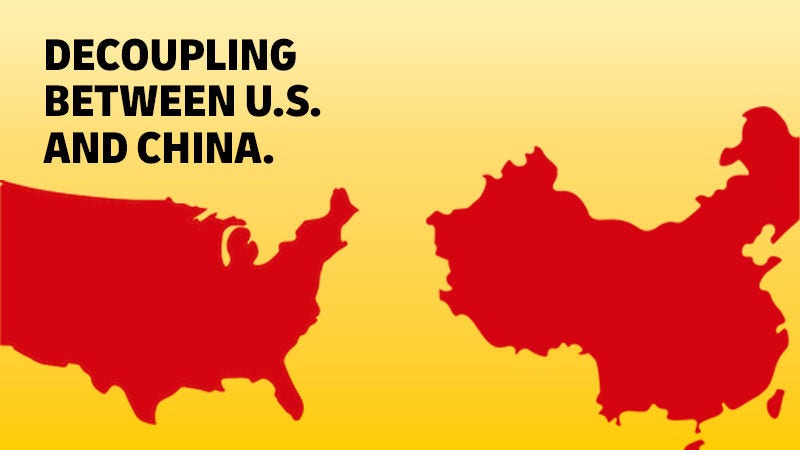
Another key trend highlighted in the report is the gradual “decoupling” between the U.S. and China, the world’s two largest economies, across several international flows. As geopolitical tensions increased in 2022, concerns grew that the global economy could split into competing blocs. However, current evidence shows little sign of a full-scale fragmentation of global trade or connectivity so far.

From globalization to regionalization?
Many observers have predicted a shift toward regionalization, driven by rising geopolitical tensions and reduced confidence in global supply chains. However, there is still little strong evidence that this trend is actually taking hold at a global level.
In fact, average trade distances have increased in recent years, suggesting that commerce is not becoming more regional overall. Of the four key flow categories measured by the DHL Global Connectedness Index, only people flows have shown clear signs of regionalization. This shift is largely a result of the COVID-19 pandemic, during which a significantly higher share of international travel shifted toward nearby destinations rather than long-haul travel.
The most globally connected countries
This edition of the DHL GCI has tracked the globalization of 171 countries from 2001 to 2021.
The Netherlands was again ranked the world’s most connected country, after falling to second place behind Singapore in 2020. Singapore was ranked second this time around.
The most significant climbers in the rankings included Albania and several other countries from the Balkans. Mozambique and Sierra Leone also showed an important increase in connectedness, following the end of their civil wars.
You can see the full list of the most globally connected countries, according to the four GCI flows, here.
And the future of globalization?
In the world’s present state of volatility, an array of predictions on the future of globalization were put forward by commentators in 2022.
These ranged from Moisés Naím’s claim that globalization has turned out to be more resilient than ever expected, to Larry Fink’s pronouncement that the Ukraine war has ended globalization as we know it, to Christine Lagarde’s more circumspect view that there are distinct shifts emerging in global trade.
The implication from these divergent opinions is that nobody is 100% sure. But with the DHL GCI report, you will have the detailed data available to help you arrive at your own conclusions and make your own business decisions.
You can explore the full DHL Global Connectedness Index report here.


 Share
Share

Similar Stories