

#eCommerceAdvice

Exporting to Singapore: Insights for cross-border success

Jane Galvez
Jane Galvez
7 min read

Despite a population of just over 6 million1, Singapore’s economy packs a punch. Low taxes, excellent infrastructure, strong services and banking sectors, and an almost entirely urban population have helped make it one of the world’s most advanced economies. The country has one of the highest GDP-per-capita in the world, making it person-for-person one of the richest countries on earth.2 Singapore sounds like a prime market for exporters like you, but do the numbers agree? Let’s take a look. 

2% GDP growth in 2023

2% GDP growth in 2023

Singapore’s gross domestic product is growing at a modest 2%, but as an advanced, mature economy, this is a positive sign—especially given the tough global outlook.(3)
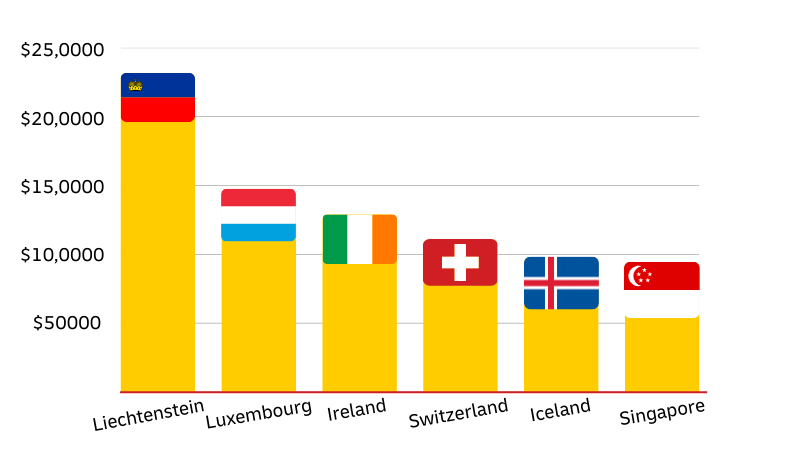
6th by GDP per capita(4)

6th by GDP per capita(4)

Gross domestic product per capita – a measure of a country’s wealth (does not indicate average earnings). In US dollars.

95.8% internet penetration

95.8% internet penetration

As an economically advanced country, it’s no surprise that Singapore has a very high internet penetration.(5)
98% of Singaporean shoppers are comfortable buying from foreign websites(6)

98% of Singaporean shoppers are comfortable buying from foreign websites(6)

Singaporeans are well accustomed to making online purchases from overseas sellers. Almost 70% of Singaporean consumers make cross-border purchases at least once a month(7). 

Projected market volume of US$6.81bn by 2030 (8)

Projected market volume of US$6.81bn by 2030 (8)

Revenue is expected to show an annual growth rate (CAGR 2025-2030) of 3.86%.
83.1% e‑commerce usage and growing (9)

83.1% e‑commerce usage and growing (9)

Singapore has not reached e-commerce saturation. User penetration is expected to hit 93.1% by 2030, with the number of e‑commerce users projected to reach 5.5 million.
USD $1,363 revenue per user (10)

USD $1,363 revenue per user (10)

That’s Singapore’s expected average revenue per user (ARPU). It makes Singaporeans some of the highest-spending e-commerce consumers in the world.

National language: English

The four official languages are English, Malay, Mandarin, and Tamil, but English is the most widely used.  

Singapore’s most popular online marketplaces11

Sorted by monthly number of online visitors. 

https://shopee.sg/

15 million visits

https://www.lazada.sg/

7.2 million visits

https://www.amazon.sg/

4.9 million visits

https://www.ebay.sg

316,700 visits

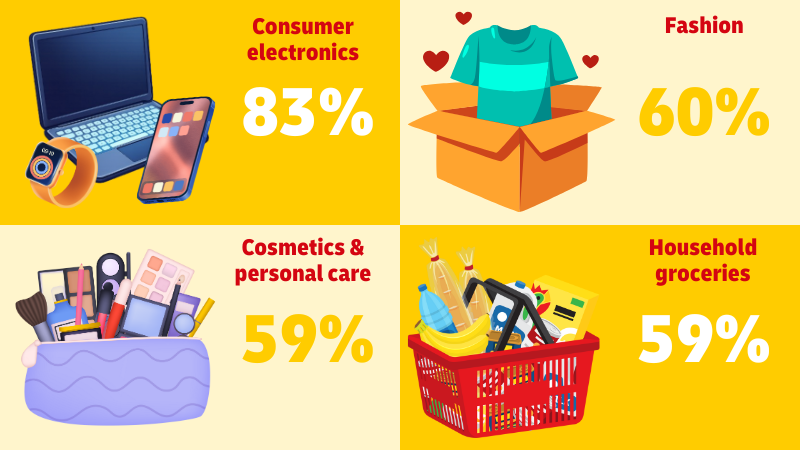
Most popular online product categories

Most popular e-commerce product categories in Singapore12


Preferred payment methods for online purchases

Singapore is one of Southeast Asia’s most active digital‑payment markets (13), with consumers using a wide mix of payment methods:

Most-used methods (14)

  • Credit & debit cards - still the dominant choice for online and in‑store transactions
  • Bank transfers - especially instant transfers via PayNow
  • Mobile wallets - including Apple Pay, Google Pay, GrabPay, and PayLah!
  • Buy Now, Pay Later (BNPL) - strong adoption through Atome and Grab PayLater


Most popular digital wallets 

  • GrabPay
  • PayLah!
  • FavePay
  • ShopeePay
  • Google Pay

Singapore’s biggest shopping events and destination

  • Great Singapore Sale - Also known as 6.6 and 7.7, this is the biggest sales event in the Singaporean retail calendar.  
  • Black Friday & Cyber Monday - End of November and the start of December sales event. Consumers expect big discounts. 
  • Cinderella shoppers - Shopee’s new event for those who prefer to shop between midnight and 2am, with discounts available between these hours. 
  • 11.11 Sale Singapore (Singles’ Day) - Annual event held on November 11th, offering discounts on a wide range of products. 
  • Orchard Road - This is the main shopping district of Singapore. Singapore is a small country, making brick-and-mortar retail more accessible than in other larger nations. 

Customs and import regulations for exporting to Singapore

  • Singapore Customs applies a 9% tax on all shipments. This is known as ‘GST’ (Goods and Services Tax). Some goods also incur duty — see the below section for more on this. 
  • Before your business can start to import and export goods to Singapore, you need to obtain a UEN number by registering with Singapore Customs.  
  • All goods imported into Singapore are regulated under the Customs Act, the Goods and Services Tax (GST) Act and the Regulation of Imports and Exports Act. 
  • Regardless of the bulk of your shipment, all your parcels must have the necessary paperwork. This includes the standard paperwork e.g., DHL waybill.
  • Once the paperwork is processed by Singapore Customs, it is then submitted to DHL Express’s network where our certified international specialists process the shipment, without it being physically present in Singapore. 
  • Most shipments are successfully cleared once they are boarded enroute to Singapore. DHL Express’ import customs clearance processes are simple and are mandated by the local government.  
  • The submission of an import declaration and payment of duty/GST to Singapore Customs is performed electronically. Business entities are encouraged to register for an Inter-Bank payment account with Singapore Customs to make this payment easier. For non-business entities, DHL can undertake the payments of duty/tax on their behalf (subject to terms and conditions) and recover the amount upon shipment delivery. 

Some goods are dutiable, and so incur both GST and duty

  • Intoxicating liquors 
  • Tobacco products 
  • Motor vehicles 
  • Petroleum products 

Each category incurs different duty rates. See this guide for more information on exact charges. 

Banned items

Some goods, such as some types of chewing gum, some cigarette lighters, firecrackers and others are completely prohibited and cannot be imported into Singapore. You can see the full list of prohibited items here.  


Exporting food

You can read DHL’s full guide to exporting food to Singapore here.  

 

Exporting to Singapore: Official websites and useful links

DHL’s expert tips for exporting to Singapore


  • Offer a seamless, hassle-free service. Be sure to use a customs broker that can take care of all the customs import and duty/tax formalities on your behalf and ensure your customers aren’t left with customs charges to pay themselves or delays to their delivery. 
  • Clear, descriptive, and complete paperwork gives Customs bodies a good idea of the contents within the shipment and also acts as a document of verification for both the shipper and consignee. 
  • Get ahead of the trends. Singapore is a very online country, and trends and habits can shift rapidly. For example, social network TikTok launched its shopping feature in 2022, called TikTok Shop, which was the fastest growing online retailer in 2024(15). Would this, or similar social selling options, appeal to your customers?  
Looking to export to Singapore?

Looking to export to Singapore?

DHL Express offer a complete international service for quick and reliable shipping.

Find out more