
1 – The State of Influencer Marketing 2024: Benchmark Report, Influencer Marketing Hub
2 – Marketing Essentials Lab, November 2023
3, 6, 9 – The Global Rise of B2B Influencer Marketing, Ogilvy, 2024

Brand influencers are no longer just the B2C sector’s secret weapon. As Brazil solidifies its position as Latin America's largest digital economy and e-commerce marketplace, the country's business-to-business sector is undergoing a massive transformation. Local B2B decision-makers are increasingly digital-native millennials who reject traditional, slow-moving cold calls or generic procurement scripts.
For companies looking to expand their presence, implementing modern B2B marketing strategies in Brazil that leverage the power of trusted industry voices is the most reliable way to shorten complex corporate sales cycles.
Read on to discover the full benefits of making B2B influencers a key part of your approach – from building brand awareness to creating deep trust amongst business customers.
Influencer marketing is an established digital growth strategy that leverages respected, well-known individuals to guide and validate consumer purchasing decisions. A business may enlist a brand influencer to market one of its products or services, choosing them because of their existing popularity and trustability amongst its target audience.
In a corporate environment, this trust is not built on temporary viral aesthetics but on verified professional expertise, technical authority, and industry problem-solving.
The distinction between business-to-business (B2B) and business-to-consumer (B2C) digital creators centers on transaction complexity, content depth, and customer relationship duration.
B2C influencer marketing is often associated with mainstream celebrities and social media stars with big followings on platforms like Instagram and TikTok, typically chosen by brands to drive quick, impulsive retail sales.
Conversely, B2B influencer marketing takes a more considered, highly targeted approach. Because of the typically more “corporate” nature of the B2B sector, B2B influencer marketing leans into industry experts and thought leaders, chosen for their authority amongst the target audience.
They may be specialized journalists, market analysts, or well-known industry speakers, and their endorsement is invaluable to B2B brands looking to build credibility within the B2B industry.
Operational Metric | B2B Influencer Ecosystem | B2C Influencer Ecosystem |
Primary Persona Type | Industry Analysts, Consultants, Tech Speakers, Executives | Celebrities, Social Media Stars, Lifestyle Creators |
Core Content Assets | White Papers, eBooks, Technical Case Studies, Webinars | Reels, Unboxing Videos, Creative Skits, Stories |
Primary Social Channels | LinkedIn, Specialized Business Blogs, Corporate Podcasts | Instagram, TikTok, YouTube Shorts |
Campaign Objective | Long-term Trust, Lead Generation, Operational Authority | Immediate Retail Impulse, Viral Brand Engagement |
These differences between B2C and B2B influencers are directly reflected in their content type. B2C content is often fun and creative, with the aim of building engagement. B2B marketing content strategies tend to be more formal and designed to provide insights – focusing on white papers, eBooks and webinars.
Whilst B2C influencer marketing has been mainstream for many years, B2B marketing is now gaining momentum, too. In 2023, 85% of B2B marketers incorporated brand influencers into their campaigns – an increase of 34% from 2020.
Local content creators impact B2B marketing strategies in Brazil because native corporate buyers demand highly contextualized, Portuguese-language thought leadership to navigate complex local regulatory, tax, and economic environments.
Unlike mature Anglo-Saxon markets where generic professional advice applies across state lines, the Brazilian business arena is shaped by shifting domestic frameworks like the Receita Federal compliance rules, complex municipal tax variations, and distinct macroeconomic shifts.
According to research from SEBRAE, small and medium-sized enterprises in Brazil consistently rank operational complexity and regulatory updates as their primary pain points, meaning they actively look for influencers who offer practical, localized problem-solving rather than high-level global theories.
To build an authoritative corporate presence using local creators, ensure your collaborative content targets localized business workflows:
Partner with trusted Brazilian tech and accounting micro-influencers to co-create instructional tutorials on integrating regional ERP tools like Bling, Tiny, or Omie with international store configurations.
Leverage localized LinkedIn thought leaders to break down complex export compliance steps, such as mapping products to accurate Nomenclatura Comum do Mercosul (NCM) tariff codes or executing Declaração Única de Exportação (DU-E) registries through the Siscomex network.
Co-host localized virtual events or webinars that address the distinct cash-flow and currency protection challenges faced by Brazilian cross-border businesses trading with major international markets like the US or the European Union.
Deploying a targeted B2B influencer program allows your company to cut through traditional advertising noise and engage corporate stakeholders directly.

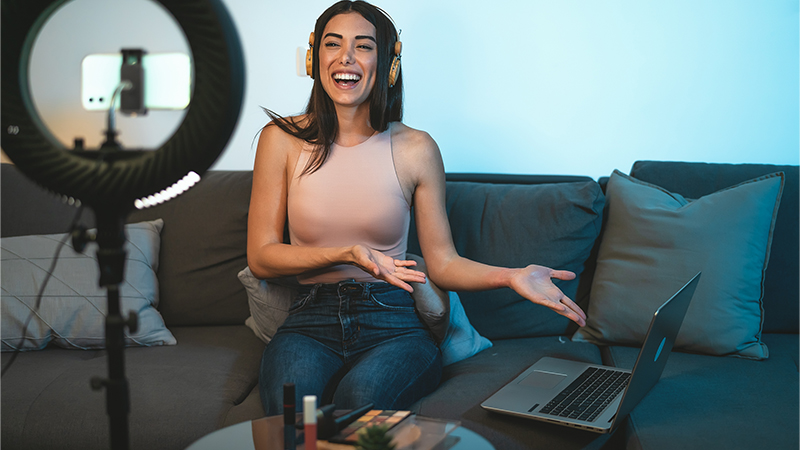




Artificial intelligence is transforming almost every facet of business, and the influencer marketing sector is no exception. One study found that in 2023, 76% of marketing agencies and 52% of influencers used some form of AI to analyze data, find influencer partners, and support content creation.
For the latter, AI has the power to optimize the content to better mirror what the target audience are actively seeking, ensuring they receive highly personalized messaging that is more likely to convert them. Another significant benefit of the technology is its ability to help brands track and measure the performance of their influencer marketing campaigns, and take analytics-driven decisions accordingly.
Whist B2B marketing on LinkedIn is often prioritized, brands may be missing a trick by not considering TikTok, too. The platform’s vast reach (1.5 billion monthly active users and counting) makes it an attractive prospect for even the most niche of businesses.
The platform’s short-form video format lends itself to streamlined “how-to” guides, allowing B2B businesses the opportunity to engage prospects around the potential of their tools. Furthermore, its largely Millennial and Gen Z audience demographic aligns with the new influx of B2B decision makers.
89% of C-Suite marketers said they believe using employees as influencers holds immense value for their businesses. These employees act as an “organic” brand voice, reaching industry peers and potential customers in a more authentic way.
It’s also an extremely cost-effective marketing strategy; businesses can start with something as simple as encouraging their employees to share informative posts on LinkedIn.
B2B sales have traditionally relied on carefully nurtured relationships with buyers. Looking ahead, as the B2B industry continues to digitalize, influencer marketing will play an increasingly integral role in helping businesses within the sector to maintain the level of trust and authenticity that human connections create, aided by new and exciting innovations in AI.
By pairing localized thought leadership with modern AI performance tracking, growing exporters can build predictable pipeline growth that bridges geographic and regulatory distances smoothly.
When expanding your business across international borders, having an experienced global logistics partner is also key to fulfilling the brand promises your influencers showcase.
DHL Express provides the international shipping networks and customs brokerage expertise required to ensure a seamless delivery experience for your corporate clients worldwide.
Open a DHL Express Business Account for dedicated support from the international shipping experts.
1 – The State of Influencer Marketing 2024: Benchmark Report, Influencer Marketing Hub
2 – Marketing Essentials Lab, November 2023
3, 6, 9 – The Global Rise of B2B Influencer Marketing, Ogilvy, 2024


 Share
Share