

1 - Consultancy.uk, April 2023
2 - Shopify, December 2021
3 - McKinsey, AI Multiple, January 2023
4 - Wakefield Research, Supply Chain Dive, April 2023
5 - Stream
6 - OptimoRoute

So much of your customers' experience with your business is impacted by your logistics. From understanding what it means and its importance in business, to exploring different types of logistics and processes, here's how to optimise your logistics strategy.
The right strategy ensures that the right products get to the right customers at the right time - all whilst saving your business money. And to help you achieve this, DHL Express can support your business needs with efficient and reliable shipping solutions.
Jump to the section most relevant to you
Logistics, by definition, refers to the planning framework that enables businesses to store and transport their goods to their customers. It covers procurement, inventory management, distribution, warehousing, transportation, packaging and risk management. Logistics management also involves identifying distributors and suppliers and ensuring their effectiveness.
For small and medium-sized businesses (SMBs) — particularly those within the e-commerce sector — logistics should be considered essential to managing costs, staying competitive and getting products to customers on time.
Moving products and/or materials from one place to another
Getting raw materials from suppliers to your business
Dependent on reliable transportation
Reliant on warehousing and storage
Part of the wider supply chain management process
Worthy of serious investment
An afterthought or something to be left to the last minute
The supply chain. It’s a part of the supply chain
Logistics management is the strategic side of logistics, involving the procurement, movement, and storage of materials, parts, and finished inventory (goods and services) from their point of origin to point of consumption.
The ‘Seven Rs’ is a popular way to define the goal of logistics management:
Get the right product
At the right quantity
At the right time
In the right condition
To the right place
And to the right customer
At the right cost
Get all of these, well, right, and your business will stay competitive.
Getting your logistics strategy right takes more than ticking boxes. Read our practical guide on how to improve your logistics operations with tips that make a real difference.
In business, logistics refers to the efficient management of how goods, materials, and information move through the supply chain — from origin to destination. It’s about coordinating storage, transportation, and delivery to ensure everything arrives where it’s needed, when it’s needed.
Think of it this way: logistics is the engine that drives your supply chain, making sure everything runs smoothly and efficiently. It's about finding the best suppliers, managing your inventory like a pro, and getting your products to your customers quickly and affordably.
Effective logistics can give your business a serious competitive edge, helping your business to reduce costs, improve customer satisfaction, and ultimately boost your bottom line.
While "logistics" and "shipping" are often used interchangeably, there's a key distinction between the two.
Logistics focuses specifically on moving and storing goods within your business' control. This includes activities like packaging, transportation, inventory management, and warehousing. It's about optimising these processes to ensure a smooth and efficient flow of goods within your own operations.
Shipping, on the other hand, is simply the act of transporting goods from one place to another. It's a vital part of logistics but only one piece of the larger process.
Sometimes logistics is confused with "supply chain", which refers to the wider chain of goods and materials before they land with your business.
Supply chain = the bigger picture. The entire network of activities involved in the sourcing and procurement of raw materials, conversion of those materials into finished goods, and the distribution of those finished goods. Your business may only have control over a part of the supply chain.
Logistics = this covers the packaging, transportation, inventory management and storage of supplies and products.
Logistics isn't one-size-fits-all.There are a variety of options,, each with its own focus and purpose. Let's break down a few of the types:
Inbound logistics is when you get the supplies your business needs to create products or services. Think of it as the starting line of your supply chain. It involves managing the flow of goods and materials from your suppliers to your production facilities or warehouses. This includes things like choosing the right transportation, keeping track of inventory, and building strong relationships with your suppliers.
Outbound logistics is where the magic happens — getting your finished products into the hands of your eager customers. This involves everything from picking and packing orders to shipping them out and making sure they arrive on time and in perfect condition. Efficient outbound logistics keeps your customers happy and coming back for more.
Sometimes things don't go as planned, and products need to come back. That's where reverse logistics comes in. It refers to managing returns efficiently, whether for repairs, replacements, or recycling. A smooth reverse logistics process can turn a potentially negative customer experience into a positive one.
Don't want to handle all the logistics yourself? That's where third-party logistics providers (3PLs) come in. These companies manage various aspects of your supply chain, like warehousing, transportation, and even customer service. They can be a valuable partner, especially for businesses growing quickly or needing extra support in certain areas.
Here are some examples of how logistics works in action, keeping those goods and resources flowing within industries across the globe.
With online shopping booming, e-commerce logistics has become necessary, and expected, in the retail landscape. It means getting those online orders to customers quickly and efficiently, from managing inventory and warehousing to picking, packing, and shipping packages. E-commerce logistics often involves complex systems and technologies to handle high volumes of orders and ensure customer satisfaction.
With online shopping continuing to grow, getting your e-commerce logistics right has never been more important. Read our e-commerce logistics tips to make sure your fulfilment process is working as hard as your marketing.
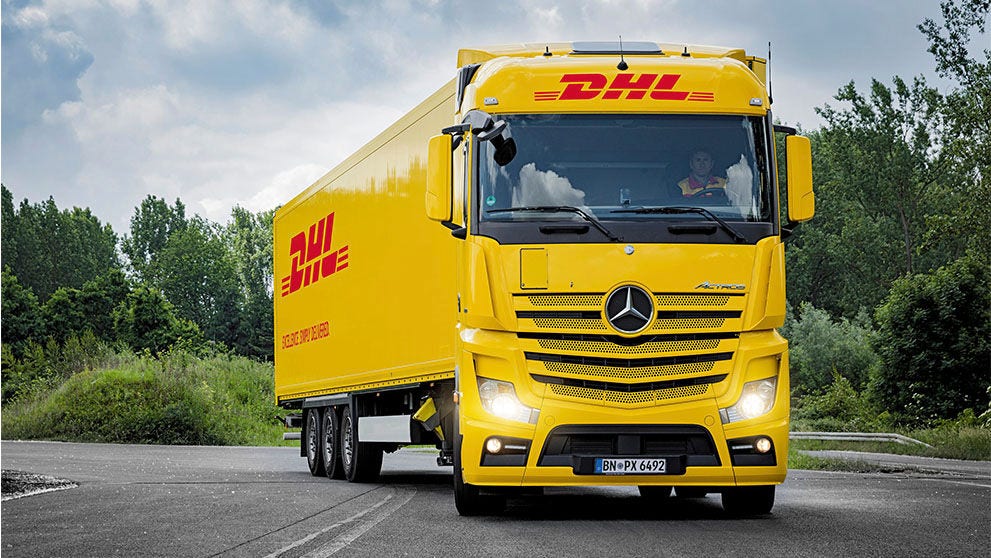
Freight logistics involves moving large quantities of goods, typically over long distances. This includes by truck, train, ship, and aeroplane, transporting everything from raw materials to finished products. Careful planning and coordination is needed to ensure efficient and cost-effective movement of goods, often across borders and through complex supply chains.
Shipping internationally adds another layer of complexity, from customs documentation to duties and taxes. Our international shipping FAQs cover the most common questions businesses face.
Freight forwarders are like the travel agents of the shipping world. They don't actually move the goods themselves, but they act as experts in navigating the complexities of international shipping. They help businesses find the best transportation options, handle customs duty documentation, and ensure compliance with regulations, which can make the whole process smoother.
Order fulfilment is the last leg of the logistics journey. It means getting those orders out the door and into the hands of your customers quickly and accurately. This covers picking and packing the right products, printing shipping labels, managing inventory, and working with carriers to ensure timely delivery. Efficient order fulfilment is crucial for customer satisfaction and repeat business.
Logistics has a series of interconnected steps that ensure goods flow smoothly from origin to destination. Let's break down five key processes:
Procurement kicks off the logistics journey and sets the stage for a smooth and cost-effective operation. It gets the right materials and products from your suppliers, ensuring you have what you need to create your own offerings. Expect to source reliable suppliers, negotiate favourable terms, and manage the flow of goods into your business from here.
Once you have your goods, you need a safe and organised place to keep them — storage. This involves considering factors like space requirements, storage conditions, and accessibility to ensure your goods are readily available when needed.
Inventory management means keeping track of your stock levels and ensuring you have the right amount of product at the right time. It's a balancing act — you don't want to run out of popular items, but you also don't want excess inventory taking up valuable space and tying up your capital.
This is where things get moving! Order picking and dispatch involves picking the right items from your inventory, packing them securely, and preparing them for shipping. Efficient order processing ensures accurate and timely deliveries, keeping your customers happy and your business running smoothly.
The final step in the logistics process is transport and delivery. This involves choosing the best transportation methods to get your products to their final destination, whether by road, rail, sea, or air. It also includes optimising delivery routes, tracking shipments, and ensuring timely and efficient delivery to your customers.
Recent research shows that supply-chain disruptions are still a major drain on UK businesses, with issues such as delays, capacity constraints and elevated costs continuing to bite. For example, a 2024 report by TMX Global estimated that UK companies may be losing over £12 billion annually1 in revenue due to logistics and supply-chain issues.
Beyond the financial impact, logistics directly shapes the customer experience. The efficiency of your logistics operation is closely linked to your customers’ experience with your business. Take inventory management, for example: did you know that 37% of online consumers who encounter an out-of-stock message will shop with another brand?2 There’s also the transportation of the goods, the packaging, the delivery — all aspects of logistics which, if you don’t get right, will impact your customers somewhere down the line. With online orders, the courier is the face of your business at your customers’ door. In short, without a smooth logistics process, businesses risk delayed shipments, dissatisfied customers, and lost sales opportunities. Time to take your logistics seriously!
First, you need to establish your goals in order to find the best paths to reach them. They may be:
…or most likely a combination of all! For SMBs and startups where profit margins are already very small, reducing costs is often a priority.
It’s perhaps unsurprising that artificial intelligence (AI) will play a big part in optimising your logistics. According to a study by McKinsey3, AI has helped businesses improve logistics costs by 15%, inventory levels by 35%, and service levels by 65%. Let’s take a look at how automated technology can be applied to some of your key logistics features.
AI, analytics, and automation are making waves in the logistics sector. Find out how AI is reshaping logistics and last-mile delivery and what it means for your business
In a survey by Wakefield Research, 73% of retailers said they struggle with inventory demand forecasting, whilst 65% said they have difficulty tracking inventory through their supply chain4.
As your business grows, automating your inventory management is crucial for meeting your lead times and fulfilling KPIs. By integrating inventory management software, you can:
Track, in real time, every item that arrives to or leaves your warehouse
Monitor your inventory turnover rate to see where customer demand isn’t being met or where you’re overstocking
Utilise sales data from multiple channels for more accurate demand forecasting
Automate procurement management so reorders are automatically triggered when products are running low
Better organise your warehouse according to stock availability
Track rates across different suppliers to find the best deals
Reduce human error by automating stock-taking and generating reports
All products you offer must be stored, packed, and transported with consistency from your warehouse or distribution centre so they’re delivered in the right condition to your customers. Here are some tips:
Look at your Picking Accuracy rate: i.e., the percentage of correct orders from the total number of orders. Customers returning incorrect products will cost your business money — and most likely lose you their repeat business! Knowing this will help you set KPIs to measure improvements against.
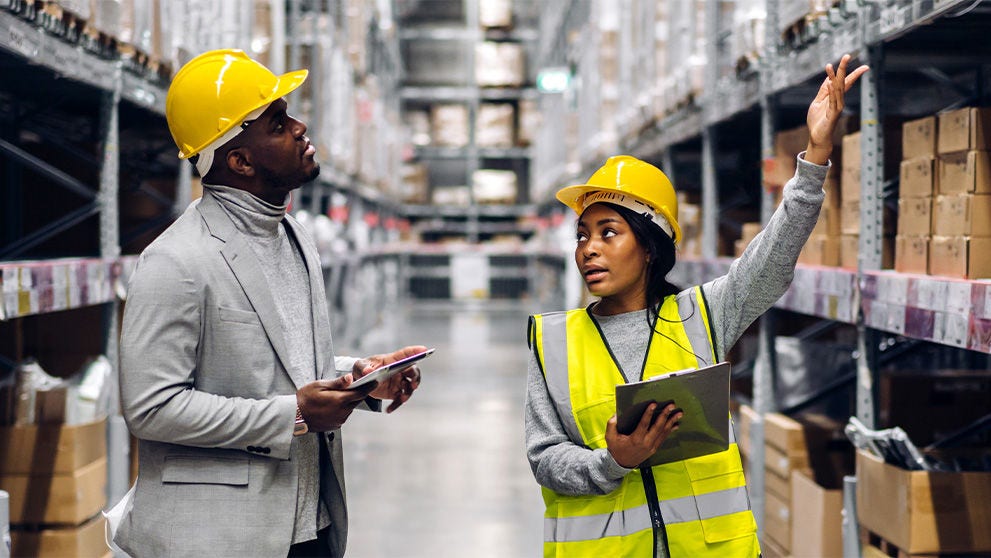
Review your warehouse layout: It sounds obvious, but something as simple as placing your best-selling products close to the sorting, packing and shipping stations will reduce your staff’s walking time. Sales and marketing data, and looking ahead to peak sales periods, will help your business strategically allocate space for in-demand inventory.
Welcome the robots: DHL’s benchmark Logistics Trend Radar has tipped indoor mobile robots as an innovation set to transform the industry.. These robots use real-time path planning to find the most efficient routes around warehouses to reduce costs in order of fulfilment. With technology moving quickly in this area, could they be right for your business?
The transportation of your goods will be a significant part of your business’ logistics outgoings, so making even minor tweaks here can save you money. Look at your Average Delivery Time and your On-Time Delivery Rate — these metrics will help you identify where your weaknesses are.
For businesses delivering goods in their own vehicles, intelligent route planning software is essential. Companies like Stream5 and OptimoRoute6 work with clients to help them plan, optimise and schedule the most efficient delivery and collection routes based on all locations, total route times, real-time traffic, and vehicle capabilities. All of which means goods will always get from A to B in the most efficient way, significantly saving time and costs.
Sending your products out to customers in excessive and unnecessary packaging will not only lose you sustainability points, it will also cost your business money. Wondering how to pack a parcel properly? The key is in efficient packaging — well-packaged products will take up less space in your warehouse and during transportation, so, remember, less is more!
Your Order Accuracy rate is the metric to pay attention to here. Failed delivery attempts will cost your business money, increase your transport emissions, and lead to unhappy customers. The solution is to offer your customers plenty of delivery options at checkout, or en-route via a courier, so that they can choose the one which is most convenient for them. Allowing them to select a two-hour delivery time slot on their chosen day, and the option to leave the package with a neighbour or in a safe space, or deliver to a parcel locker, are all examples that will improve your first-time delivery success rate.
Though many large businesses will handle their logistics in-house — for example, owning transportation vehicles and warehouse facilities — smaller businesses will often outsource their operations to meet customer demand. Businesses of all sizes rely on expert logistics providers for international deliveries.
The scale ranges from first-party logistics (1PL) — which involves just two parties, the goods and the customer, e.g., a flower shop delivering to its customers using its own vans — to 5PL, an innovative solution which has emerged in recent years to meet the increasing demands of the e-commerce sector.
Logistics leader DHL Express offers a range of solutions to meet the needs of SMBs and e-commerce businesses, including 360 fulfilment covering picking, packing and delivery. Those partnering with DHL also benefit from the company’s regional and global distribution networks, which can help businesses meet same and next-day delivery promises, and international delivery, at competitive rates.
To explore exactly what each of the PL models entail — and identify the right one for your business’ needs — check out DHL Express’ dedicated guide.
Logistics means getting the right stuff to the right place at the right time — and DHL Express is here to help you do just that. From handling different types of logistics management, like inbound, outbound, and even reverse logistics, to streamlining every function of logistics, we’ve got you covered. Whether it’s speeding up deliveries or controlling costs, DHL Express offers tailored solutions to fit your business.
Sign up for a DHL Express account today, and let’s get your logistics running like clockwork!
AI is transforming logistics across the entire supply chain. Key applications include demand forecasting - analysing sales trends to keep stock levels optimal - warehouse optimisation, where AI directs picking routes and automates sorting, and route optimisation for last-mile delivery, which reduces fuel costs and improves on-time rates.
For smaller businesses, many of these capabilities are now accessible through logistics partners and third-party platforms without significant in-house investment. The businesses embracing these tools now will be better positioned to compete on speed, cost, and reliability as the technology continues to mature.
Logistics and supply chain management are closely related, but they're not the same thing. Logistics refers specifically to the planning, movement, and storage of goods - getting the right products to the right place at the right time. Supply chain management is the bigger picture. It encompasses everything from sourcing raw materials and managing supplier relationships, through to production, logistics, and ultimately getting goods into customers' hands.
Reverse logistics is the process of moving goods backwards through the supply chain - from the customer back to the retailer, manufacturer, or disposal point. The most familiar example is product returns, but it also covers repairs, refurbishment, recycling, and resale of end-of-life goods.
For businesses, it's no longer just an operational headache - it's a competitive differentiator. Customers expect hassle-free returns, and how you handle them directly affects loyalty and repeat purchases. A well-designed reverse logistics process also reduces waste and supports sustainability goals, making it worth planning from the outset rather than treating as an afterthought..
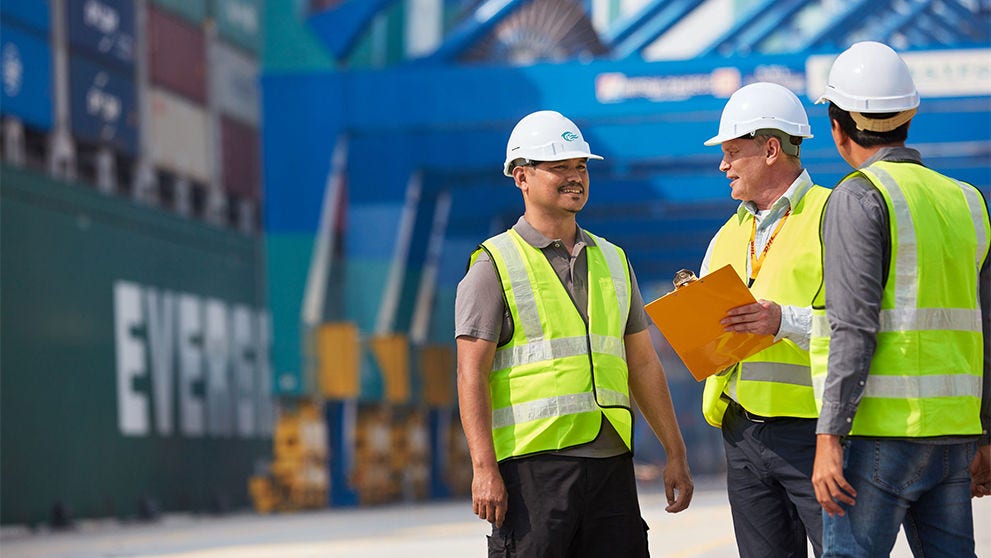
Logistics nodes are anywhere that goods are received, stored, or shipped. They are the physical locations that serve as hubs for the movement of goods and services, such as warehouses, distribution centres, transportation hubs and retail stores.
They can also be virtual nodes such as online ordering systems, software platforms, and data warehouses. Logistics nodes are integral to the efficient flow of goods and services throughout the entire supply chain.
Today, more than ever, businesses like yours are looking for more agile and flexible supply chains. Driven by customer demands, tighter timelines and more digital transactions, new technology like superfast 5G is rapidly digitalising the world of logistics. Here are 5 ways 5G can help your logistics and potentially supercharge your productivity.
Discover how DHL can help your business optimise its logistics by speaking to one of our experts. Begin your journey, here.
A cold chain is a temperature-controlled logistics network that keeps goods within a specific temperature range throughout their entire journey. It is essential for products whose safety or quality depends on staying within defined temperature limits, including fresh food and dairy, pharmaceuticals and vaccines, and certain industrial chemicals.
1 - Consultancy.uk, April 2023
2 - Shopify, December 2021
3 - McKinsey, AI Multiple, January 2023
4 - Wakefield Research, Supply Chain Dive, April 2023
5 - Stream
6 - OptimoRoute


 Share
Share