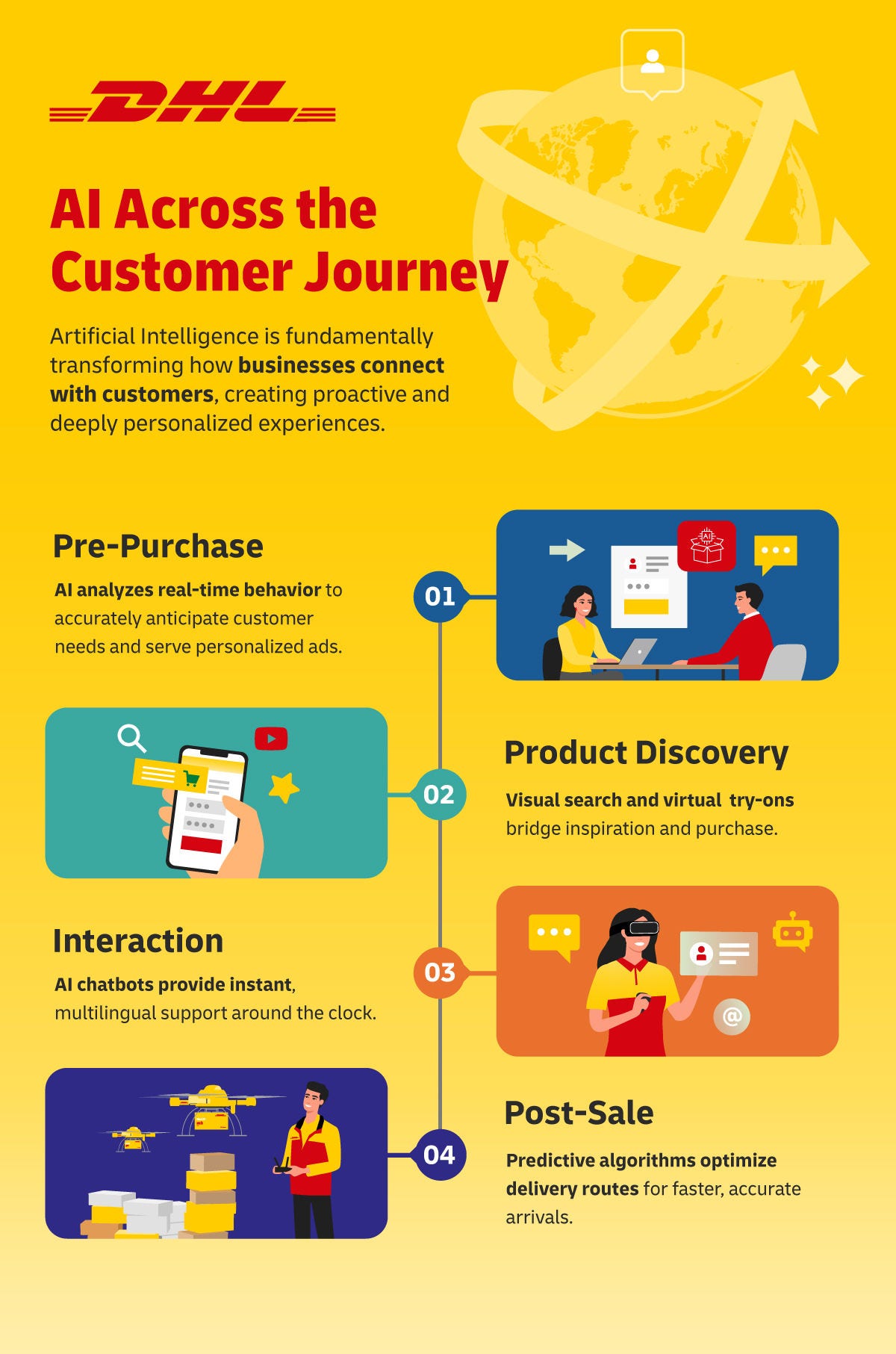
Artificial Intelligence is reshaping the global retail landscape, and Japan stands at the forefront of AI adoption in Asia-Pacific's sophisticated e-commerce ecosystem.1 As one of the most significant developments in modern e-commerce trends, AI is fundamentally transforming how businesses connect with customers, moving from reactive selling to proactive, deeply personalized experiences that honor Japan's legendary standard of omotenashi customer service.
The numbers tell a compelling story. The global AI in e-commerce market is projected to reach at least $16.8 billion by 20302, with Japan among Asia Pacific's leaders in AI deployment at 82%1. Japanese retail giants are already pioneering this transformation: Rakuten uses AI-powered recommendation engines to personalize online shopping experiences for over millions of users daily3, while Uniqlo leverages AI for inventory optimization and analyzes 30 million customer feedback points annually for insights4. These examples of AI use demonstrate that artificial intelligence in e-commerce isn't a distant possibility—it's happening now.
For Japanese businesses competing in today's market, the question isn't whether to adopt AI e-commerce solutions, but how quickly they can be implemented. In a nation where customers expect seamless, intuitive service as a baseline, AI-powered e-commerce represents your competitive edge. Let's explore how the applications of AI are redefining every touchpoint of the customer journey.
Hyper-personalization: Anticipating the Japanese consumer
Traditional personalization relied on broad demographic categories like age, location, and purchase history. But with AI, personalization goes far deeper. Modern AI systems analyze real-time behavior patterns, interpreting micro-signals like browsing speed, scroll depth, time spent on product pages, and even cursor movements to understand customer intent.
AI then translates this behavioral data into actionable personalization through recommendation engines. By combining behavioral intelligence with seasonal trends and social signals, machine learning algorithms can accurately suggest products. These AI-powered recommendation engines don't just increase conversion rates; they fundamentally improve the shopping experience by reducing decision fatigue and surfacing products customers didn't know they needed.
This shift represents how AI will change e-commerce: it transforms commerce from a passive catalog into an intelligent partner that anticipates customer needs before they're articulated. For Japanese consumers accustomed to exceptional service, this technology delivers personalization at a scale that would be impossible through human effort alone.
AI-driven customer service: 24/7 support in any language
In Japan, where customer expectations for service quality are exceptionally high, instantaneous and accurate support isn't a luxury; it's a requirement, making customer service AI transformative.
AI-powered chatbots and virtual assistants are now used in customer service to handle common inquiries with near-human understanding, manage order statuses, process returns, and provide instant troubleshooting. Modern systems employ natural language processing to understand customer intent, even when queries are phrased imprecisely, learning from each interaction to continuously improve response accuracy. These intelligent systems can also detect sentiment and escalate frustrated customers to human agents before dissatisfaction escalates, ensuring customers always receive the appropriate level of support. Instead of replacing traditional customer service representatives, AI will augment our understanding of the industry, handling routine queries while freeing human agents to address the complex, emotionally sensitive issues that require empathy and creative problem-solving.
Using AI in e-commerce customer support means your business can provide consistent, accurate responses 24/7, even outside traditional business hours when many Japanese consumers prefer to shop. For businesses expanding internationally, AI translation tools enable seamless support conversations across languages, critical for Japanese businesses selling beyond their borders.
The visual revolution: AI enhances product discovery
Beyond personalized recommendations and conversational support, AI is transforming how customers discover and interact with products. By making product interactions more engaging and reducing purchase uncertainty, AI plays a critical role in lowering return rates and fostering customer confidence.
Visual search technology exemplifies this transformation, allowing Japanese consumers to upload photos of products they've seen, in magazines, on social media, or in physical stores, and instantly find similar items, bridging the gap between inspiration and purchase. The impact on the fashion industry has been particularly dramatic with Virtual Try-On (VTO) technology. Using AI and augmented reality, VTO lets customers visualize how clothing, accessories, or even furniture will look in their specific context, dramatically reducing the uncertainty that drives returns among Japanese online fashion shoppers.
Generative AI further enhances product discovery by creating comprehensive, localized, and engaging product descriptions at scale. For businesses managing thousands of SKUs, this technology ensures every product features compelling, SEO-optimized copy that speaks directly to Japanese customer preferences and search behavior, making the entire catalog more accessible and appealing.
From purchase to delivery: AI's role in post-sale experience
The customer journey doesn't end at payment. In fact, for many Japanese consumers, the delivery experience significantly influences their perception of your brand and likelihood of repeat purchase. This is where AI trends in logistics directly enhance customer satisfaction.
AI enables predictive Estimated Time of Arrival (ETA) updates based on real-time traffic patterns, weather conditions, and delivery route optimization. Instead of generic "delivery between 9 am-5 pm" windows, customers receive accurate, constantly updated delivery timeframes, even notifications when their package is five minutes away.
Behind the scenes, AI streamlines logistics by optimizing last-mile delivery routes. These algorithms process countless variables: traffic patterns, delivery density, package priority, and driver location, to determine the most efficient routes in real-time. The result? Faster delivery, reduced costs, and fewer frustrated customers wondering where their package is.
When businesses partner with logistics providers like DHL Express, AI-driven fulfillment tools integrate directly with e-commerce platforms, creating end-to-end visibility that transforms the entire customer experience from click to delivery.
Challenges & ethical considerations
While AI offers tremendous opportunities, Japanese businesses must navigate certain critical challenges responsibly. Customer data privacy stands paramount among these concerns. Under Japan's Act on the Protection of Personal Information (APPI), businesses must maintain transparent data practices and obtain proper consent, ensuring customers feel confident that their behavioral data is protected and used ethically.
Algorithmic bias presents another critical consideration. Because AI systems learn from historical data that may contain unintended biases, Japanese businesses should regularly audit their AI systems to ensure recommendations and pricing don't inadvertently discriminate against specific customer segments.
Perhaps most importantly, customer trust is earned through transparency. Being clear about when customers are interacting with AI versus humans builds this trust. Many Japanese consumers appreciate AI efficiency but want the option to reach human support when needed. The key is balance—using AI to enhance service while maintaining the human touch that defines omotenashi.

Embracing the AI era of Japanese e-commerce
AI is not just another passing e-commerce trend; it's a foundational technology for staying competitive in Japan's sophisticated market, and businesses thriving today are those that recognize AI as essential infrastructure, not optional innovation.
For ambitious Japanese businesses ready to grow, the question isn't whether to adopt these technologies, but how to implement them strategically to maintain competitive advantage while honoring the principles of exceptional customer service that define Japanese commerce.
The transformation AI brings extends beyond the digital storefront to every aspect of your operations, including logistics and fulfillment. Integrating AI into your supply chain can enhance the customer experience from click to delivery, ensuring that the excellence you promise online translates into real-world satisfaction.
Open a DHL Express Business Account today to explore global shipping and logistics solutions that integrate seamlessly with the latest AI-driven fulfillment tools, and discover how the right partnerships and technologies can accelerate your business growth in Japan's dynamic e-commerce landscape.


 Share
Share
Similar Stories