

An HS code is short for Harmonized Commodity Description and Coding System.

Navigating International Trade: A Complete Guide to HS Codes
Navigating cross-border trade has grown increasingly complex over the years as the explosion of goods transported globally has become more diversified. To avoid your packages being delayed at customs, you need to supply accurate data—and that means listing the products you are sending in detail. The Harmonized Commodity Description and Coding System (widely known as the HS code) is designed to label all existing goods in precise detail, making it easier to identify products internationally.
An HS code is a standardized numerical classification used by border authorities worldwide to classify the exact type of goods you are shipping.
These specific identifiers were created by the World Customs Organization and are utilized by automated clearance systems in almost every country. As customs and government bodies now have a common point of reference to apply regulations based on HS codes, they are able to create a standard for treating each HS category consistently. This uniformity creates a more organized importing/exporting structure and a reliable framework for countries wanting to implement new regulations.
The responsibility of providing the HS code is always that of the shipper, so you’ll need to carry out a thorough product catalog search when you ship. You can find the appropriate HS code for your product via your country’s government website, or by using DHL’s intuitive, all-in-one portal, MyGTS (My Global Trade Services).
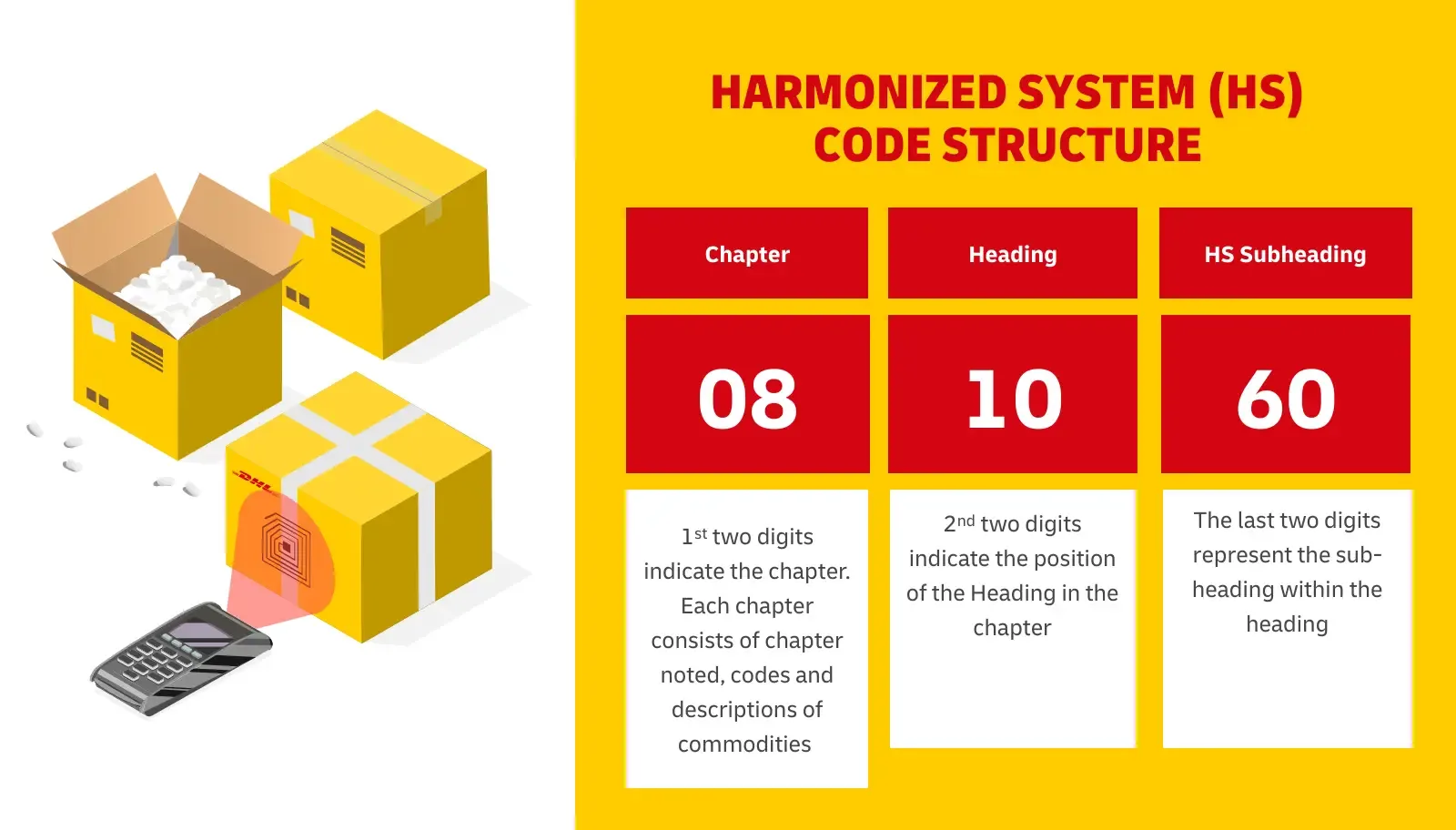
The foundational core of each Harmonized System digit sequence always consists of six digits. The first two digits identify the chapter under which the HS code falls. There are a total of 21 chapters; each chapter provides a description to generalize the category. The next four digits comprise the heading and sub-heading within that specific section.
Member nations of the Association of Southeast Asian Nations follow the ASEAN Harmonized Tariff Nomenclature (AHTN)—where the initial six digits remain identical to the international HS codes—but feature two supplementary figures at the end that further break down the sub-headings. Merchandise shipped within this regional bloc normally requires the eight-digit AHTN classification, though the standard six-digit HS codes are also considered valid.
Commercial enterprises are encouraged to indicate the appropriate product classification numbers in their shipping documents to ensure a uniform border processing experience every time. There are thousands of different tariff lines available, as each commodity is further categorized into very specific descriptions.
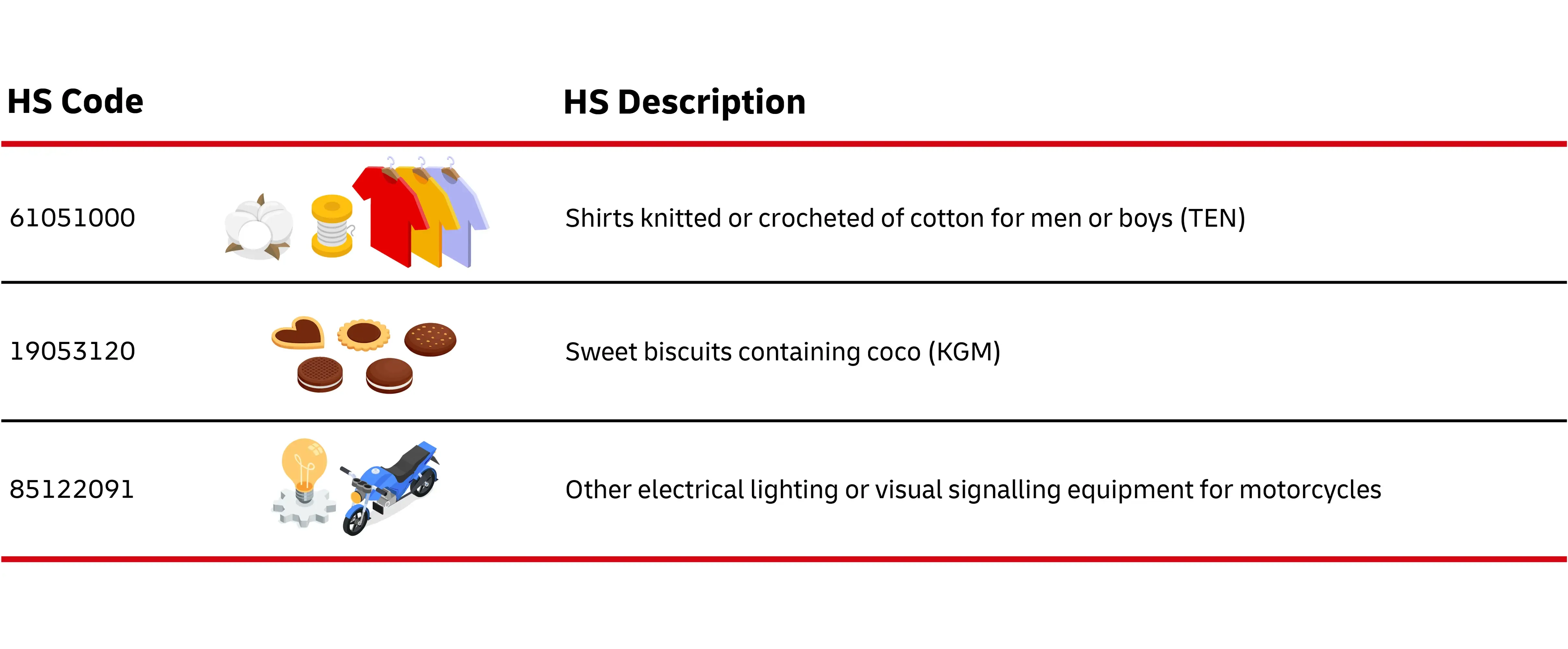
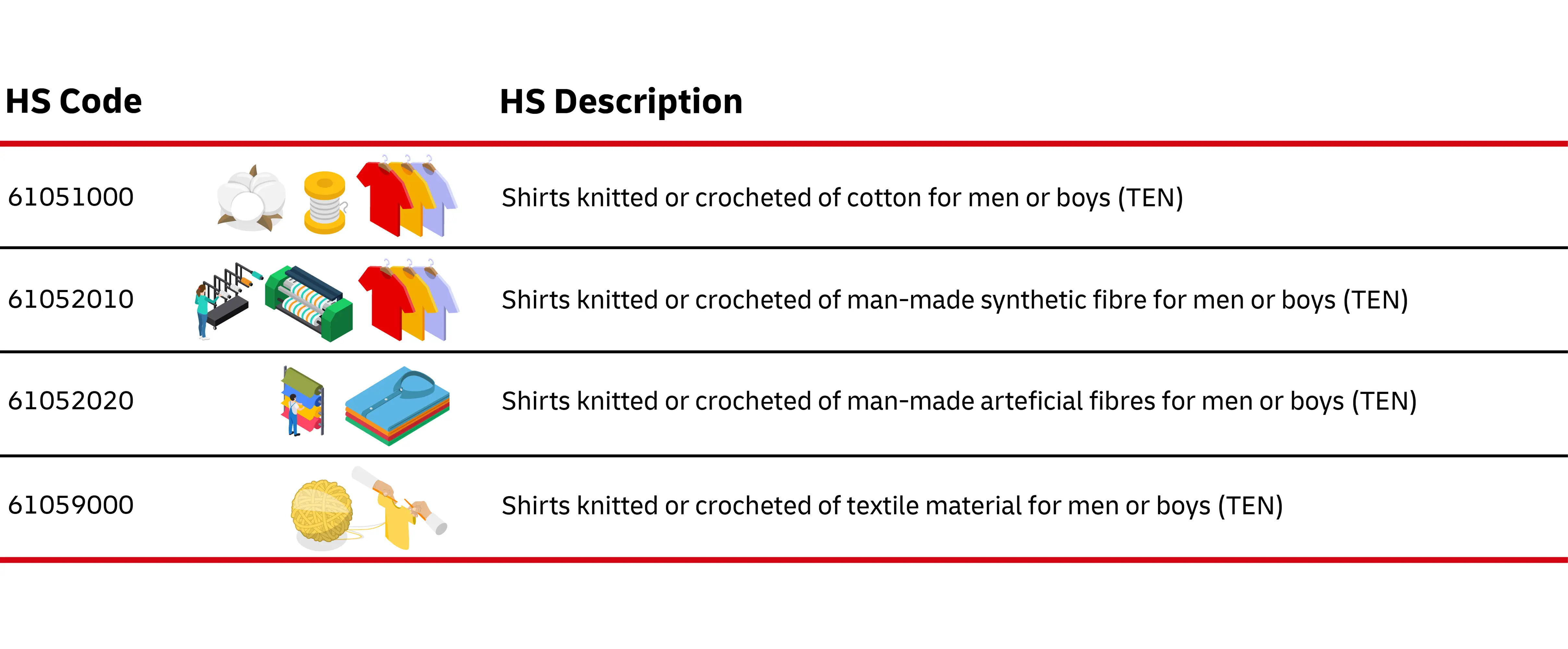
For instance, the system includes distinct classifications for men’s shirts made of cotton, men’s shirts made of synthetic fibers, and men’s shirts made of other textiles—an extensive breakdown that generates roughly 10 different codes for a single apparel category like ‘shirt’.
On certain occasions, specific products might feature overlapping classifications where multiple tariff entries seem relevant. When this occurs, the exporter is required to choose a single designation—typically selecting the option that provides the most accurate reflection of the physical item.
The customs department of almost every country has already defined different regulations based on different classifications. When you include the incorrect code, there is a risk of unintended duties and taxes, higher restrictions on importing, or in the worst-case scenario, rejection of entry into the destination country.
While including your product’s specific tariff classification is not a mandatory requirement on international paperwork, featuring it directly on your commercial invoice remains highly advantageous. This practice guarantees a completely transparent and precise breakdown of your cargo, which is especially critical for highly technical components. Let’s analyze the example of listing “Television Parts” as the item description on your invoice. Although this phrasing seems simple enough, television parts are actually split into numerous independent tariff categories based on the technical specifications of each individual piece. To formally declare the precise component you are transporting, you must utilize the correct six-digit code to properly categorize the freight.
An HS code is short for Harmonized Commodity Description and Coding System.
An HS code serves as an internationally standardized classification system for commercial goods, utilizing a structured framework of unique identifiers and standardized terminology.
The initial six digits of any HS code are universally standardized by the World Customs Organization. This framework establishes a unified base for identifying commodities on a global scale. However, certain nations, particularly across the Asia-Pacific region, often append two extra numbers to provide more detailed product categories tailored to their local commerce requirements.
Using incorrect HS codes can trigger significant operational and financial complications for your business:
Unexpected Border Fees: Your cargo might be subject to higher or unforeseen customs tariffs and assessments.
Compliance and Import Barriers: The merchandise may face stricter regulatory oversight and entry restrictions than intended.
Transit Disruptions or Denied Entry: In the worst-case scenario, customs officials may hold up or even reject your shipment entirely at the border.
While not strictly mandatory, it's highly recommended. Providing the HS code on your invoice and other shipping documents ensures accurate customs clearance, minimizes delays, and helps avoid potential issues with duties and taxes.
The World Customs Organization routinely evaluates and modifies global tariff classification sequences every five years to align with technological advancements, shifting international trade trends, and newly developed commodities.
If you encounter difficulties determining the appropriate tariff classification number, you can take the following steps:
Get in touch with local border enforcement agencies: These government entities frequently offer online databases and administrative assistance to help shippers.
Leverage digital classification engines: Numerous web-based platforms, such as the proprietary interactive lookup resource developed by DHL Express, can streamline your search for the precise entry sequence.
Request professional guidance from our team: Our global logistics professionals possess deep expertise in international trade frameworks and can assist you in preparing all necessary customs documentation— Apply for an account today.
Absolutely. These classification numbers are utilized globally to categorize merchandise across all international logistics operations, regardless of whether the commodities are undergoing import entry or being dispatched as an export shipments.
Although both systems serve to categorize merchandise, HS codes are utilized globally for classifying goods in international trade, regardless of whether they are being imported into a country or exported from it. In contrast, Schedule B codes operate exclusively within the United States and are applied strictly to outbound items.
No, every individual item requires its own specific classification number that precisely represents its distinct features and material makeup.
Managing a massive volume of international shipments, Mexico’s leading logistics provider handles thousands of documents, parcels, and cargoes every single day. Its global network of international specialists are well-versed in customs regulations and HS code variations so that every shipment moves to its destination without delay.
Whether you're importing or exporting, choosing to open a DHL business account means all the hassle of customs will be taken care of for you, delivering a premium international parcel delivery service so you can focus on your business.


 Share
Share