
1 – World Finance

Shipping internationally can feel like a maze for SMEs—especially with import tax, import duty, and customs fees to manage. One wrong step, and costs soar or shipments get tied up at borders.
This guide breaks it all down. We’ll show you how to navigate customs with ease, manage duties and taxes, and keep your shipments moving—so you can focus on growing your business across borders.
Import duty—frequently referred to as customs duty—is a tax that customs authorities charge on goods when they cross international borders. It’s a way for governments to generate revenue, but it also helps protect local industries by making imported products more expensive than those produced domestically.
In practical terms, that means when your business ships goods from one country to another, customs officials may apply an import duty before your shipment is released for delivery.
These terms frequently cause confusion, but they actually serve different functions. Here’s a straightforward guide to help you distinguish between them:
Import duties Also known as customs duties, these are taxes levied on imported goods. The exact percentage varies based on the product type, its declared value, and its country of origin.
Tariffs Tariffs are a specific sub-category of import duty applied to particular types of goods. They typically function as a percentage of the item’s value and are frequently implemented to help protect local industries.
Import taxes This serves as the overarching term for all fiscal assessments placed on imported goods. It encompasses import duties and tariffs, as well as additional global trade fees like VAT or local sales tax.
Here’s a quick overview of the primary regulatory taxes your business might encounter when managing international shipments:
A regulatory tariff charged on imported goods, usually based on the commodity’s classification, value, and country of origin.
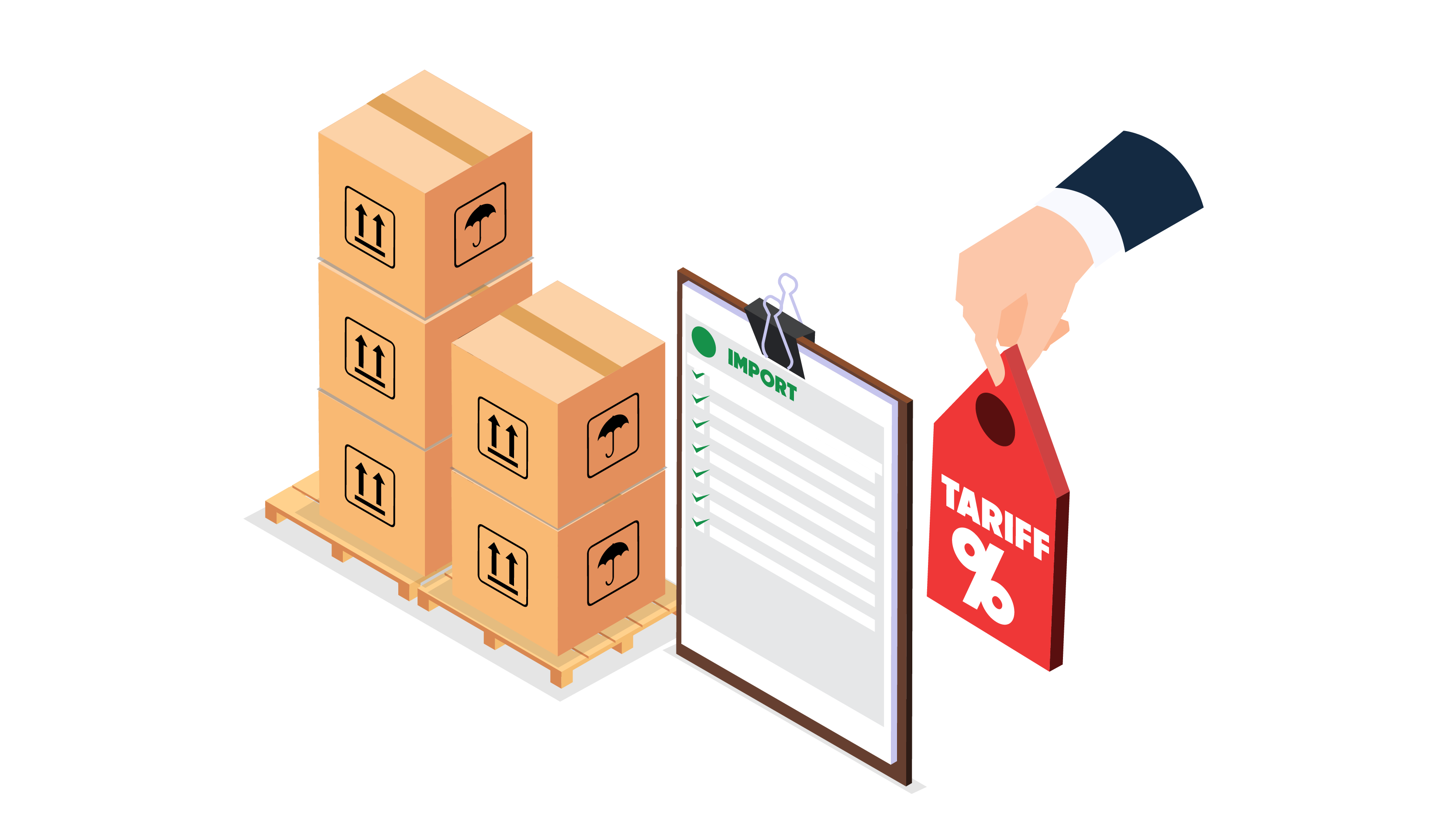
A specific kind of customs duty applied to certain products, often used to protect local industries or balance trade between countries.

A tax on specific goods such as alcohol, tobacco, or fuel—often applied on top of standard import duties.
A consumption tax added to most goods and services, including imports, in many regions around the world.

An extra charge on imported goods sold at unfairly low prices, implemented to protect domestic producers.
Import duties and taxes add to your total shipping cost, so it’s smart to factor them in early. They increase the landed cost of your products, and missing or incorrect paperwork can lead to delays, storage fees, or even fines.
For the end consumer, these extra line items can drive up retail pricing—or result in an unexpected collection request upon package arrival if the expenses are not managed transparently from the start. Determine ahead of time whether to build these expenses directly into your retail pricing structure or charge them separately, and establish a clear strategy to communicate these expenses so buyers are never surprised.
The import taxes and duties you will need to pay are determined by a few critical variables, including:
The value of the goods (including insurance and shipping fees)
The detailed physical description of the items
The country or region of origin
The destination country’s specific tariff rates
The goods’ HS Code(s)
Many nations maintain a minimum order value—widely referred to as a de minimis threshold—below which goods can enter without additional taxes or duties. When the value of your package surpasses this threshold, the standard fiscal assessments become applicable.
Good news: You don’t have to guess these amounts. By utilizing DHL’s MyGTS tool, you can easily calculate import taxes and duties for your shipment before it leaves, helping you plan pricing, avoid surprises, and keep your customers happy.
The de minimis threshold—the monetary benchmark beneath which goods can enter duty-free or tax-free—varies widely by country, exerting a significant influence on your international parcel delivery service and logistics.
United States: Historically one of the highest at USD 800, but that duty‑free exemption ended as of August 29 2025.
Australia: Still presents one of the more generous thresholds at AUD 1,000 (approx. USD 670–700) for many imports.
Some countries have extremely low or effectively zero duty‑free thresholds, meaning all imports may be subject to duties/taxes regardless of value.
The European Union applies VAT from “€0” on many goods, even when duties don’t apply until around €150 for certain items.
Some markets charge significantly higher average tariff rates, which can add a meaningful cost and complexity for e‑commerce sellers. The Bahamas, for instance, has an average tax rate of 18.56% on imported items 1.
If you’re shipping into such markets, expect higher landed‑cost add‑ons for duties – they’ll impact pricing, margin, and customer experience.
On the flip side, some countries maintain very low average tariffs, making them more accessible from a cross‑border shipping cost perspective. For example, Switzerland and Japan both report tariff averages below 2–3% 2.
That means fewer duties to factor in, which gives you slightly more flexibility on cost and logistics for your customers.
When shipping merchandise across international borders, identifying the party responsible for settling import taxes and duties can get complicated. Let 's break down.
Carrier Your shipping service—for example, DHL Express—acts strictly as a customs broker. It handles the technical compliance paperwork so your goods clear customs smoothly, and initially advance any import taxes and duties on your behalf to prevent transit bottlenecks.
The Exporter and Importer In cross-border B2C sales, your Mexican business operates as the exporter, while your international buyer functions as the importer. Who actually pays duties is strictly determined by the Incoterms—the globally recognized shipping rules agreed between exporter and importer. The two most common options for corporate accounts are:
Delivered Duty Paid (DDP): You, the seller, cover shipping costs along with all import taxes and duties upfront.
Delivered Duty Unpaid (DDU): You handle shipping, but the customer pays taxes and duties when goods arrive.
DDU might seem cheaper for your business, but surprise charges at delivery can frustrate customers – and hurt repeat sales.
The Importer of Record The designated party responsible for import compliance, legal paperwork, and paying duties is called the Importer of Record. In fully integrated DDP shipments, that’s you; in standard DDU setups, it’s the customer.
💡 Pro-Tip from the Customs Team: Selecting inaccurate Incoterms is one of the most common cause of shipping delays globally. Setting up a commercial workflow with an expert like DHL Express ensures your shipments are smooth, compliant, and entirely stress-free.
Draft precise international paperwork: Accurate commercial invoices, waybills, and specific export forms are vital to achieve effortless customs clearance.
Know rules: Research your destination country’s customs regulations, import taxes, and duties to factor costs into your pricing.
Protect and pack your goods: Utilize correctly dimensioned crates, clear labeling, and premium materials to safeguard your inventory from transit damage and reduce your shipping costs.
Check for restrictions: Ensure that your specific products are not restricted from entry, and obtain any required government authorizations or compliance documents ahead of time.
Plan for taxes and duties: Decide who pays (you or the customer) and leverage your logistics partner to calculate or even pay duties upfront to avoid delays.
Choose a customs brokerage: Partnering with a global logistics leader like DHL Express grants your company direct access to worldwide trade specialists, predictable expenditure metrics, and digital classification resources designed to accelerate border clearance.
💡 For fast international shipping, open a DHL business account today.
1 – World Finance


 Share
Share