


1 - Cision PR Newswire, March 2021
2 - Shopify, December 2021
3 - McKinsey, AI Multiple, January 2023
4 - Wakefield Research, Supply Chain Dive, April 2023
5 - Stream
6 - OptimoRoute



 Share
Share

A significant portion of the customer journey relies heavily on how you manage your distribution operations. Here’s how to fine-tune your operational approach to ensure merchandise reaches the correct buyers exactly when expected—while simultaneously cutting operational expenses.
Logistics refers to the structural blueprint that enables businesses to house and move their inventory to their target market. It encompasses sourcing, inventory management, distribution, warehousing, transportation, packaging, and contingency planning.
For growing enterprises – particularly those within the digital retail sector – these processes must be prioritized to trim expenditures, maintain a market edge, and deliver orders to customers on time.
Logistics is:
The physical transfer of cargo and/or materials from one location to another
Sourcing fundamental components from suppliers to your business
Inextricably linked to dependable transit networks
Dependent on strategic warehousing and storage facilities
A core element of the wider supply chain management process
Deserving of significant capital allocation
Logistics is not:
An afterthought or a secondary priority to handle at the eleventh hour
The entire supply chain, but rather a vital component within it
A function your business needs to manage internally – it can easily be outsourced
Sometimes logistics is confused with ‘supply chain’, which refers to the wider chain of goods and materials before they land with your business.
Supply Chain= the complete commercial picture. It represents the all-inclusive network of activities involved in handling international shipments, managing warehouse storage, executing automated order processing, and streamlining cross-border distribution. By partnering with a global leader, this complex grid becomes a reliable ecosystem that helps your brand dynamically scale.
Logistics = the part of the supply chain your business directly controls and covers the packaging, transportation, inventory management and storage of your supplies and products.
Industry research found that over 60% of North American and European companies lost up to 20% in revenue recently due to logistical disruptions¹. Granted, unforeseen macroeconomic shifts created an unprecedented year, but it still highlights how important an optimized framework is to a business’s bottom line – especially for scaling SMBs and start-ups with tight profit margins.
Furthermore, the efficiency of your business logistics services is closely linked to your customers’ experience with your business. Take inventory management, for example: did you know that 37% of online consumers who encounter an out-of-stock message will shop with another brand?² There’s also the transportation of the goods, the packaging, and the final delivery… all aspects of a professional logistics operation which, if you don’t get right, will impact your customers somewhere down the line. It is time to elevate your corporate execution!
This discipline represents the strategic dimension of logistics, involving the sourcing, movement, and storage of materials, parts, and finished inventory (both goods and services) from the point of origin to the point of consumption.
The ‘Seven Rs’ framework serves as a popular way to define the core purpose of logistics management:
Get the right product
In the right quantity
At the right time
In the right condition
To the right place
And to the right customer
At the right cost
Mastering each of these variables ensures that your business will stay competitive.
To begin, you need to define your targets in order to identify the best paths to reach them. They may include:
Lowering operational expenses
Driving higher revenue
Minimizing excess inventory
Enhancing customer delivery times
…or most likely a combination of them all! For growing companies and startups where profit margins are already narrow, reducing costs is often the primary priority.
It comes as no surprise that artificial intelligence (AI) is playing a transformative role in optimizing your logistics. According to a study by McKinsey*, AI has helped businesses improve logistics costs by 15%, inventory levels by 35%, and service levels by 65%. Let’s examine how automated technology can be applied to some of your key logistics features.
According to a study conducted by Wakefield Research, 73% of retailers admitted to facing challenges with inventory demand forecasting, while 65% expressed difficulty monitoring stock levels across their entire operations*.
Transitioning to automated systems remains essential for hitting target lead times and fulfillment KPIs. By deploying an integrated platform, you can:
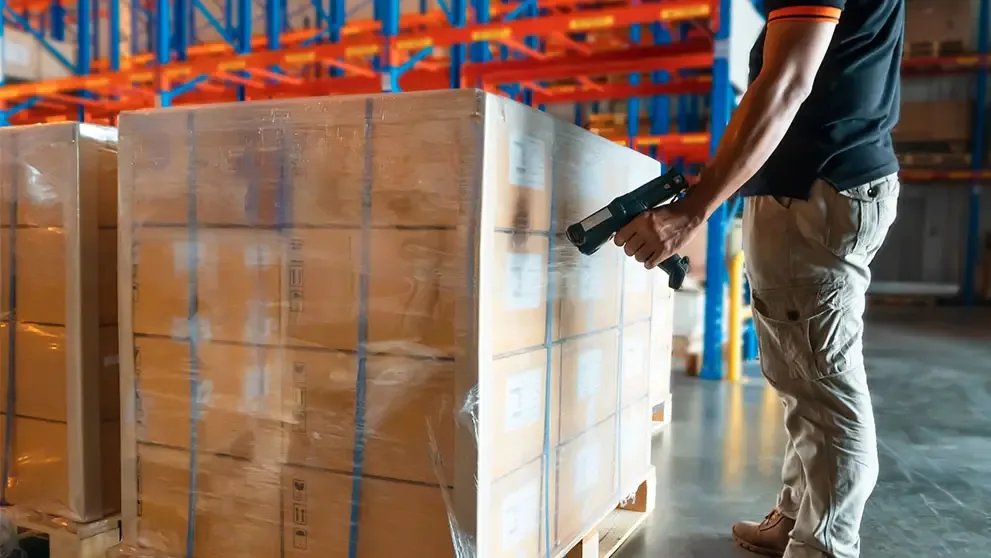
Monitor every product entering or exiting your facility with instant updates
Analyze stock rotation metrics to pinpoint supply shortages or costly gluts
Leverage multi-channel commercial analytics to build highly precise predictive models
Streamline purchasing operations so that replenishment orders launch automatically as stock diminishes
Optimize floor layouts based on real-time item availability
Compare vendor pricing structures to secure optimal commercial terms
Minimize manual mistakes through digital audits and automated reporting tools
Every item in your catalog needs to be securely warehoused, prepped, and dispatched uniformly from your warehouse or distribution center so it reaches buyers in flawless shape. Consider these best practices:
Evaluate your order picking accuracy—which measures flawless fulfillments against total volume. Processing returns for wrong items drains capital and severely damages brand loyalty. Establishing this baseline allows managers to define clear performance milestones.
Review your warehouse layout. Position top-moving SKUs adjacent to consolidation and dispatch lanes to drastically reduce employee transit times. Commercial trend analytics and peak season forecasts should dictate how space is allocated for high-velocity stock.
Welcome the robots. DHL’s benchmark Logistics Trend Radar – now in its sixth edition – notes that autonomous indoor navigation units are poised to revolutionize global supply chains. Utilizing dynamic path optimization, these units chart ideal routes within distribution hubs to lower order fulfillment costs. This could be a game-changer for your operation.
Moving freight represents a major portion of your operational overhead, meaning minor adjustments can yield substantial savings. Closely monitor mean transit times and your punctual arrival rate to accurately diagnose operational bottlenecks.
If your enterprise manages a private fleet, advanced routing software becomes indispensable. Platforms like Stream 5 and OptimoRoute 6 specialize in helping operators coordinate, refine, and map out optimal transit paths considering geographic distribution, duration windows, live traffic patterns, and payload limits. This ensures cargo moves smoothly while saving hours and capital.
Sending your products out to customers in excessive and unnecessary packaging will not only lose you sustainability points, it will also cost your business money. Well-packaged products will take up less space in your warehouse and during transportation, so, remember, less is more!
Your first-time delivery success rate is the critical benchmark to monitor. Missteps here multiply fuel emissions, drain resources, and alienate clients. To counter this, provide buyers with flexible checkout options. Features like short, designated drop-off windows, secure signature waivers for neighbors, or parcel locker access significantly optimize your fulfillment success.
While numerous enterprise organizations manage fulfillment workflows internally – such as operating proprietary commercial fleets and storage complexes – smaller ventures frequently must delegate these operations to external providers to satisfy consumer expectations.
Operational frameworks span from first-party logistics (1PL) – where a merchant directly manages product transit to the buyer, such as a local floral shop executing residential deliveries via its own vans – all the way to 5PL, a highly integrated model that emerged recently to handle the escalating requirements of the e-commerce sector.
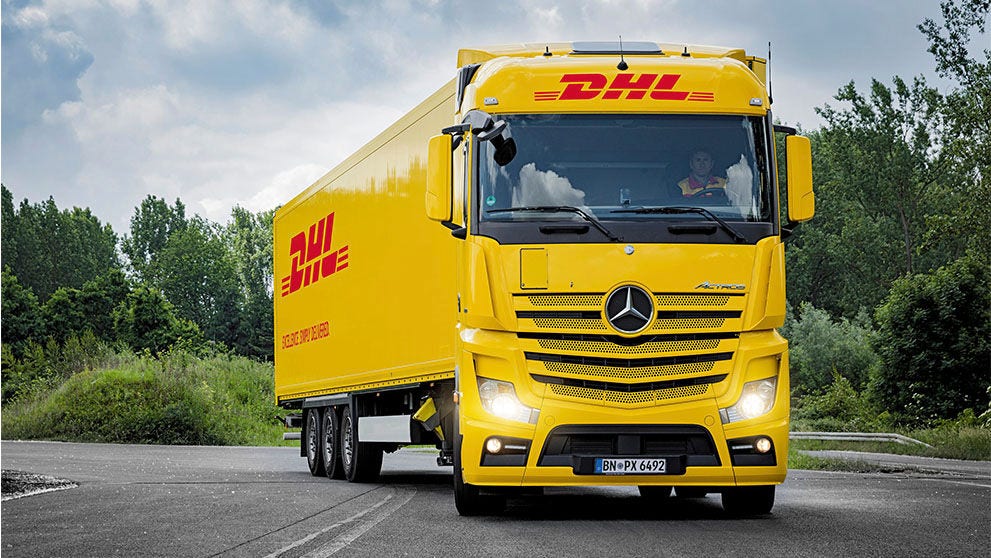
The global industry leader, DHL, provides a versatile suite of solutions engineered specifically for small enterprises and digital brands, featuring comprehensive fulfillment options that manage sorting, packaging, and final dispatch. Brands that align with DHL also benefit from the organization’s vast localized infrastructure, enabling them to honor same-day and next-day delivery commitments at highly optimized price points.
To explore exactly what each of these operational models involves – and identify the ideal structural choice for your commercial goals – review our dedicated guide.
A logistics node represents any touchpoint where inventory is accepted, securely housed, or dispatched. These physical facilities function as central crossroads for global distribution, encompassing localized storage facilities, distribution centers, transit terminals, and commercial retail storefronts.
Additionally, these intersections can take digital forms, including cloud-based purchasing architectures, system platforms, and data repositories. These essential connection points ensure the seamless movement of items and service streams across a globalized commercial network.
In the current market, forward-thinking enterprises are actively seeking more agile and flexible supply chains. Driven by evolving user expectations, tighter timelines, and surging electronic transactions, cutting-edge infrastructure like superfast 5G is rapidly digitalizing the entire sector.
Here are 5 ways 5G can help your logistics to supercharge productivity when deploying shipping for your online store or shipping packages abroad from Mexico.
Begin your journey here.
1 - Cision PR Newswire, March 2021
2 - Shopify, December 2021
3 - McKinsey, AI Multiple, January 2023
4 - Wakefield Research, Supply Chain Dive, April 2023
5 - Stream
6 - OptimoRoute
Share