



Every year, logistics providers and delivery companies transport 25 billion packages(1) across the globe. It all runs seamlessly on a carefully coordinated network of air, land, and sea transport. But the hardest part—and the most critical element for businesses like yours—is the ‘last mile’.
In this article, we break down why the last mile is so challenging, what decisions you can make to improve last-mile delivery, and what the long-term outlook looks like for this vital final leg of the logistics process.
What is last-mile delivery?
Last-mile delivery, sometimes referred to as ‘final mile’, is the movement of goods from a transportation hub to their final destination—typically a buyer's residential address.
But why is the last mile so challenging? Complex networks of rail, sea, road, and air transport transfer billions of parcels around the world every year. These are controlled and highly orchestrated networks, using dedicated routes and specialized vehicles over long distances. But the crucial final leg of the journey—the last mile from a local hub or distribution center to the consumer's residence or office—doesn’t have anything close to the same level of control, consistency, and scale.
Local delivery drivers need to navigate unpredictable traffic, road closures, route optimization challenges, weather conditions, and a wide range of unpredictable obstacles.
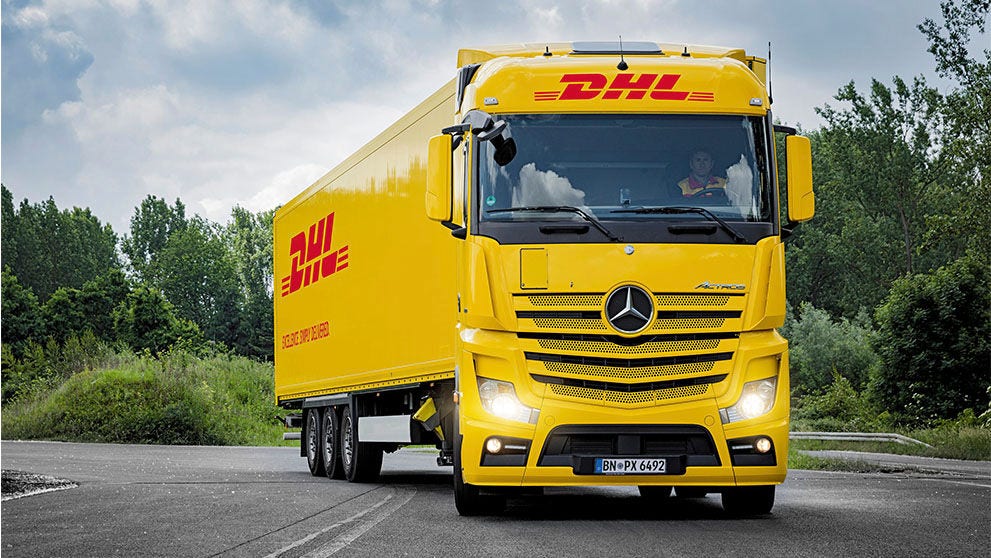
From the delivery company’s perspective, it’s the least efficient part of the logistics cycle: van drivers have to make many short stops often delivering just one parcel at a time (compared to the many thousands of items a single aircraft carries). And, for most e-commerce deliveries, they need to do this while acting as the only customer-facing human in the entire supply chain.
Navigating the hurdles of logistics for e-commerce and last-mile delivery
E-commerce continues to grow, meaning an increasing volume of packages to deliver
A deficit of delivery employees
Inherent inefficiencies like congested traffic, mechanical failure, and only one drop-off at a time
Consumers now expect next day, same day, or even 1- or 2-hour deliveries
It’s partly why last-mile delivery accounts for 41% of the total cost of delivery (2). Despite these hurdles, even the smallest merchants must now compete with the high standards set by global providers who have made next-day delivery the norm and same-day delivery viable.
So how can your business excel in last-mile delivery?
You have options. You can choose a logistics partner that offers services to help reduce your costs while delivering the seamless service they want and expect.
How to optimize last mile delivery
Here are four factors you need to consider:
1. Take advantage of localized storage and dark stores
Many businesses are strategically distributing their stock among small regional warehouses, focusing on popular and seasonal items to reduce the distance for final delivery. According to Roy Hughes, EVP Network Operations Europe, DHL Express, several 'power cities', such as New York and Beijing, are "facilitating and driving this localization trend".
Small and medium enterprises may lack the resources for their own warehouses, but some logistics firms offer access to unused temporary storage. This enables e-commerce brands to store inventory and offer same-day delivery to local customers.
2. Use ad hoc resources for faster delivery
This localized shift has simultaneously amplified the demand for freight management operations capable of transporting goods to consumers on the very day they order them. This is where ‘crowdsourced delivery’ comes into play. Extending beyond taxi and food dispatch apps, crowdsourcing works with local, vetted independent operators who can choose to pick up a pending order and hand it over directly to the customer.
It’s a highly effective remedy for the age-old capacity problem: when faced with an overwhelming volume of packages but a shortage of vehicles and drivers, what do you do?
Pickups tailored to the buyer’s schedule: the rise of secure lockers
Other on-demand alternatives feature drop-off locations and storage lockers, which can accept a delivery on behalf of your customer and accelerate the move towards urban localization. DHL’s Packstation, which initially debuted back in 2001, offers a network of automated, 24/7 self-service kiosks spanning more than 3,500 locations in Germany alone.
3. Leveraging smart algorithms and analytics for superior routing and greener deliveries
The crowdsourcing framework remains less than ideal for transporting more expensive, bulkier packages, which is when you will probably want to depend on a highly reliable transport partner. However, heavy-duty deliveries present their own issues, with trucks having to find a suitable unloading spot or navigate smaller inner-city roads. As out-of-route miles account for 3-10% of a driver’s total mileage, suboptimal mapping decisions can add a hidden cost to already expensive services. (3)
The answer is intelligent dispatch mapping
Some sources suggest (4) that drivers and operational scheduling personnel frequently dedicate 3-4 hours a day manually planning their routes.
As these new technologies continue to play an expanding role in improving the last mile, Mei Yee Pang, Head of Innovation, Asia Pacific DHL Customer Solutions and Innovation, emphasizes that it is paramount now to adopt “a data-driven approach in servicing customers.”
No room for human workers?
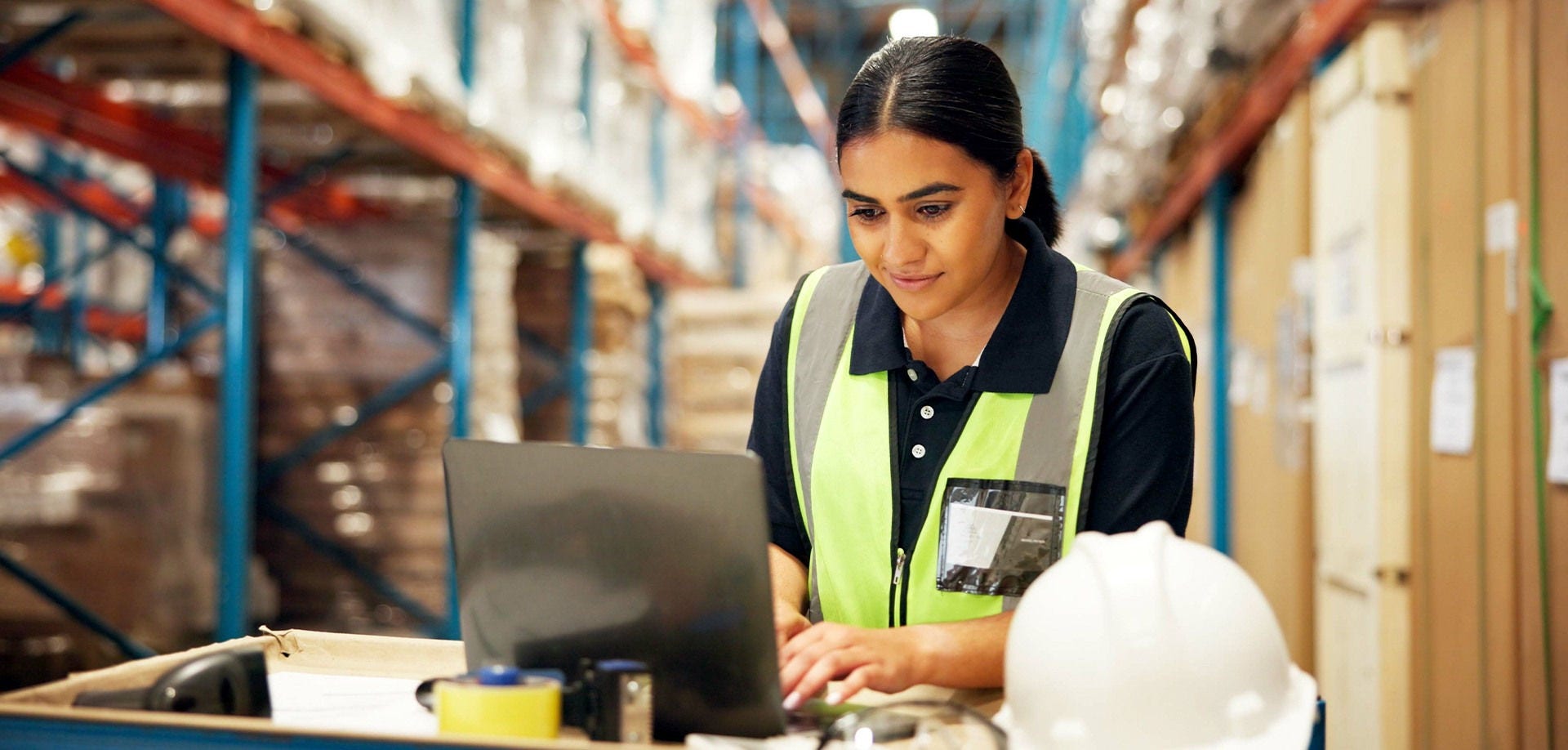
In the distribution centers, AI and robotics are coming together to automate repetitive tasks. However, does that mean humans are no longer needed? Tim Tetzlaff, Global Head of Accelerated Digitalization, DHL Logistics & Distribution: “The more we can use robots to complete repetitive or distant tasks in highly predictable, structured environments, the more we free up our employees to leverage their unique human capabilities.” AI and robots are another tool to help people—not to replace them.
Perhaps most importantly, route optimization AI can reduce carbon emissions from a last-mile road fleet by as much as 25%. Software company Descartes’ route optimization tools have been shown to reduce CO2 emissions by over 552,000 tons and decrease fuel usage by 5% to 25% (5). This creates an incredibly significant environmental impact, all achieved by simply finding the best route.
Deliver your goods via drone or robot
Alternative distribution models are expanding rapidly; indeed, the adoption of intelligent parcel lockers situated within high-foot-traffic public areas like grocery stores and urban centers is increasing by 25% annually.
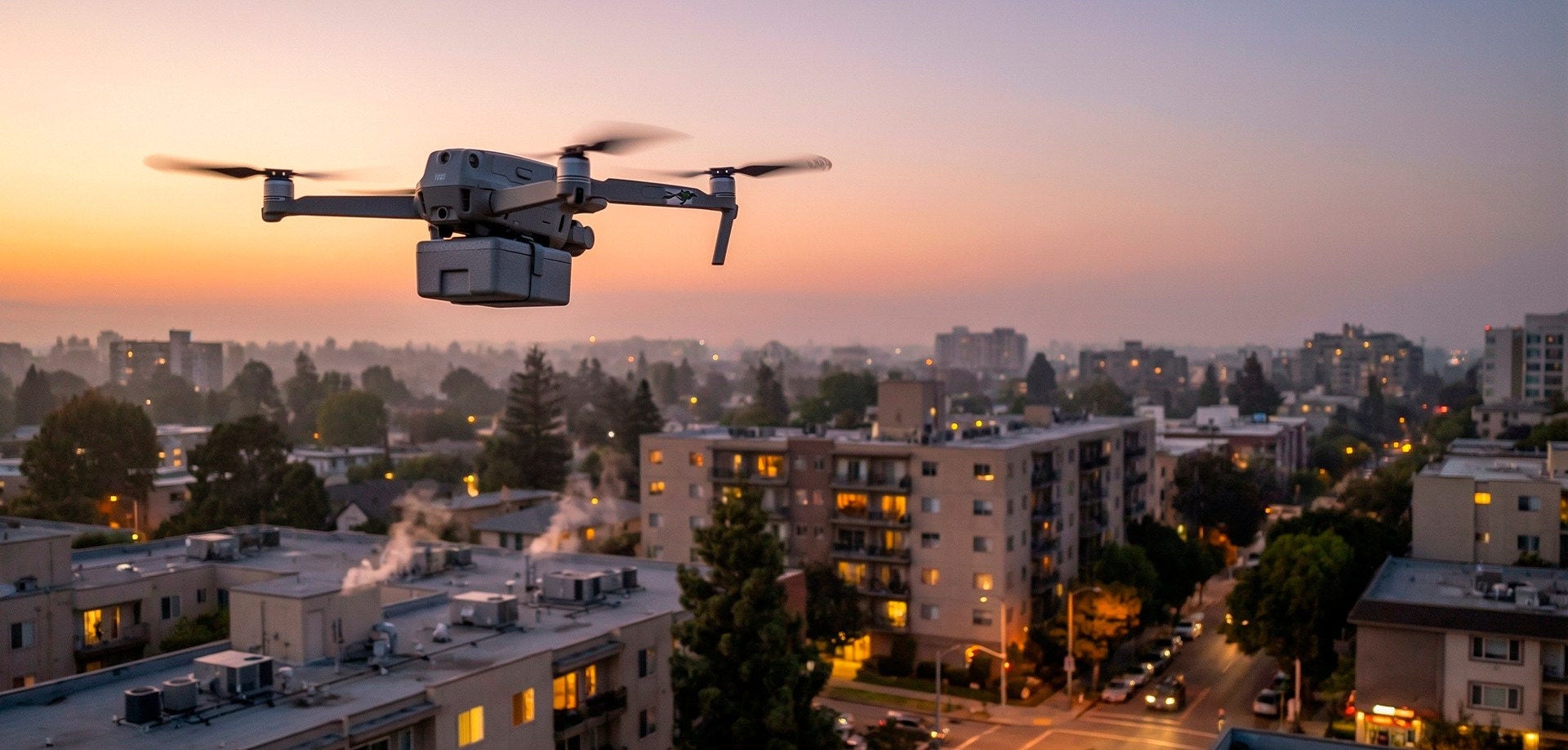
A few pioneering enterprises are currently testing automated delivery using aerial drones and bots. Although unmanned aerial vehicles are primarily utilized right now to transport critical, high-worth medical items like blood or prescriptions, rapid technological breakthroughs have extended their capabilities across the broader logistics landscape. Implementing these systems can alleviate severe supply chain bottlenecks triggered by surging online shopping volumes, gridlocked metropolitan roadways, and a shrinking pool of commercial drivers.
Drones are delivering
DHL executed a highly successful 90-day pilot program for its proprietary Parcelcopter within the German town of Reit im Winkl. Throughout this trial, consumers placed their packages inside the 'Skyport' terminal—the aircraft's automated launching pad—to trigger the dispatch sequence. This configuration offers a swift, uncomplicated solution that streamlines shipping to remote zones lacking advanced infrastructure or locations cut off by rugged terrain like lakes and mountain ranges.
This is far from the only innovative trial taking place across the sector: Bulgaria-based innovator Dronamics engineered a specialized fixed-wing cargo drone capable of hauling a 350 kg (772 lb) payload for immediate, same-day distribution across a maximum range of 1,553 miles (2,500 km). They secured official EU regulatory clearance for these flights, permitting beyond visual line of sight (BVLOS) routes ahead of their full commercial launch. Concurrently, South African innovator Cloudline received authorization from Kenyan officials to trial its autonomous, airship-style vessels, ensuring zero-emission transport of payloads up to 100 kg (220 lb) into hard-to-reach rural communities.
Across the United States, commercial drone provider Zipline obtained official federal authorization as a certified air carrier in 2022, allowing the brand to scale up its automated retail and healthcare delivery services.
Mind that delivery robot…
On the other hand, land-based unmanned vehicles—essentially compact, wheeled rovers—serve as secure, rolling storage lockers that travel along pre-programmed pathways directly to a residence. Recipients get an automated alert upon arrival, letting them securely unlock the onboard compartment to collect their purchase.
Driven by these final-stretch advancements, McKinsey (6) anticipates a future landscape where automated transport networks handle 80% of all package dispatches. This projection aligns with industry data showing that, despite widespread corporate doubt regarding consumer acceptance of automated shipping, 60% of buyers express positive or neutral attitudes toward drone-based drop-offs.
The price problem
Even though deploying these cutting-edge networks demands a substantial upfront investment, 48% (7) of shoppers are willing to pay higher fees for next-day fulfillment, while 23% will pay a premium for same-day drop-offs—a figure that climbs to 30% among younger buyers.
With this emerging generation becoming the primary engine of market spending, a delay of a mere 12 hours can significantly impact a brand's competitive advantage in crowded spaces—a setback you must actively prevent.
Enterprises ought to implement progressive operational changes to satisfy these elevated standards, carefully weighing expenditure against service quality moving forward.
The future of last-mile deliveries
Although the broader market is shifting toward localized, cloud-connected distribution centers to refine final-stage transit, the entire logistics sector remains in a state of continuous adaptation.
Offering his industry forecast, Lee Spratt, CEO of DHL E-commerce Americas, highlighted the critical necessity of “being more agile in adjusting to market trends, maintaining an openness towards learning and reinvention, and promoting a newfound flexibility as a baseline for the transport industry.”
Last mile delivery FAQs
How does last mile delivery work?
Last mile delivery, often designated as final mile delivery, represents the closing phase of your product's movement: routing from a local hub straight to the consumer. Whether your brand relies on fast international shipping or a specialized international parcel delivery service when shipping abroad, the objective remains to transfer packages as affordably, rapidly, and precisely as possible. This final segment relies on ground transit options like vans, cars, or motorbikes, or routes to convenient pickup spaces like local supermarkets and smart lockers. Innovative alternatives are already undergoing field trials, including autonomous ground rovers and aerial drones.
How long does last-mile delivery take?
This timeline varies based on terminal positioning, the precise recipient coordinates, localized congestion patterns, seasonal weather, and overall routing efficiency productivity. While consumers increasingly demand rapid turnarounds, complete transparency and total shipment visibility remain paramount.
How are customer demands reshaping last-mile delivery?
Turnaround times, pricing structures, and overall execution quality now serve as core competitive benchmarks. It is critical to recognize that this final handover is often the sole face-to-face contact a customer has with your business ecosystem, transforming the courier into a direct representation of your brand values. Consequently, organizations must provide diverse delivery services, including expedited overnight options, immediate same-day drop-offs, scheduled delivery days, and sustainable, low-emission routing methods.


 Share
Share

Similar Stories