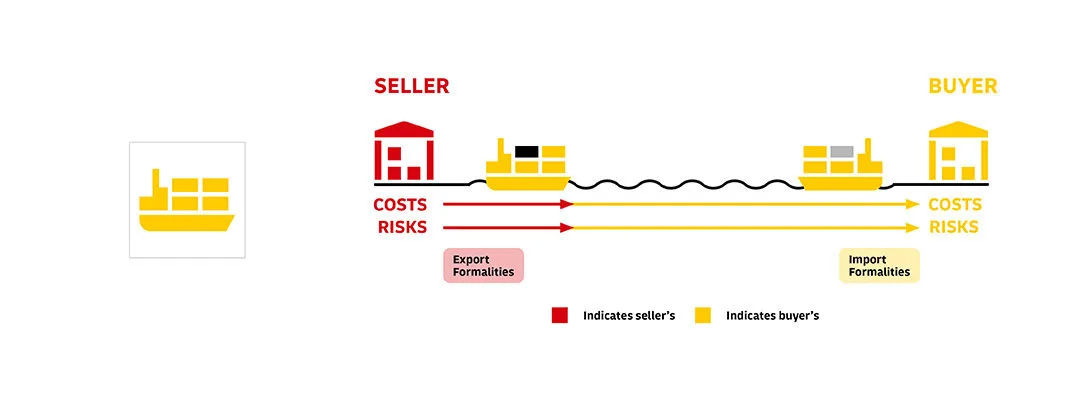
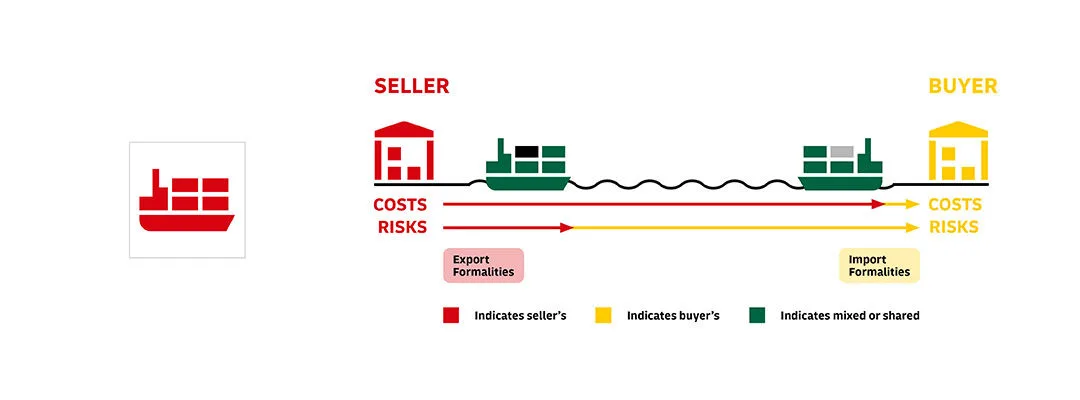
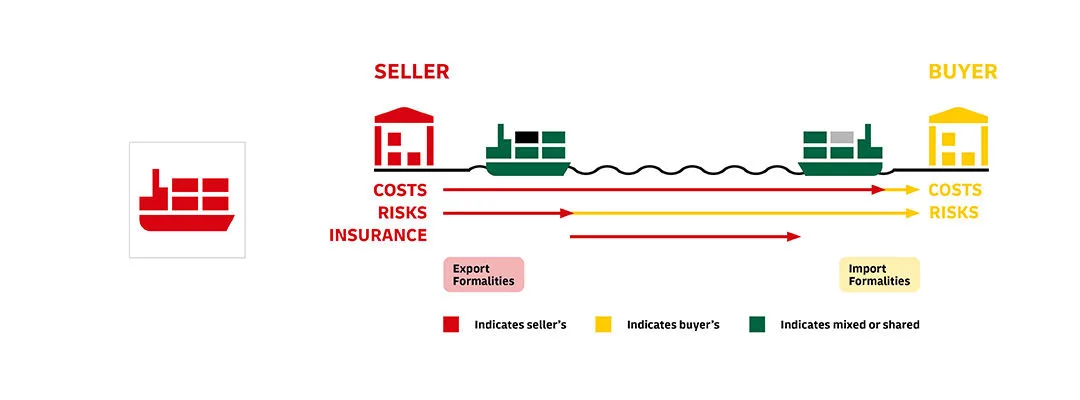


Shipping internationally? A critical concept you’re bound to encounter is “Incoterms®.” In this guide, we’ll decode their significance, breaking them down into plain language. We’ll share examples of Incoterms®, and how they can impact your business's customs clearance process.
What are Incoterms®?
Incoterms® – or “International Commercial Terms” – were established by the International Chamber of Commerce (ICC) to standardize international commercial transactions.
The Incoterms® rules are a globally recognized set of standards, used worldwide in international and domestic contracts for the delivery of goods, clarifying responsibilities between buyer and seller for costs and risk, as well as cargo insurance.
The Incoterms® rules detail the meaning of a series of commercial terms, each designated by three letters, which reflect the practice followed by companies when drawing up contracts for the sale of goods.
Incoterms® help to reduce disputes between buyers and sellers, by defining a uniform set of international trade standards.
Why are Incoterms® important?
Within global trade, Incoterms® provide several benefits:
Standarization: Incoterms® ensure a uniform “language” for international transactions. With all parties working to the same definitions and guidelines, the risk of disputes arising from misinterpretations is reduced.
Clarifies responsibilities: Incoterms® outline who is responsible for transportation, cargo insurance, export and import formalities, payment of duties and taxes, and at what point risk transfers from the seller to the buyer. This helps all parties meet their obligations.
Efficiency: Incoterms® clearly define the trade contract responsibilities between a buyer and a seller, leading to smoother communication and transactions across borders.
Incoterms® explained
Incoterms® are grouped into two categories based on the modes of transport that will be used. There are seven Incoterms® for any mode of transport, and four for sea, land or inland waterway transport.
Each Incoterm® is represented by a three-letter abbreviation. This reflects the practice companies follow when drawing up contracts for the sale of goods.
So here they are: the International Chamber of Commerce’s (ICC) official definition of each Incoterm®.
The seven Incoterms® for any mode of transport
DDP
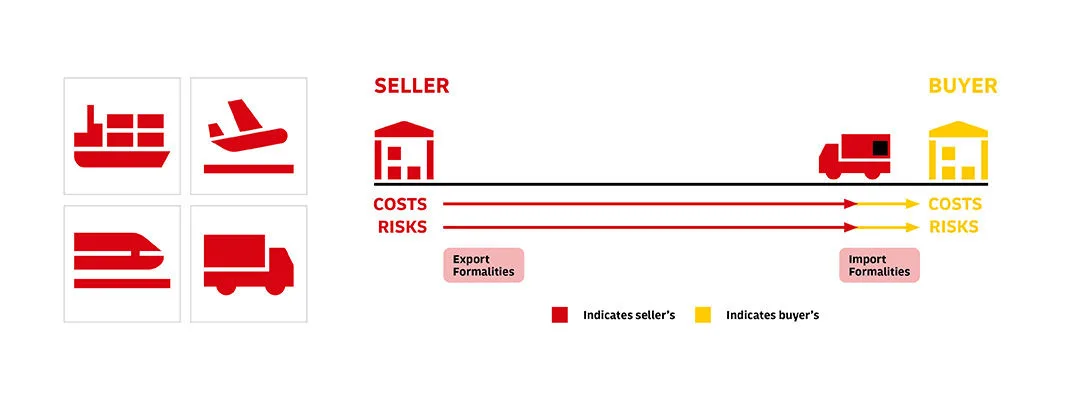
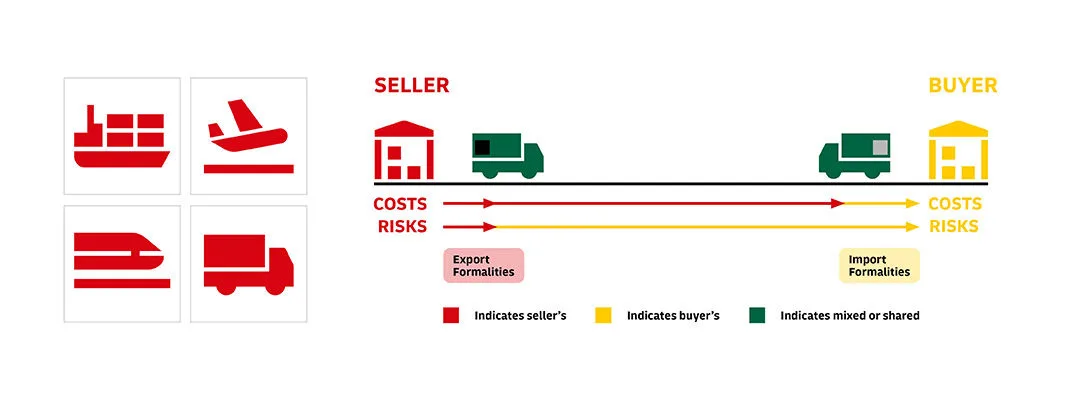
DELIVERED DUTY PAID (DDP) specifies that the seller delivers the goods to the buyer when the goods are placed at the disposal of the buyer, cleared for import, on the arriving means of transport, ready for unloading, at the named place of destination or at the agreed point within that place, if any such point is agreed. The seller bears all risks involved in bringing the goods to the named place of destination or to the agreed point within that place. In this Incoterms® rule, therefore, delivery and arrival at destination are the same.
DAP
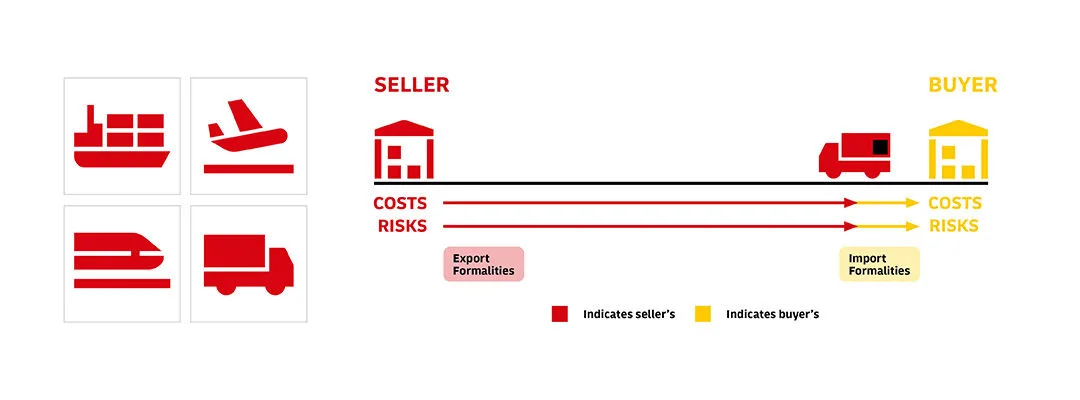
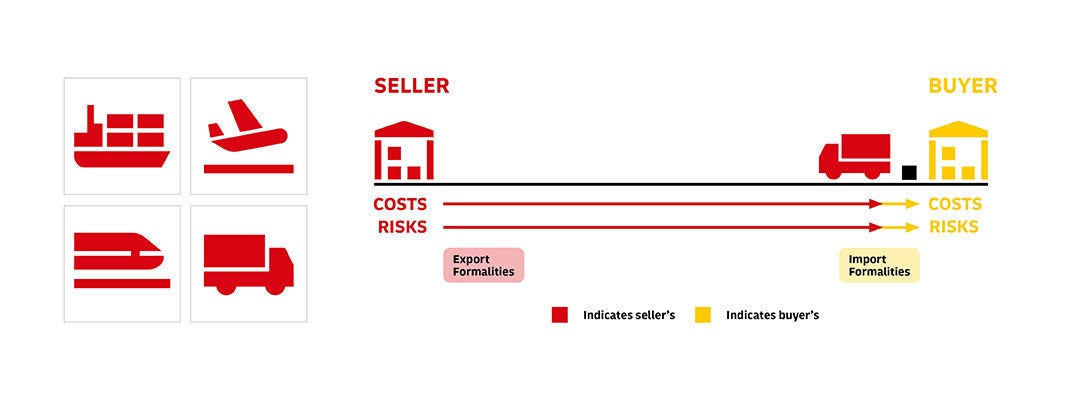
DELIVERED AT PLACE (DAP) specifies that the seller delivers the goods – and transfers risk – to the buyer when the items are placed at the disposal of the buyer on the arriving vehicle ready for unloading at the named location of destination or at the agreed point within that area, if any such point is agreed. The seller bears all risks involved in bringing the goods to the named destination point or to the agreed location within that site. In this Incoterms® rule, therefore, the completion of delivery and the arrival of goods at destination are identical.
DPU
DELIVERED AT PLACE UNLOADED (DPU) specifies that the seller completes delivery – and hands over risk – to the purchaser when the merchandise, once discharged from the arriving vehicle, is placed at the disposal of the buyer at a named location of destination or at the agreed point within that area, if any such point is agreed. The seller bears all vulnerabilities involved in bringing the goods to and unloading them at the named destination site. In this Incoterms® rule, therefore, the execution of delivery and the cargo's arrival at destination are identical. DPU is the sole Incoterms® rule that obligates the seller to unload merchandise at destination. The seller should therefore ensure that they are capable of arranging the offloading at the named place. Should the parties intend for the seller not to bear the risk and cost of unloading operations, the DPU rule should be avoided and DAP should be used instead.
EXW
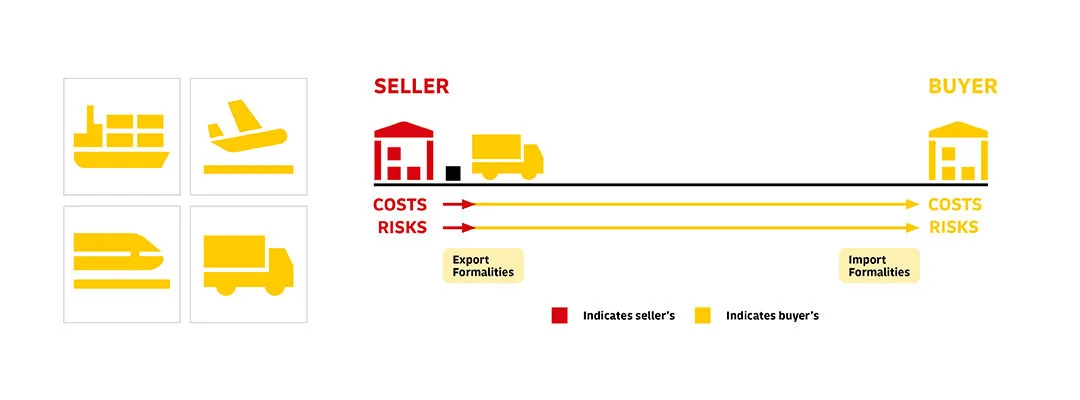
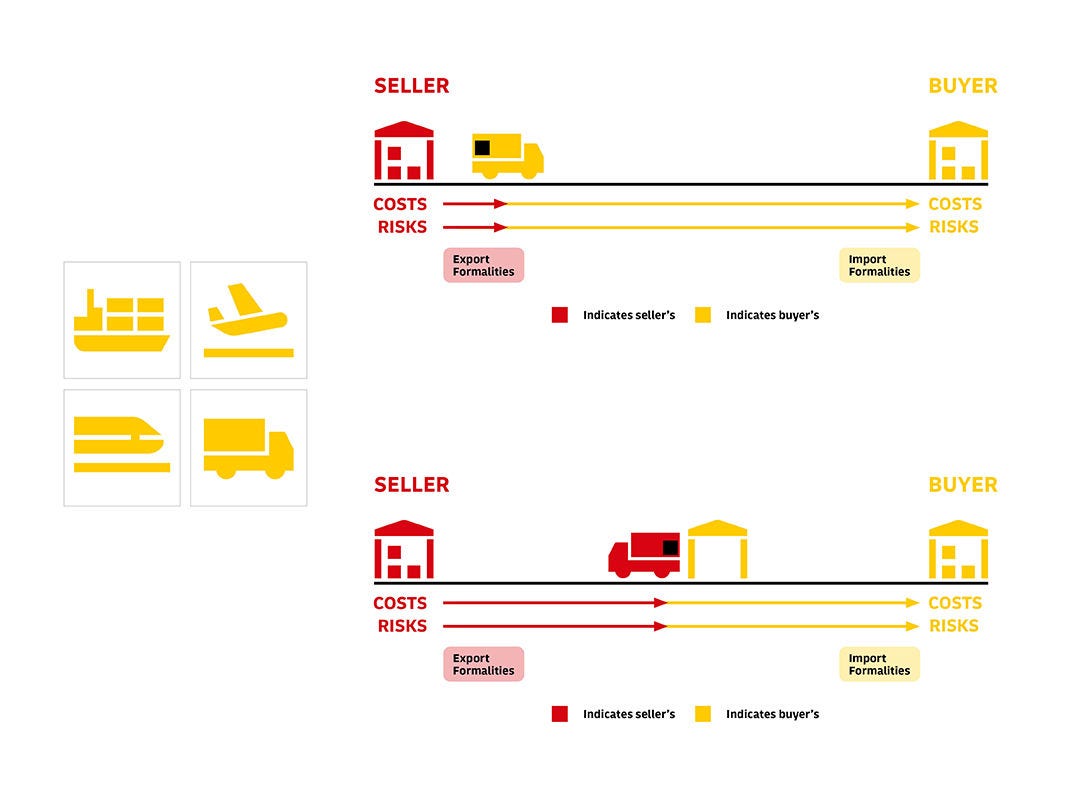
EX WORKS (EXW) outlines that the seller completes delivery when the merchandise is positioned for the purchaser at a designated location (such as a factory or warehouse), regardless of whether or not that named site belongs to the seller. For delivery to occur, there is no obligation for the seller to load the cargo onto any collecting transportation vehicle, nor are they required to manage customs clearance for export, in instances where such clearance is applicable.
FCA
FREE CARRIER (FCA) outlines that the seller delivers the merchandise to the buyer in one of two distinct ways:
First, when the specified site is the seller’s premises, the merchandise is delivered once it is loaded onto the vehicle arranged by the purchaser.
Second, when the designated destination is another place, the merchandise is delivered when, after being loaded onto the seller’s own vehicle, they reach the specified location and are ready for unloading from that transportation asset and at the disposal of the carrier or of another person nominated by the purchaser.
Whichever of the two is chosen as the delivery point, that location defines where risk transfers to the buyer and the exact moment costs are for the purchaser’s account.
CPT
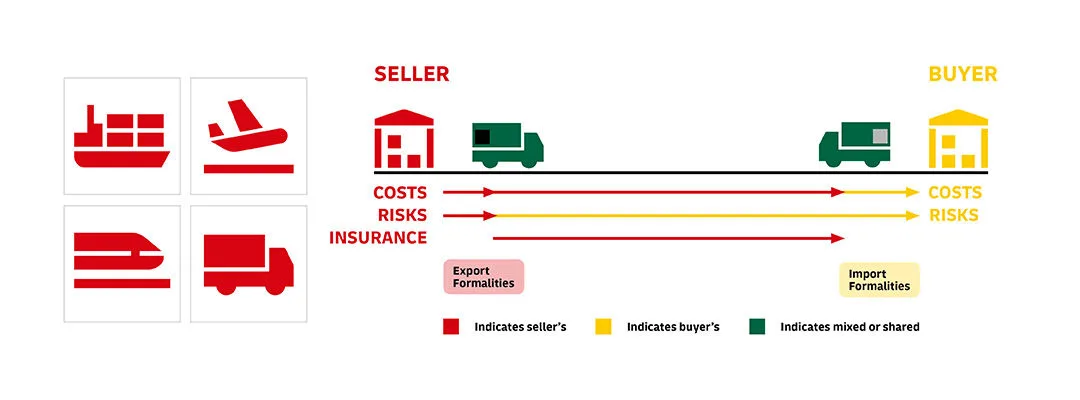
CARRIAGE PAID TO (CPT) stipulates that the seller hands over the merchandise – along with the associated risk – to the purchaser via the transporter engaged by the supplying party or by obtaining the items for such delivery. The shipper can fulfill this obligation by transferring physical custody of the goods to the carrier in a way and at a location suited to the selected mode of transit. Following delivery to the purchaser in this manner, the seller provides no warranty that the cargo will reach the final destination in perfect condition, in the stated quantity, or even arrive at all. This is because liability shifts from seller to purchaser the moment the goods are handed over to the carrier; however, the supplying party remains responsible for arranging the transportation from the point of delivery to the agreed destination.
CIP
CARRIAGE AND INSURANCE PAID TO (CIP) specifies that the supplying party hands over the merchandise – and shifts liability – to the purchaser by transferring custody to the carrier contracted by the seller or by procuring the goods so delivered. The seller can fulfill this obligation by granting the carrier physical possession of the goods in the manner and at the location suited to the chosen means of transit. Following the initial transfer to the buyer in this way, the supplying entity does not guarantee that the merchandise will reach the place of destination in flawless condition, in the stated quantity or indeed at all. This is because liability shifts from seller to purchaser when the delivery is delivered to the buyer by handing them over to the carrier; the supplying party must nonetheless contract for the transportation of the goods from delivery to the agreed destination.
The four specific Incoterms® rules reserved for sea and inland waterway shipping
FAS
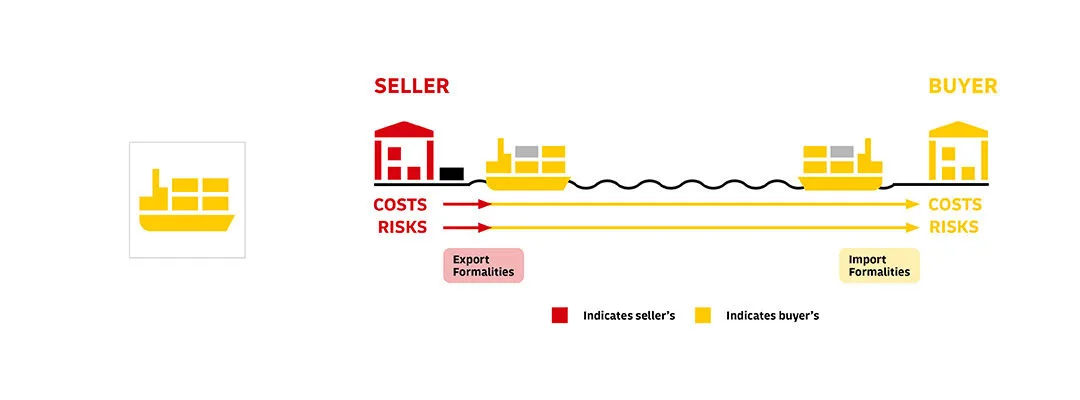
FREE ALONGSIDE SHIP (FAS) means that the seller delivers the goods to the buyer when the goods are placed alongside the ship (e.g. on a quay or a barge) nominated by the buyer at the named port of shipment or when the seller procures goods already so delivered. The risk of loss of or damage to the goods transfers when the goods are alongside the ship, and the buyer bears all costs from that moment onward.
FOB
FREE ON BOARD (FOB) specifies that the supplying party hands over the merchandise to the purchaser onto the vessel designated by the buyer at the stated port of loading, or obtains items already so delivered. The liability for any loss of or damage to the goods transported once the products are on board the vessel, and the buyer bears all costs from that moment onwards.
CFR
COST AND FREIGHT (CFR) specifies that the supplying party hands over the merchandise to the purchaser on board the vessel or procures the cargo already so delivered. The liability for any loss of or damage to the goods transfer when the products are on board the vessel, such that the shipper is deemed to have performed its obligation to deliver the goods whether or not the items actually arrive at their destination in flawless condition, in the stated quantity or, indeed, at all. In CFR, the seller has no obligation to the buyer to purchase insurance protection: the purchaser would be well-advised therefore to purchase some cover for itself.
CIF
COST INSURANCE AND FREIGHT (CIF) specifies that the supplying party delivers the merchandise to the buyer on board the vessel or procures items already so delivered. Liability for any loss or product damage transfers once the cargo is on board the vessel, meaning the shipper is deemed to have met their obligation to deliver the goods whether or not the items actually arrive at their destination in flawless condition, in the stated volume, or, in fact, at all.
Selecting the proper Incoterms® for your international transactions
For any exporting SME, you should review what are Incoterms (provided by the ICC) and agree on Incoterms for international transactions with their respective buyers
Discover further details about these global commerce rules via the official International Chamber of Commerce website, where you can also order the “Incoterms® 2020” publication. Register for specialized web-based courses on the Incoterms® 2020 rules at icc.academy.
DHL has also created a dedicated handbook to help you better understand the various classifications; please see the link below:
Disclaimer
This piece is structured to offer a clear summary of the Incoterms® rules commonly deployed worldwide in international and domestic agreements.
“Incoterms” is a registered trademark of the International Chamber of Commerce (ICC).
Find extra details on Incoterms® rules via the official International Chamber of Commerce website, where you can also buy the “Incoterms® 2020” publication.
Register for online courses on the Incoterms® 2020 rules at icc.academy
While we have exerted maximum effort to ensure that the data presented here has been obtained, produced, and processed from sources believed to be reliable, no warranty, express or implied, is issued concerning the accuracy, adequacy, completeness, legality, reliability or utility of this material. All content compiled here is provided on an "as is" basis. In no scenario will DHL Express, its related partnerships or entities under the DHL Group, or the partners, agents or employees thereof be held accountable to you or anyone else for any decision made or action taken in reliance on the insights provided here or for any consequential, special or comparable liabilities, even if advised of the possibility of such damages.
For straightforward international shipping, open a DHL Express Business Account.


 Share
Share

Similar Stories