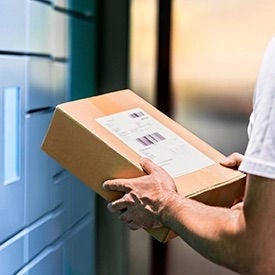




Learn how an optimized reverse logistics strategy can help your business reduce costs, minimize waste generation, strengthen your sustainability profile, and drive customer loyalty.
Understanding reverse logistics
Reverse logistics is the movement of goods “upstream” through a supply chain, to return them from the end customer back to a retailer or manufacturer.
Product returns represent one of the most common examples that all e-commerce businesses are familiar with . When online shoppers send an item back to the retailer because it is damaged – or simply because they changed their purchase decision– this action falls under reverse logistics. This process also covers the recycling, repurposing, repairing, and resale of products.
Reverse logistics vs. traditional logistics
Traditional logistics starts at the supplier, moves through the distributor/retailer, and ends with the customer. It encompasses sourcing, inventory management, distribution, warehousing, transportation, packaging and risk management.
Reverse logistics – as the name suggests – involves moving goods in the opposite direction. It begins with the customer and ends at different points along the supply chain, depending on the nature of the return.
The advantages of reverse logistics
Managing returns presents a major challenge for e-commerce businesses, yet it remains essential for fostering customer loyalty. In fact, 67% of consumers review an online merchant’s return policy before committing to a purchase (1), so an efficient reverse logistics operation will help your business win more sales.
Returns also offer businesses an opportunity to meet sustainability targets. Repairing, refurbishing, and recycling products prevent them from ending up in landfills.
Core categories of reverse logistics
These are the main models of reverse logistics your business should consider.
Handling customer returns
This is the most common reverse logistics process: when an end customer sends back a purchase to a seller because it is damaged, fails to meet expectations, doesn’t fit, or for other reasons. With around 30% of all products ordered online being returned to the sender(2), e-commerce businesses should make a seamless returns experience a key part of their strategy to ensure customer loyalty.
Remanufacturing or refurbishment
This involves refurbishing and rebuilding merchandise. Retailers and manufacturers may also recover specific components from a defective product to be used elsewhere. These avenues prevent waste and reduce costs.
Packaging management
This focuses on reusing packing materials to reduce waste and costs. As an example, an e-commerce business may encourage a customer returning a faulty product to return it using the original packaging. The business can then repair the product and send it back to the customer in the same packaging.
Unsold goods
This part of reverse logistics is when a retailer returns unsold inventory to the manufacturer. It could be due to a delivery failure, or poor inventory management (such as overestimating demand for a product).
Delivery failure
In the event of a failed delivery (for example, the customer was not home to receive the package), products may be shipped back to the retailer.
Rental equipment
This is when rented or leased products are returned to the manufacturer at the end of a defined term. From there, they may be recycled or sent out to another customer.
Repairs and maintenance
Some businesses offer warranties on their products. The customer will send the product (a laptop, for example) back to the business to be serviced.
End of life
These are products that can no longer be used – if they are irreparable, for example – so therefore, they will need to be recycled or disposed of.
The reverse logistics process
This specialized cycle differst across various sectors. For example, an online apparel retailer typically manages a high volume of standard customer returns. Elsewhere, consumer goods giant Procter & Gamble has introduced a reusable packaging scheme to collect its used glass bottles from the homes of customers (3).
Regardless of your industry, a structured reverse logistics strategy empowers you to optimize your budget and minimize environmental waste:
Process the return After your customer has requested a return via your website or app, your business must activate the intake process. This involves coordinating return shipping, approving refunds, and dispatching a replacement product if the original is damaged. It is also a good idea to ask your customers the reason for their return (“item not as described”, “poor quality” etc.) which can help you prepare for, and process, the return more quickly.
Inspect the returned product(s) Once the product arrives back at your facility, it should be inspected to verify its current condition. Will it need to be cleaned before resale? Fixed? Parts replaced? Your business can streamline its reverse logistics process by having pre-set categories in place, including “refurbish”, “recycle”, and “repair”.
Route the product to its processing destination Depending on its categorization, transfer the product quickly to where it will be processed.
Recycled products should first be stripped of parts that can be reused or resold. The remaining part should be recycled in a responsible manner that prioritizes long-term sustainability.
Items for repair should be fixed and returned to the customer (if under warranty), or disposed of if they are irreparable. Some items can be resold as new.
Challenges in reverse logistics
Businesses must anticipate several obstacles when implementing a reverse logistics system.
Costs
Managing reverse logistics can be expensive – especially for small businesses. The combined costs of transportation, processing, and restocking all accumulate, and with 79% of online consumers expecting free return shipping(4), these costs often fall entirely on the seller. Running a well-planned, optimized reverse logistics operation is key to reducing waste – and keeping customers happy.
Customer demands
E-commerce customers anticipate a rapid, frictionless process when sending items back. Brands should view this returns process as an investment – after all, 84% of consumers will not shop again with a retailer after a bad returns experience⁵. An excellent starting point is crafting a clear and simple returns policy – essential to attract and retain customers. Our dedicated guide is available to assist you in designing guidelines for your business.
Environmental impact
Returned items will impact your business’ carbon emissions. Yet, a recent study found that 64% of US consumers would be willing to pay extra when returning an item if it subsidized a greener carrier option⁶, making it crucial to analyze your logistics options thoroughly. DHL Express has recently launched GoGreen Plus, a dedicated solution to help businesses reduce the carbon emissions associated with their shipments through the use of Sustainable Aviation Fuel. Explore how this sustainable alternative can transform your business, here.
Complex return flow
Reverse logistics can involve many different processing channels which can be a lot for a small business – indeed any business – to deal with. The handling of returned items includes inspection, testing, repurposing, repairing, repackaging and resending, and requires coordination across all points. Thankfully, there are several automated technologies you can implement to help your business. With that in mind, continue reviewing our insights below!
Strategies to optimize reverse logistics
Automated process
By integrating advanced technology and Artificial Intelligence (AI), brands can easily optimize their e-commerce returns logistics processes. This operational shift guarantees flawless execution while lowering administrative overhead. Examples include:
Warehouse Management System (WMS). To efficiently coordinate complex inbound and outbound product channels, utilizing a top-tier WMS is indispensable. It empowers merchants to monitor every return in real-time that arrives at the fulfillment center, ensuring items are routed to their next destination quickly and accurately. Managing returned merchandise demands up to 20% more space than forward logistics*, making it vital to keep inventory moving swiftly to avoid a backlog.
Inventory Management System (IMS). Implementing an automated tracking system ensures your brand maintains full visibility of returned products. A modern platform handles returned merchandise in the same way as supplier products, ensuring goods are resold or repurposed as quickly as possible, which reduces waste and optimizes warehouse space.
Use predictive analytics to anticipate returns
Advanced returns forecasting tools extract actionable data to help merchants pinpoint the root causes of product returns, determine which items can be resold, and estimate the costs of redistribution. Machine learning algorithms can anticipate a product’s likelihood of being returned based on data such as the customer’s past return rate and the number of times the same or similar product has been returned. This allows retail brands to better plan their inventory, avoid stock imbalances and protec your profit margins.
Gather customer data
Though efficient reverse logistics management streamlines how your business handles incoming items, it’s important to actively minimize return volumes from the start. Asking your customers exactly why they are returning a product can help your business address any pain points. For example, if you operate an e-commerce website selling accessories and a particular model is returned often because it is “not as shown on the website,” this indicates a clear need to add more detailed product specifications, high-def photos, and customer reviews to the product listing page. If the customer has a more accurate idea of what they’re buying, they’re less likely to be disappointed upon its arrival.


 Share
Share

Similar Stories