#LogisticsAdvice


 Share
Share
The AI-Powered export business: Leveraging automation & data to scale faster
7 Mins Read
Share

The global business landscape is transforming at a breakneck speed and many Small and Medium Enterprises (SMEs) worldwide are adopting Artificial Intelligence (AI) automation solutions to keep pace. Is your small business in Pakistan doing the same?
With SMEs accounting for approximately 90% of all businesses in Pakistan and contributing to 40% of its GDP and 30% of total exports1, harnessing AI tools for SMEs is a key way to enhance competitiveness on the world stage.
From integrating market research to warehouse management, here are just some of the ways Pakistani exporters and startups can leverage data and AI-driven automation in scaling their global operations.
The digital frontier of export: Why Pakistani SMEs need AI to stay competitive
Offering competitive prices is no longer enough to keep your business ahead of the competition. Speed, accuracy, and intelligent decision-making are now increasingly important in gaining a foothold in the global export market. Businesses need to be able to instantly adapt to shifts in consumer demand, trade regulations, and supply chain disruptions—sometimes even overnight.
A major advantage of AI solutions is that they democratize advanced analytics and decision-making capabilities, allowing local Pakistani businesses to compete with global giants on more even footing. And while financial constraints and a limited skilled workforce are known challenges for AI integration in Pakistan2, accessible AI tools can level the playing field by providing affordable, user-friendly platforms. These tools optimize operations by helping with demand forecasting, customer segmentation, and automated financial analysis, empowering local businesses to keep up with regional and global trends.
The AI mythbuster: Are AI business tools still too sophisticated and beyond reach?
The common misconception that AI tools require massive investment and sophisticated data expertise is rapidly dissolving. Many powerful AI tools like Google Looker Studio and Power BI are now available for free or at affordable enterprise subscription rates, making them accessible even on tight SME budgets.
Many AI and Large Language Model (LLM) platforms like ChatGPT, Gemini, Claude, or Perplexity are also highly user-friendly and intuitive, requiring minimal technical skill to prompt complex tasks like generating marketing posts or analyzing logistics data.
Developments in agentic AI3 have also improved AI’s role as a “smart assistant” or “digital co-pilot” able to handle repetitive tasks. Even the Pakistani government has also recognized this; in October 2025, the Small and Medium Enterprises Development Authority (SMEDA) launched the country’s first AI-powered legal and compliance platform for SMEs4. SMEs will be able to access 24/7 legal and compliance guidance through the AI chatbot, enhancing the accessibility of crucial business resources.
This frees up your team’s valuable human expertise to focus on strategy, innovation, and customer relationships that directly advance your business goals.
How AI enables smarter market research and demand forecasting
The traditional method of relying on static spreadsheets and historical data for future planning is often too slow and limited for the pace of modern global trade. AI tools for market research and demand forecasting fundamentally change this, moving businesses from guesswork to data-driven decisions.
1. Predicting what sells, where, and when
AI’s dynamic, multi-source analytics capability allows it to scan vast datasets, including trade portals, competitor sites, news feeds, and social sentiment, to create a holistic, real-time market view. This helps SMEs identify and anticipate major consumer demand changes, ensuring your entire business strategy is aligned with global trends.
2. Breaking down raw data into actionable insights
AI can do more than process numerical data too; it can integrate unstructured data like social media trends and real-time global information to provide richer, more nuanced social commerce insights into consumer demographics and market changes. Likewise, by analyzing past purchasing behavior and online activity, AI tools can aid in targeted outreach and personalized communications to your customer base. Granular data analysis can even inform the precise timing for promotions or allow for adjusting inventory levels by city or specific buyer segment. This level of detail ensures resources are never misallocated and trends aren’t missed.
3. Detecting smart trends and upcoming opportunities
Finally, AI’s Machine Learning (ML) and Natural Language Processing (NLP) capabilities enable it to spot emerging consumer preferences, monitor competitor moves, and flag risks and disruptions from global events or supply chain issues much faster than manual methods. Exporters can proactive adjust their shipping schedules based on this knowledge, enabling faster market adaptation, better budget allocation, and quicker identification of growth opportunities in a volatile international market.
How AI automates and streamlines the export workflow
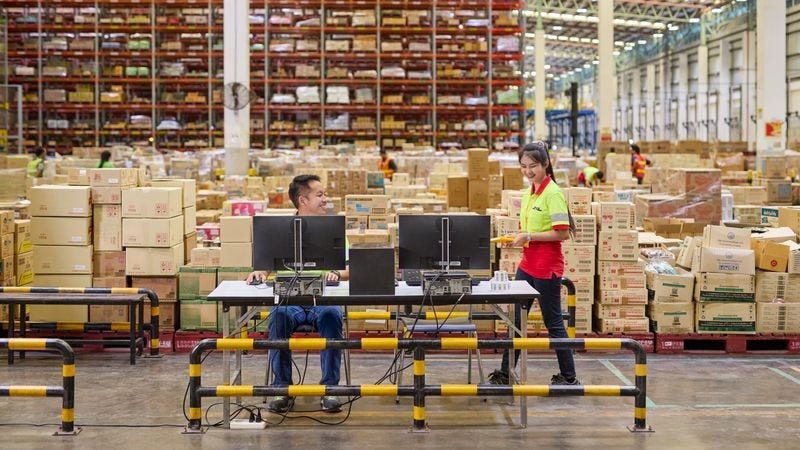
The highest application of AI adoption in Pakistani SMEs is currently seen in marketing, sales, and customer service5. However, its application in logistics and compliance, as well as business processes like invoicing, inventory management, and financial analysis, is where significant time and cost savings can be found.
1. Managing back-office operations and essential tasks
AI-powered automation tools can generate validated customs documents with a few clicks, drastically reducing the chances of shipment delays due to paperwork errors. AI detection systems can also help classify goods correctly, minimizing duty calculations and speeding up clearance.
2. Smart inventory and supply chain management
The integration of AI supply chain or warehouse management tools can help predict demand patterns and monitor stock levels in real-time, preventing costly overstocking or understocking. This optimization directly improves cash flow by reducing capital tied up in slow-moving inventory and minimizing missed sales opportunities.
3. 24/7 customer service through AI chatbots
AI chatbots can provide instant, round-the-clock customer support and query resolution in multiple languages, enhancing your cross-cultural communication and business responsivity. Certain platforms with CRM capabilities integration are even able to handle basic queries like how to track package status or answer product FAQs. This improves resolution times and enhances overall customer satisfaction.
Your competitive edge: The AI-DHL partnership
AI provides the strategy and predictive insights to unlock new business opportunities; international logistics services and human expertise complete the cycle through seamless execution and reliable delivery.
For Pakistani exporters trying to stay competitive, there are several ways to integrate their AI insights and logistics provider to truly boost their global efficiency:
- Customs compliance: DHL’s flagship self-service shipping platform, My Global Trade Services (MyGTS), uses AI and ML to help customers find the correct HS Codes for their shipments. This eliminates guesswork, making customs clearance faster and more accurate. MyGTS also features a trade lane comparison capability that helps SMEs analyze trade agreements and calculate estimated duties/taxes (landed costs) across various routes, enabling them to identify the most favorable import/export conditions in new markets.
- Predictive logistics and route optimization: Through analyzing large data sets, DHL’s AI capabilities accurately forecast shipping volumes and optimizes courier routes for last-mile delivery while considering factors like urgent deliveries or specific time requirements. This not only minimizes fuel consumption but ensures goods arrive faster.
- Seamless integration with MyDHL API: The MyDHL API allows for full integration of in-house systems with DHL’s network, combining the benefits of DHL Express with an SME’s current shipping processes. This integration enables functions like automatic label generation, real-time rate calculation, pickup scheduling, and tracking directly within your e-commerce platform or warehouse management system. This means that the demand forecasting done by AI tools can instantly translate into a shipping label without manual data entry, providing a continuous flow of data and improved operational efficiency.
- Enhanced customer experience: AI-powered tracking platforms allow for real-time visibility and proactive notifications. This closes the customer feedback loop faster, transforming the delivery experience into a key brand differentiator that builds customer trust and encourages repeat purchases.
By leveraging DHL’s advanced, AI-compatible shipping solutions, Pakistani SMEs can turn their smart data into profitable global commerce.
The future of export is now
The age of AI in business is here, and SMEs have to adopt and adapt to avoid falling behind the competition.
To successfully turn these intelligent insights into reliable exports, partnering with a reliable international logistics services provider is non-negotiable.
Open a DHL Express business account today to unlock advanced, AI-compatible logistics solutions that provide the speed, reliability, and global reach needed to accelerate your export growth.
Share
Similar Stories