Navigation and Content
E-Commerce Logistics

2026 Cross-Border Buying Behavior Trends

70% of global shoppers buy from retailers outside their home country – and 45% do so at least once a month

Consumers want more choice, better prices and unique products – and they’re looking beyond borders to find them. But purchasing from an international retailer comes with high expectations. Trust, delivery and returns all influence the decision to click ‘buy now’.

With the value of the global cross-border e-commerce market expected to reach 4.81 trillion U.S. dollars by 20321, there is a clear opportunity for online retailers to reach a wider audience and grow their sales. The demand is there, now it’s about delivering on it. 


Cross-Border in numbers

53%

OF GEN Z AND MILLENNIALS SHOPPERS BUY FROM OTHER COUNTRIES AT LEAST ONCE A MONTH

71%

OF HANDS FREE SHOPPERS BUY FROM OTHER COUNTRIES AT LEAST ONCE A MONTH

60%

OF SHOPPERS WORLDWIDE BUY FROM OTHER COUNTRIES TO GET LOWER PRICES

57%

OF GLOBAL SHOPPERS SAY FREE DELIVERY WOULD ENCOURAGE THEM TO BUY ACROSS BORDERS

63%

OF GLOBAL BUSINESSES ADAPT THEIR ONLINE STORES WITH LOCAL LANGUAGES AND CURRENCIES FOR EACH MARKET THEY SERVE

47%

OF GLOBAL BUSINESSES IDENTIFY DELIVERY COSTS AND TRANSIT TIMES AS THE MAIN BARRIERS TO CROSS-BORDER SALES

41%

OF GLOBAL BUSINESSES SELL ELECTRONICS TO INTERNATIONAL MARKETS

AUSTRIAN

BUSINESSES ARE THE MOST ACTIVE CROSS-BORDER SELLERS


Which countries are buying and selling online to international markets?

Understanding which markets shop and sell across borders most frequently can help your business target the right international audiences. By focusing on where shoppers are most open to buying from other countries, you can unlock growth opportunities and meet global demand.


Shoppers buying from retailers in other countries

Businesses selling to shoppers in other countries

Argentina

56%

45%

Australia

74%

58%

Austria

86%

78%

Belgium

82%

71%

Brazil

71%

30%

Canada

66%

68%

China

54%

40%

Czech Republic

76%

69%

Denmark

81%

74%

France

55%

70%

Germany

66%

71%

India

42%

61%

Italy

72%

64%

Malaysia

66%

32%

Morocco

75%

Netherlands

77%

85%

Nigeria

69%

89%

Poland

73%

57%

Portugal

88%

64%

Saudi Arabia

84%

66%

South Africa

80%

61%

Spain

72%

65%

Sweden

71%

69%

Switzerland

82%

76%

Thailand

65%

33%

Türkiye

57%

63%

UAE

78%

76%

UK

62%

71%

USA

53%

60%

GLOBAL

70%

61%

Europe

73%

69%


The winning markets for cross-border sales

While shoppers tend to gravitate toward a small number of major markets, like China and the USA, many English-speaking markets still haven’t adapted their full e-commerce experience for international shoppers. 22% of Canadian, 21% of US, and 18% of UK B2C businesses do not localize e-commerce with local languages and currencies, highlighting the gap between global demand and how businesses serve it.

Younger, tech-enabled shoppers are driving cross-border shopping, with 53% of both Gen Z and Millennials buying internationally more than once a month, compared to 45% of shoppers globally.

As cross-border shopping becomes more frequent, businesses that remove barriers through localization, transparent pricing, and seamless delivery experiences will be best positioned to capture this growing demand.

World map showing the percentage of online shoppers buying from each country in 2025, including China (57%), the USA (41%), the UK (23%), Germany (21%), France (13%), Italy (9%), Turkey (7%), Spain (7%), Canada (7%) and Australia (6%).

Price opens the door – trust and delivery keep it open

Cross-border opportunities hold real growth potential for online retailers. Lower prices are the main reason shoppers look beyond their own country – especially in Malaysia (72%), Argentina and Portugal (71%), followed by the Czech Republic (68%), Denmark and Thailand (67%)

International demand is often driven by price and product quality, but delivery and logistics ultimately determine whether a purchase is completed. High delivery costs, long transit times, customs complexity, and difficult returns remain some of the biggest barriers to cross border shopping. The next phase of global e commerce growth will be won by brands that make international delivery feel as seamless and reliable as domestic delivery.

While many shoppers look beyond their borders for better prices or higher quality products, trust remains essential to securing the sale. Understanding what prevents shoppers from clicking 'buy now' can help businesses address key concerns, remove friction, and stand out from competitors. Fear of fraud is the biggest barrier to cross border purchases, particularly in Nigeria and South Africa (58%), the United States (52%), and Argentina (51%).

Why do you buy from these countries?


Lower prices


Product or brand isn't available in their country


Better quality products


Better delivery/ returns options


Sustainable or ethical sourcing


GLOBAL

60%

44%

32%

23%

13%

Europe

63%

42%

20%

18%

8%

Gen Z

54%

44%

36%

24%

15%

Millennials

57%

41%

36%

24%

15%

Gen X

64%

44%

30%

23%

12%

Baby Boomers

69%

44%

21%

21%

8%

Why don’t shoppers buy from other countries?


Fear of fraud or lack of trust


High delivery costs/ long delivery times

Customs/duties/  taxes
 

Complicated/ costly returns
 

Uncertainty about delivery/ returns providers

GLOBAL

45%

45%

41%

36%

33%

Europe

42%

39%

42%

35%

29%

Gen Z

41%

44%

36%

31%

29%

Millennials

41%

42%

38%

31%

29%

Gen X

46%

46%

43%

36%

35%

Baby Boomers

51%

48%

47%

44%

41%

What would encourage shoppers to buy from abroad?


Free delivery


Secure payment options/ buyer protection
 

Free returns


Prices in local currency
 

Clear transit times


GLOBAL

57%

48%

43%

41%

37%

Europe

55%

44%

40%

38%

34%

Gen Z

54%

46%

39%

37%

36%

Millennials

55%

46%

40%

38%

38%

Gen X

59%

49%

45%

42%

38%

Baby Boomers

63%

52%

48%

49%

37%

If you're expanding into new markets, check that your pricing aligns with local competitors. To build trust and secure sales, offer secure payment options and buyer protection, be transparent about your delivery and returns offering and offer prices in local currencies.


Meet the global shopper

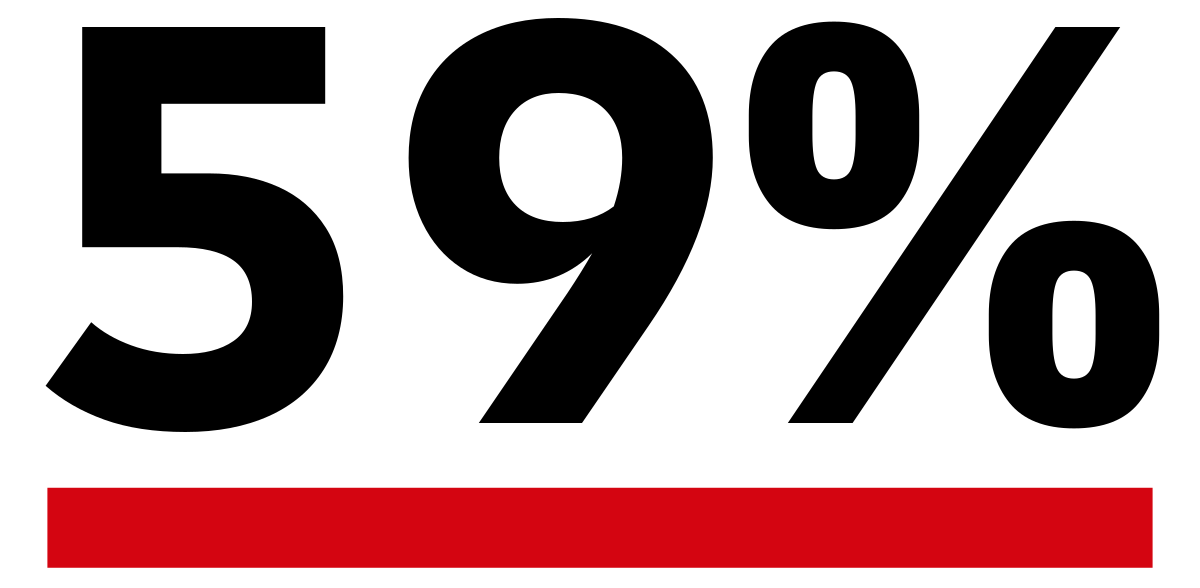
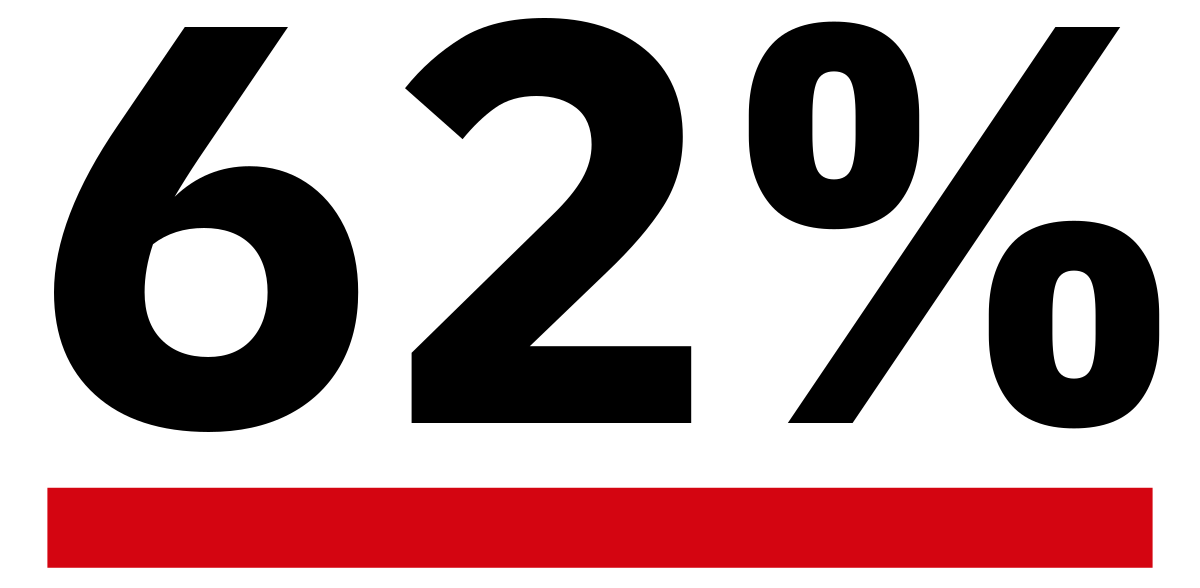
These cross-border shoppers are highly open to international retailers and digitally savvy, with 62% using digital wallets for online payments. Their purchasing decisions are shaped by trust in delivery providers, the convenience of digital payment options, and incentives such as free delivery, making a seamless and reliable shopping experience essential to winning their business.

For a complete view of all shopper profiles, head to page 42 of the 2026 E-Commerce Trends Report.
 

Cross-border but conscious

Cross-border shoppers aren’t just looking for deals – they’re also mindful of sustainability. They're more likely to buy pre-owned items and take part in recycling schemes.

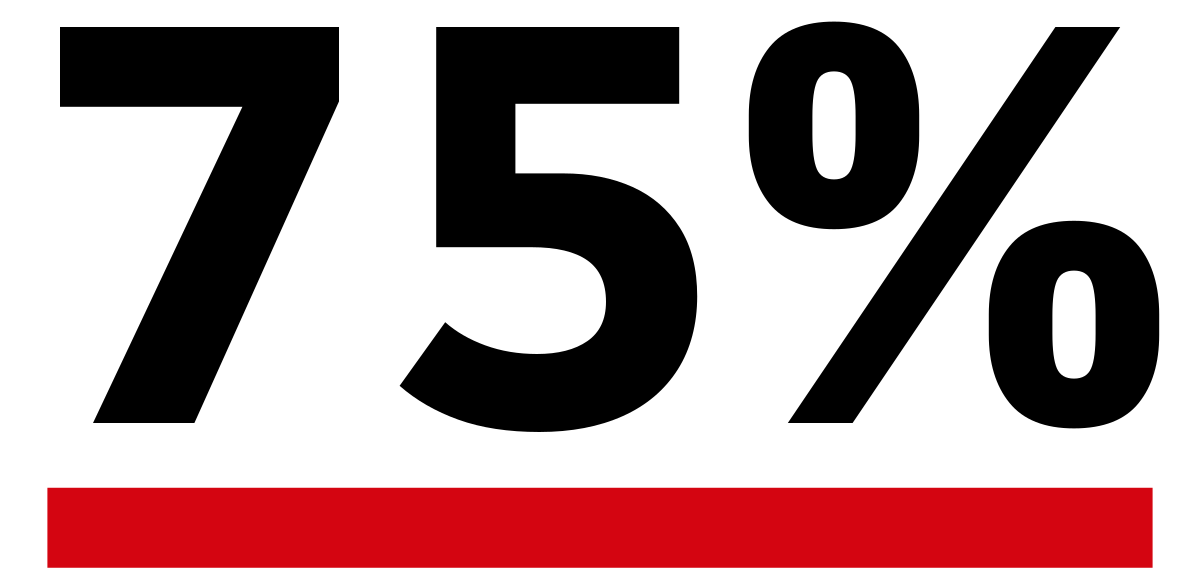
would not shop from a brand if they did not trust the delivery provider

currently use a digital wallet when making payments online

would be encouraged to buy from other countries if they offer free delivery


All stats and figures are taken from the DHL eCommerce Trends Surveys conducted between December 15th 2025 and February 11th 2026. Within the last three months prior to the survey, shopper respondents were required to have made at least one purchase online and business respondents were required to have regularly sold items online. For shoppers, 50+ questions were asked to 29,000 respondents across 29 countries (1,000 per country), and 50+ questions were asked to 5,800 respondents in 28 countries worldwide, with an equal split across demographics – where possible. Note Morocco did not have a large enough number of business respondents to be included in the business data, as such, results for this country are not included. The countries chosen for this survey represent some of the most active e-commerce markets across the globe. Where percentages do not equal 100%, this is due to certain questions having multiple-choice options. Where there is a deviation of percentages over 100%, this is due to rounding of answer options. Not all data from the survey is displayed on this page or within our report. Country, regional, generational, shopper and business profile data is provided, but this does not reach a level of statistical significance to make definitive statements about specific groups globally. Figures are correct at the time of publishing.


Explore even more trends from the current and past reports:


Ship smarter with DHL eCommerce

Running an online business? Let us elevate your online sales with our easy-to-manage e-commerce logistics services. Get reliable, affordable, and sustainable business parcel delivery and returns within your country or around the world.