

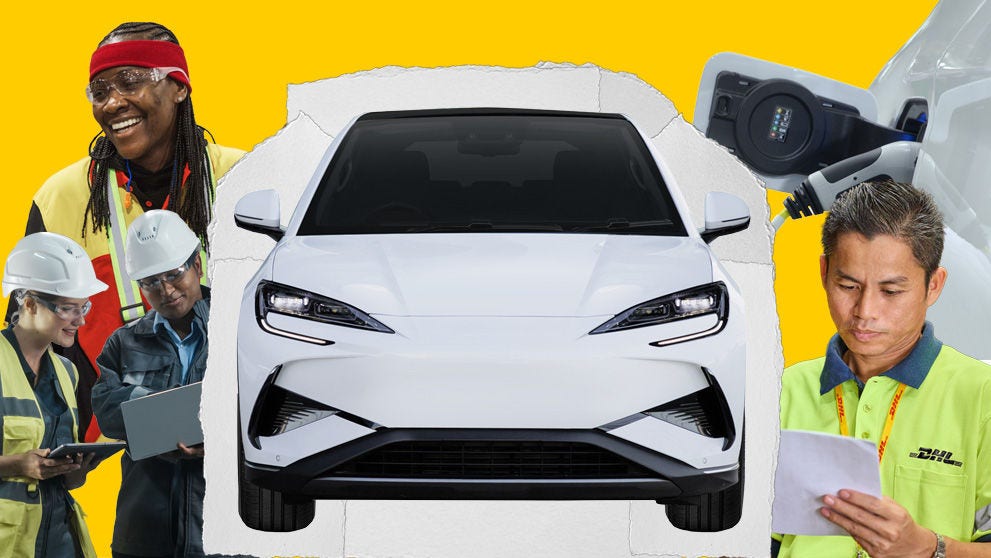
Automotive logistics is the planning, transport and coordination of parts, components and finished vehicles across the automotive supply chain. It is one of the most time-sensitive and operationally complex sectors in global trade, where a precisely coordinated flow of components must arrive at exactly the right place and the right time. Many manufacturers rely on lean, just-in-time (JIT) production to minimise inventory costs, but this leaves little room for error: even a small delay can have significant consequences.
Inside the global supply chain of the automotive industry
Vehicle manufacturing relies on a multi-tier supplier network that spans continents. OEMs (original equipment manufacturers) coordinate the full picture, working with Tier 1 suppliers, who build the major systems and assemblies that go straight into a vehicle; Tier 2 manufacturers, who supply the smaller components and sub-assemblies that feed those systems; and Tier 3 producers, who supply the raw materials and basic parts further upstream.
A single vehicle contains around 30,000 components¹, pulled from suppliers across Europe, Asia and North America. Keeping all of that synchronised across borders and time zones is what makes automotive logistics so demanding.
The global automotive logistics market is forecast to reach US$386.91 billion (roughly €355 billion) by 2031², and much of that growth is being driven by increasing supply chain complexity.
Semiconductors, sensors and electronic control units are now among the most logistics-critical components in the chain. Modern software-defined vehicles rely on hundreds of chips per unit, and these parts need precise handling, controlled conditions and fast delivery. A disruption at the component level quickly becomes a production-level problem.
To understand why that matters, it helps to look at what automotive logistics actually involves.
Belgium sits right in the middle of this network. Volvo Car Gent, one of Volvo Cars’ two European factories and the largest industrial employer in Flanders, produced over 212,000 vehicles in 20253, including the fully electric EX30 and EX40 models, while Zeebrugge, part of the Port of Antwerp-Bruges, is one of Europe’s busiest hubs for importing and exporting finished vehicles by roll-on/roll-off (RoRo) shipping4.
What is automotive logistics?
Automotive logistics is the specialised management of freight flows that keep vehicle manufacturing and distribution running. That includes getting raw materials and components into factories, moving finished vehicles out to dealers and end customers, handling recalls and end-of-life returns, and keeping spare parts flowing to service networks.
Unlike general freight, the automotive supply chain operates under tight sequencing requirements, strict delivery windows and zero tolerance for a missing part on the production line.
The four types of automotive logistics
Automotive logistics is not one operation. It is four, running simultaneously, each with different priorities and different points of failure.
Inbound logistics
This is the flow of raw materials, components and sub-assemblies from suppliers into manufacturing facilities. In JIT and just-in-sequence (JIS) environments, parts must arrive in order at the right moment. But the main challenge is getting hundreds of supplier shipments to land in a single, uninterrupted production rhythm.
Outbound logistics
Once vehicles leave the factory, they need to reach dealerships and end customers via car carrier trucks, rail and roll-on/roll-off (RoRo) shipping. The challenge is moving high-value cargo across long distances without damage, while meeting delivery windows.
Reverse logistics
Product recalls, warranty returns, end-of-life recycling, lease vehicle returns: all of these move in the opposite direction through the supply chain. Each one requires coordinated collection, inspection and processing, often across multiple countries and regulatory frameworks.
Aftermarket logistics
Spare parts, accessories and repair components need to reach service networks, dealerships and independent workshops quickly. Parts availability directly affects vehicle uptime and customer satisfaction, which makes aftermarket fulfilment a competitive differentiator.
Key trends reshaping automotive logistics
Several forces are reshaping automotive supply chains at once, and none of them are temporary.
Electrification: The shift to EVs is redesigning supply chains at a fundamental level, introducing new raw materials, new supplier geographies and new handling requirements. EV registrations in the EU are forecast to represent over 50% of all new car sales by 20305. Logistics infrastructure built around internal combustion engines has to adapt in parallel with the vehicles themselves.
Digitalisation: Software-defined vehicles are increasing semiconductor content per unit and expanding the supplier base required to support them. On the logistics side, AI-driven demand forecasting is sharpening inventory positioning, while IoT-enabled shipment tracking gives supply chain teams the data to intervene before a delay turns into a disruption.
Regulatory pressure: Stricter emissions standards and sustainability reporting requirements are creating new obligations across the automotive supply chain and its associated freight operations. Businesses are increasingly required to track and reduce the carbon footprint of their logistics activity, which is shifting modal choices, fleet decisions and carrier selection.
Trade policy and tariff volatility: Shifting trade agreements and tariff structures are prompting manufacturers to reconsider where they source components and how they route finished vehicles to market. Nearshoring, multi-sourcing and flexible routing are all gaining traction as hedges against policy unpredictability.
Of all these shifts, electrification carries some of the most immediate logistics implications, particularly around battery supply chains.
EV and battery supply chain challenges
The EV battery supply chain introduces a distinct set of logistics challenges beyond conventional component shipping.
Raw material concentration is a structural vulnerability. Lithium, cobalt and nickel are extracted from a small number of geographically concentrated regions, then refined and processed across multiple stages before reaching battery cell manufacturers and assembly plants. Each handover in that chain is a potential disruption point, and long lead times leave little room for recovery when something goes wrong.
Belgium also plays a role in this chain. Umicore, the Brussels-headquartered materials group, refines and recycles the metals used in EV batteries6, feeding them back into the supply chain that manufacturers across Europe depend on.
Battery transport adds further complexity. Lithium-ion batteries are classified as dangerous goods under international transport regulations, requiring specific packaging, labelling and documentation. Their weight and temperature sensitivity create handling requirements that standard freight networks often cannot meet. As battery pack sizes increase and EV range targets rise, the logistics challenge scales accordingly.
Businesses exploring automotive supply chain solutions in the EV segment need providers with specialist dangerous-goods expertise, temperature-monitoring capability, and the compliance knowledge to move battery shipments across borders without customs delays.
These vulnerabilities are not hypothetical. When disruptions reach the production stage, the consequences are immediate and measurable.
The real cost of a production line stoppage
JIT manufacturing keeps costs low by holding minimal inventory. The trade-off is that there is very little buffer when something goes wrong. A single missing component, whether a sensor, a fastener or a semiconductor, can halt an entire vehicle assembly line.
The costs accumulate quickly: idle labour, lost production output, expedited freight premiums to source replacement parts urgently, potential contractual penalties for late delivery commitments, and knock-on delays for downstream partners and dealers. According to Siemens' 2024 research, a single hour of downtime at an automotive plant can cost more than US$2.3 million7 (roughly €2.1 million). That figure has climbed 113% since 2019, reflecting how much tighter and more interconnected these production environments have become.
Prevention is substantially cheaper than recovery, and there are proven strategies that help supply chain teams stay ahead of disruption rather than reacting to it.
Automotive logistics solutions for a resilient supply chain
Building resilience into the automotive supply chain process requires a combination of technology, strategic planning and the right logistics partnerships. These are the solutions that address the most common failure points.
Real-time shipment visibility
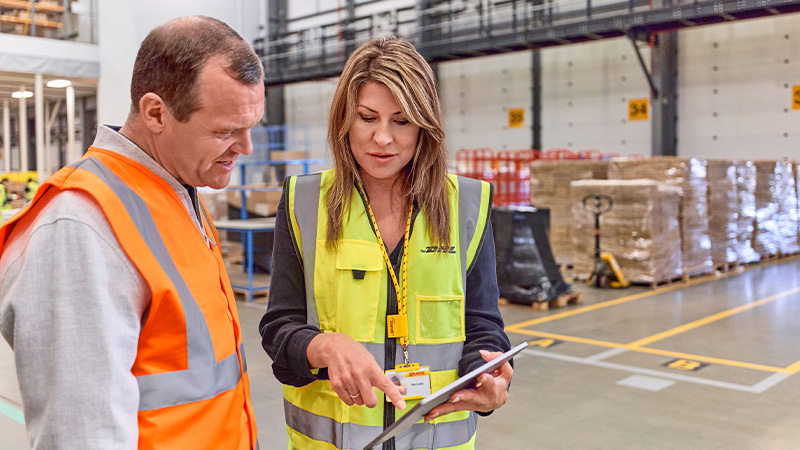
End-to-end tracking from supplier collection through customs to factory gate gives supply chain teams the lead time to reroute, expedite or reallocate before a delay becomes critical.

Predictive analytics and monitoring tools
AI-driven forecasting tools analyse supplier performance data, port congestion trends and demand signals to surface risks before they materialise. Combined with IoT monitoring, they give planners actionable intelligence rather than reactive alerts.
Supplier diversification
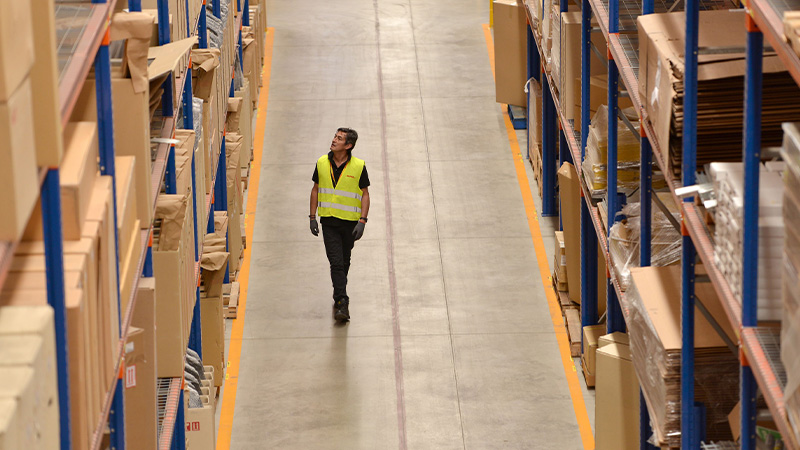
Single-source dependencies are a structural risk. Multi-sourcing strategies for critical components, particularly semiconductors and battery materials, reduce exposure to regional disruptions and give procurement teams more flexibility in volatile markets.

Contingency transport routes
Pre-agreed alternative routing options allow rapid switching when primary lanes are disrupted. For time-critical shipments, this typically means having express air freight as a confirmed fallback when sea or road timelines cannot be compressed.

Strategic inventory positioning
Holding small buffer stocks of the most critical components at or near production sites can absorb minor disruptions without triggering a stoppage. The key is identifying which parts carry the longest lead times and the highest disruption impact.

Proactive logistics planning for high-risk components
Semiconductors and battery cells warrant dedicated logistics planning rather than being treated as standard freight. This means lead-time mapping, carrier pre-qualification and pre-clearance arrangements for key trade lanes.
Resilience and sustainability are increasingly linked goals, and managing both in parallel is becoming a defining challenge for logistics teams across the automotive sector.
Balancing sustainability and efficiency in automotive logistics
The automotive industry operates under some of the most demanding sustainability targets in manufacturing, and those targets now extend clearly into freight. The challenge is maintaining the speed and cost efficiency that JIT supply chains require whilst reducing the emissions footprint of the logistics operation.
Practical levers include route optimisation and load consolidation to reduce empty or partial vehicle movements, modal shift from air to sea or rail where delivery timelines allow, and the use of sustainable aviation fuel (SAF) for air freight where speed cannot be compromised. Greener last-mile options, including lower-emission delivery vehicles for urban parts distribution, are also gaining ground as part of broader supply chain solutions for the automotive industry.
For more on how businesses can build more sustainable freight strategies without sacrificing operational performance, DHL’s sustainability in logistics covers the latest approaches and emerging trends.
Meeting all of these demands, from speed and resilience to compliance and sustainability, requires a logistics partner with the network and expertise to match the realities of the automotive sector. The Port of Antwerp-Bruges, home to Zeebrugge, has committed to climate neutrality by 2050 and is already running the world’s first hydrogen-powered tugboat8, giving Belgium-based automotive shippers a head start on greener routing options.
How DHL Express supports the automotive industry
For automotive businesses managing urgent parts movements, cross-border complexity and the constant pressure of production timelines, DHL Express offers time-definite international express shipping connecting suppliers, manufacturers and dealers across more than 220 territories.
Where the risk of a line stoppage makes delivery timing non-negotiable, DHL Express provides the network and capability to move critical components, including semiconductors, electronic control units and battery cells, on schedules that standard freight cannot match. Customs clearance expertise across key trade lanes reduces the risk of border delays disrupting carefully planned logistics windows. At the same time, end-to-end shipment visibility keeps supply chain teams informed at every stage.
For automotive teams managing multi-country sourcing and complex documentation requirements, the combination of speed, compliance knowledge and global reach makes DHL Express a practical partner for keeping production moving.
Open a DHL Express Business Account to find out how DHL Express can support your automotive logistics requirements.


 Share
Share