
Whether you're moving industrial machinery, automotive components, medical equipment, or multiple boxes consolidated onto a pallet, larger shipments can bring challenges. Weight distribution, pallet stability, packaging compliance, and handling requirements all play a role in ensuring goods arrive safely and on time.
For shipments weighing 50 kg and above, these considerations become even more important. Solutions such as DHL Heavy Weight Express are designed specifically for larger, heavier shipments, combining specialist handling with the speed and reliability of an integrated express network.
But even the most capable shipping service depends on one thing: preparing your shipment correctly. Poor packing is one of the most common causes of damage, delays, unexpected surcharges, and shipment claims.
If you're wondering how to pack large and heavy shipments correctly, this guide will walk you through everything you need to know. From choosing the right pallet and securing palletized goods to using dunnage, labeling correctly, and avoiding common mistakes, we'll help you prepare your shipment for a smoother journey.
What qualifies as a large or palletized shipment?
Not every shipment belongs in a standard parcel network. As goods become larger, heavier, or more complex to handle, businesses often need different packaging and transportation methods to keep them secure in transit.
Large items
Goods whose dimensions make them difficult to move through standard parcel networks. Examples include furniture, machinery, exhibition displays, and oversized replacement parts. DHL Express typically considers shipments large when two sides exceed 800 mm, or one side exceeds 1,200 mm.
Heavy items
Shipments that exceed typical parcel weight limits and require specialized handling. As a rule of thumb, individual pieces above 30 kg often need lifting equipment or additional support during handling.
For larger international shipments from 50 kg upwards, DHL Heavy Weight Express is purpose-built to handle heavier freight, supporting individual palletized pieces up to 1,000 kg and total shipment weights up to 3,000 kg.
Palletized goods
A practical way to move multiple boxes or bulky items as a single, stable shipment. Palletization improves handling efficiency and helps protect goods throughout the journey.
When to move from parcel to palletized shipping
If you're shipping multiple boxes to the same destination, irregularly shaped goods, fragile or high-value items that need stabilization, or loads that are too heavy to lift safely, palletization is usually the better option. DHL Heavy Weight Express supports shipments from 50 kg up to 3,000 kg, with individual pallet pieces supported up to 1,000 kg.
The challenges of shipping large and palletized goods
Shipping a palletized load isn't simply a bigger version of parcel shipping. Larger shipments face additional handling, compliance, and transportation challenges that can affect costs and transit times.
Common challenges include:
- Higher damage risk due to weight, movement, and interactions with forklifts and handling equipment
- Stricter handling requirements, including load stability, pallet compliance, and forklift access
- Additional costs and surcharges for overweight, oversized, or non-stackable shipments
- Customs requirements, such as ISPM-15-compliant wood pallets for international exports
- Delays caused by unstable loads, incorrect dimensions, or non-compliant packaging
Getting the packing right isn't just about protecting your goods. It's an important part of keeping shipments compliant, controlling costs, and ensuring a smoother delivery experience for your customers.
Why correct packing matters for large shipments
Shipment safety and damage prevention
Proper packing helps protect goods from the bumps, vibrations, and repeated handling they experience throughout transit.
Cost control
Poor packing can lead to surcharges, re-handling fees, replacement costs, and even rejected shipments.
Transit times and delays
Unstable loads or non-compliant pallets are more likely to be held, reworked, or delayed during transport and customs clearance.
Customer experience
Goods that arrive on time and in good condition help build trust, while damaged deliveries can lead to claims, returns, and lost business.
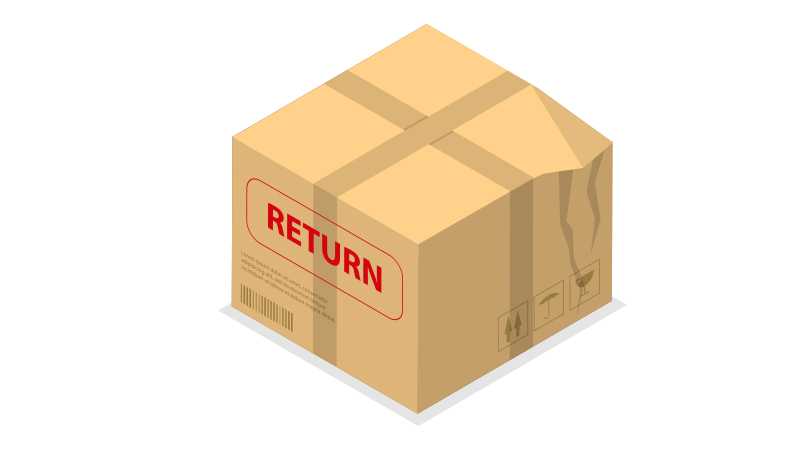
The risks of poor packing
Damage in transit
Re-handling fees
Customs delays
Shipment claims
Customer dissatisfaction
Step 1: Choose the right pallet
Many pallet-related problems start with the wrong foundation. Choosing the right pallet helps keep your shipment stable, compliant, and easy to handle.
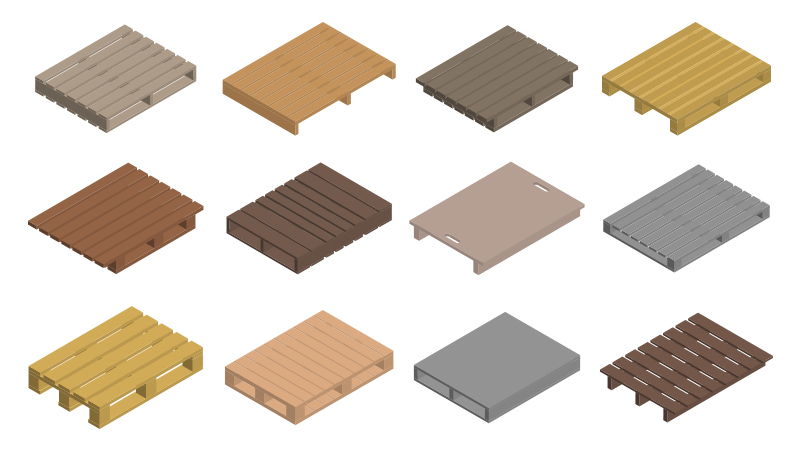
Pallet material
Wood pallets are the most common choice. They're strong, reusable, and suitable for most shipments, but must be ISPM-15 heat-treated for international export.
Plastic pallets are water-resistant and easy to clean, making them popular in industries such as food and healthcare. They don't require ISPM-15 treatment.
Cardboard or composite pallets are lightweight and often used for one-way exports, but generally support lighter loads.
Pallet size and weight capacity
Common pallet sizes include the EUR pallet (1200 × 800 mm) and the North American pallet (48 × 40 inches). DHL Heavy Weight Express accepts palletized pieces up to 1,000 kg within dimensions of 300 × 200 × 160 cm. Four-way entry pallets are preferred for easier forklift handling.
Checking pallet condition
Before loading, inspect the pallet for cracked boards, protruding nails, or signs of damage. For international wood pallets, make sure the ISPM-15 stamp is clearly visible.
Step 2: Stacking and weight distribution
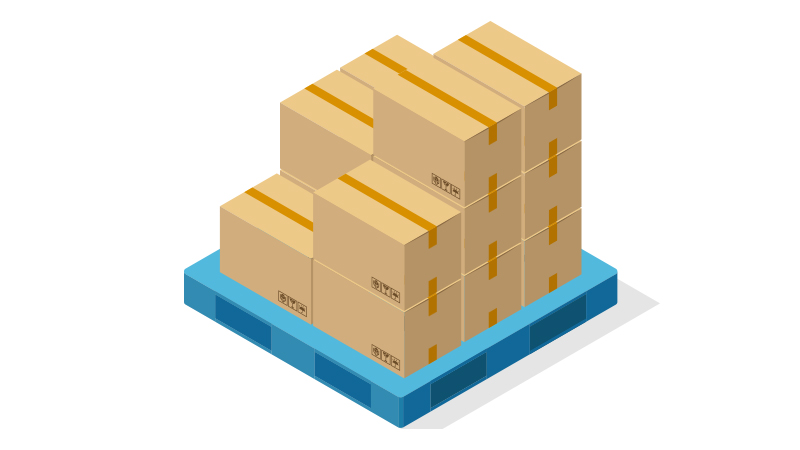
How you stack a pallet can have a major impact on its stability during transit.
Distribute weight evenly
Place heavier items at the bottom of the pallet and lighter items on top. This keeps the center of gravity low and reduces the risk of the load shifting or tipping during handling.
Use the right stacking pattern
Column stacking works best when boxes are the same size, while interlocking stacking can add stability to mixed loads. Avoid pyramid stacking, which reduces load strength and can make shipments non-stackable.
Avoid overhang
Goods should never extend beyond the pallet edge. Overhang increases the risk of damage from forklifts, racking systems, and other freight during transit.
A well-balanced pallet is safer to handle and less likely to incur damage, delays, or additional charges.
Step 3: Securing the goods
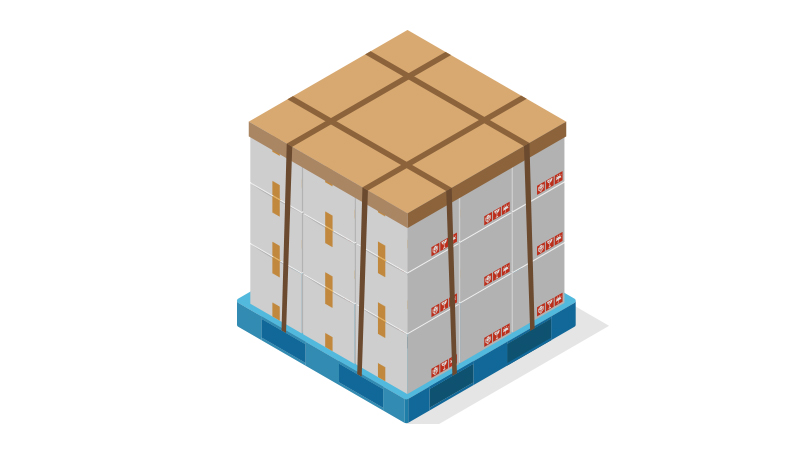
Even a perfectly stacked pallet can fail if the load isn't secured properly.
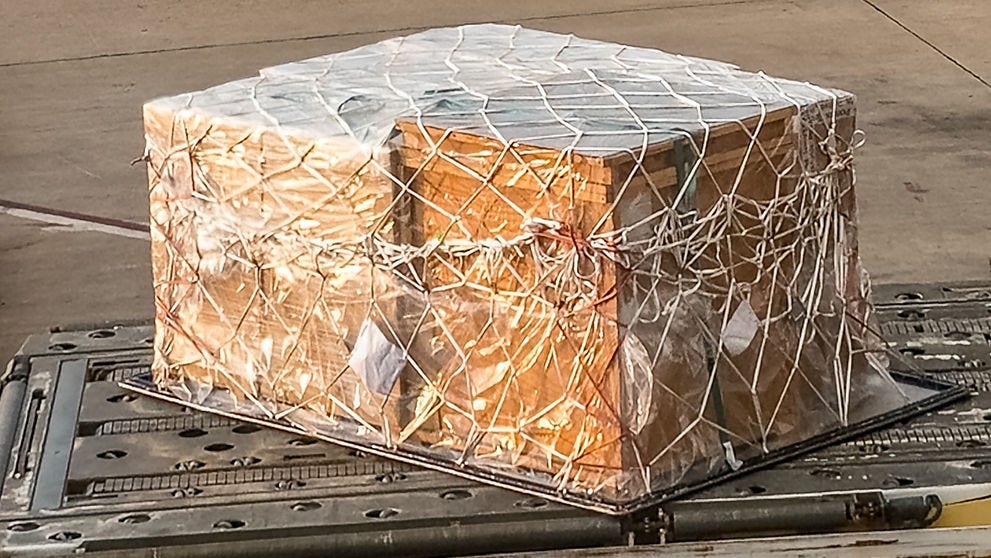
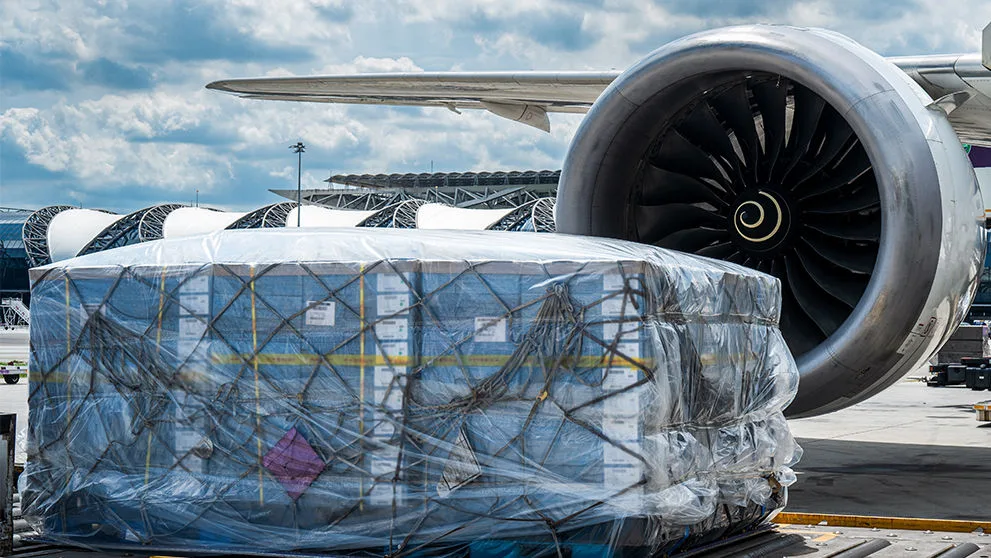
Shrink wrap and stretch wrap
Wrap the load from the pallet base upwards, ensuring the film covers the pallet itself to anchor the shipment. Use at least three full rotations at the top and bottom, with enough tension to prevent movement.
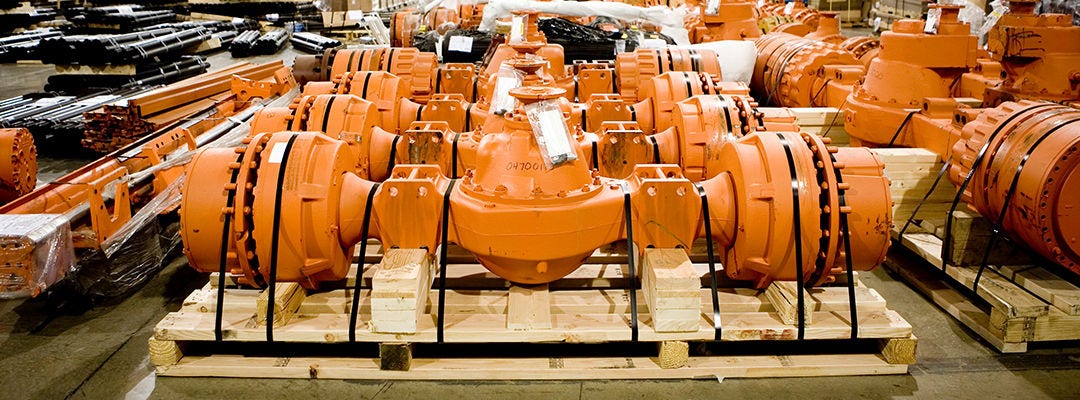
Strapping and banding
For heavier shipments, use metal or heavy-duty plastic straps to secure the load to the pallet. A minimum of two straps should run perpendicular to the pallet base, with additional cross-strapping for taller loads.
Corner boards and edge protectors
Place corner boards along the vertical edges of the shipment before strapping. They help prevent strap damage and provide additional protection during handling.
Proper securing is non-negotiable. Loose or unstable loads remain one of the most common causes of damage in palletized shipping.
Step 4: Protective packaging materials
The pallet provides stability, but the right packaging materials help protect the goods themselves.
Use:
- Double- or triple-walled corrugated boxes for heavy or fragile items
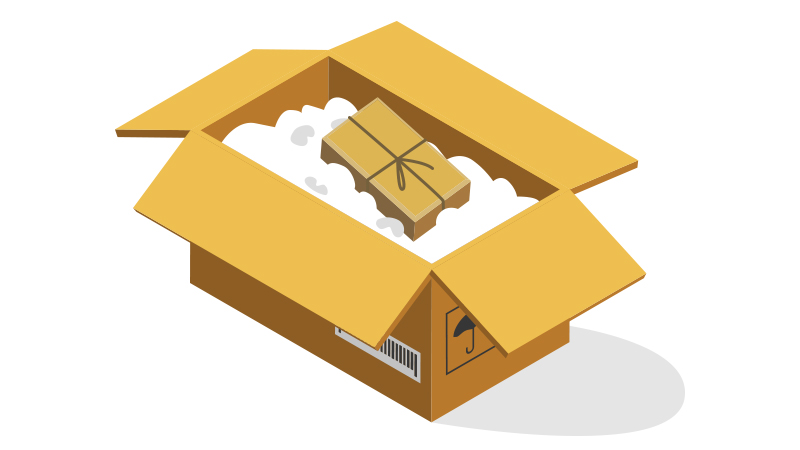
- Foam inserts, bubble wrap, air pillows, or packing peanuts to cushion products and absorb shock
- The H-taping method to seal all box seams and strengthen cartons
- Custom foam inserts or wooden crating for high-value, delicate, or irregularly shaped goods
The more valuable or fragile the shipment, the more important internal protection becomes.
What is dunnage and why it matters
What is dunnage?
Dunnage is any material used to protect, separate, and stabilize cargo during transit. It fills empty space, reduces movement, and helps keep goods secure inside a pallet, container, or crate.
Common examples include inflatable airbags, foam blocks, wooden bracing, kraft paper, and corrugated inserts.
Why dunnage matters
Even a well-packed pallet can be damaged if products are able to shift during transport. Dunnage helps absorb shock and vibration, fills voids between items, and prevents cargo from moving when the shipment is handled, loaded, or transported.
Think of it as an extra layer of protection. While packaging protects the product itself, dunnage helps keep the entire load stable.
Types of dunnage and when to use each
- Inflatable airbags (dunnage bags): Use to fill gaps between pallets or inside containers.
- Foam dunnage: Use around fragile goods that need shock absorption.
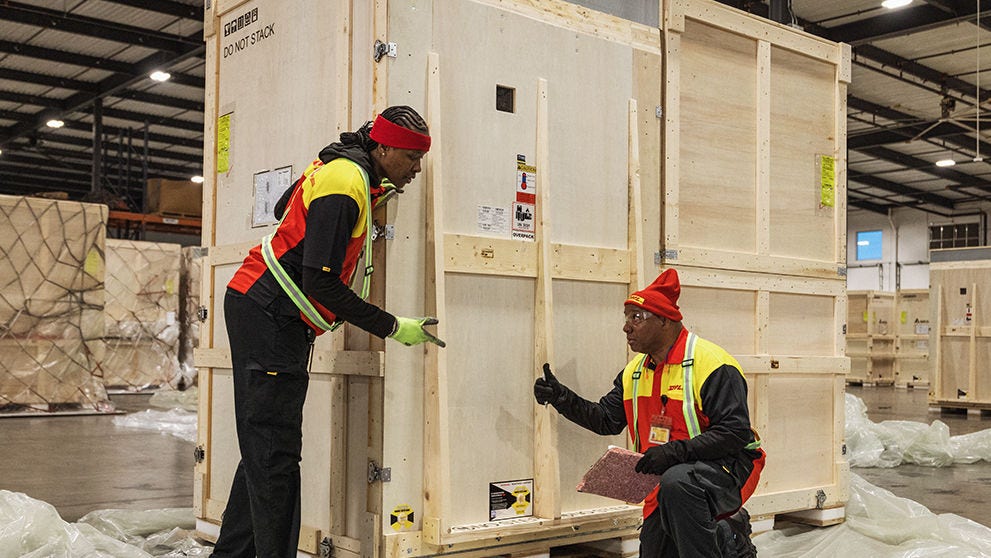
- Wooden bracing: Use for heavy machinery, crates, and irregularly shaped cargo.
- Kraft paper or corrugated inserts: Use as lightweight void fill for lighter shipments.
- Edge protectors and bracing boards: Use to reinforce stacked boxes and prevent strap damage.
The right dunnage can significantly reduce the risk of in-transit damage.
Step 5: Labeling and documentation
Clear labeling helps keep your shipment moving through the network without unnecessary delays.
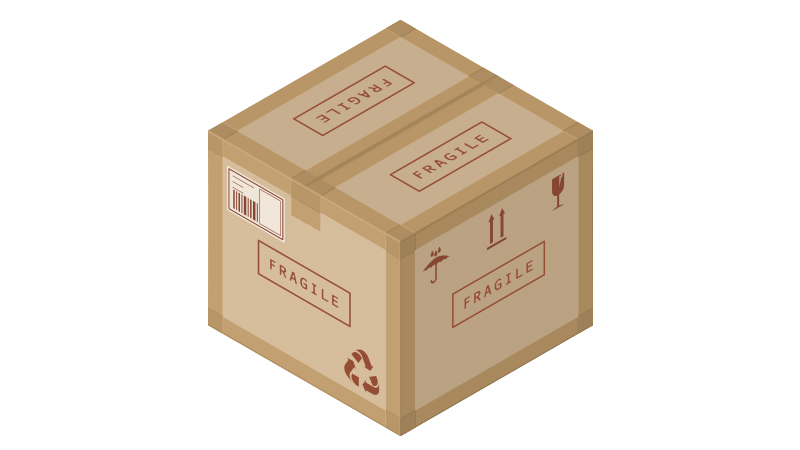
- Attach shipping labels and handling markings to all sides and the top of the pallet
- Include instructions such as FRAGILE, THIS WAY UP, or DO NOT STACK where appropriate
- Ensure barcodes remain visible and are not obscured by stretch wrap
- For multi-pallet shipments, label each pallet clearly (for example, 1 of 3, 2 of 3, 3 of 3)
- For international shipments, ensure commercial invoices and waybills are complete and accurate. Incomplete or incorrect documentation remains one of the most common causes of customs delays.
Common packing errors to avoid
Even experienced shippers can make mistakes when preparing large or palletized loads. Watch out for these common issues:
- Overloading pallets beyond the carrier's weight limits
- Uneven stacking or pyramid stacking, which reduces stability
- Insufficient securing, such as under-wrapped or un-strapped loads
- Incorrect labeling, including missing handling instructions or obscured barcodes
- Using damaged pallets or non-ISPM-15-compliant wood pallets for international shipments
- Ignoring dunnage, allowing goods to shift during transit
Avoiding these mistakes can help reduce damage and keep your shipping costs under control.
Ship large and palletized goods with DHL Heavy Weight Express
Once your shipment is packed and ready to go, you'll need a shipping service that's designed to handle it.
DHL Heavy Weight Express is built specifically for larger, heavier shipments, combining the speed of express delivery with the capability to transport palletized freight. The service supports shipments from 50 kg up to 3,000 kg, with individual palletized pieces weighing up to 1,000 kg, making it ideal for machinery, production components, medical equipment, and other time-critical goods.
Why businesses choose DHL Heavy Weight Express:
Global reach and network control: Ship to more than 220 countries and territories through DHL's fully integrated network of aircraft, hubs, customs expertise, and last-mile delivery. Unlike fragmented freight models, your shipment moves through one coordinated system from pickup to delivery.
Heavy Weight Priority Desks: Dedicated specialists proactively monitor every shipment, providing a single point of contact and rapid intervention if issues arise –helping keep critical deliveries on track.
Stable, all-in pricing: Transparent, door-to-door pricing includes customs brokerage and shipment handling, giving businesses greater cost certainty when shipping large and palletized goods internationally.


 Share
Share

Similar Stories