





Shipping internationally? Properly preparing your shipment will streamline the customs clearance process and ensure that your product reaches the customer in perfect condition.
By understanding the key elements of packing, labeling, and documentation, you can avoid common pitfalls, reduce delays, and maintain a competitive edge in the market.
Step 1: Pack your parcel
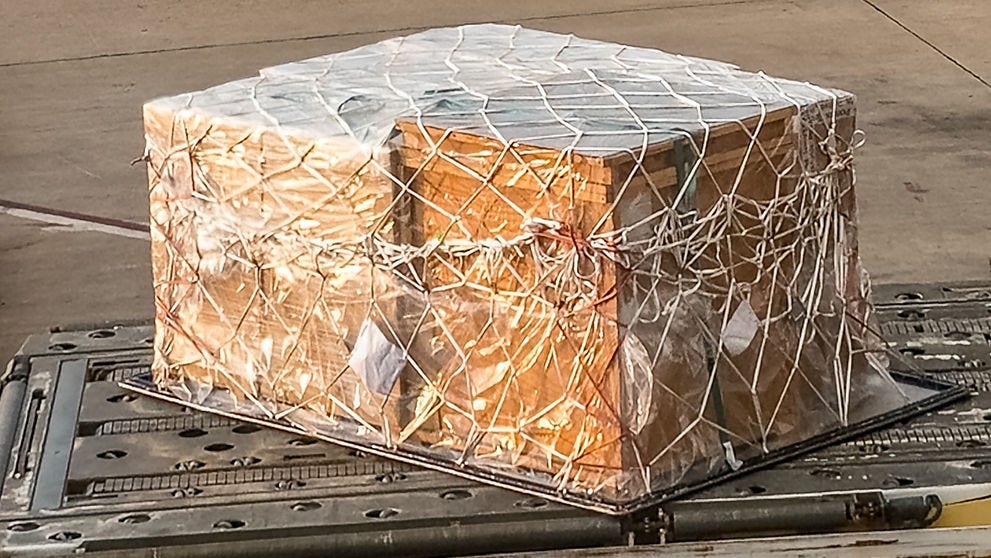
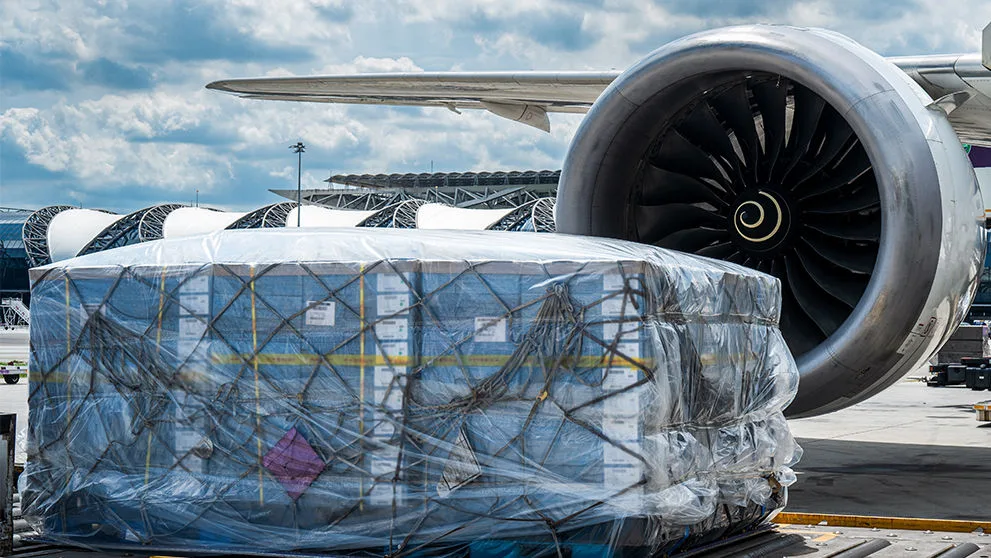
When packing for international shipping, your parcel travels within the DHL Express network, transiting through multiple facilities, vehicles and airplanes. A well-packed shipment can reduce the risks of damage, ensuring your consignee receives the contents in pristine condition.
While DHL Express does our very best to handle your shipments carefully, it is important to remember that the responsibility of the packaging lies with the shipper.
How to pack an international parcel: these are the four key considerations to ensure your shipment arrives in optimum condition:
1. Assess what you're shipping
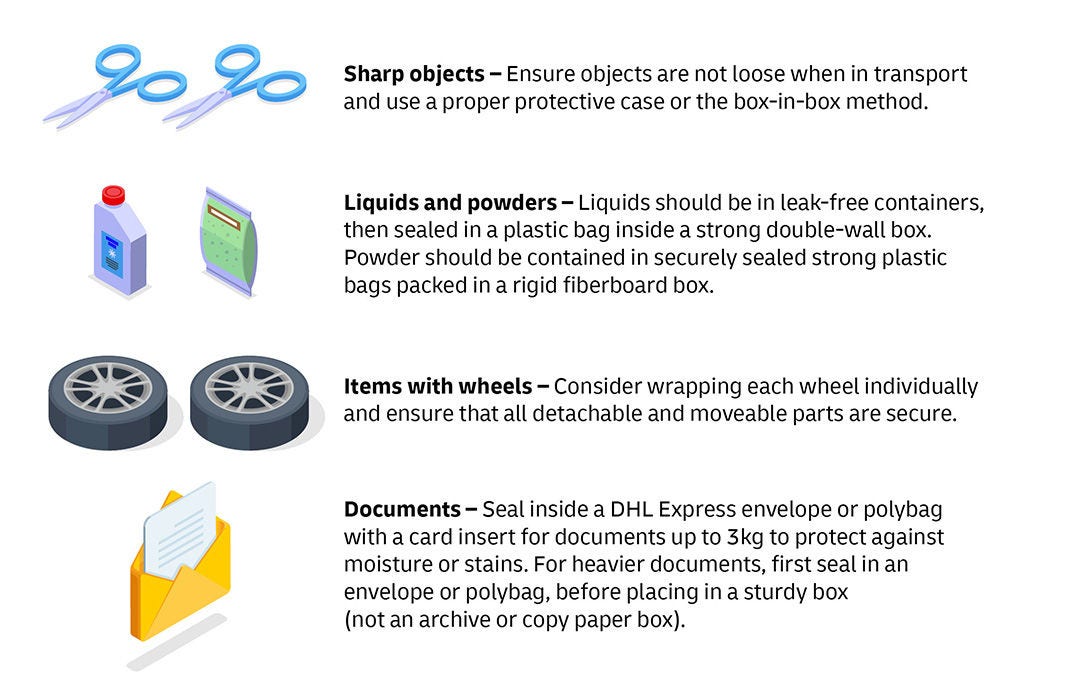
Carefully consider the items you are sending and what it will take to protect them in transit.
2. Packaging materials
Select the correct box and packaging materials to protect your items.
3. Sealing
Tape the seams of your package thoroughly and with strong, high-quality tape.
4. Labeling
Ensure you have attached a complete and accurate Air Waybill to your shipment, where it is clearly visible.
1. Assess what you are shipping
Consider dangerous and restricted goods
Dangerous Goods and Restricted/Prohibited Commodities are items that require specialist handling due to safety or legal reasons. Items like lithium batteries, perfumes and certain electronics may have specific shipping requirements or restrictions. To check if your goods fall into this category, contact our Restricted Commodities team.
2. Packaging materials
Having assessed your shipment, you now have to decide on the ideal external and internal packaging for your international shipping.
Good quality packaging is critical to protecting your shipment during transportation. DHL Express provides a range of packaging supplies that are tried and tested. However, if you prefer to use your own materials, the following provides some general guidelines. Since this guide is designed for general use across a wide variety of products, we recommend that you also refer to packaging standards within your industry.
Select a suitable box
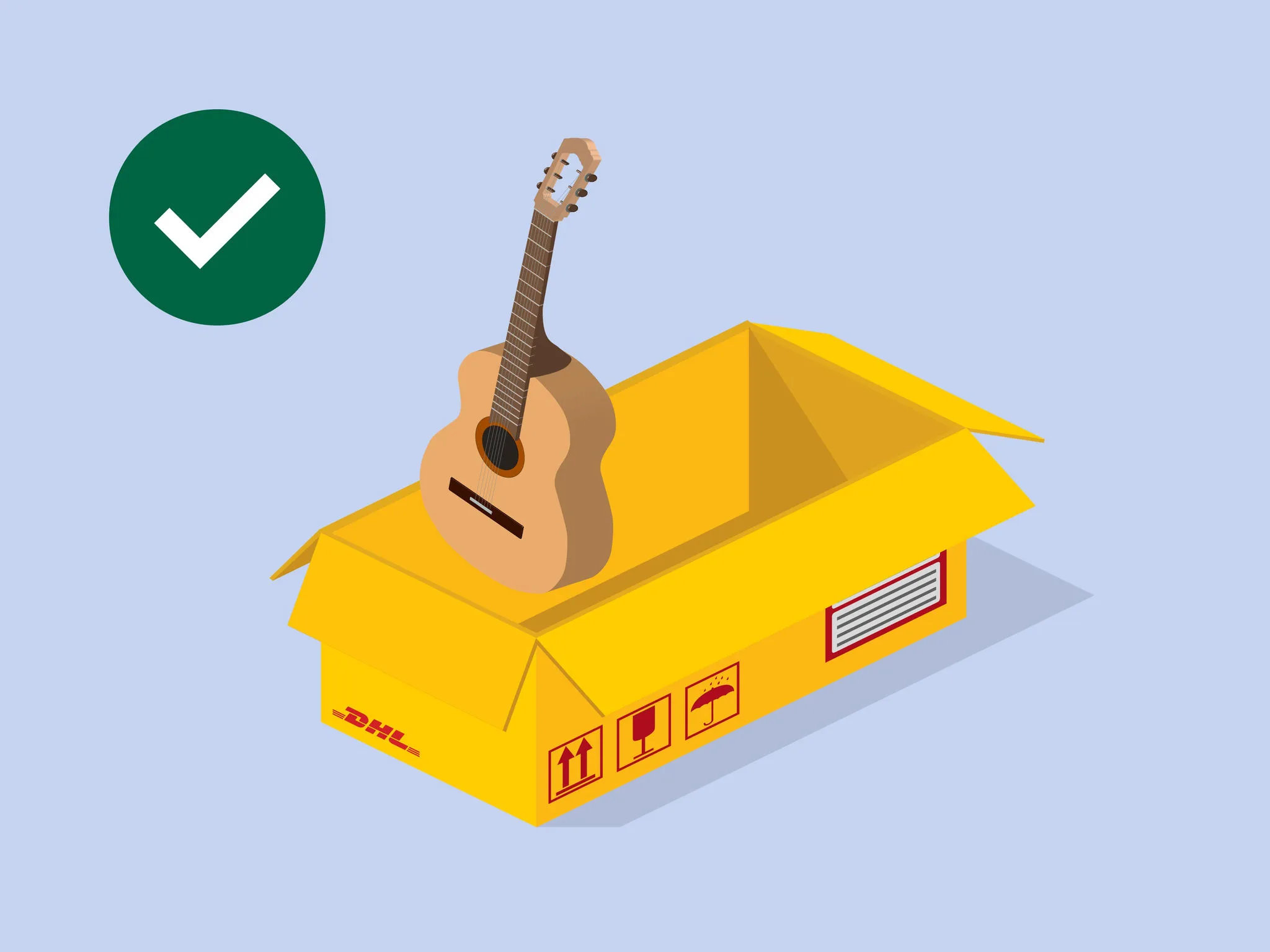
Choose a preferably new box (old boxes tend to lose rigidity) that can fit the contents of your shipment with about 6cm of excess space. Always use high-quality corrugated cardboard boxes for parcels, and for fragile or heavy items, double-wall or tri-wall boxes are recommended.
Remember, under-filled boxes may collapse, and over-filled boxes can burst. Prevent this by choosing the right sized box for the contents being shipped.
You can take your shipment to a DHL Express Service Point where you will be able to choose packaging. Look out for any manufacturer’s stamp on the box which can tell you about its strength and whether it is suitable packaging for the weight of your shipment.
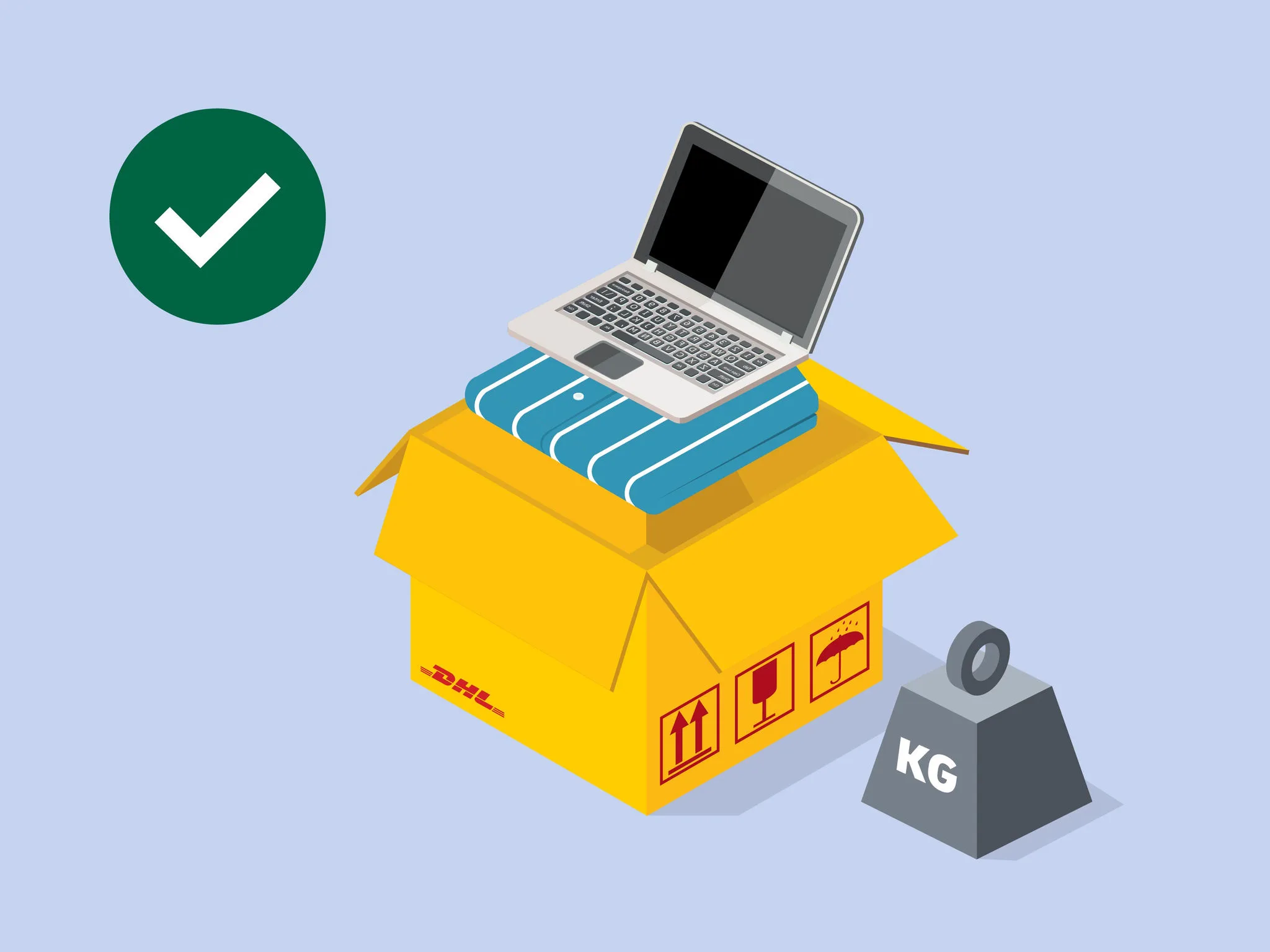
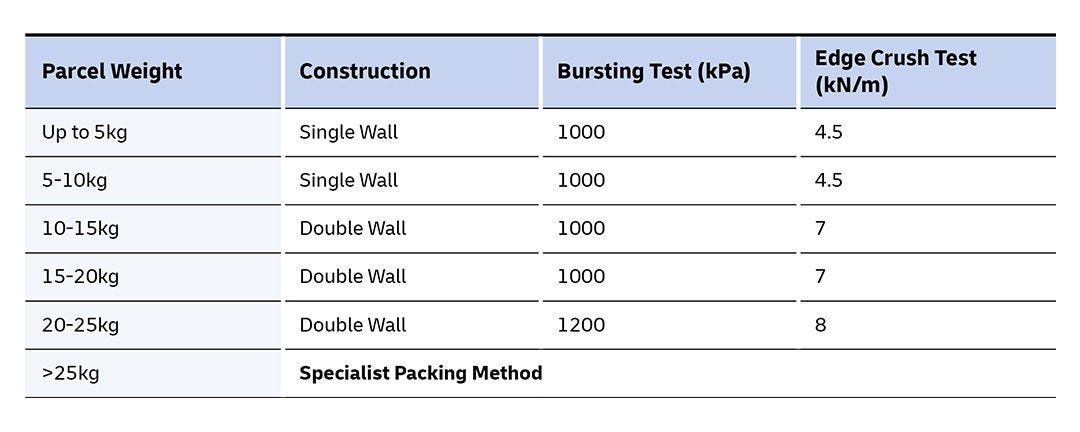
Choose a box or polybag appropriate for the weight of your shipment
Box specifications
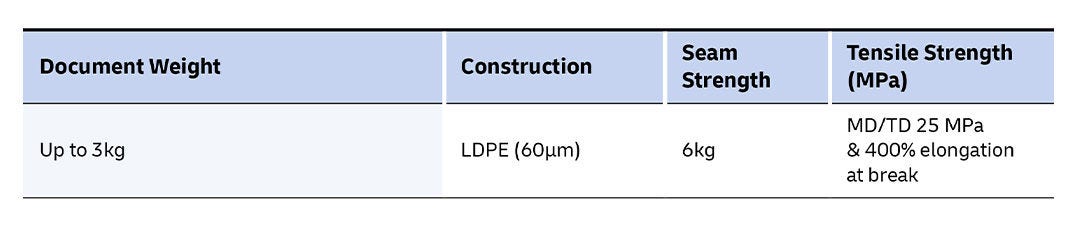
DHL Express polybag specifications
To avoid splits or tears, the tensile (stretch) and seam (seal glue) strength of the DHL Express polybag should meet the recommended standards outlined below.
DHL Express polybags have a minimum elongation (stretch) of 35cm prior to failure and can hold 30% more weight at the seam.
Remarks:
Burst-Test (aka Mullen Test) is the force of pounds per square inch required to rupture or burst the side of a corrugated box. The result indicates the box's ability to withstand external or internal forces, and how the box will contain its contents during rough handling.
Edge-Crush-Test (ECT) measures the stacking strength of corrugated cardboard boxes or fiberboard. Determining a finished box's compression-strength is defined by the amount of force that is needed to crush the cardboard by standing it on its edge.
Seam Strength refers to the load required to break a seam.
Tensile Strength is the maximum stress that a material can withstand while being stretched or pulled before failing or breaking.
Objects with a rigid edge are not suitable for polybags, as they can pierce the plastic.
Basic packing method: internal packaging
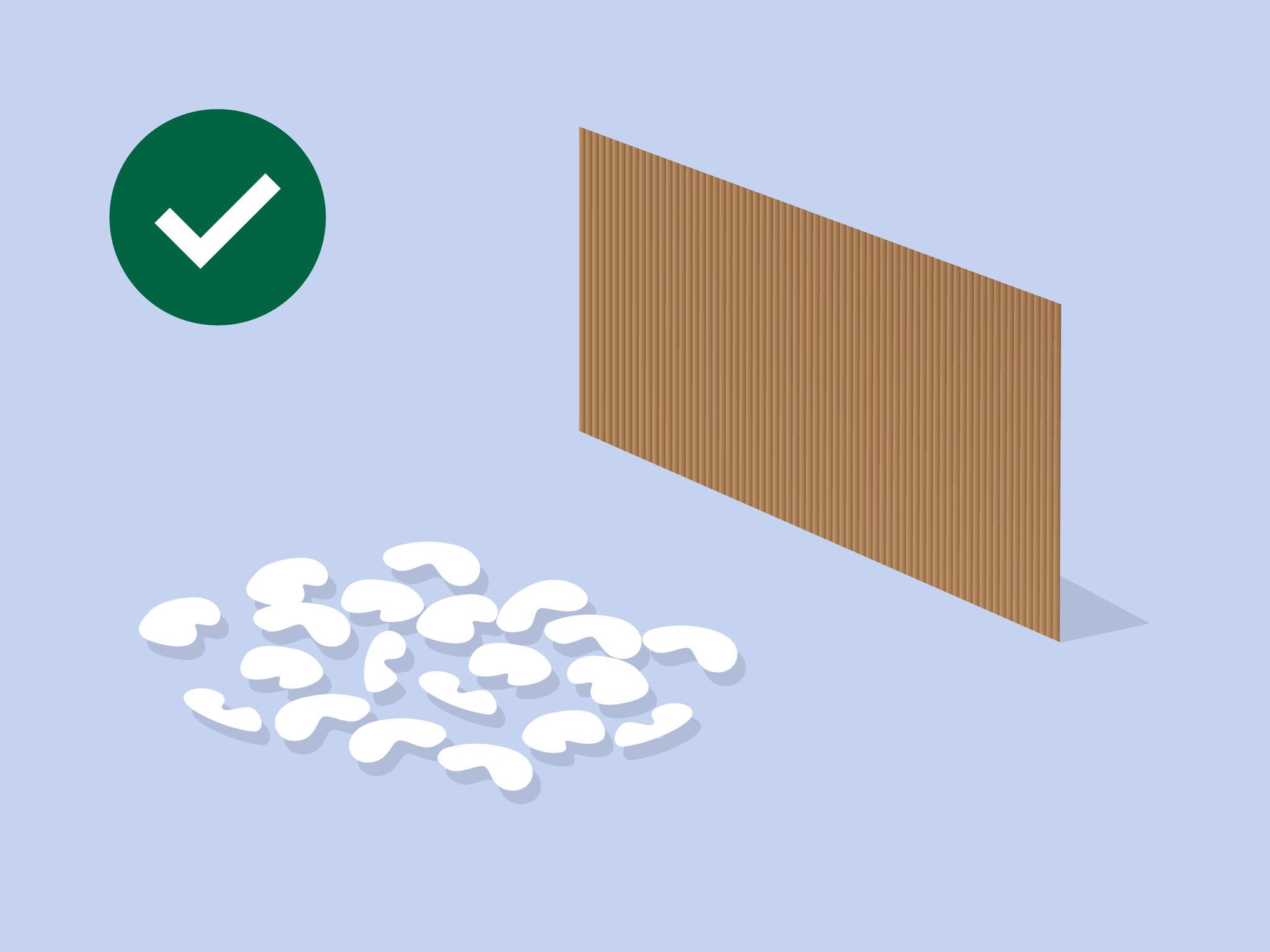
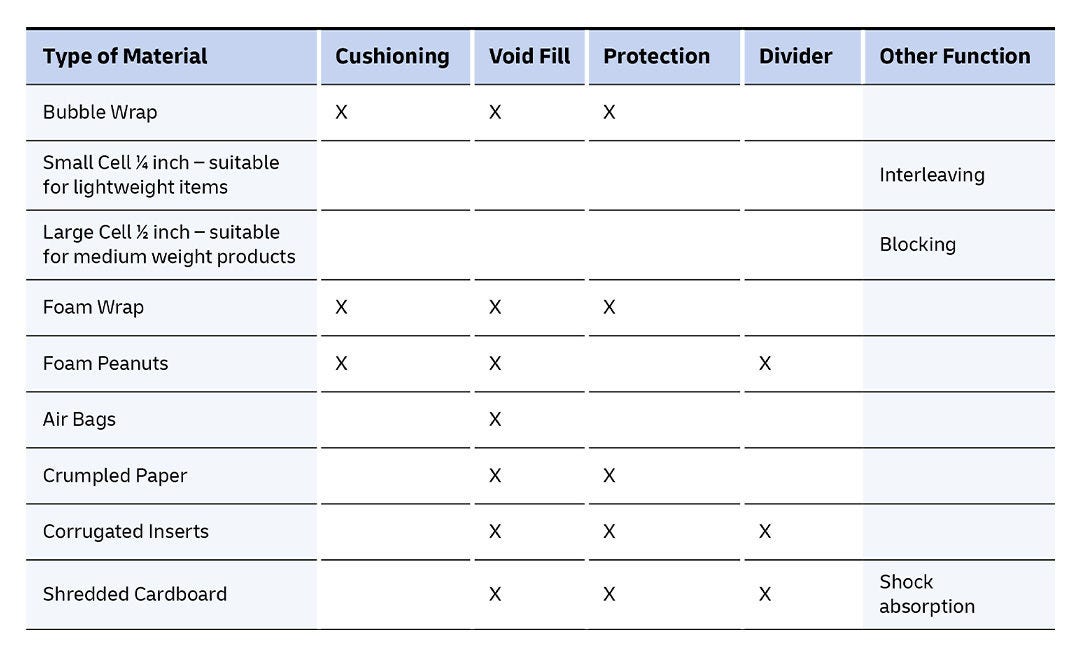
Layer the bottom of the box with protective inner packaging material. Bubble wrap, airbags, cardboard and foam peanuts/pellets are the most common. All have different qualities and it is important to use them appropriately.
Here’s a table to help:
Fill the gaps
Place the contents to be shipped on the bed of protection within the box. Ensure your items are placed centrally in the box with at least 6cm of space from any of the external walls and corners.
If shipping multiple items within a single box, ensure each one is wrapped individually and well separated from the others.
Fill any void space with more protective materials until there is no empty space. This will prevent items from moving inside the box during transport.
Box-in-box packing method
The box-in-box method utilizes a second outer box to offer additional protection. It is useful for the transportation of more fragile items or where the inner box will be used for retail purposes.
Both an outer and inner box will need to be prepared.
We recommend using the original manufacturer's packaging as the inner box where possible. Alternatively, the inner box should be packed using the basic packing method outlined above.
The outer box should be at least 14cm larger in all dimensions than the inner box to provide sufficient overpack protection.
We recommend a double wall box, but if using single wall, ensure your box has suitable strength for the weight of its contents.
Place approximately 6cm of void fill in the base of the outer box before centrally placing the inner box inside. Restrict any movement of the inner box by filling the space on all sides before sealing the outer box ready for transportation.
Sustainable packaging
Consider using eco-friendly packaging – your customers will notice! Prioritize biodegradable and recyclable materials.
3. Sealing
Tape up all the edges and seams of the box. A good seal helps to protect your package during transit. It is advisable to reinforce the edges as they are most susceptible to compression during transportation.
Both the adhesive tapes you choose and how you seal the shipment makes a difference in protecting your shipment contents from being exposed or damaged during transit.
We recommend the following pressure-sensitive tapes for their strength and durability:
- Polypropylene tape (brown plastic tape)
- Vinyl adhesive tape (electrical tape)
- Fiber-reinforced paper tape (duct tape)
If you are a non-account holder, please do not seal your shipment until the courier has inspected its contents on collection.
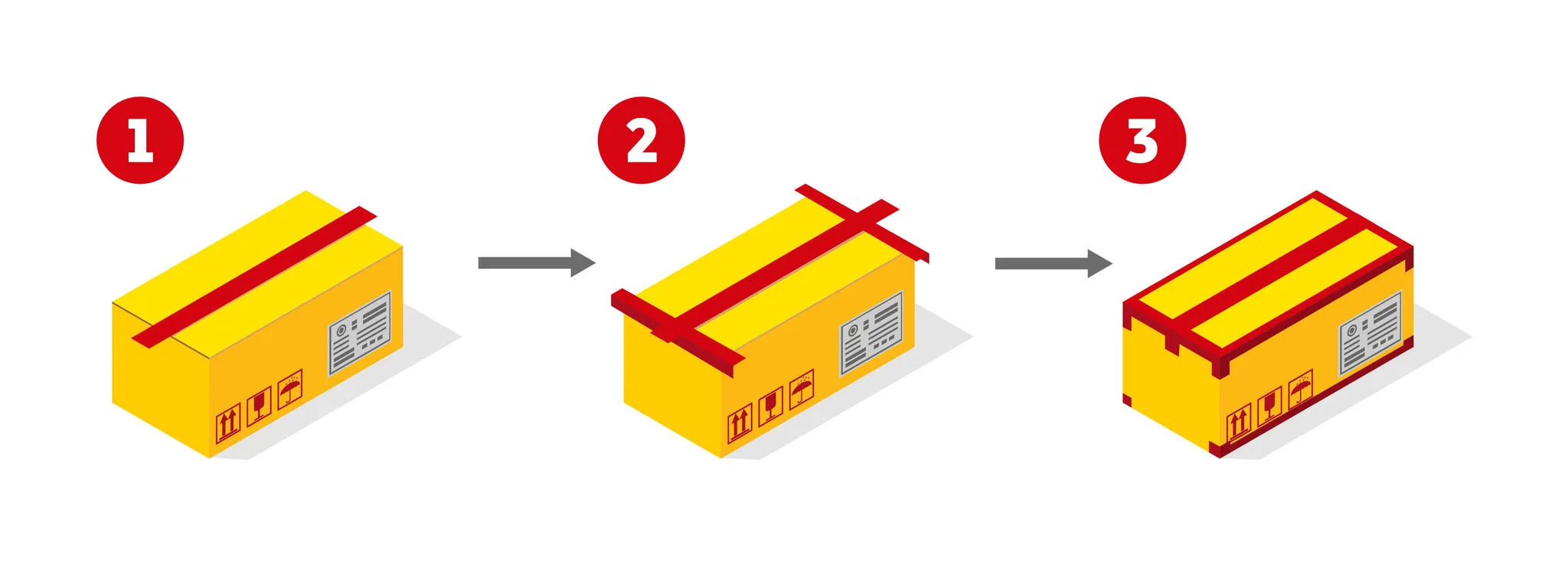
H-tape method
Ensure all seams are sealed using the 'H-tape' method.
- Apply one strip of tape along the center seam
- Apply two strips of tape across both edge seams. Apply more strips of tapes for heavier shipments
- Repeat the H-taping so that both box’s top and bottom seams are sealed
4. Labeling
Want to know how to label a package for international shipping? Here are four key points to remember:
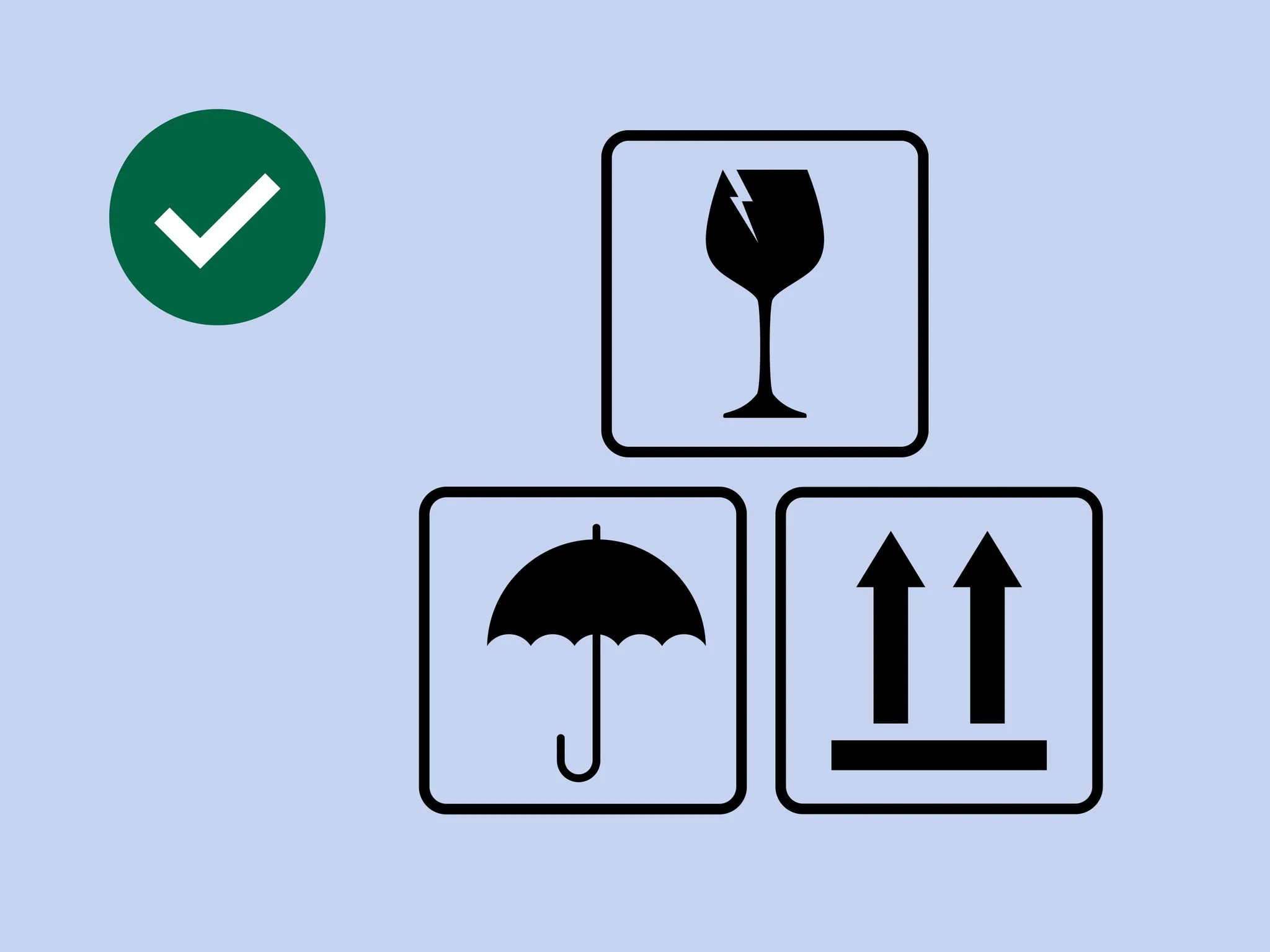
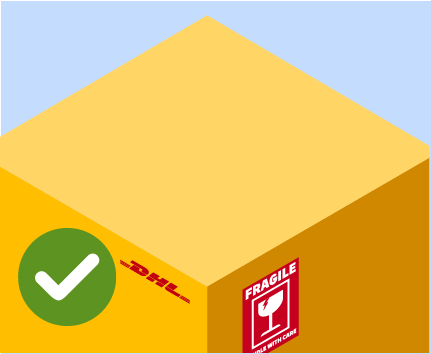
Handling Labels
Any special handling label must be applied by the shipper prior to courier collection. Common labels include:
Applying the shipment label
Displaying the shipment label(s) clearly is important to ensure your shipment moves swiftly through DHL Express' network.
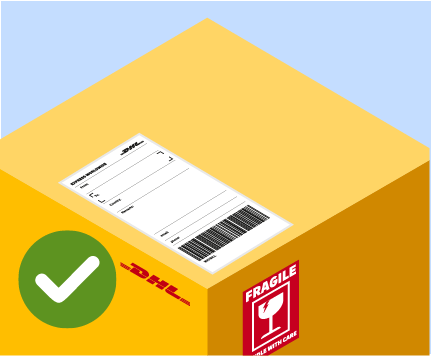
Fix the shipment label securely to the top surface of the shipment box. This will help us keep your shipment in an upright position as much as possible during transit!
Ensure the label is wholly visible on one surface and that the label does not cover any seams.
Do not let other labels, tapes or paperwork cover the shipment label.
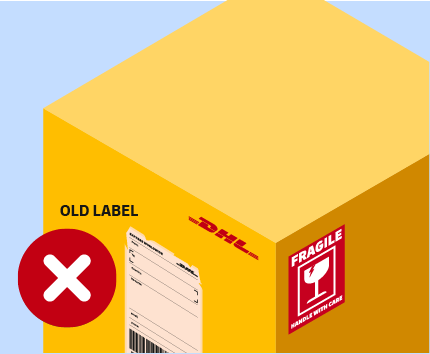
We never recommend using an old box but if you do, ensure all outdated shipment labels are removed prior to use.
Place a spare label inside the package to help us identify your shipment in the event the original label becomes detached or damaged.
If you need to apply other labels to your shipment, avoid placing them on the same side as the shipment label.
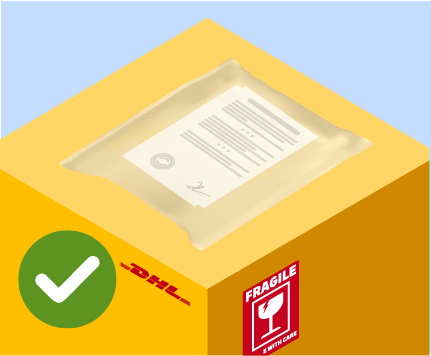
Use a plastic self-adhesive clear window pouch to hold any loose documents that are required to be placed outside of the box.
Step 2: Prepare your documentation
DHL Express Air Waybill
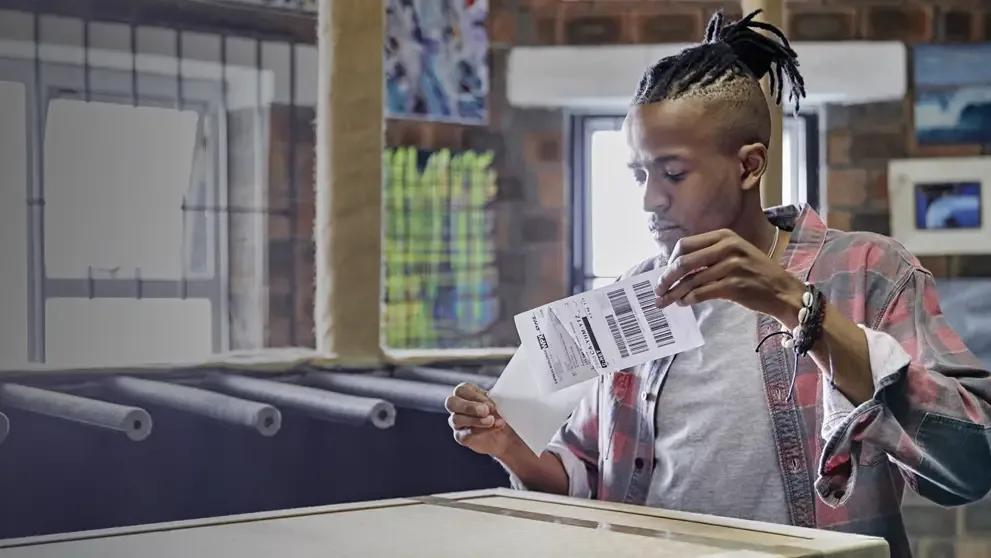
A key part of international shipping is customs clearance. For a smooth experience, you’ll need to complete an Air Waybill (AWB). This is a document issued by a carrier and attached to a shipment. It includes important details like the sender’s and recipient’s name and address, a description of the goods, and who is liable to pay the duties and taxes. It is arguably the most important piece of documentation when shipping internationally.
Useful information when filling in your Air Waybill
- Unless the duties & taxes paid (DTP) service is selected, these will be borne by the consignee. If nothing is indicated, duties & taxes unpaid (DTU) is the default.
- The declared weight and dimensions of your shipment may be verified. If any discrepancies are found, additional charges may apply.
- The shipper’s address and details should reflect you or your company’s name, telephone or mobile number, email address and your complete mailing address including postal code.
- The receiver’s address and details must include the company or individual’s name – a valid contact person, contact number, email address, as well as complete mailing address including postal code.
- The shipment information will be used for customs clearance to ensure that the details tally with the actual contents and the shipping invoice.
- Air Waybills have an expiration date and will be invalid beyond that.
- You will be prompted to provide a sender/receiver Tax ID for many countries if your shipment is for a sale of goods.
Your new DHL Express Air Waybill will be identified by a unique 10-digit code known as your AWB number. It acts as the reference for your shipment in the event that you need to communicate with us for anything about your shipment.
Multi-piece shipments
If you are sending a number of shipments under one Air Waybill, affix the original Air Waybill to one package. Then affix copies to the other packages. Label each box with the total number of boxes in the shipment, such as “1 of 3”, “2 of 3”, “3 of 3” etc.
Now that you’ve learned how to create your own Air Waybill, we can proceed to the next step.
Prepare your shipping invoice
Invoices are only required for parcel shipments – they do not apply for shipping documents.
A shipping invoice provides customs authorities with important information about the goods being transported, including their value, quantity, country of origin, and purpose of shipment. It helps customs officials assess duties and taxes, verify compliance with import regulations, and process the shipment efficiently.
To help avoid delays, make sure your invoice is complete and accurate. Include a clear description of each item, the quantity, value, currency, and the reason for export (for example, sale, gift, sample, or repair). The information on your invoice should match the contents of your shipment and the details provided on the Air Waybill.
Step 3: Arrange a collection
The final step before you entrust your shipment to DHL Express is scheduling your shipment collection.
The final step before you entrust your shipment to DHL Express is scheduling your shipment collection. To schedule a DHL Express courier pick-up from your home or office, have this information ready for the online pick-up request form:
- Your account number
- Pick-up location contact
- Pick-up location address
- Package location information
- Total number of packages
- Weight of shipment
- Contact’s phone and email address
- Desired pick-up date and time frame
Alternatively, you can take your parcel to a local Service Point. Once your shipment is within our care, you can track your shipment with real-time updates.
How to prepare your parcel for shipping: a summary
Choose packaging that is appropriate for the size, weight, and nature of the items you are sending, and pack your shipment securely in a suitably sized box or bag. Ensure you cushion and protect your items with the correct materials and then secure your parcel at the seams using the H-tape method.
Next comes the paperwork. Check you have completed your Air Waybill (and shipping invoice, if necessary) with all the accurate information required. Apply it to a clear area on the top of the box to ensure it is handled correctly.
Finally, contact DHL Express by phone or online to arrange a collection. Alternatively, you may wish to drop off your parcel at your nearest DHL Express Service Point.
For further information, download the DHL Essential Packing Guide for Express Shipments


 Share
Share

Similar Stories