1 - Siemens, 2023
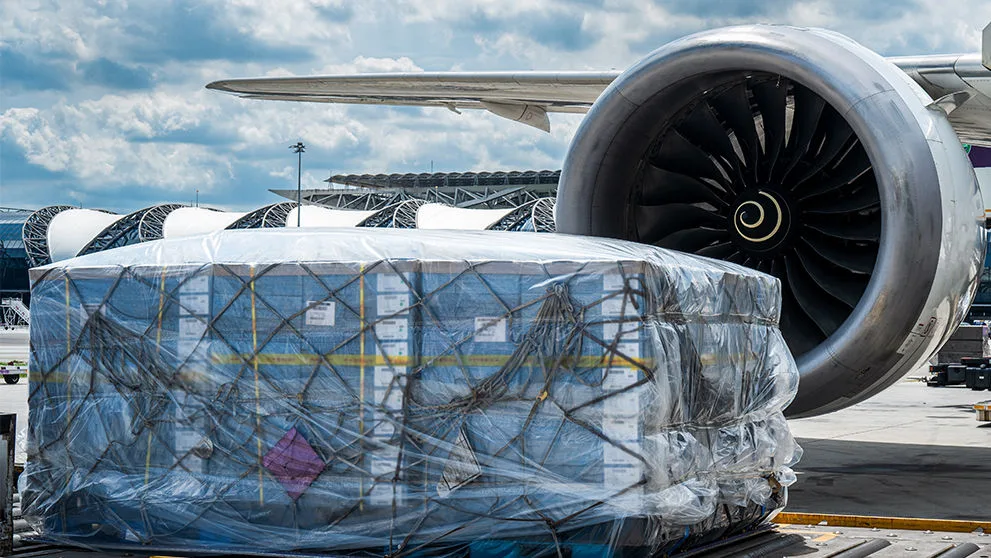
Heavy weight shipping has traditionally been associated with freight forwarding and long lead times. For many businesses, delays have simply been accepted as part of moving large shipments across borders.
Today's supply chains operate very differently. Production schedules leave far less room for error, and businesses increasingly expect heavy weight shipments to move with the same speed and predictability they've come to expect from express logistics.
So, are some of the biggest assumptions about heavy weight shipping now outdated? In this article, we'll bust six common myths and explore why a different approach is helping businesses keep operations moving.
Heavy weight shipments have traditionally moved through freight forwarding, where the journey is coordinated across multiple carriers and service providers. Depending on the route, shipments may change hands several times before reaching their destination.
With DHL Heavy Weight Express, shipments move through a single integrated network from pickup to delivery, with one point of contact and end-to-end visibility throughout the journey – a predictable service for time-critical heavy shipments.

The lowest price on a shipping quote doesn't always reflect the true cost of getting a heavy shipment from A to B. When multiple providers are involved, additional handling fees, customs charges, and other surcharges can quickly add up. Delays and extra administration also carry their own costs, even if they don't appear on the invoice.
Choosing a shipping solution with transparent, all-in pricing can provide greater cost certainty, helping businesses avoid hidden fees and make more informed decisions.
Total shipping cost vs price per kilogram
Price per kilogram can be misleading. Oversized dimensions, additional handling requirements, and multiple carrier fees can all increase the final cost. Likewise, splitting one heavy shipment into several smaller parcels isn't necessarily cheaper once individual shipping rates and surcharges are considered.
Focusing on the total cost of delivery – including handling and administration – often provides a more accurate basis for comparison than the initial quote alone.

Holding extra inventory has long been a way to protect against supply chain uncertainty. If you're worried about delays, carrying additional stock can seem like the safest option – but it comes at a cost. Cash is tied up in inventory, storage costs increase, and valuable warehouse space is taken up.
The better solution is to reduce the uncertainty itself. Choosing a shipping partner that offers reliable transit times and consistent service can help free up working capital while keeping supply chains responsive.
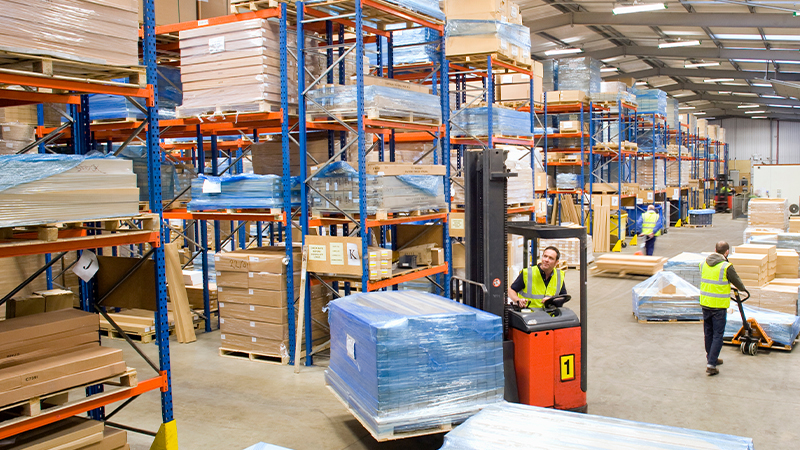
Many manufacturers accept downtime as an unavoidable part of running a business. A machine breaks down, a critical component is delayed, and production pauses until the replacement arrives. One missing part can bring an entire operation to a standstill, with costs quickly spiralling.
That's why more businesses are turning to services like DHL Heavy Weight Express. By moving time-critical shipments through a single integrated network, it helps reduce delays and get essential components where they're needed, faster.
The cost of unplanned downtime
Unplanned downtime costs industrial manufacturers an estimated US$50 billion every year1

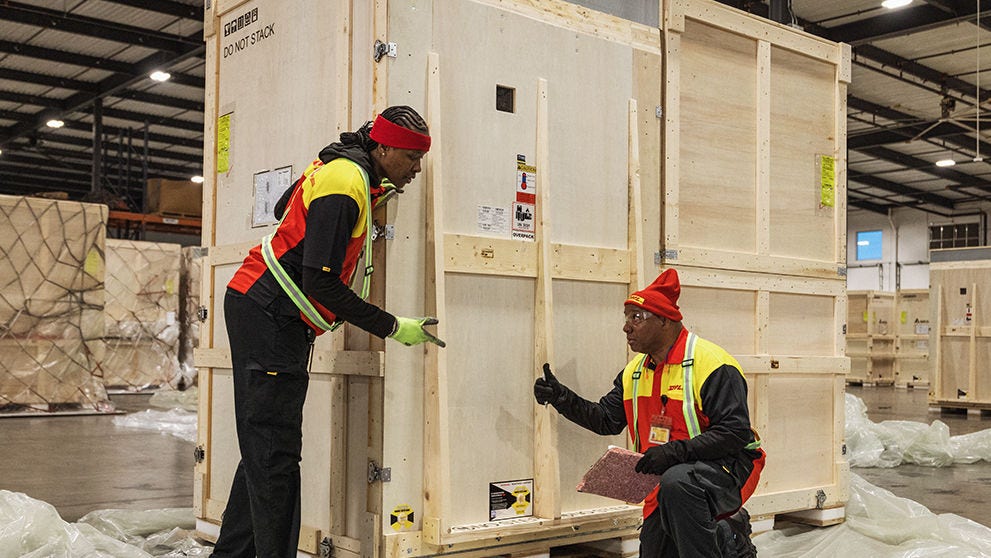
A pallet is a pallet, right? Not quite. Heavy shipments vary enormously, and what works for industrial machinery may be completely unsuitable for medical devices, precision equipment, or sensitive technology. The size or weight of a shipment is only part of the picture.
For high-value or regulated shipments, chain of custody and specialist handling are just as important as transit time. DHL Heavy Weight Express is designed with those requirements in mind, helping businesses move critical shipments with the care and visibility they demand.
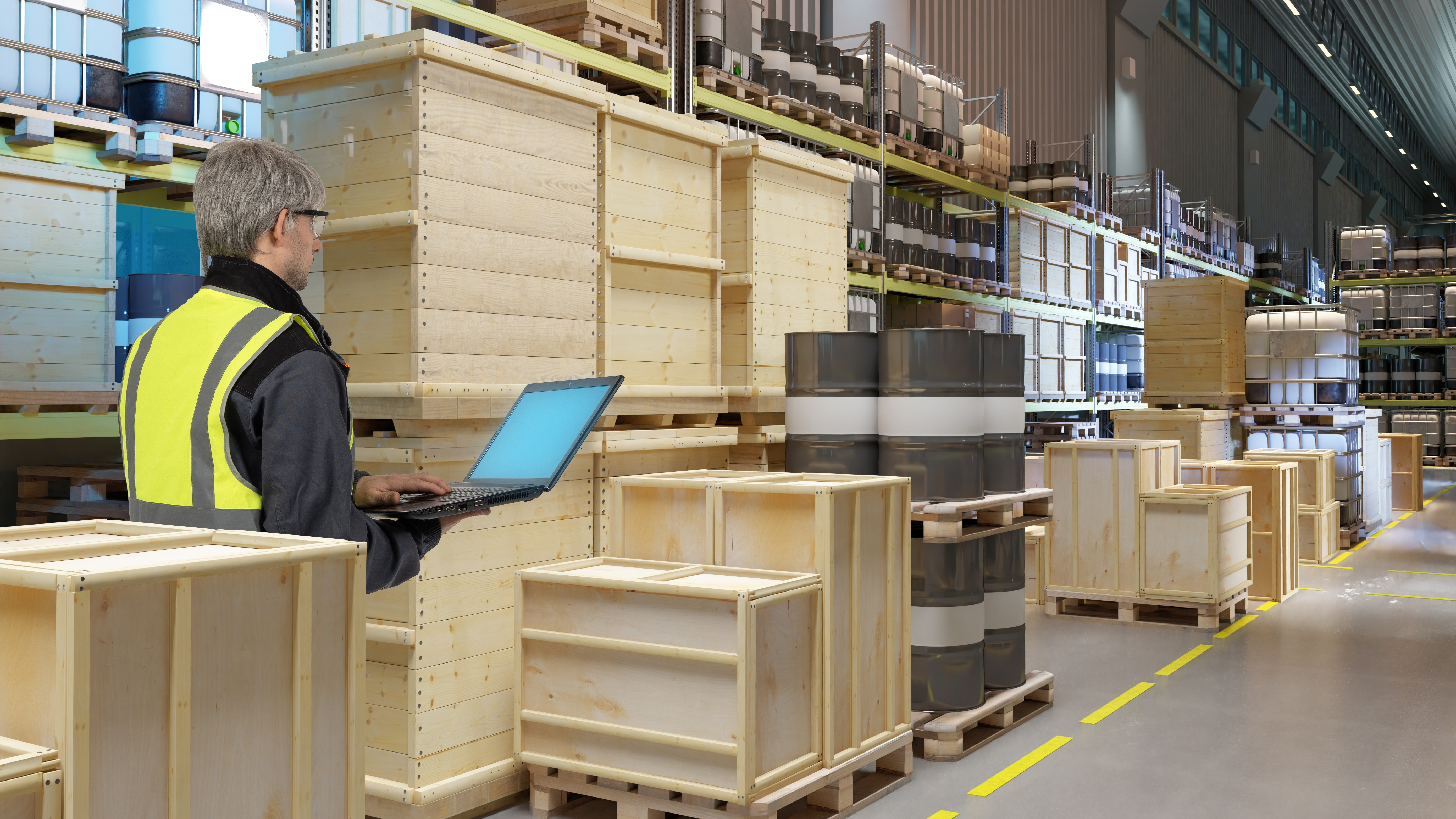
Disruption is no longer the exception – it's part of doing business. Extreme weather, geopolitical events, supplier issues, and transport delays can all interrupt the flow of goods.
Resilient supply chains are built on contingency. Businesses that recover fastest are those with reliable backup plans, clear visibility, and logistics partners that can respond quickly when disruption occurs.
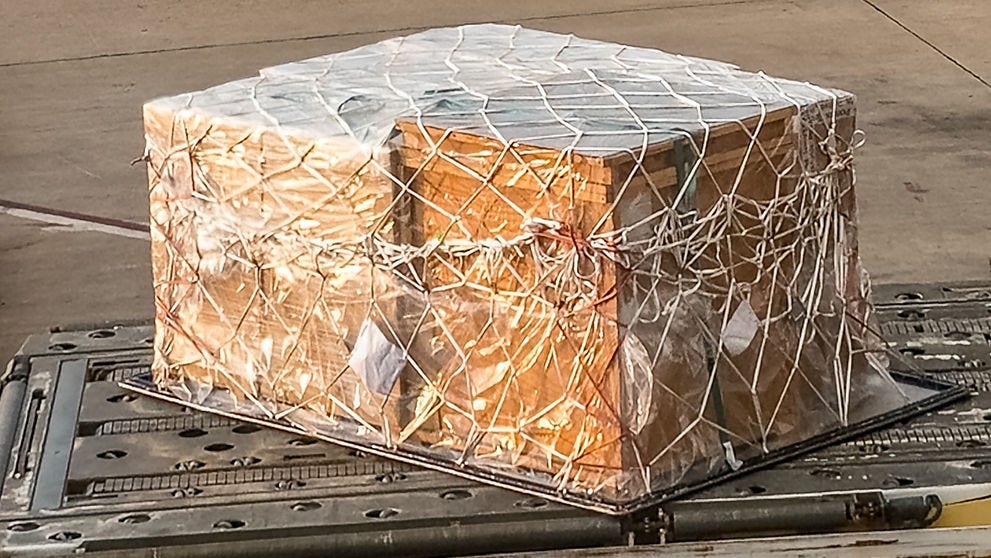
Packaging considerations for heavy weight shipments
Use strong, new corrugated cartons suitable for the shipment's weight, and consider double-boxing fragile items with cushioning between the inner and outer boxes for added protection.
Seal cartons using reinforced tape in an H-pattern across all seams, rather than standard household tape. Finally, apply heavy-package labels showing the shipment weight so handlers know exactly what they're lifting and can handle appropriately.

Product launches, site openings, and major installations rarely have the luxury of flexibility. If one critical shipment arrives late, the impact can extend well beyond logistics – affecting revenue, customer relationships, and reputation.
That’s why reliable delivery is essential. DHL Heavy Weight Express helps businesses meet fixed deadlines by combining the speed of express shipping with the capability to move shipments from 50 kg upwards through a single integrated network, ensuring key milestones stay on track.
DHL Heavy Weight Express is designed for international shipments weighing 50 kg and above, combining the speed of express shipping with the capability to move larger, heavier goods through one integrated network. It can be the right choice when:
Open a DHL Express Business Account or speak to your Account Manager to find out how DHL Heavy Weight Express can support your business.
1 - Siemens, 2023


 Share
Share