1 – McKinsey, 2025
2 – Finisterre
3 – PANGAIA
4 – Alima Pure
5 – La Bouche Rouge
6 – Shiro
7 – NatureFlex
8 – ThermoFibre
How sustainable is your packaging? Now more than ever, your customers are paying close attention to the boxes, mailers and wrapping their orders arrive in – and it’s shaping how they see your brand.
Then consider the environmental impact and tightening governmental regulations around packaging waste, and the time is ripe to make sustainable packaging a key part of your business proposition.
Read on to discover new trends in eco-friendly packaging, and some best practices to follow.
From overflowing landfills to ocean plastic, the environmental cost of packaging waste is hard to ignore. Traditional materials like single-use plastics and non-recyclable composites often end up polluting the planet for decades.
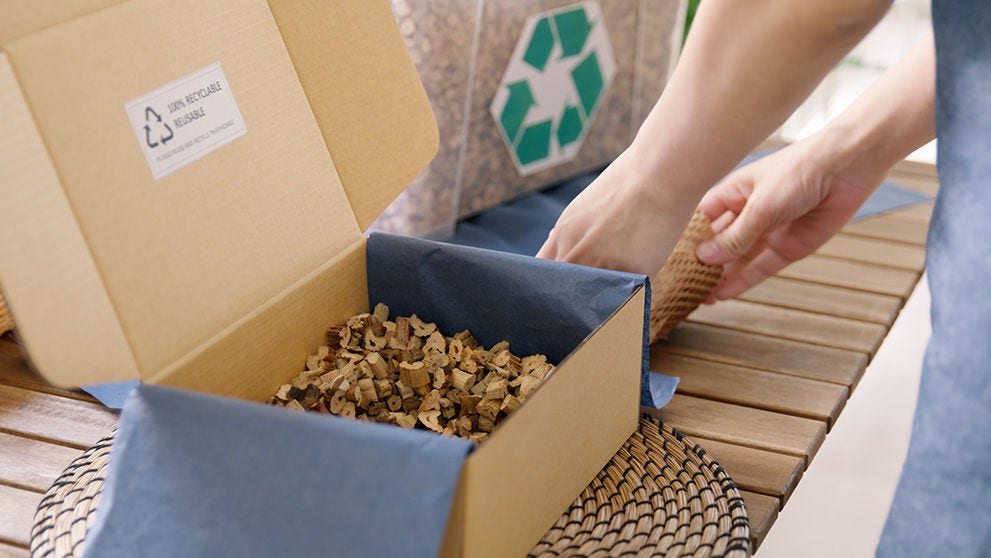
Switching to sustainable packaging – like recyclable paper, compostable mailers, or reusable containers – helps reduce your carbon footprint and cuts down on waste. Even small changes in packaging design can add up to a big difference, especially at scale.
Eco-conscious shoppers are actively seeking out brands that use sustainable packaging, and many are even willing to pay more for it – a survey by McKinsey1 found that 25% of high-income Gen Z consumers are prepared to pay “a lot more” for sustainable packaging.
Whether it’s a recyclable mailer, minimal packaging, or a "plastic-free" badge on your website, these choices influence buying decisions – showing customers that your business values the planet as much as they do.
So, what environmentally friendly packaging designs are currently shaking things up? Let’s look at some of the innovations being used in the fashion, beauty and food sectors.

Recycled mailer bags
Mailer bags made from 100% recycled, FSC*-certified paper are gaining popularity in the fashion industry. These bags significantly reduce material usage and weight compared to traditional designs. For instance, UK-based outdoor brand Finisterre2 utilizes these mailers, cutting material usage by 70% and weight by 50% compared to their previous designs.
*Forest Stewardship Council
Biodegradable garment bags
These bags offer excellent protection for clothes, ensuring they remain pristine during transit and storage. PANGAIA3, a global fashion brand, has adopted these compostable bags for their entire product line. By exclusively using TIPA® compostable packaging, PANGAIA has eliminated 39.2 tons of plastic waste and 1.5 million polybags from its supply chain.

Refillable makeup containers
Refillable containers, such as compacts and jars, are crafted from materials like aluminium and glass, reducing the need for single-use plastics. “Clean” beauty company Alima Pure4 is one of many brands to have adopted these containers – customers can purchase eyeshadow, blush, and pressed foundation refills to pop into their existing cases.
Plastic-free
Some beauty brands are going beyond recycled content and aiming to eliminate plastic altogether. This means turning to alternative materials like glass, metal, bamboo, or paperboard for everything from lipstick tubes to deodorant sticks. For example, French brand La Bouche Rouge5 uses upcycled leather for its lipstick cases, with refills available for the inner product. Meanwhile, in Japan, Shiro6 has developed glass packaging with minimal plastic use across its skincare and fragrance ranges.

Compostable clear bags
These bags, such as those made from NatureFlex7 (a biopolymer derived from renewable, plant-based resources), offer an eco-friendly alternative to traditional plastic bags. They are 100% biodegradable and compostable in both home and industrial composting systems, and are FDA-approved for food contact, making them suitable for various perishable items like sandwiches, bakery goods, and dry snacks.
Molded fiber packaging
Molded fiber packaging, created from recycled paper or plant fibers, is used for various food items. ThermoFibre8 produces laminated molded fiber trays and bowls that are microwavable, ovenable, and home compostable, providing a sustainable solution for food packaging.
Switching to eco-friendly packaging brings big benefits, but it’s not without hurdles. Here are the main challenges businesses face – and how to overcome them.
One of the most persistent obstacles is cost. Sustainable materials tend to be more expensive – whether due to higher raw‑material prices, newer or smaller scale supply chains, or extra R&D and testing.
Shop around suppliers for the best deals, and be aware that whilst passing cost increases on to customers is an option, not everyone is willing or able to pay more.
When considering eco‑friendly materials, ensure they match the performance of traditional materials in every respect. Durability, barrier properties (e.g. protecting against moisture, oxygen), compatibility with existing machinery, and ensuring product safety (especially for food/perishables) should all be considered.
It’s not just about making more eco‑friendly packaging – the systems to collect, recycle, compost, or otherwise dispose of packaging properly need to be in place. If waste infrastructure is weak, a compostable package may end up in a landfill where it doesn’t degrade properly, or recyclable packaging may not be collected or processed.
As technology advances and consumer expectations rise, new solutions are reshaping how businesses approach packaging. Here are some of the biggest trends to watch:
Eco-friendly packaging is rarely a one-size-fits-all solution. Here are the key factors to weigh up.
Sustainability is important, but so is performance. Your packaging still needs to protect the product and perform well in transit.
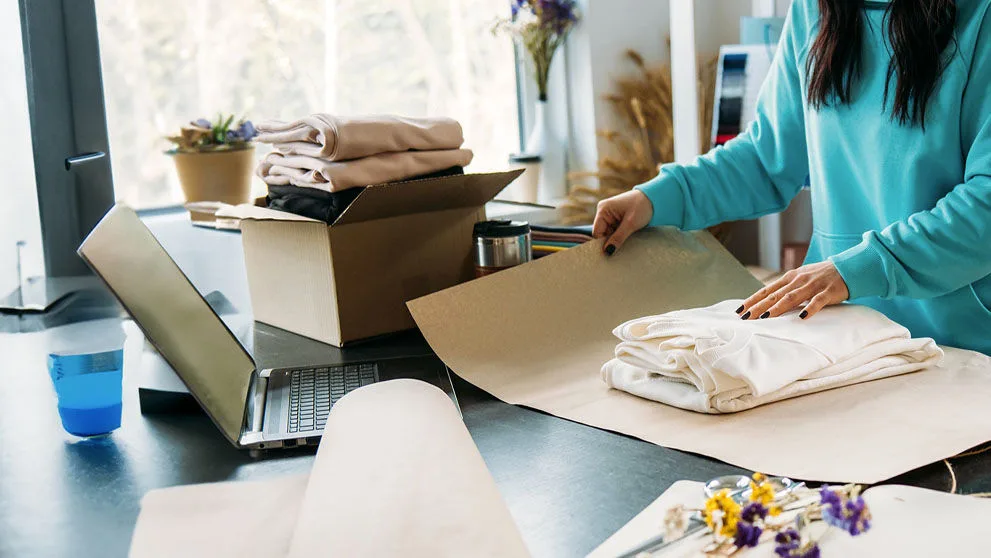
It also needs to make financial sense. Start with small swaps that have a big impact – for example, switching to recycled mailers or reducing excess packaging. Over time, you can scale your efforts as suppliers and materials become more cost-effective.
A package may be recyclable – but only if the local infrastructure supports it. Another might be compostable – but only in industrial facilities, not home bins.
This is where lifecycle thinking comes in. Consider:
Use lifecycle assessments (LCAs) or supplier data where available to make informed choices that align with your sustainability goals.
Finally, tell your customers what you’re doing – and why. If you're investing in better packaging, make it part of your brand story.
Be specific, too: rather than vague terms like “eco-friendly” or “green”, say things like “compostable mailer – breaks down in 90 days.” This will help your brand avoid claims of greenwashing, and build greater trust with customers.
For SMEs looking to run a more sustainable logistics operation, packaging is a smart place to start. From using recycled materials to reducing excess or redesigning for efficiency, remember – even small changes can have an impact!
For fast, international shipping, open a DHL Express Business Account.
1 – McKinsey, 2025
2 – Finisterre
3 – PANGAIA
4 – Alima Pure
5 – La Bouche Rouge
6 – Shiro
7 – NatureFlex
8 – ThermoFibre


 Share
Share