Whether you're shipping products to customers across the country or around the world, how to pack a parcel matters more than you might think. Good packaging protects your products, keeps shipping costs under control, and helps create that all-important positive first impression.
That's especially important for growing e-commerce businesses. According to a recent survey, 60% of (US) customers received damaged goods from online retailers in the past year, making poor packaging one of the biggest causes of customer complaints and returns1. So, a little extra care before your parcel leaves the warehouse can save time, money and frustration later. Here's how to pack a parcel for safe, successful delivery.
Why proper packaging is critical for your business
It's easy to think of packaging as simply a box to get your products from A to B. In reality, it's an important part of your logistics strategy.
Good packaging helps to:
- Reduce costly damage. A well-packed parcel is far less likely to arrive broken, helping you avoid replacements, refunds and unhappy customers.
- Make a great first impression. Your packaging is often the first physical interaction a customer has with your brand. A thoughtful unboxing experience can leave a lasting impression and encourage repeat purchases.
- Keep shipping costs under control. Choosing the right-sized box and avoiding unnecessary empty space can help reduce dimensional weight charges and improve shipping efficiency.
The better your packaging, the better protected your products – and your reputation.
Step 1: Choose the right packaging materials
Every shipment starts with choosing the right packaging. Of course, it will depend on the type of thing you’re shipping – fragile items, for example, may require a little more attention, but the below is a good starting point.
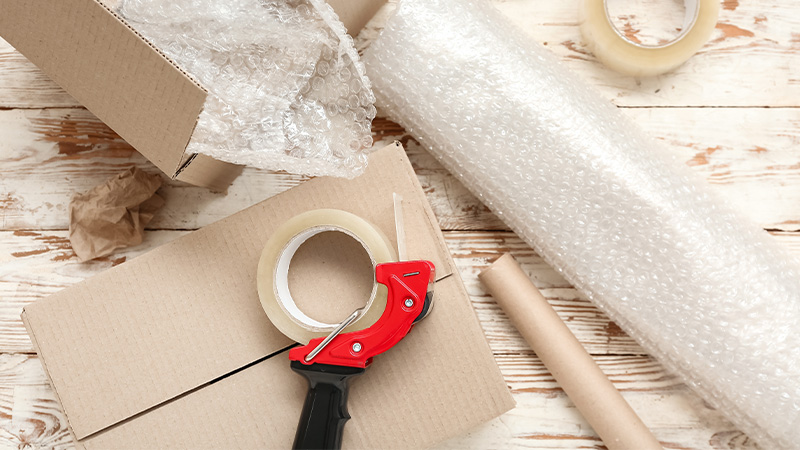
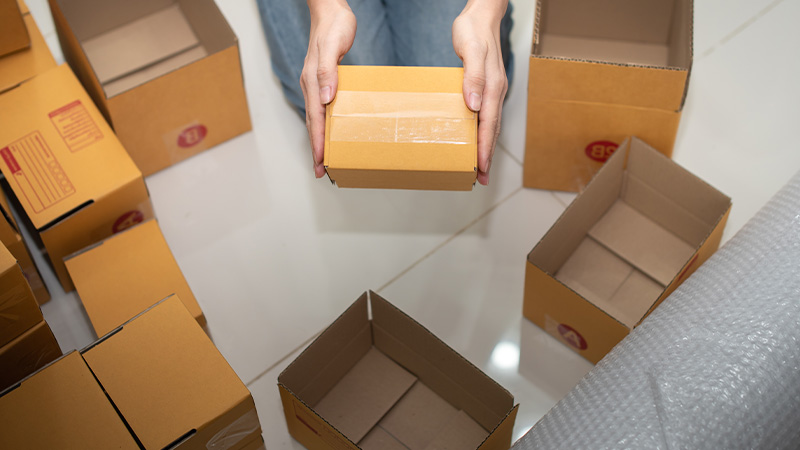
For the outer packaging, use a new, high-quality corrugated cardboard box that's appropriate for the size and weight of your shipment. Double-wall boxes are recommended for heavier or more valuable items, while single-wall boxes are suitable for lighter products.
Inside the box, choose cushioning materials that keep products securely in place. Depending on the item, this might include paper cushioning, air pillows, moulded fibre inserts or recyclable paper wrap.
Step 2: Protect your items inside the box
Not every product needs the same level of protection.
The one-box method works well for durable, pre-packaged or soft goods, where cushioning inside a single box provides sufficient protection.
For fragile, valuable, sharp or irregularly shaped products, use the two-box method. Pack the item securely inside a smaller inner box, then place that box inside a larger outer box with at least 6cm of cushioning on every side. This extra layer helps absorb knocks and vibrations during transit, significantly reducing the risk of damage.
Whatever method you choose, the goal is the same: stop the contents from moving around inside the box. That’s where filler comes in. Fill any empty spaces with suitable packing materials such as crumpled paper, air pillows, moulded inserts or plant-based packing peanuts, depending on the product you're shipping. If you can hear or feel movement when you gently shake the box, add more cushioning before sealing it.

Step 3: Secure your items and distribute the weight evenly
How you arrange products inside the box is just as important as the packaging itself.
Place heavier items at the bottom and lighter items on top. Fill empty spaces with cushioning material to prevent products shifting during transport, and avoid concentrating too much weight in one corner of the box.
If you're shipping multiple items together, separate them with protective material so they don't knock against each other in transit.
Step 4: Seal your parcel properly
Even the strongest box won't perform well if it isn't sealed correctly.
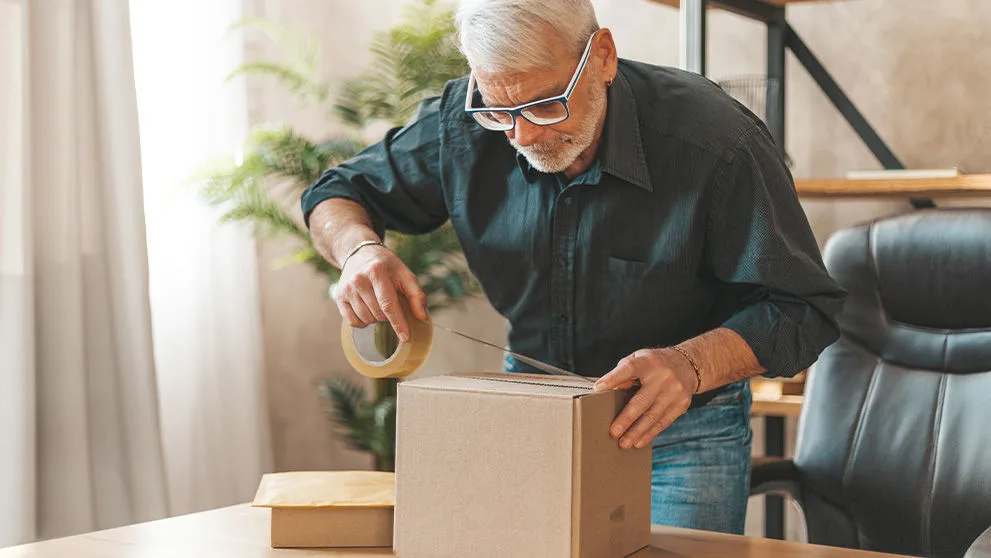
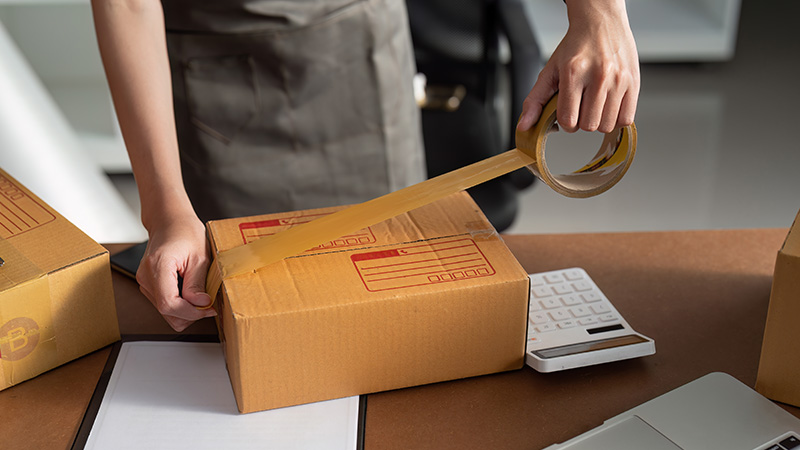
Use strong packing tape designed specifically for shipping – not masking tape, duct tape, string or twine, which may not provide sufficient strength.
For cardboard boxes, use the H-tape method: just as the name suggests, apply tape along the centre seam and across both edge seams on the top and bottom of the box, creating the shape of an "H". This provides extra strength and helps prevent the box opening during handling.
Step 5: Label your parcel and attach the correct documentation
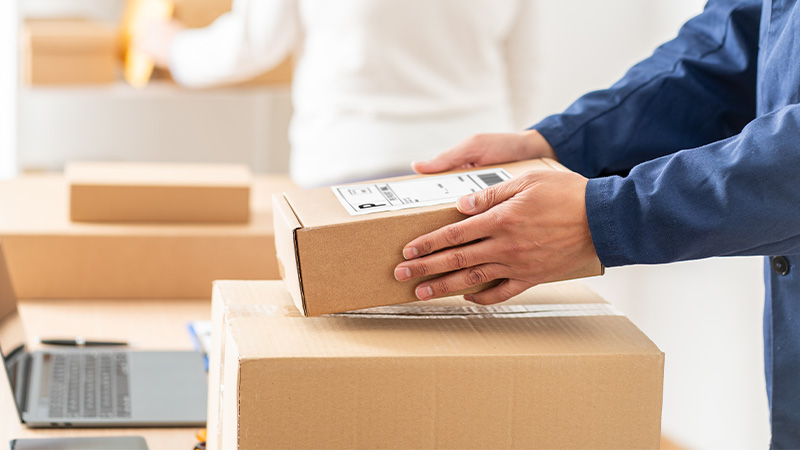
For international shipments, make sure labels are clear, secure and easy to read. Avoid placing tape over barcodes, as reflections can interfere with scanning.
You'll also need to prepare the correct customs documentation. The most common documents include:
- Commercial Invoice – This describes what's inside your shipment, its value, country of origin and other key details that customs authorities use to assess duties, taxes and clearance requirements.
- Air Waybill (AWB) – Your shipment's transport document. It contains important information about the sender, recipient and shipment, and enables your parcel to be tracked throughout its journey.
- HS (Harmonized System) code – An internationally recognized product classification code that tells customs exactly what you're shipping. Using the correct HS code helps reduce the risk of delays and incorrect duties or taxes.
Accurate documentation helps customs authorities process your shipment more quickly and reduces the risk of delays. Depending on your shipping method, these documents may need to be attached securely to the outside of the parcel in a clear document pouch, or submitted electronically before the shipment is collected. Many DHL Express services support Paperless Trade, allowing customs documents to be transmitted digitally instead of being printed and attached to the parcel.
If you're unsure what paperwork you'll need, DHL’s MyGTS (My Global Trade Services) can help. The free online tool provides guidance on customs requirements, helps you find the correct HS code, and shows which documents may be required for your destination before you ship.
Step 6: Check whether your shipment requires special handling
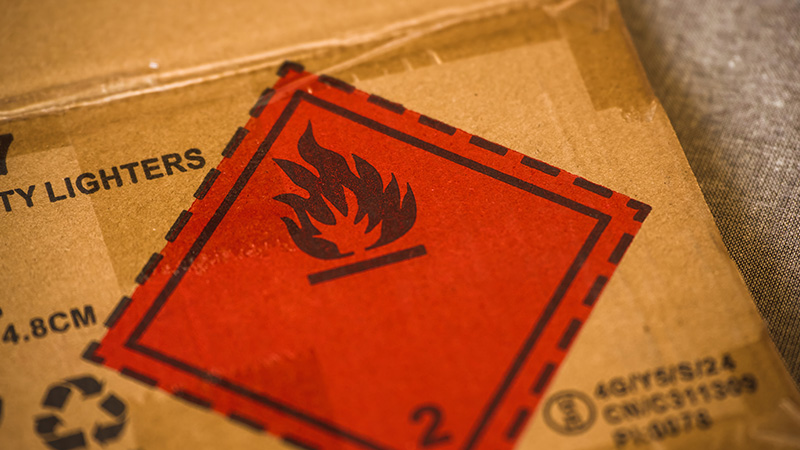
Before sending your parcel, confirm whether your products fall into any restricted or regulated categories.
Items such as lithium batteries, perfumes, aerosols and certain chemicals may be classified as dangerous goods and require specialist packaging, labeling or documentation before they can be transported.
It's always worth checking the import requirements for your destination country too, as restrictions can vary between markets.
Step 7: Use packaging to reinforce your brand
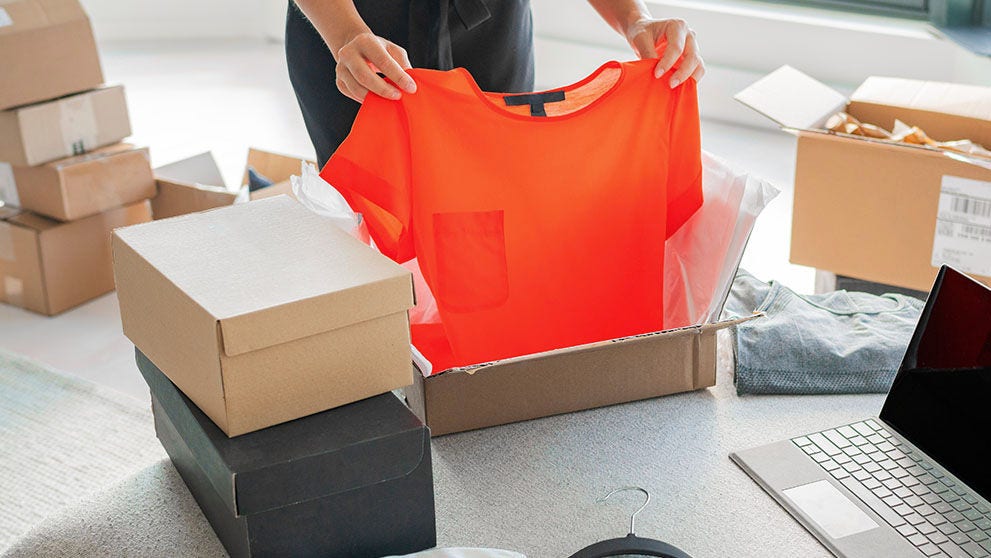
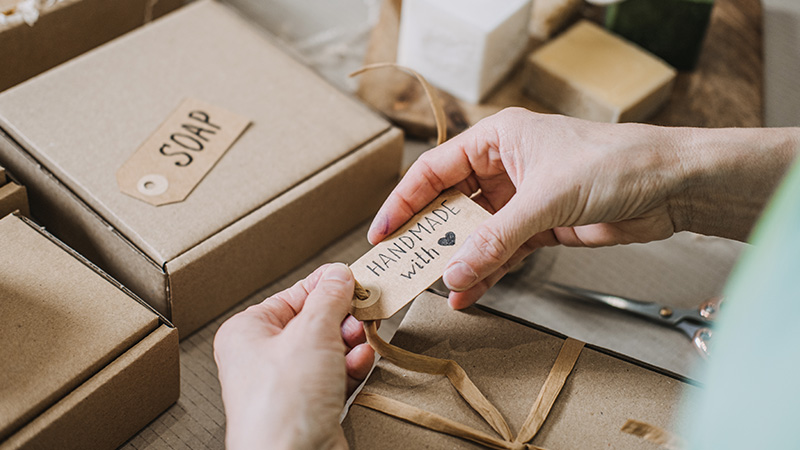
Running an e-commerce business? Packaging is often the first physical interaction customers have with your brand, so taking a little extra time to deliver some “unboxing magic” can make a big difference.
Simple touches – such as branded boxes, tissue paper, stickers or a thank-you note – can make your shipment feel more premium and memorable without significantly increasing costs.
Just remember that branding should never come at the expense of protection. A beautifully presented parcel still needs to arrive in perfect condition.
Step 8: Make returns easy
Let's be honest: returns are one of the less glamorous parts of running an e-commerce business. They take time, cost money and create extra work.
The good news? A smooth returns process can actually work in your favor. Customers are far more likely to shop with a retailer again if returning an item is quick and hassle-free, so it's worth making the experience as simple as possible.
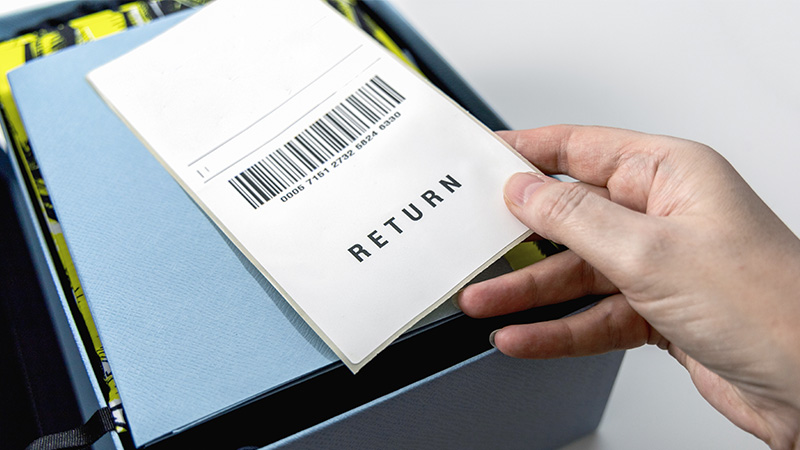
Start with your packaging. Where possible, choose boxes or mailers that customers can easily reseal and reuse for the return journey. Including clear return instructions, or even a pre-printed return label where appropriate, can also make the process much simpler.
It might seem like a small detail, but an easy return can leave just as strong an impression as a successful delivery – and help turn a one-time customer into a loyal one.
Step 9: Pack more sustainably
Sustainable packaging isn't just good for the environment – it can be good for your business too. Using less packaging means less waste, lower material costs and, in many cases, lower shipping costs.
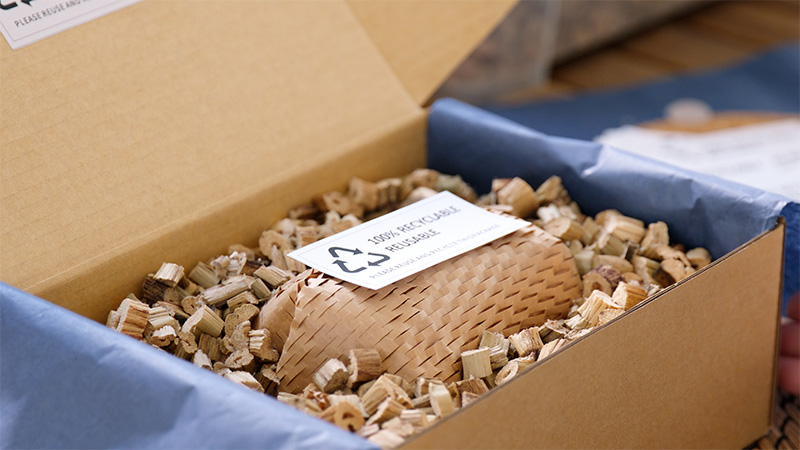
Start by choosing recyclable or responsibly sourced materials where possible, avoiding oversized boxes, and using only as much protective packaging as your products actually need. Right-sizing your packaging not only reduces waste but can also help lower transportation costs by reducing dimensional weight charges.
If you're shipping internationally, it's also worth checking the packaging regulations in your destination market. Some materials – such as expanded polystyrene (EPS or Styrofoam®) – are restricted or being phased out in certain countries and regions due to environmental legislation. Choosing recyclable or reusable alternatives can help future-proof your shipments while demonstrating your commitment to more sustainable shipping.
It's a small change that can make a big difference – not only for the environment, but also for customers who increasingly value businesses that reduce unnecessary packaging waste.
Other considerations for international shipping
Even the best-packaged parcel can run into problems if it doesn't meet the destination country's shipping requirements.
Before sending your shipment, check whether your goods are permitted in the destination market and whether any additional documentation, licences or certifications are required. Again, DHL’s MyGTS can help with this – think of it as your SME’s digital shipping assistant!
Make sure your Commercial Invoice, HS codes and customs declarations accurately describe the contents, as incorrect or incomplete paperwork is one of the most common causes of customs delays.
It's also worth checking who will be responsible for paying any applicable duties and taxes before the shipment is sent. Understanding these requirements in advance can help avoid unexpected costs and minimize delays at the border.
Ready to ship?
Once your parcel is packed securely, choosing the right shipping partner is the next step.
With DHL Express, you can combine expert international shipping services with customs expertise, end-to-end tracking and reliable global delivery to help your parcels reach customers quickly and safely – wherever in the world they may be.


 Share
Share

Similar Stories