Grow your business with the Discover newsletter
Logistics advice & insights straight to your inbox
Subscribe now

Global demand for spices is rising and is projected to reach US$28.21 billion by 2031, expanding at a 5.12% annual growth rate from 2026 to 20311. However, exporting them involves strict food safety rules, documentation, and careful logistics.
For Sri Lankan exporters, this presents both an opportunity and a challenge. As an internationally renowned producer of high-quality cinnamon, pepper, turmeric, chili, and curry leaves, Sri Lanka’s spice industry has a strong reputation, but meeting international standards and shipping requirements is key to success.
This guide explains how exporters can properly package spices for shipping, prepare the necessary documentation, understand market demand, and ship spices overseas efficiently and safely with DHL Express.
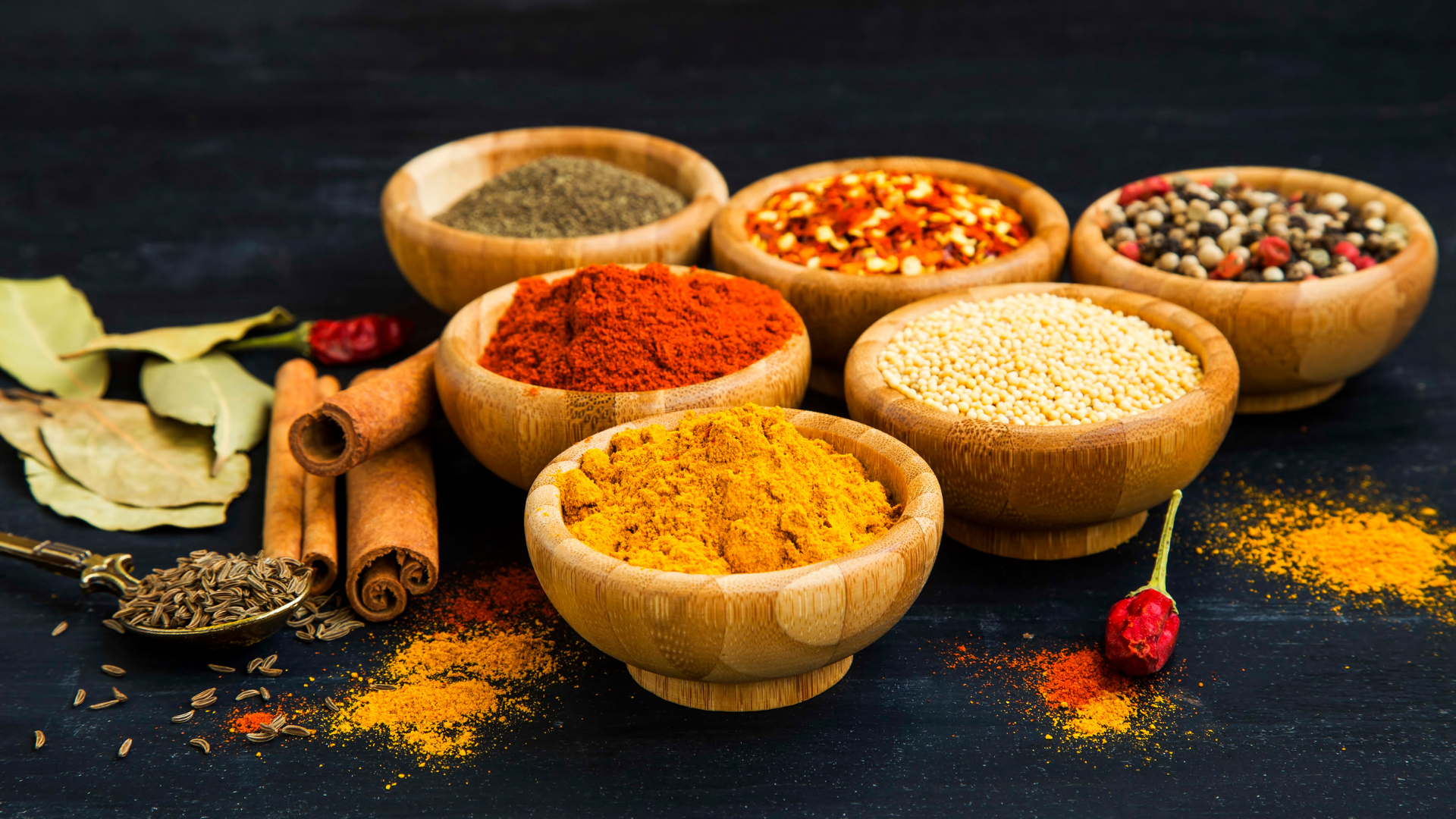
Global consumers are increasingly embracing healthier and more natural lifestyles. This has sparked greater interest in spices — not just as flavor enhancers but also for their perceived health benefits and functional properties.
The demand isn’t limited to kitchens. Food manufacturers, retail and e-commerce brands, and even cosmetics and wellness companies are sourcing quality spices for diverse applications.
Sri Lanka’s advantages are clear: superior aroma, purity, and traceability, underpinned by the global reputation of Ceylon spices. Buyers also value the island’s focus on sustainability and ethical sourcing, factors that increasingly influence purchasing decisions worldwide.
Sri Lanka’s spices are shipped to markets across the globe, each with its own export regulations and consumer preferences.
Because food safety and quality standards differ by destination, exporters should research the specific requirements before shipping.
Spices are classified as food and agricultural products, which makes them subject to rigorous international controls. Authorities focus on maintaining food safety and preventing the spread of pests or contaminants.
Key risks regulators look for include:
Failing to meet these standards can result in shipment rejection, product recalls, or fines. Exporters must ensure that every batch complies with the importing country’s food regulations, from production to final packaging. Partnering with a logistics provider like DHL Express helps simplify compliance and reduce risk.
Exporting spices involves a series of mandatory documents that ensure transparency and traceability throughout the supply chain.
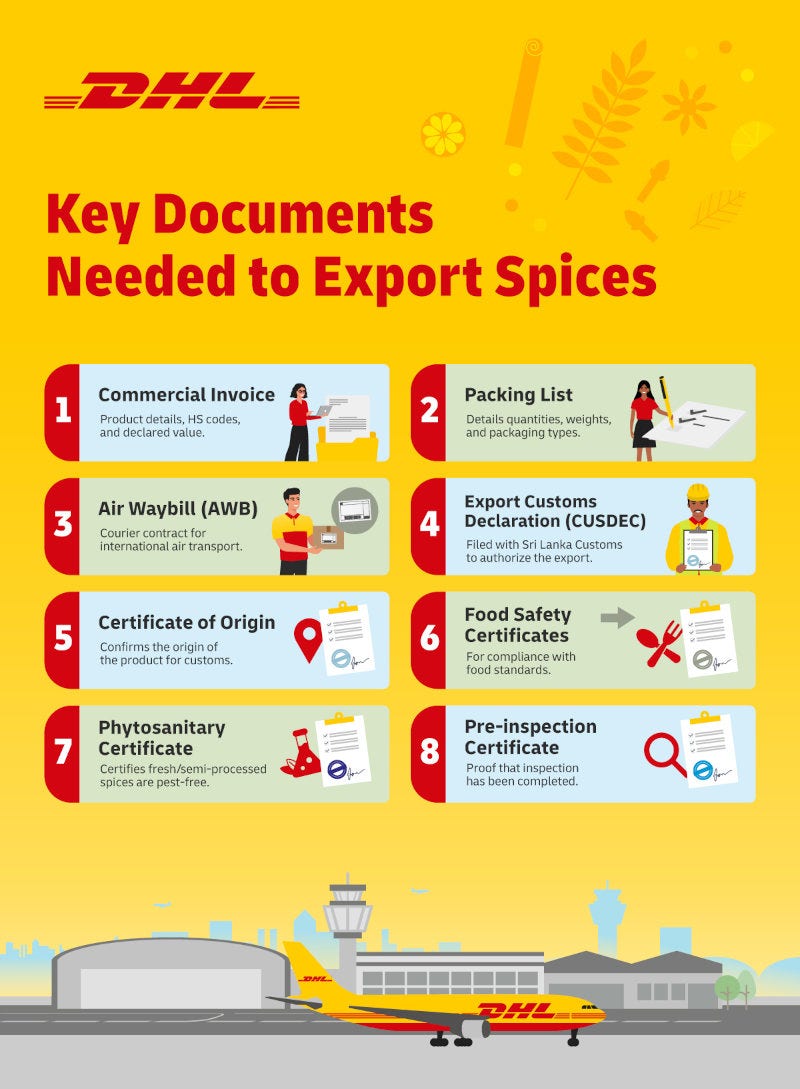
Documentation requirements differ by spice and destination, so exporters should confirm details before shipping to avoid customs delays.
Proper packaging preserves the quality, aroma, and shelf life of Sri Lankan spices. Exporters should choose materials that protect against moisture, light, and odor contamination while maintaining compliance with food-safety regulations.
Ground spices:
Whole spices:
Oleoresins and extracts:
To avoid quality loss, manage risks such as humidity, oil seepage, or light exposure.
Exporting food products like spices comes with a unique set of hurdles. Common issues include:
Addressing these challenges requires careful planning, reliable logistics support, and continuous monitoring of export standards.
With decades of experience in international supply chain logistics, DHL Express offers expertise that simplifies global spice exports and supports long-term business growth.
Freshness is critical in spice exports. DHL Express’ time-definite international network ensures your shipments reach global markets quickly, reducing the risk of quality deterioration and missed deadlines.
DHL Express provides guidance on complex export rules, from FDA and EU food regulations to phytosanitary requirements, ensuring shipments clear customs smoothly.
Track every shipment in real time with proactive updates and notifications — essential for maintaining buyer trust and traceability.
With DHL Express, exporters can focus on expanding their business while leaving the complexities of logistics to trusted experts.
Sri Lanka’s spice exporters are well-positioned to capture growing international demand, but global success requires compliance, speed, and reliability. By partnering with DHL Express Sri Lanka, you gain a logistics ally that helps you navigate regulations, protect product integrity, and deliver quality to buyers worldwide.


 Share
Share