






The healthcare and life sciences sector in the UAE is evolving rapidly, driven by advancements in biotechnology, clinical research, precision medicine, and pharmaceutical innovation. As the country strengthens its position as a regional healthcare hub, reliable logistics has become essential to ensuring the safe movement of medicines, medical devices, clinical trial materials, and advanced therapies.
This article explores the key trends, challenges, and logistics solutions shaping the healthcare and life sciences supply chain in the UAE, and how organizations can maintain compliance, visibility, and product integrity across increasingly complex operations.
Why Healthcare Logistics Matters in the UAE's Growing Life Sciences Sector
The UAE's healthcare sector continues to expand as part of the country's long-term vision to enhance healthcare outcomes, attract global life sciences investment, and strengthen local pharmaceutical capabilities.
Healthcare logistics is central to every clinical trial, biopharma innovation, medical device shipment, and patient treatment. Success requires more than transportation alone.
Logistics for life sciences demands stringent regulatory compliance, temperature control, visibility, and risk management. Whether transporting laboratory samples, specialty medicines, or medical devices across the UAE and internationally, supply chains must deliver continuity, transparency, and complete control.
The UAE Healthcare & Life Sciences Market: Growth and Opportunities
The UAE healthcare sector is experiencing strong growth, supported by government initiatives, healthcare infrastructure expansion, and increasing demand for specialized medical treatments.
Initiatives such as the UAE Centennial 2071 vision and ongoing investments in healthcare innovation are encouraging advancements in biotechnology, digital health, AI-powered diagnostics, and precision medicine. Meanwhile, pharmaceutical manufacturers and healthcare providers are increasingly adopting innovative technologies to improve patient outcomes and operational efficiency.
As healthcare services expand across Dubai, Abu Dhabi, and the Northern Emirates, the need for reliable healthcare logistics and temperature-controlled supply chains continues to grow.
Key Challenges Facing Healthcare Supply Chains in the UAE
While opportunities continue to increase, healthcare organizations in the UAE face several challenges:
- Maintaining product integrity across high-temperature environments.
- Meeting international GDP and GxP compliance requirements.
- Managing cross-border healthcare shipments efficiently.
- Supporting growing clinical trial activity.
- Ensuring visibility and security throughout the supply chain.
Above all, healthcare providers require resilient logistics networks capable of maintaining uninterrupted operations while protecting sensitive medical products.
Temperature-controlled logistics
Temperature-controlled logistics plays a critical role in the UAE healthcare supply chain, particularly given the region's climate conditions.
Whether transporting vaccines, biologics, specialty pharmaceuticals, or clinical trial materials, maintaining strict temperature ranges is essential to preserving product efficacy and patient safety.
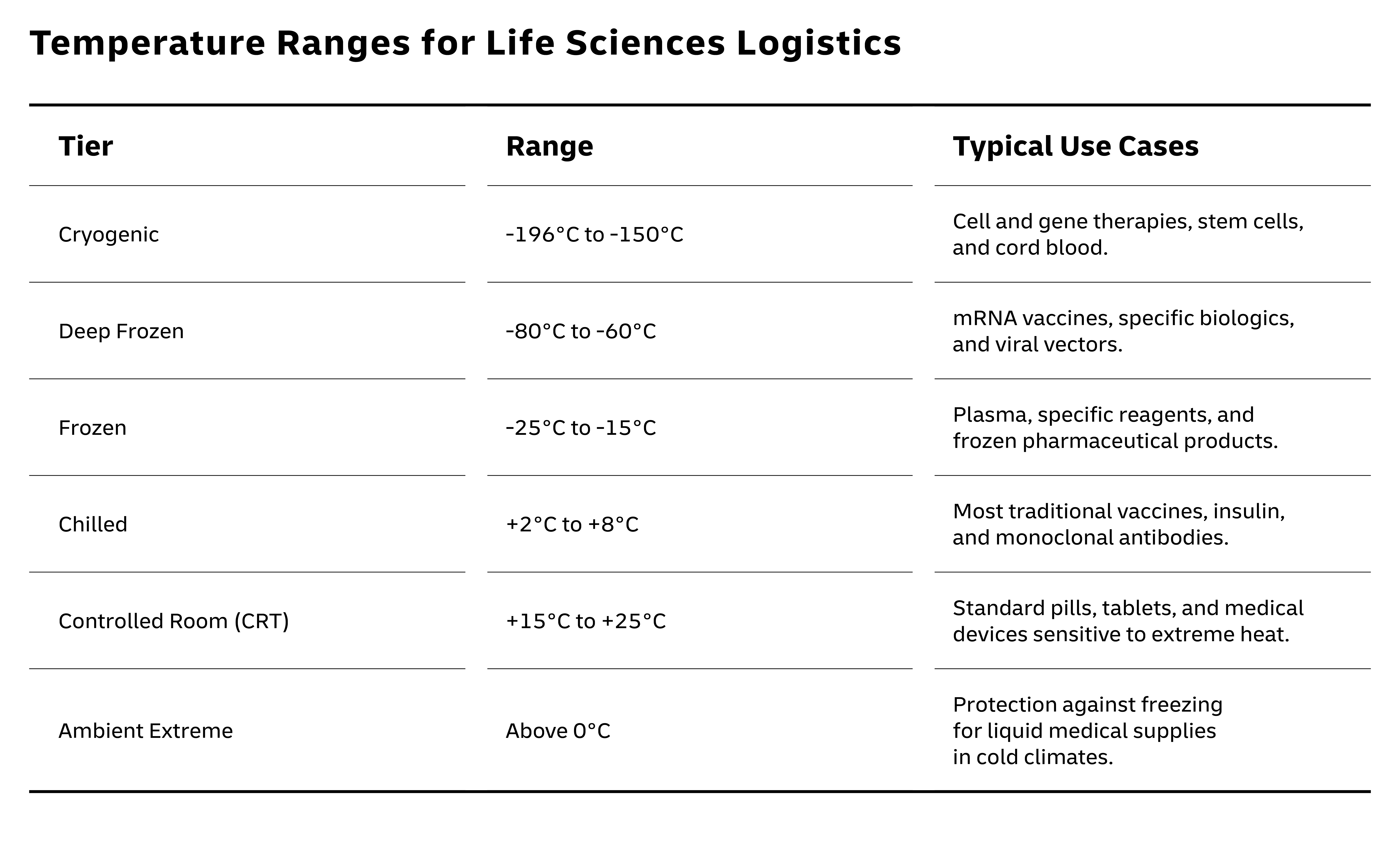
From controlled ambient and chilled environments to ultra-low cryogenic conditions reaching -196°C, healthcare shipments require specialized packaging, active monitoring technologies, and robust contingency planning.
In the UAE, where temperatures can exceed 45°C during summer months, advanced cold chain logistics solutions are particularly important for ensuring product integrity throughout domestic and international transportation.
Case Study: Casgevy Gene therapies like Casgevy require cryogenic temperatures. Stem cells are collected at a treatment center and moved to a factory at -196°C using liquid nitrogen. Once the new cells are ready, they are frozen again for the trip back to the patient. Speed and temperature are non-negotiable.
Clinical trial logistics & direct-to-patient models
As novel treatments are developed and the industry shifts towards biopharma and advanced therapies, Clinical Trials are moving out of the clinic and into the patient’s home. These decentralized models make things easier for participants, but increase logistics complexity. Logistics providers manage thousands of connections between researchers and patients. Direct-to-patient services must be fast and flexible. They use pre-conditioned packaging and "blinded shipping" to keep patient data private. This focus on the participant helps sponsors maintain trial retention and secure results faster.
Active vs. Passive Packaging Systems
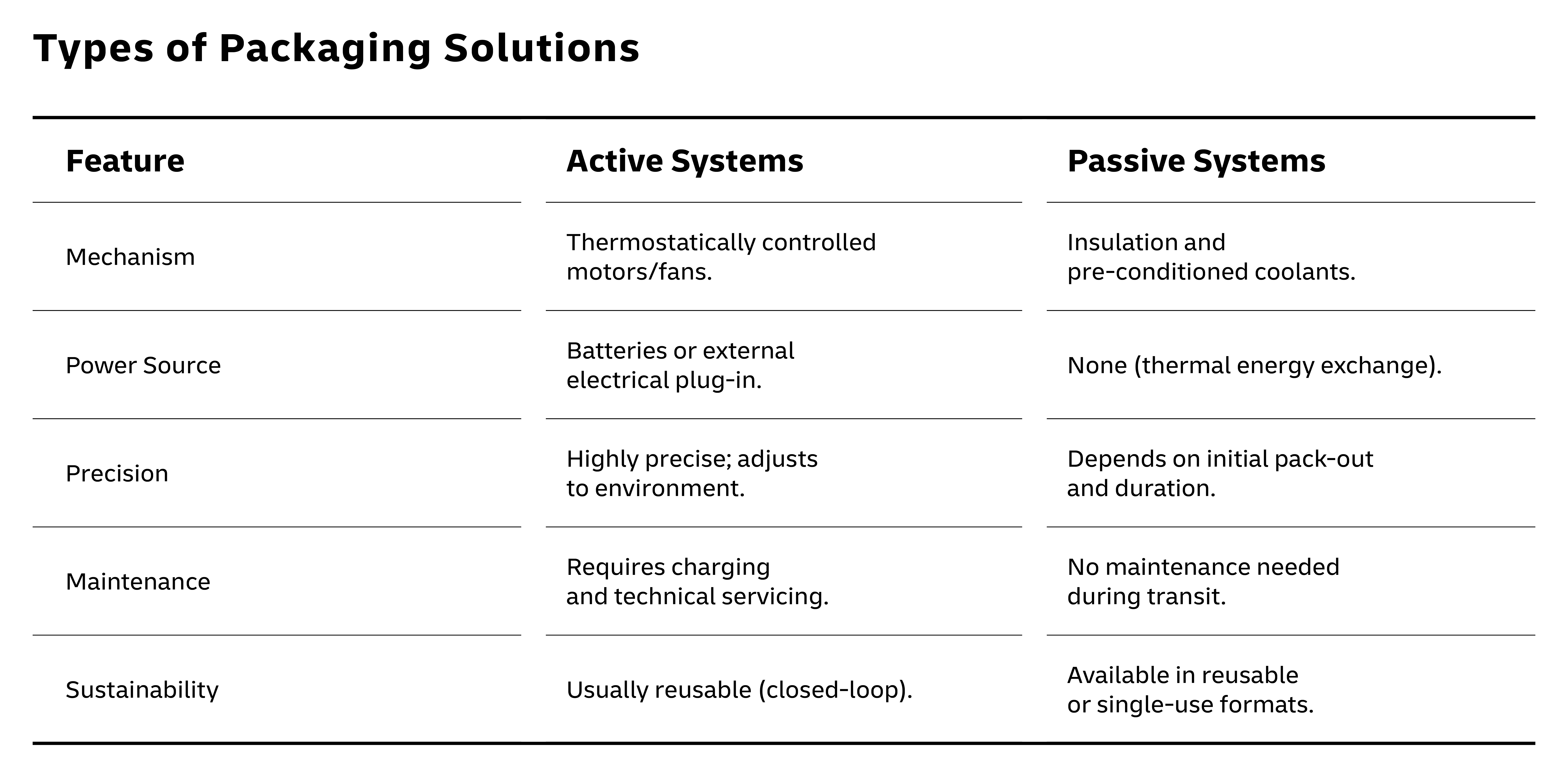
Selecting the right packaging is a balance of risk, cost, and transit duration. Life sciences logistics typically utilize two primary categories of thermal protection: active and passive systems.

Active Systems
Active packaging functions like a mobile refrigerator. These systems utilize mechanical or electric cooling and heating components powered by internal batteries or an aircraft’s electrical supply.
Best for: High-value biologics (e.g., cell and gene therapies), intercontinental routes with potential customs delays, and products requiring ultra-precise temperature maintenance.
Key Advantage: These units actively respond to external environment changes and often include real-time telemetry to report location, temperature, and battery life.
Passive Systems
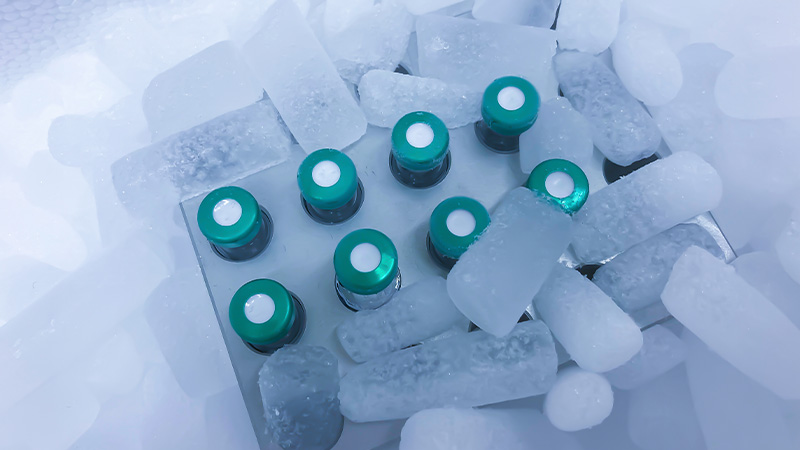
Passive systems rely on advanced insulation and "Phase Change Materials" (PCMs) such as gel packs, dry ice, or thermal blankets. They do not require an external power source to function.
Best for: Regional distribution, last-mile delivery to hospitals or clinics, and shorter transit times (typically 24 to 96 hours).
Key Advantage: Passive shippers are more cost-effective, offer greater flexibility in payload size, and are often easier to manage in areas with limited power infrastructure.
Navigating Healthcare Logistics Compliance in the UAE
Healthcare and life sciences shipments moving through the UAE must comply with local and international regulatory requirements.
Effective logistics partners support compliance through validated processes, quality management systems, specialized handling procedures, and continuous staff training. This includes adherence to GDP, GxP, IATA, and country-specific healthcare regulations.
Strong compliance frameworks help healthcare organizations minimize risk while ensuring the safe movement of medical products across borders.
Digital Visibility and Real-Time Monitoring for Healthcare Shipments
Real-time visibility has become increasingly important for healthcare organizations operating in the UAE.
Advanced monitoring solutions provide continuous tracking of location, temperature, humidity, and shipment conditions throughout the supply chain. This enables proactive intervention if any deviations occur, helping reduce risk and improve operational efficiency.
Digital visibility also supports regulatory compliance, inventory management, and decision-making across healthcare supply chains.
Building Secure Healthcare Logistics Networks Across the UAE and Beyond
Healthcare shipments require secure, validated transportation networks supported by certified facilities, specialist handling teams, and temperature-controlled infrastructure.
Within the UAE, healthcare organizations increasingly rely on logistics partners with dedicated healthcare expertise, GDP-compliant facilities, and integrated international networks to ensure sensitive products reach patients safely and efficiently.
DHL for the Life Science & Healthcare sector
As the UAE continues to strengthen its position as a regional healthcare and life sciences hub, DHL Health Logistics supports healthcare providers, pharmaceutical companies, clinical research organizations, and medical device manufacturers with specialized logistics solutions.
Backed by a global network spanning more than 220 countries and territories, DHL combines local expertise in the UAE with international healthcare logistics capabilities to support the movement of temperature-sensitive pharmaceuticals, clinical trial materials, biologics, medical devices, and advanced therapies.
Through dedicated healthcare-certified facilities, temperature-controlled solutions, real-time visibility technologies, and regulatory expertise, DHL helps healthcare organizations maintain supply chain integrity while delivering critical products where and when they are needed.
DHL Express for life science and healthcare logistics ships:
Put your healthcare logistics in the safest hands, speak to a DHL Express Life Sciences and Healthcare expert.
To find out more about DHL Health Logistics, visit our dedicated hub.


 Share
Share
Similar Stories