






The life sciences sector is evolving at an unprecedented pace. From advanced gene therapies to complex global clinical trials, the supply chain remains the foundation of modern patient care. This sector overview highlights the key challenges shaping the industry and the specialized logistics solutions enabling progress. It also explores emerging trends in life sciences and healthcare logistics that are influencing Biotech Supply Chain Directors, Clinical Operations Managers, and CGT Program Leads.
What is healthcare logistics?
Healthcare logistics is the specialized management, transportation, and storage of medical supplies, pharmaceuticals, and equipment to ensure timely, safe, and compliant delivery to healthcare facilities. It optimizes the entire supply chain—from manufacturer to patient—to reduce costs, improve inventory accuracy, and enhance patient care.
The Life Sciences and Healthcare sector is going through a period of rapid advance and innovation, and Healthcare logistics is central to every new clinical trial, innovative biopharma solution and revolutionary gene therapy. Success requires more than just transport.
Logistics for life sciences demand unparalleled levels of excellence, stringent regulations, and risk management. Product integrity is paramount. Whether it’s small-scale lab samples or large-volume pharma distribution, the end-to-end supply chain must deliver continuity, visibility and 100% control.
Key trends in the healthcare, life sciences, and medical supplies sector
The life sciences market is growing rapidly. Projections suggest the industry will reach US$269.56 billion by 2035. This growth stems from new technology such as AI diagnostics and wearable health trackers, which are growing in popularity by 15-20% each year. However, the most significant shift is in the lab. Researchers use genetically engineered organisms to create personalized drugs. Medical tools are also evolving. New materials like graphene and chip-sized lasers make devices smaller and smarter.
Key challenges in medical logistics
Rapid growth brings complexity. Organizations must navigate global regulations while managing costs. Data security is also vital. In the US, HIPAA compliance is a requirement. Above all, the industry requires a supply chain that remains unbroken under pressure.
What specialized logistics are required for life sciences and healthcare supply chains?
Standard shipping does not meet the requirements for medicines and medical devices. These shipments require real-time compliance and safe handling from start to finish.
- Smart Warehousing: Advanced systems track stock and optimize picking.
- Bespoke Environments: Facilities are designed for ambient, chilled, or frozen products.
- Collaborative Design: Logistics partners work with manufacturers to build resilient chains for biologics and radiopharmaceuticals.
Temperature-Controlled Logistics for Pharmaceuticals and Life Sciences
Controlled environments are the foundation of successful LSH logistics. These need to be developed to transport time- and temperature-sensitive shipments. Whether it's delivering vaccines and medical supplies or returning clinical supplies, supply chain environmental integrity ensures consistent temperatures throughout the entire process.
To achieve this, a modular, agile approach strategy for each customer works best. For instance, the nature of specialty pharma treatments means that temperature regimes must be rigorously maintained to ensure their integrity and efficacy. Whether it’s controlled-ambient, chilled or deep-frozen, environments must be carefully calibrated and continually monitored across a global GDP network. But maintaining consistent temperatures from +25°C to -196°C requires more than specialist environments. Temperature-controlled packaging and data loggers linked to a network of Control Towers and Active Shipment Monitoring technology that immediately responds to any change in location, condition or temperature is the only way to ensure every pharmaceutical, sample or device arrives in pristine condition. On a planet whose climate range moves from +134°F to - 128°F (at sea level), maintaining a constant ambient temperature globally takes dedicated, specialist logistics.
Temperature Ranges Needed for Healthcare and Life Science Logistics
| Tier | Range | Typical Use Cases |
|---|---|---|
| Cryogenic | -196°C to -150°C | Cell and gene therapies, stem cells, and cord blood. |
| Deep Frozen | -80°C to -60°C | mRNA vaccines, specific biologics, and viral vectors. |
| Frozen | -25°C to -15°C | Plasma, specific reagents, and frozen pharmaceutical products. |
| Chilled | +2°C to +8°C | Most traditional vaccines, insulin, and monoclonal antibodies. |
| Controlled Room (CRT) | +15°C to +25°C | Standard pills, tablets, and medical devices sensitive to extreme heat. |
| Ambient Extreme | Above 0°C | Protection against freezing for liquid medical supplies in cold climates. |
Case Study: Casgevy Gene therapies like Casgevy require cryogenic temperatures. Stem cells are collected at a treatment center and moved to a factory at -196°C using liquid nitrogen. Once the new cells are ready, they are frozen again for the trip back to the patient. Speed and temperature are non-negotiable.
Clinical trial logistics & direct-to-patient models
As novel treatments are developed and the industry shifts towards biopharma and advanced therapies, Clinical Trials are moving out of the clinic and into the patient’s home. These decentralized models make things easier for participants, but increase logistics complexity. Logistics providers manage thousands of connections between researchers and patients. Direct-to-patient services must be fast and flexible. They use pre-conditioned packaging and "blinded shipping" to keep patient data private. This focus on the participant helps sponsors maintain trial retention and secure results faster.
Active vs. Passive Packaging Systems
Selecting the right packaging is a balance of risk, cost, and transit duration. Life sciences logistics typically utilize two primary categories of thermal protection: active and passive systems.

Active Systems
Active packaging functions like a mobile refrigerator. These systems utilize mechanical or electric cooling and heating components powered by internal batteries or an aircraft’s electrical supply.
Best for: High-value biologics (e.g., cell and gene therapies), intercontinental routes with potential customs delays, and products requiring ultra-precise temperature maintenance.
Key Advantage: These units actively respond to external environment changes and often include real-time telemetry to report location, temperature, and battery life.
Passive Systems
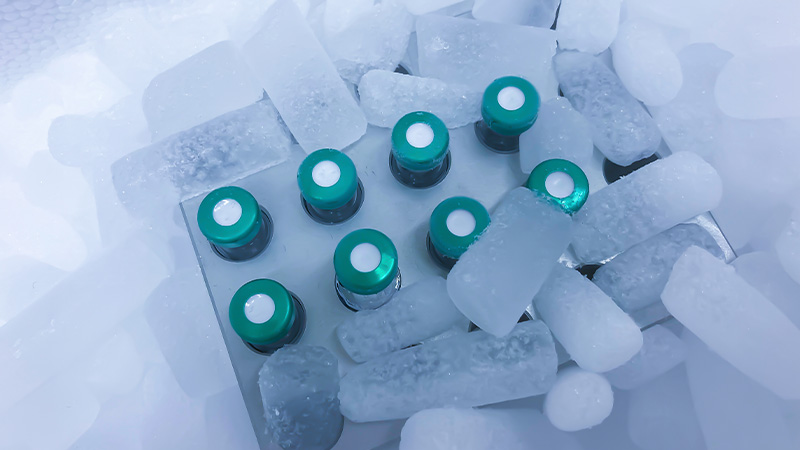
Passive systems rely on advanced insulation and "Phase Change Materials" (PCMs) such as gel packs, dry ice, or thermal blankets. They do not require an external power source to function.
Best for: Regional distribution, last-mile delivery to hospitals or clinics, and shorter transit times (typically 24 to 96 hours).
Key Advantage: Passive shippers are more cost-effective, offer greater flexibility in payload size, and are often easier to manage in areas with limited power infrastructure.
Types of Packaging Solutions Needed for Healthcare and Life Science Logistics
| Feature | Active Systems | Passive Systems |
|---|---|---|
| Mechanism | Thermostatically controlled motors/fans. | Insulation and pre-conditioned coolants. |
| Power Source | Batteries or external electrical plug-in. | None (thermal energy exchange). |
| Precision | Highly precise; adjusts to environment. | Depends on initial pack-out and duration. |
| Maintenance | Requires charging and technical servicing. | No maintenance needed during transit. |
| Sustainability | Usually reusable (closed-loop). | Available in reusable or single-use formats. |
Regulatory trade and compliance expertise
Compliance solutions must meet all international and in-country standards. For shipments of biological materials and medical devices, proactive compliance should be integrated via end-to-end handling protocols. Strong cultures of reporting and auditing ensure processes remain defined. Industry-leading e-QMS systems manage records, training, and auditing. These processes are backed by in-house regulatory experts who provide guidance at every clinical stage.
GXP certification for all LSH locations ensures a level of knowledge that matches regulatory rigor. Mature quality management systems should be embedded within the logistics culture to form a baseline for quality processes.
Digitally enabled visibility
Visibility is a core component that ensures peace of mind. Digitally enabled, end-to-end shipment visibility through a combination of dedicated monitoring teams and digital platforms, ensures sensitive medical items are tracked throughout their journey. From pickup to delivery, around the clock and in real time, Quality Control Centers staffed by dedicated life science personnel need a constant ‘eyes-on’ approach.
IoT solutions and high-quality smart sensors such as SenseAware have been introduced to provide continuous GPS tracking and feedback of temperature, humidity, and light exposure - and to trigger proactive intervention when any deviation is registered. But as the customer, you also need to access real-time shipment information, with status updates via web-based tracking tools and automated notifications when specific shipment events occur.
Digitally enabled visibility isn’t only about shipment security. This technology also helps to manage regulatory compliance and optimize inventory levels - driving further efficiency in the supply chain.
DHL’s LifeTrack platform further enhances this visibility by providing a centralized dashboard for real-time shipment monitoring, integrating sensor data, milestone tracking, and proactive alerts to ensure full control across the supply chain.
Secure and validated transportation networks
Hermetically-sealed, safeguarded networks with dedicated GDP/GXP certified warehousing, transportation, and specialist staff indicate an organisation where global LSH logistics are operating at the highest standards. Within these networks, shipments will only be handled by certified specialists.
Expert guidance on customs procedures prevents delays, while pre-clearance and "best flight out" options provide priority movement. Packaging and processes are validated to ensure compliance with local, regional, IATA, and GDP regulations.
DHL for the Life Science & Healthcare Sector
DHL Health Logistics provides comprehensive solutions across both conventional and advanced healthcare sectors, including consumer health, medical devices, biopharma, and clinical trials. Built on over 30 years of Life Sciences & Healthcare experience and expertise, our integrated, end-to-end global network spans over 220 countries, ensuring timely delivery of healthcare shipments in the right condition anywhere in the world – all guided by our purpose: We Care.
The DHL LSH team comprises over 11,000 certified specialists across more than 30 clinical trial depots, 250 GDP/GxP-certified sites, and 106 life sciences-certified air freight stations, managing over 2.5 million square meters of temperature-controlled space.
As part of its €2 billion investment in DHL Health Logistics, DHL Group has expanded its dedicated Airfreight Cold Chain Network to strengthen global transport of temperature-sensitive pharmaceuticals, vaccines, biologics, and advanced cell and gene therapies.
By combining DHL Aviation connectivity with more than 30 GDP-compliant aviation hubs, DHL has increased control over capacity and enhanced temperature integrity across the journey.
DHL Medical Express (WMX) for Time-Critical Healthcare Logistics
DHL Express Medical Express (WMX) is a specialized healthcare logistics solution designed for the secure, rapid transport of pharmaceuticals, clinical trial materials, and sensitive biological shipments across global medical supply chains. Built for life sciences and biotechnology organizations, WMX ensures speed, compliance, and product integrity when moving vaccines, biologics, and laboratory samples between manufacturers, research facilities, and healthcare providers. Supported by a global network spanning more than 220 countries, shipments benefit from priority handling, expedited customs clearance, and dedicated life sciences logistics expertise to reduce risk, avoid delays, and maintain continuity in patient care.
To protect temperature-sensitive products, DHL WMX supports a full range of cold chain logistics requirements, from controlled room temperature to ultra-low cryogenic conditions. Advanced packaging solutions, contingency services such as dry ice replenishment, and access to temperature-controlled storage help maintain strict environmental conditions throughout transit. Combined with real-time shipment visibility, proactive monitoring, and full regulatory compliance with international standards, WMX enables organizations to manage complex pharmaceutical shipping with confidence, ensuring reliability, quality, and control at every stage of the healthcare supply chain.
DHL Express for life science and healthcare logistics ships:
Healthcare Logistics FAQ
Understanding Healthcare Logistics
What is healthcare logistics?
Healthcare logistics refers to the specialized, end-to-end coordination of storing, handling, and transporting medical products such as pharmaceuticals, medical devices, and biological materials. It plays a critical role in ensuring that these products arrive safely, on time, and in full compliance with regulatory requirements. The goal is to maintain product integrity while optimizing efficiency across the entire supply chain—from manufacturer to patient.
Why is cold chain logistics critical in life sciences?
Cold chain logistics is essential in healthcare because many products are temperature-sensitive and can degrade if exposed to conditions outside specified ranges. Vaccines, biologics, and advanced cell and gene therapies require tightly controlled environments throughout transit. Maintaining uninterrupted temperature conditions ensures product safety, regulatory compliance, and therapeutic effectiveness.
Temperature & Compliance
What temperature ranges are used in healthcare logistics?
Healthcare logistics depends on multiple temperature categories tailored to specific products. Cryogenic transport (-196°C to -150°C) is used for advanced therapies like stem cells. Deep frozen ranges (-80°C to -60°C) are common for mRNA vaccines. Frozen, chilled, and controlled room temperature ranges support various pharmaceuticals, ensuring stability and effectiveness throughout transportation and storage.
What regulations apply to healthcare logistics?
Healthcare logistics must comply with strict global regulations including Good Distribution Practice (GDP), Good Practice (GxP) standards, International Air Transport Association (IATA) guidelines, and data privacy regulations such as HIPAA. These frameworks ensure safe handling, traceability, and quality control across the supply chain.
Packaging & Transportation
What is the difference between active and passive packaging systems?
Active packaging systems use powered cooling or heating mechanisms to actively maintain temperature conditions, making them ideal for high-value or long-duration shipments. Passive systems, on the other hand, rely on advanced insulation and phase change materials such as gel packs or dry ice. While passive systems are more cost-effective and flexible, their performance depends heavily on initial preparation and transit duration.
What types of products require specialized healthcare logistics?
Healthcare logistics supports a wide range of products including vaccines, biologics, clinical trial materials, laboratory samples, medical devices, and gene therapies. Each category may require customized handling, packaging, and regulatory compliance to ensure safe delivery.
Industry Trends & Innovation
What are decentralized clinical trials and direct-to-patient logistics?
Decentralized clinical trials allow patients to participate remotely from home instead of visiting centralized sites. This model relies on direct-to-patient logistics to deliver investigational medicines and collect samples securely. It improves patient participation but significantly increases logistical complexity, requiring precise coordination and secure data handling.
What are the biggest challenges in healthcare logistics?
Key challenges include maintaining temperature control, ensuring regulatory compliance across multiple regions, managing sensitive data securely, and achieving full real-time visibility of shipments. As the industry evolves toward personalized medicine and advanced therapies, logistics networks must become more agile, connected, and resilient.
DHL Healthcare Logistics Solutions
How does DHL support healthcare logistics?
DHL provides comprehensive healthcare logistics solutions including temperature-controlled shipping, GDP-certified warehousing, real-time monitoring, and clinical trial logistics. With a global network spanning over 220 countries and specialized infrastructure for life sciences, DHL ensures that sensitive healthcare shipments are delivered safely, efficiently, and in full compliance.
Put your healthcare logistics in the safest hands. Open a free DHL business account today to speak to a DHL Express Life Sciences and Healthcare expert.
To find out more about DHL Health Logistics, visit our dedicated hub.


 Share
Share
Similar Stories