How AI Helps B2B Companies Optimize Cost to Serve
In today’s B2B landscape, teams need a clear view of what it costs to serve each customer. AI makes cost to serve analysis faster and more accurate, which supports profitability and resilience. Using AI in logistics helps DHL and our B2B shipping customers reduce fulfillment costs and improve service.
What “Cost to Serve” Means for B2B Logistics

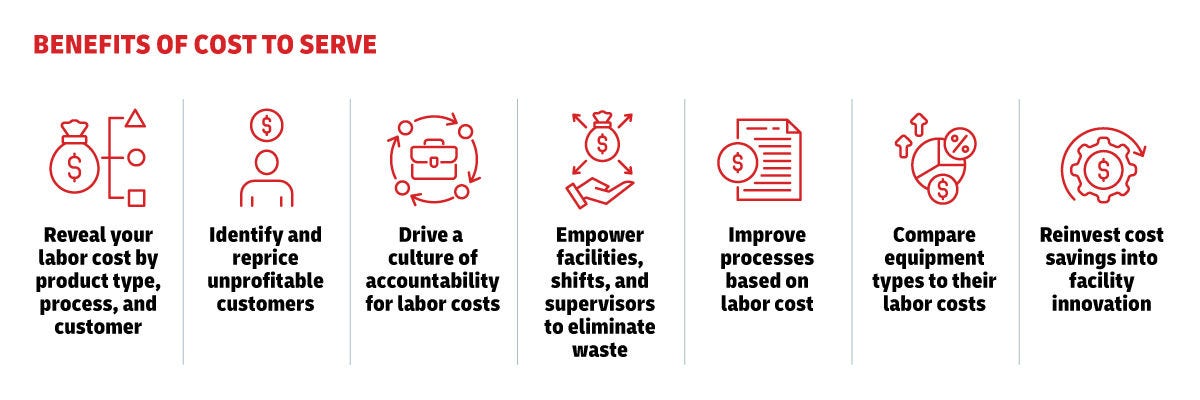
Cost to serve (CTS) is a method for calculating the total expense of delivering a product to a customer. It includes direct costs such as production, warehousing, and transportation, along with indirect costs such as administrative overhead and customer service. In a B2B environment, costs vary by product, delivery format, frequency, location, ordering channel, and other factors.
For example, two brands might generate the same revenue, yet one could cost 30% more to serve if it makes more frequent shipments. Without full visibility into CTS, companies risk underpricing their services, serving unprofitable segments, or missing opportunities to streamline fulfillment costs.
Using AI in supply chain management also helps shipping and logistics companies like DHL streamline transport routes and choose delivery destinations based on demand and profitability, which supports our sustainability mission.
How AI in Logistics Reveals True Profitability
Traditionally, calculating cost to serve required manual data collection across siloed systems. AI and machine learning (ML) automate data integration, recognize patterns across orders and channels, and use predictive analysis to identify the cost to serve. Here’s how AI driven insights transform cost to serve analysis:
Automated Data Integration
AI tools can consolidate cost data from ERP, CRM, and logistics systems to create a single, accurate view of the entire service chain, including hidden costs that often slip through the cracks.
Dynamic Cost Modeling
Machine learning algorithms can continuously analyze variables such as order size, delivery routes, handling requirements, and customer behavior to identify the most and least profitable accounts or SKUs.
Intelligent Pricing Strategies
By understanding the actual cost to serve per customer, companies can develop AI-assisted pricing models that reflect true service costs.
Fulfillment Optimization
Predictive AI models can recommend the most cost-efficient fulfillment centers, transport modes, or consolidation strategies, reducing both logistics costs and carbon footprint.
Scenario Simulation
AI can simulate “what-if” scenarios: for example, how changing order size, delivery frequency, or packaging standards would affect cost to serve.
The DHL Advantage: Turning Insights into Action
At DHL, we believe innovation drives measurable results. We see AI as a practical way to move from cost to serve insights to action. Our teams pair industry expertise with advanced analytics to map end-to-end logistics costs and reveal inefficiencies that traditional reporting can miss.
Through AI-powered cost modeling, DHL can:
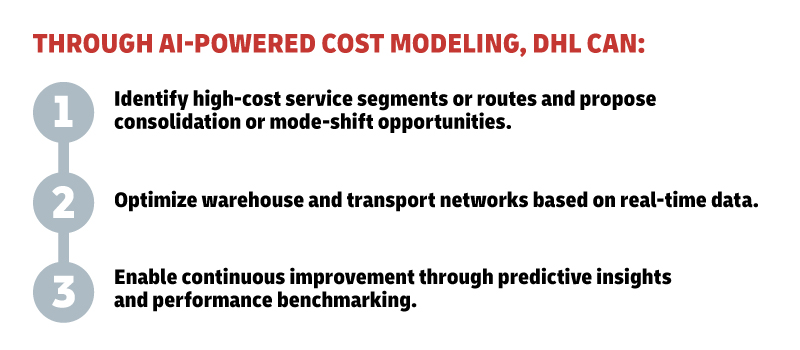
Identify high-cost service segments and routes, then propose consolidation or mode-shift opportunities to reduce cost to serve.
Optimize warehouse and transport networks with real-time data.
Enable continuous improvement through predictive insights and performance benchmarking.
For B2B enterprises, this data-driven approach results in greater transparency, improved profitability, and stronger customer relationships.
Partner for success
As AI continues to evolve, cost-to-serve analysis will shift from a retrospective accounting exercise into real-time, predictive insight. Partnering with a major player like DHL for your B2B shipping and logistics needs can help you maintain your competitive edge by giving you access to the latest and most informative technology. Open a business account with us today to get started!


 Share
Share