As technology and global trade flows rapidly change, B2B supply chains must become more intelligent, efficient, and agile. Generative artificial intelligence (Gen AI) is a key tool in achieving this goal. As large language models (LLMs) and related technologies mature, they get better at generating insights, drafting documents, engaging in natural-language dialogues, and simulating scenarios.
Using Gen AI, major shipping and logistics players like DHL can build complex B2B automation tools to succeed in today’s dynamic global landscape.
DHL is using Gen AI to provide predictive demand, faster onboarding, smarter customs and procurement workflows, and to make shipping intelligence more transparent for our customers. Let’s explore what generative AI means for B2B supply chains, and how we’re implementing it in our organization.
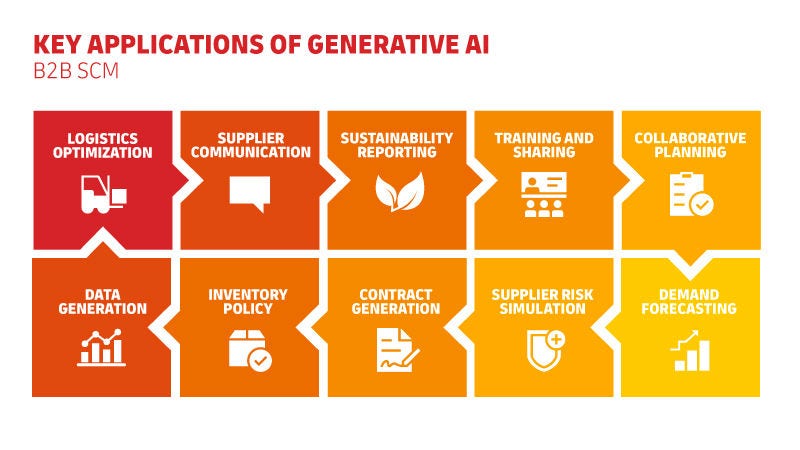
Generative AI: What it means, and why it matters for B2B supply chains
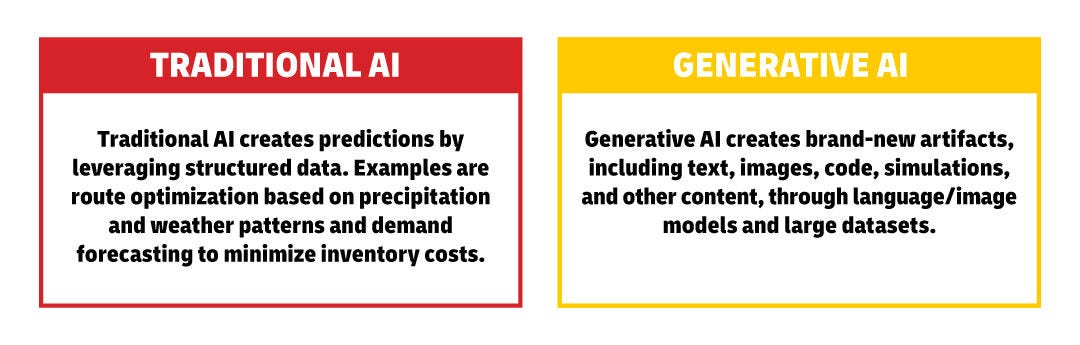
While AI has supported optimization, forecasting, and data analysis in supply chain management for years, the arrival of generative AI marks a big shift. Generative AI can read procedures originally written for human workers and execute the work described in many use cases. When the procedures require decisions and reasoning to succeed, the Gen AI becomes what’s called Agentic AI. The difference between traditional AI and generative AI is simple:
Traditional AI creates predictions by leveraging structured data. Examples include route optimization based on weather or traffic patterns and demand forecasting to minimize inventory costs.
- Generative AI creates new artifacts, including text, images, code, simulations, and other content. It uses language and image models trained on large datasets.
In the supply chain and procurement domain, this means:
Generating demand scenarios (e.g., “What happens if demand doubles in Q3 because of a regional promotion?”) rather than only estimating a point forecast.
Generating or drafting communications.
It provides interactive intelligence every step of the way
Why Gen AI matters for B2B supply chains:
B2B chains tend to involve many parties (buyer, seller, logistics provider, customs, carrier) and a complex flow. Generative AI reduces friction and minimizes delays by summarizing, generating, and handling real-time inquiries.
Trade flows, regulations, and sourcing change faster now than they used to, so static rules and heuristics won’t keep up with the pace. Generative AI helps you make quicker decisions.
For an end-to-end logistics player like DHL, embedding generative AI deepens value beyond transport.
Emerging uses of LLMs in B2B shipping & procurement
Here are three ways companies are using generative AI in supply chain flow.
1. Forecasting & predictive demand
Generative AI models take in historical demand data to generate scenario ranges for future demand.
2. Customs compliance automation & shipping intelligence
Customs, duties, import and export regulations, and shipment visibility are still bottlenecks and sources of cost. Generative AI automates parts of customs documentation, HS and HTS code classification checks, route-risk assessment, and shipment intelligence.
3. Buyer, supplier & partner communications (onboarding, procurement)
Generative AI automates and accelerates communication flows in procurement and in supplier and partner ecosystems. Use cases include supplier onboarding, buyer queries, and contract drafting.
See below for some specific use cases where DHL is implementing generative AI to improve efficiency and support our customers’ expectations and demands.
Generative AI at DHL
At DHL, we’re now using Gen AI-enabled voice robots to call customers and help them understand inbound duties due on their shipments. We’re also exploring Agentic AI solutions to execute repetitive procedural work in customs clearance data cleansing. Before current Gen AI capabilities became available, this type of automation wouldn’t have been possible. Generative AI lets us rapidly build system interfaces and deploy optimization algorithms that streamline warehouse tasks. We’re investing in AI shipping solutions that help us increase order fill rates and preempt errors, improving overall efficiency and customer experience.
4. Why this matters now (and what to watch out for)
Why now?
Many supply chain leaders already plan to deploy generative AI. One survey found half of supply chain leaders will implement it in the next 12 months.
Trade volatility, regulatory complexity, and demand unpredictability make the traditional reactive supply chain model unsustainable. Generative AI capabilities help organizations operate proactively and with greater transparency.
As a global logistics leader, DHL stands out from the competition by staying on the cutting edge of technology, and right now that means utilizing Gen AI.
Things to watch / challenges:
- Data quality and integration: Generative AI is only as good as the data feeding it. Procurement systems often have fragmented or low-quality data, which hinders outcomes.
- Trust and transparency: If the system generates recommendations or decisions, such as new routing or supplier onboarding, there must be human-in-the-loop oversight and auditability.
- Model risk and “hallucination”: Generative AI models may produce plausible-looking but incorrect outputs; guardrails, validation, and clear escalation paths are essential.
- Change management: Embedding new ways of working, such as chatbots for suppliers and AI-driven forecasting, requires culture change in logistics and procurement teams.
DHL and its customers are taking generative AI seriously. It’s the next stage in the evolution of B2B supply chains, and DHL is here to help you generate better demand forecasts, automate customs and compliance, and enable smarter communications.
By combining DHL’s global logistics platform, network reach and domain expertise with generative AI capabilities, we can move from “reactive shipping” to a truly intelligent supply chain ecosystem: one that delivers faster onboarding, deeper insights, and more transparent outcomes for our customers.


 Share
Share