Many Bangladeshi manufacturers rely on imported machinery from China, Germany, Japan and South Korea for textile, apparel, pharmaceuticals, and food processing operations. These machines often combine multiple functions into a single unit, making accurate tariff classification essential to avoid customs delays and unexpected duties.
Multi-functional equipment does not always fit neatly into standard customs categories. A device that performs two or three functions simultaneously can potentially fall under multiple harmonised headings.
An incorrect classification exposes your business to genuine penalty risk, not just administrative issues. If a machinery import has not been through a diligent classification process, it may be held at the border while officials conduct their own engineering assessments.
MyGTS provides HS code assistance and tools to help businesses assess classification and estimate duties and taxes before shipping. Final classification remains subject to the applicable customs rules and customs authorities.
Three risk factors to weigh
If you are managing outbound freight from a major commercial hub like Dhaka, it is important to watch for:
- Overlapping Functions: Devices that merge separate capabilities do not fit cleanly under a single tariff description.
- Varying Duty Rates: Different headings for the same item can carry significantly different duty rates.
- Classification Complexity: For businesses importing through Chattogram Port or Hazrat Shahjalal International Airport, providing clear technical documentation can help reduce queries related to the intended function and classification of complex equipment.
You will see this play out in real equipment, such as advanced machinery for the garment industry that combines automated fabric cutting with integrated digital pattern management, where the overlapping functions make classification anything but straightforward.
How do you actually apply the General Rules of Interpretation?
Compliance officers work through the World Customs Organisation's (WCO) rules in a specific order to determine the correct legal code. If Rules 1 through 3a do not resolve the heading, then Rule 3b is brought into consideration.
What Rule 3b says
Rule 3b of the General Rules of Interpretation states that composite goods made of different materials or components, which cannot be classified under Rule 3a, are to be classified as if they consisted of the material or component which gives them their essential character. In practice, this means identifying which part is the primary driver of the item's value and function.
DHL Express's Non-Routine Entry service can assist you in understanding complex regional rules and aligning your documentation with the correct standards for clearance.
How to work through the rules in three steps
- Apply Rule 3a: Check whether one heading provides a more specific description of the goods than a more general one.
- Apply Rule 3b: Determine the "essential character" based on the volume, weight, value, or functional role of the components.
- Apply Rule 3c: If headings are still considered equally valid, you must classify the goods under the heading which occurs last in numerical order.
How can classification affect your landed cost?
Misinterpreting an import's primary function can change the applicable tariff rate and your overall cost calculation, particularly if the value falls outside standard exemptions.
Even small classification differences can affect the total landed cost of imported machinery, especially for businesses that import production equipment or components on a recurring basis.
Using our Duty Tax Paid solutions means that duty and tax charges are calculated and handled upfront, which helps to reduce unexpected payment delays at the border. This service also directs the tax bill to the shipper's account instead of the consignee, so your customer is not faced with an unexpected invoice.
Classification Detail
| Minor Component Coding
| Essential Character Coding
|
|---|
Tariff Rate Application
| Uses lower auxiliary component rate
| Uses primary high-value machinery rate
|
De Minimis Inclusion
| May fit under low-value thresholds
| Often exceeds national limit markers
|
Audit Vulnerability
| Triggers frequent reassessment notices
| Supports long-term compliance consistency
|
Baseline thresholds vary a lot by destination gateway. In Bangladesh, there is no de minimis value for general commercial shipments, meaning all such goods are subject to duty and taxes. It is advisable to consult the National Board of Revenue (NBR) for the specific rules applicable to your goods, as an error here can push your shipment into a full multi-day entry process.
What do you need for a compliance file that holds up at the border?
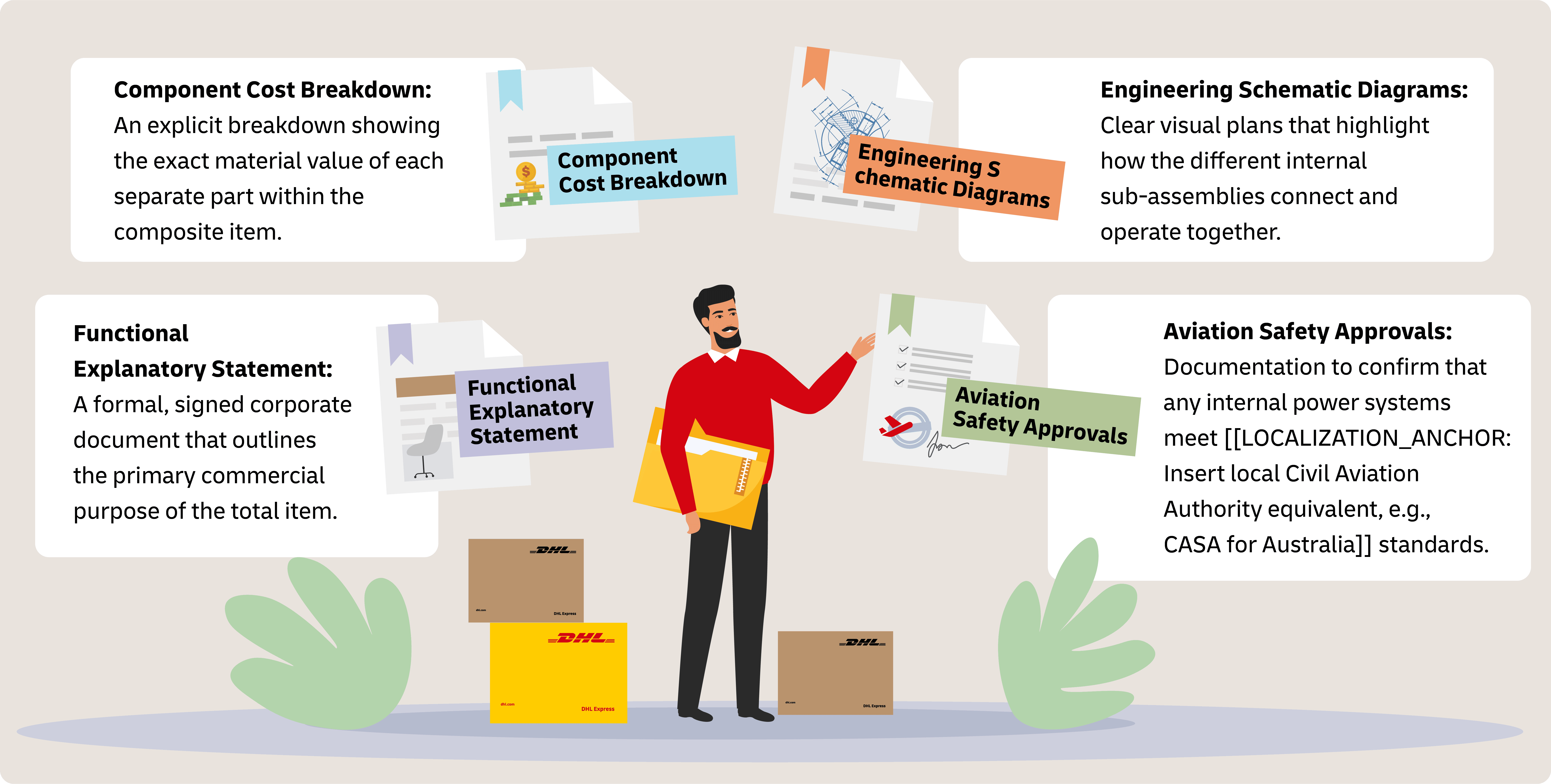
By assembling your technical literature, schematics, and functional breakdowns before you ship, you are in a much stronger position if a border official questions your classification. Should an official dispute your code, a comprehensive file gives your C&F Agent concrete evidence to support your declaration. While customs authorities have the final legal say, clear and thorough documentation strengthens your position considerably.
MyDHL+ provides shipment and documentation visibility that can help businesses prepare for customs clearance before the shipment arrives.