#LogisticsAdvice


 Share
How to Ship Artwork Internationally from Ireland: A Complete Guide
5 min read
Share
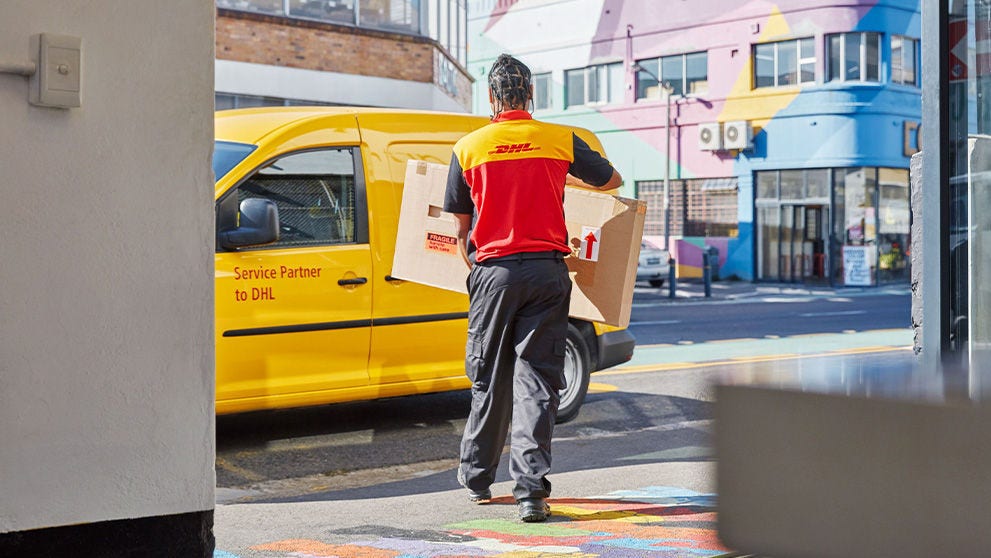
Wondering how to ship artwork internationally from Ireland without it arriving with an unwanted crack, dent or scratch?
Whether you're an Irish artist selling your work overseas, a gallery sending a piece to an international exhibition, or an e-commerce business shipping artwork to customers abroad, careful preparation can make all the difference.
From paintings and prints to sculptures and ceramics, artwork often requires extra consideration when it comes to packaging, customs and transportation.
This article covers the process: assess the piece, choose the right packaging, protect it against movement and moisture, label it clearly, prepare the correct customs documentation, check duties and import requirements, and make sure it can be protected and tracked throughout its journey.
Shipping artwork? Watch this first!
From paintings and canvases to sculptures and other valuable pieces, careful packing helps protect your artwork throughout its international journey.
Before you start packing, however, it's important to understand exactly what you're shipping.
Assess the artwork before you ship
Start with the basics: your artwork's size, weight, value and fragility.
These factors will influence the packaging you need, the shipping service you choose and how the shipment should be protected in transit.
Size is particularly important because international shipping charges aren't always based solely on actual weight. Carriers can calculate costs using actual weight or volumetric weight, whichever is greater. [dhl.com]
This can be especially relevant when shipping paintings or canvases. A piece may be relatively light but require a much larger box once protective packaging is added.
With DHL Express, volumetric weight is calculated by multiplying the parcel's length, height and width in centimetres, then dividing the result by 5,000. [dhl.com]
For example, if a framed piece weighs 8 kg but the packaged shipment measures 50 × 40 × 40 cm:
50 × 40 × 40 ÷ 5,000 = 16 kg volumetric weight
In this example, the shipment would be charged based on its 16 kg volumetric weight rather than its 8 kg actual weight. [dhl.com]
That's why it's important to measure and weigh the finished parcel, rather than the artwork alone.
How to pack artwork for international shipping
When shipping valuable or fragile artwork overseas from Ireland, the right packaging is essential.
Begin by wrapping paintings, drawings and works on paper with a suitable acid-free protective material. Avoid placing plastic wrap directly against painted or delicate surfaces, as it may trap moisture or stick to the finish. [dhl.com]
Next:
- Protect vulnerable corners and edges with suitable corner protectors.
- Add sufficient cushioning to absorb shocks and vibrations.
- Make sure the artwork cannot move around inside the package.
- Use a strong, rigid outer box or protective case.
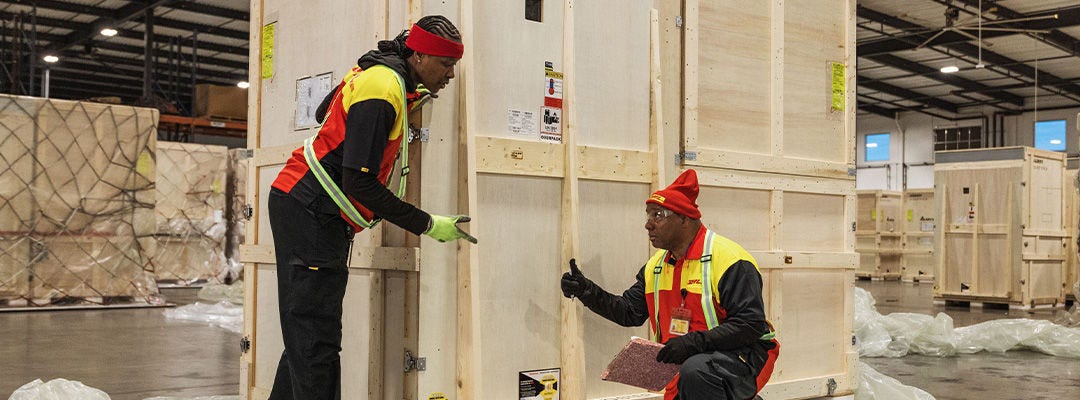
- Consider a custom-built crate for particularly fragile, valuable or oversized pieces.
Your packaging needs to protect the artwork throughout handling and transportation, not just while it's sitting securely in your studio, gallery or business.
How to pack different types of artwork
There isn't a one-size-fits-all approach to shipping artwork internationally. Different types of artwork come with different risks.
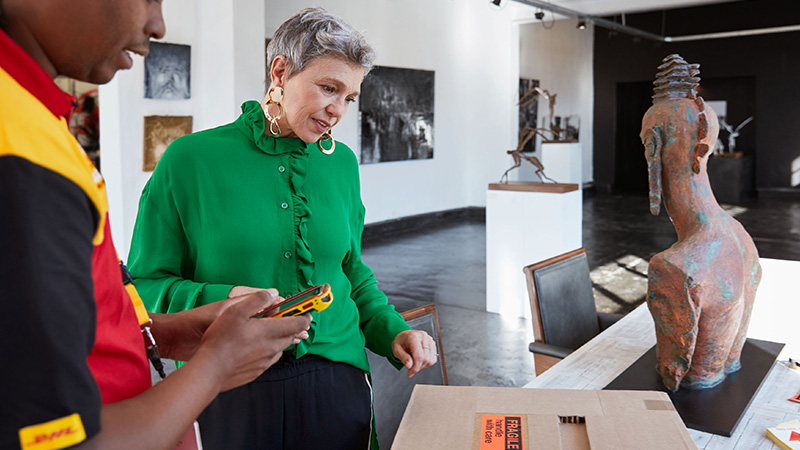
Sculptures
Sculptures may have delicate, protruding or irregularly shaped elements.
Protect these areas individually before securing the sculpture so that it cannot shift during transportation.
For valuable or especially fragile sculptures, a custom crate with appropriate cushioning and internal supports may be the best option.

Glass artwork
Glass requires careful attention because it can crack or shatter if subjected to an impact.
Protect the surface appropriately, reinforce vulnerable areas and ensure the frame cannot move around inside the package.
For valuable framed artwork, you may also need to consider whether the glass should be removed or specially secured before shipping.
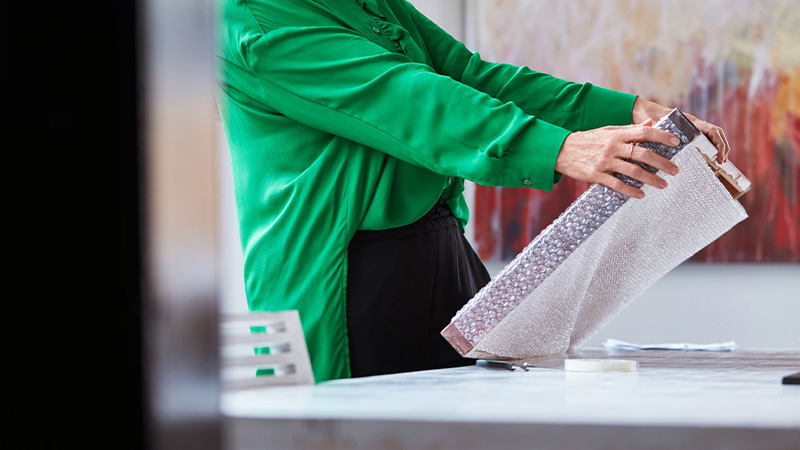
Canvas artwork
Protect the surface of the painting or canvas with acid-free wrapping material before adding corner protection and cushioning.
The piece should then be placed securely inside a rigid outer box. For particularly large, fragile or high-value paintings, a custom crate may offer a more suitable level of protection.

Pottery
Wrap ceramic or pottery pieces individually, paying particular attention to handles, spouts and other vulnerable areas.
Use adequate cushioning and make sure there is no room for the item to move inside the box.

Mural artwork
Murals, installations and large-scale pieces can present additional logistical challenges.
Depending on their construction, they may need to be rolled, mounted on rigid backing, palletised or transported in a custom-built crate.
Consider the final dimensions and weight of the packaged artwork before choosing between parcel and freight shipping.

Industrial art
Large metal sculptures, installations and other industrial artworks can be heavy, irregularly shaped or difficult to handle. They may require specialist lifting equipment, palletization or a custom crate, so plan the logistics alongside the packaging rather than treating them as separate jobs.
Shipping large or oversized artwork from Ireland
Sometimes an artwork is too big for a standard parcel network. Even before you reach a hard network limit, oversized pieces may attract additional handling or oversize charges.
Once a piece becomes particularly large, heavy or awkward to handle, freight shipping – usually palletized or crated – can be the more appropriate option. The important thing is to check the limits of your chosen service before you build the crate or book the collection.
DHL Heavy Weight Express offers international delivery in as little as 1–3 days for time-critical heavy shipments weighing 50 kg and above. Businesses benefit from the speed and simplicity of express shipping with dedicated customs support from Heavy Weight specialists.
Labeling and handling instructions
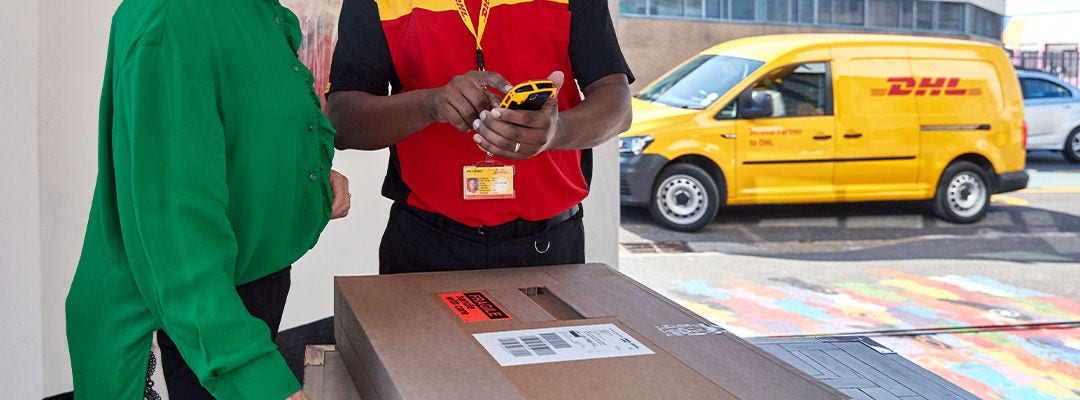
Strong packaging protects the contents, but accurate labelling is equally important.
Your shipment should clearly display the sender's and recipient's details.
Where appropriate, handling instructions such as“Fragile” or“This Way Up” can provide useful visual guidance. However, these labels should never be treated as a replacement for appropriate protective packaging.
Ensure shipping labels are securely attached, easy to read and aren't positioned across box seams or areas where they may become damaged.

Customs documents for shipping artwork from Ireland
International artwork shipments need accurate customs information, just like any other commercial shipment. The exact HS code can vary depending on the type of artwork – paintings, for example, may fall under heading 9701 – so don't simply assume that everything described as “artwork” uses the same classification.
The key is to check the classification and destination requirements before shipping. Your documentation will typically need to include:
- Commercial Invoice: Sets out what you're shipping, its value, origin and other information customs authorities need.
- Accurate description: Don't just write “artwork”. Describe what the item is, such as an original oil painting on canvas, ceramic sculpture or framed photograph.
- Declared value: Give the genuine value required for customs purposes. Under-declaring an artwork to reduce duties can cause serious problems.
- HS code: Use the appropriate classification for the specific artwork where required.
- Supporting documentation: Depending on the destination and nature of the piece, additional licences, certificates or other documents may be required.
Getting this information right at the start can help avoid customs questions and delays later in the journey.
Duties, taxes and import regulations
The customs treatment of artwork can vary significantly depending on where it's going and why you're shipping it. A piece being sold to a customer may be treated differently from one being sent temporarily to an art fair, exhibition or restoration facility.
If artwork is traveling temporarily for an exhibition or similar purpose, an ATA Carnet may help simplify the process by allowing eligible goods to enter participating countries temporarily without paying the usual duties and taxes, provided the relevant conditions are met.
There are also additional rules for certain cultural goods entering the EU. Depending on the type, age and origin of the item, an import licence or importer statement may need to be submitted through the EU's Import of Cultural Goods (ICG) system. The rules have been designed to help prevent the illicit trade of cultural heritage, so check the requirements well before the shipment travels.
In short: don't leave customs research until the artwork is sitting at the airport. Check the destination-country requirements before you ship.
Insurance and shipment protection
If you're shipping something worth hundreds or thousands of pounds, the cost of protecting it in transit is worth considering.
First, check what protection is included with your chosen service and whether artwork is eligible. Some carriers place specific restrictions on valuable or fragile artworks, and coverage can depend on the item's value and type. DHL Express, for example, has restrictions relating to certain high value works of art, so it's important to check eligibility before booking.
For eligible shipments, consider whether additional shipment value protection is appropriate for the artwork you're sending. You should also keep a record of the item's condition before shipping – ideally with clear photographs.
How much does it cost to ship artwork internationally from Ireland?
Artwork shipping costs can vary considerably. The main factors include:
- Dimensional weight: A large but lightweight artwork may be charged according to its volumetric weight rather than its actual weight.
- Crating: A custom-built crate offers excellent protection but adds both material and labor costs – as well as weight and volume.
- Service level: Faster, time-definite services generally cost more than slower alternatives.
- Oversize surcharges: Large or awkwardly shaped parcels may incur additional handling or oversize charges.
- Duties and taxes: The destination country may charge import duties and taxes depending on the artwork and circumstances of the shipment.
- Value protection: Additional protection for eligible high-value shipments can add to the overall cost.
The cheapest option isn't necessarily the best one. With valuable artwork, the cost of inadequate packaging or the wrong service can be far greater than the original saving.
Tracking and visibility
When you're shipping a one-of-a-kind painting or sculpture, a vague tracking notification stating “somewhere in transit” isn't particularly reassuring.
End-to-end tracking, on the other hand, gives you visibility into the shipment's progress and can help you spot potential issues earlier. It's also useful for keeping the recipient informed, particularly when the artwork is traveling to an exhibition, gallery or customer with a specific delivery deadline.
For high-value pieces, that visibility can provide a little extra peace of mind while the artwork is making its way across borders.
Common mistakes to avoid
A few seemingly small mistakes can create disproportionately large problems when shipping artwork:
- Under-declaring the value to try to reduce duties or taxes.
- Writing “artwork” on the Commerical Invoice instead of giving a clear, specific description.
- Wrapping plastic directly around a painted surface, which can trap moisture or affect the finish.
- Shipping glazed artwork without properly protecting the glass, increasing the risk of cracks or breakage.
- Skipping a condition report or photographs, leaving you without a clear record of the artwork's condition before it traveled.
A few extra minutes before collection can save considerably more time – and money – later.
Choosing an international artwork courier in Ireland
Shipping artwork internationally involves much more than simply putting a painting or sculpture into a box.
You need to consider the artwork itself, how it will be packaged, its final dimensions and weight, customs documentation, destination-country requirements, tracking and the shipping service you choose.
Working with an experienced international logistics provider can make the process easier.
DHL Express combines international express delivery with customs expertise, shipment tracking and solutions for larger and heavier shipments. Its international network reaches more than 220 countries and territories.
Whether you're an artist in Ireland selling your first piece overseas, a gallery preparing for an international exhibition, or an Irish business sending artwork to customers around the world, careful preparation is key.
Pack it properly, prepare the correct customs documentation and choose a shipping service suited to your artwork's size, value and destination.
For fast international shipping of your artwork, open a DHL Express Business Account.
 Share
Similar Stories