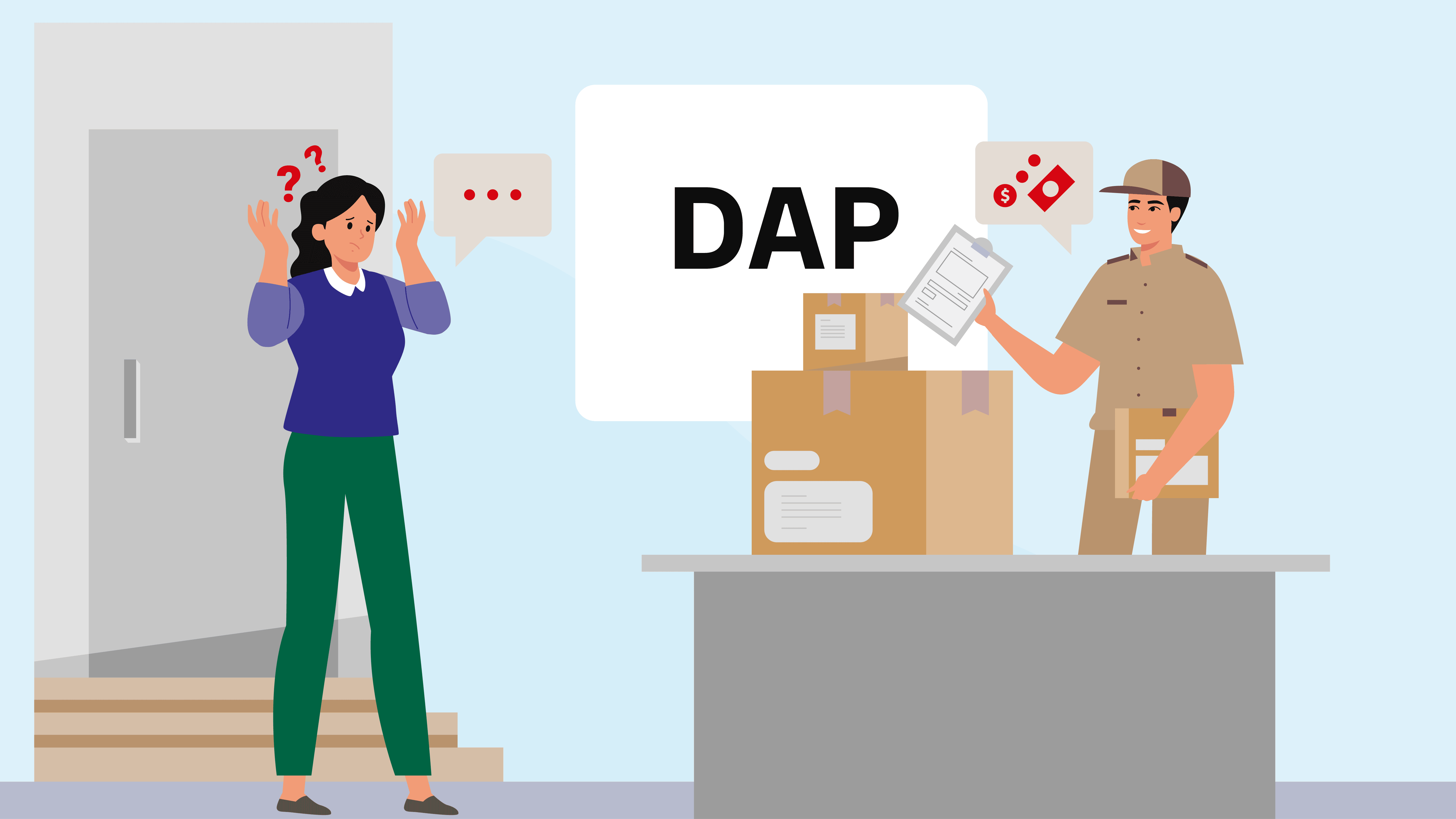
Under DAP terms, the responsibility for customs clearance falls to your buyer. This requires them to coordinate with local agents and manually pay duties and taxes before their parcel can be released. This process introduces significant friction at a critical point in the customer journey. According to DHL's 2026 E-Commerce Trends Report, 62% of online shoppers say unexpected customs and tax charges have caused them to abandon a purchase altogether, making this one of the most costly points of friction in cross-border selling.
This is precisely the moment when brand trust can be eroded. From the buyer's perspective, they have already paid the full price at checkout, so an additional bill upon delivery may be perceived as a hidden cost, regardless of the fine print in your shipping policy.
What does the DAP clearance process look like for your customer?
Ensuring smooth clearance under DAP terms depends on comprehensive paperwork and regulatory compliance that many sellers may overlook until a problem arises.
What your customer faces at the border
Under DAP terms, once your parcel reaches its destination, your customer becomes responsible for clearing it through local customs. Depending on the market, this can mean paying duties and taxes directly to the courier or tax authority, providing identification or a local tax reference such as an EORI number in the EU, and in some cases authorising an agent before the parcel is released. Any hesitation or unfamiliarity with this process on the buyer's side is what turns a routine delivery into a stalled or refused shipment.
Where Duty Tax Paid comes in
If you'd rather your customer never sees a customs bill or has to navigate this process themselves, DHL Express's Duty Tax Paid (DTP) service lets you cover duties and taxes upfront on their behalf. The charge goes to your DHL account instead of the buyer's door, removing the clearance step that causes DAP shipments to stall or get refused in the first place.
Can switching to DDP improve your checkout conversion?
Adopting Delivered Duty Paid (DDP) terms can convert international interest into firm sales by removing the uncertainty of total landing costs. When your customer sees the complete and final price at checkout, this transparency directly contributes to a reduction in cart abandonment rates. If you're shipping to the EU specifically, the Import One-Stop Shop (IOSS) system lets you declare and pay VAT upfront on shipments valued up to €150, so your buyer isn't charged VAT again on delivery.
How DAP and DDP compare
The fundamental differences are outlined below:
Delivery Term
| Who Pays Duties?
| Impact on Customer
|
|---|
DAP
| Buyer
| Unforeseen fees at the door lead to frustration and shipment refusals.
|
DDP
| Seller
| A seamless delivery experience with no surprise costs for the buyer.
|
A single refused DAP parcel can cost your business significantly in return freight charges and lost product margin. This risk is particularly high during peak shopping seasons like Diwali, when both order volumes and refusal rates tend to increase.
How MyGTS helps you price it right
You can use the tools within MyGTS to estimate duties and taxes before you finalise your shipping arrangements, which is especially useful if you're shipping from a major hub like Nhava Sheva Port. This foresight allows you to accurately factor these costs into your product pricing, protecting your margins while providing a transparent, all-inclusive price to your customers.