First, create an Amazon Seller account and choose a "Selling Plan" (Individual if you’re just testing, Professional if you’re serious). Then, you just list your product in the Seller Central portal by adding photos, a description, and a price.
India's export story on Amazon Global is entering an exciting new chapter in 2026. With the right product selection and logistics strategy, Indian SMEs can tap into billions of dollars in global demand. This guide identifies the top-selling categories on Amazon that Indian exporters should focus on, shows you how to identify trending products on Amazon, and explains why partnering with the right logistics provider like DHL can transform your cross-border e-commerce success.
Global demand for unique, high-quality Indian goods continues to surge, with consumers in the US, UK, and EU actively seeking authentic products that tell a story. From handcrafted textiles to Ayurvedic beauty products, "Made in India" has evolved from a label to a badge of quality and authenticity. The proof is in the numbers: Indian exports on Amazon Global have reached a significant milestone, with over 200,000 Indian exporters selling more than 750 million products to customers worldwide, achieving $20 billion in cumulative e-commerce exports ahead of schedule1.
But success on Amazon Global is more than just about having great products. Selecting products customers are willing to pay a premium for, while keeping shipping logistics manageable and cost-effective, is crucial.
The most successful Indian exporters on Amazon understand that the right product + smart logistics = profitable scaling. They focus on categories where India has a natural advantage (craftsmanship, traditional knowledge, sustainable practices) and pair this with efficient shipping solutions that keep their FBA inventory stocked and their "Buy Box" status protected.
Let's explore the best-selling categories on Amazon for Indian exporters in 2026, and show you exactly how to identify and capitalize on these opportunities.
Understanding which categories on Amazon are gaining momentum helps you position your business strategically. Here are the highest-selling product categories where exporters are seeing exceptional growth:
Home & Kitchen ranks among the top three export categories for Indian sellers on Amazon Global, recording 35%+ year-over-year growth2. This category includes home textiles (bed and bath linen, kitchen accessories), sustainable kitchenware, and home décor, all areas where Indian craftsmanship has a natural competitive advantage.
These products typically have excellent weight-to-value ratios—they're relatively light to ship yet command a premium due to their artisanal quality. With approximately 62% of U.S. consumers purchasing handcrafted products at least twice annually3, and millennials/Gen Z actively seeking culturally authentic goods, this category offers sustainable growth for Indian exporters.
Valued at $12.4 billion in 2024 and forecast to reach $32.7 billion by 20334, the global Ayurvedic beauty market presents a massive opportunity for Indian SMEs to leverage their traditional knowledge and authentic sourcing.
Amazon Global Selling data confirms this momentum, with beauty recording over 40% year-over-year growth5. The convergence of the global "Clean Beauty" movement with growing international awareness of Ayurvedic principles has created unprecedented demand for products that Indian manufacturers are uniquely positioned to supply. So if you have access to organic Ayurvedic supplements and herbal powders (ashwagandha, triphala, brahmi), you're sitting on gold.
Apparel and jewellery represent high-growth export categories for Indian sellers, with the sector forecast to grow at a rapid 10–12% CAGR from 2024 to 20306 and jewellery showing strong performance (almost 20% year over year growth7). These categories enable Indian exporters to leverage their unique cultural heritage and craftsmanship, catering to in-demand apparel like sustainable handloom products, fusion wear and traditional ethnic wear, as well as in-demand jewellery like demi-fine jewellery, handmade pieces, and traditional craftsmanship.
Environmental consciousness isn't just a trend—it's the baseline expectation for today's consumers. Recent data shows that 49% of U.S. consumers purchased an environmentally friendly product in the past month (up from 43% in 2024)8 and sustainable products currently hold a 17% global market share but account for 32% of market growth, making them consistently rank among the most sold products worldwide9.
Since this category often overlaps with other categories (e.g., eco-friendly kitchenware, sustainable beauty), there are multiple listing opportunities within Amazon's catalogue. Additionally, 90% of consumers say they are more likely to purchase from a brand or retailer if its packaging is eco-friendly, and 54% deliberately choose products with sustainable packaging10.
This gives Indian exporters selling traditional, sustainable manufacturing methods, from handloom weaving to natural dye processes to biodegradable packaging, a clear competitive edge in markets increasingly driven by environmental values.
Now that you understand which categories are thriving, the next step is identifying specific products within these categories that will drive profitable sales. Here's how to identify trending products on Amazon and validate their potential before investing in inventory.
Learning how to find top-selling items starts with understanding Amazon's Built-In Intelligence: Best Seller Rank (BSR). This metric shows where trending products rank within their categories, with lower numbers indicating higher sales velocity.
Here’s how to use it:
Then utilise third-party tools like Jungle Scout or Helium 10 to uncover deeper insights that help you validate demand. These can include:
Pro tip: Focus on products with steady demand (not just seasonal spikes) and moderate competition. You want categories where quality and authenticity can be your differentiators.
Identifying promising categories and trending products is just the beginning. The next step is ensuring your product selection actually translates into profitable sales. Here's how to filter opportunities and time your market entry strategically.
International shipping costs can make or break your Amazon FBA margins. The key to profitability is favouring lightweight products that command premium prices—because Amazon's FBA fees are partially based on dimensional weight, and international shipping charges scale with package size and weight.
Products with LOW weight-to-value ratios (light but expensive) maximise your profitability, while products with HIGH weight-to-value ratios (heavy but cheap) eat into your margins through shipping costs.
For example:
Choosing products with favourable weight-to-value ratios means you keep more of your revenue after Amazon's fees and shipping costs.
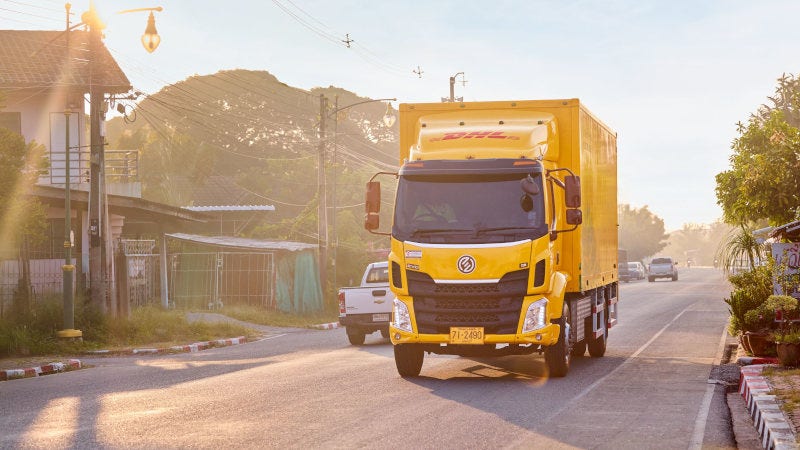
You've identified the best-selling category on Amazon for your business. You've validated demand through research. You understand seasonal timing. Now comes the make-or-break factor: getting your products to Amazon's fulfilment centres efficiently and reliably.
Amazon FBA success depends on three factors working together seamlessly: customs compliance, inventory speed, and simplified documentation. DHL Express is specifically designed to handle all three, turning what could be your biggest headache into your strongest competitive advantage.
Amazon FBA has zero tolerance for errors. Your inventory needs to arrive at their fulfilment centres (whether in the USA, UK, or EU) with perfect documentation and 100% customs compliance. Even minor errors can result in rejected shipments, delayed inventory availability, and lost sales.
The DHL advantage:
Shipping to Amazon FBA internationally involves complex "Importer of Record" (IOR) requirements. Essentially, someone needs to be legally responsible for your goods when entering a foreign country. Most Indian SMEs aren't registered entities in the US, UK, or EU, and setting this up independently is time-consuming and complex.
DHL Express simplifies this entire process by:
Focus on sourcing and selling, while DHL handles the regulatory complexity of getting your products into foreign markets legally and efficiently.
Beyond delivering products, smart logistics directly impacts your profitability. DHL Express helps you optimise margins by pricing your products competitively while maintaining healthy margins.
With DHL's online shipping tools, like the overseas shipping calculator, you can estimate duties and taxes upfront, so you know your true landed cost before you list your products. This means:
The convergence of growing global demand for authentic Indian products, sophisticated research tools to identify trending items on Amazon, and world-class logistics infrastructure creates significant opportunities for Indian SMEs in 2026.
The best-selling categories on Amazon, Home & Kitchen, Beauty & Wellness, Apparel & Jewellery, and Sustainable Goods, play to India's natural strengths. With the right product selection strategy (focusing on weight-to-value ratios and seasonal planning) and efficient FBA logistics, you can build a thriving cross-border business that scales profitably.
Remember: success on Amazon Global isn't about selling everything to everyone. It's about finding the niche that aligns with your capabilities, validating demand through research, and ensuring your logistics partner can keep your inventory flowing smoothly to FBA centres worldwide.
Are you ready to take your Indian products to the world? Open a DHL Express Business account today to access expert FBA shipping solutions and start scaling your Amazon Global business.
First, create an Amazon Seller account and choose a "Selling Plan" (Individual if you’re just testing, Professional if you’re serious). Then, you just list your product in the Seller Central portal by adding photos, a description, and a price.
No. If you choose Fulfillment by Amazon (FBA), you send a bulk box of your products to Amazon’s warehouse once, and they handle the rest. Every time a customer clicks "Buy," Amazon picks, packs, and ships it for you, and even handles the returns.
Amazon generally takes a "Referral Fee" (essentially a commission) on every sale, around 15% depending on the category. If you use FBA, you’ll also pay a small fee for storage and shipping, but this is often cheaper than mailing individual packages to customers yourself.
Exclusive business discounts up to 60%
Seamless global shipping
Dedicated support for your business growth


 Share
Share