Shipments of medical devices are subject to strict regulatory inspections to protect patient safety. You are required to maintain complete tracking records and adhere to national regulations to ensure smooth customs clearance. Overlooking even a single documentation step can result in a significant delay at the border.
DHL Express can help you check the requirements for permits and licences before your shipment arrives, so your documentation is in order well before the aircraft lands. Maintaining the accuracy of these records is critical for a clear audit trail, particularly if you are shipping from a major medtech manufacturing centre such as Hyderabad.
What to check before you ship
These four checks can help prevent most common delays before they occur:
- Medical Registration: Ensure every device is correctly matched against the destination market's official medical device registry.
- Approval Timelines: Plan ahead for both Indian export documentation and destination market approvals. For example, obtaining a required Free Sale Certificate from the Central Drugs Standard Control Organisation (CDSCO) can take several weeks and is a prerequisite for many destination countries. You must also factor in the often lengthy timelines for registering devices in major markets, such as under the EU's Medical Device Regulation (MDR).
- Clear Descriptions: Check that all commercial invoices clearly state the device's exact intended use and its official medical classification.
- Local Authorities: Comply with India's own health product regulator, the Central Drugs Standard Control Organisation (CDSCO), which governs the manufacturing and export of medical devices.
Filing the necessary forms can be a complex process, so we recommend always confirming the latest import rules with the destination authority before you ship.
How do UDI codes affect customs clearance?
Customs authorities in many countries use Unique Device Identification (UDI) barcodes to verify the legitimacy and traceability of your medical cargo. Any printing errors or missing data can lead to your products being held for inspection or subjected to a formal audit at the border.
Your team can use My Global Trade Services (MyGTS) to check specific medical product classifications and required labelling codes against destination rules before shipping. It's important to verify the de minimis threshold for your destination market, as this affects customs duties. For goods being imported into India, such as commercial samples or returns, the de minimis value is generally INR 10,000. For your own export documentation requirements when shipping from India, the CBIC website is the primary resource.
Keep your UDI tracking clean
These steps help ensure your barcodes remain valid throughout their journey:
- Label Checks: Cross-reference your product barcodes against the UDI database of the destination market.
- Digital Paperwork: Use electronic documentation to ensure your tracking numbers remain clear and scannable during transit.
- Audit Readiness: Maintain clear digital copies of all registration certificates for rapid submission to customs officers if requested.
Clear and accurate label management significantly reduces the risk of costly customs inspection delays.
How do you protect sterility and temperature during transit?
Improper handling or an unexpected temperature deviation during shipping can damage sensitive diagnostic equipment before it even reaches the hospital. This is why it is critical to implement the correct environmental protections for your high-value medical devices.
DHL Express provides priority handling for sensitive healthcare shipments, subject to contractual agreement and market availability, to help maintain the specific conditions your equipment requires while in transit.
Four things to lock down before you ship
These checks help protect your equipment from the moment it leaves your facility:
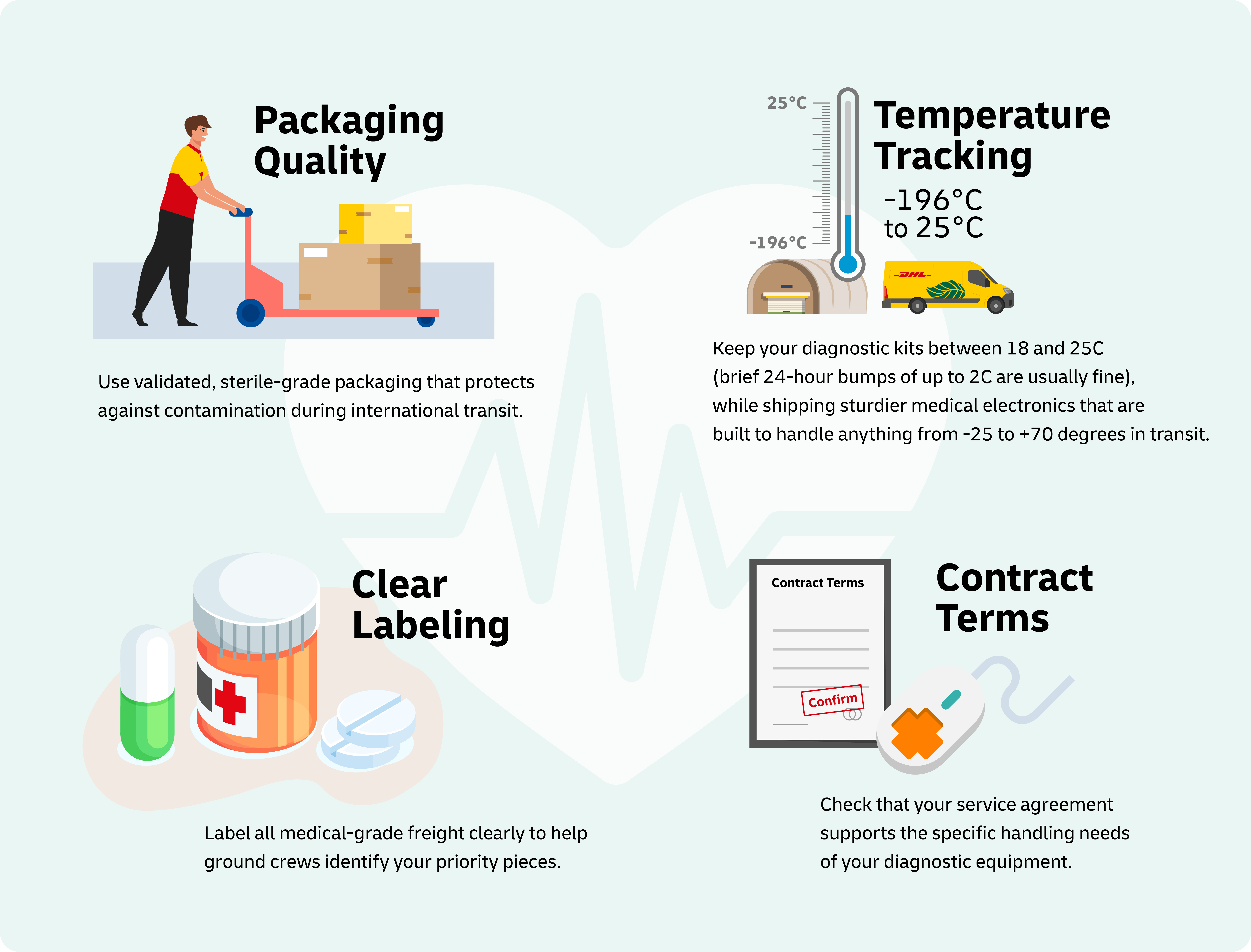
- Packaging Quality: Use validated, sterile-grade packaging that protects against contamination during international transit.
- Temperature Tracking: Ensure that temperature-sensitive diagnostic kits are kept within the manufacturer's specified range. While sturdier medical electronics often tolerate a wider range of conditions, you should always confirm the specific device's handling requirements before shipping.
- Clear Labelling: Label all medical-grade freight clearly so that ground crews can easily identify your priority shipments.
- Contract Terms: Check that your service agreement supports the specific handling requirements of your diagnostic equipment.