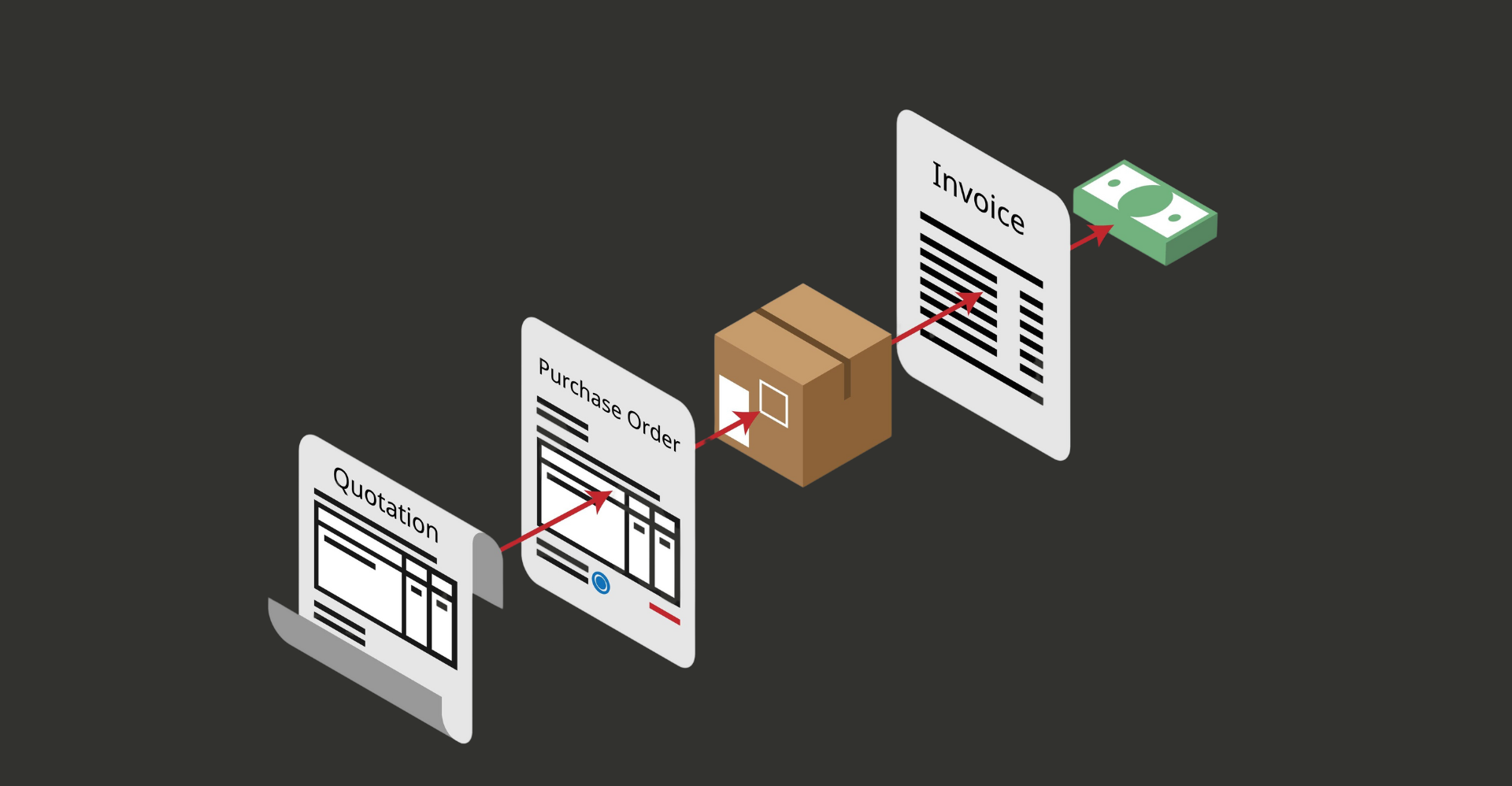
A stock-keeping unit (SKU) is a unique, alphanumeric code created by the seller for internal tracking and inventory management. Unlike external codes that identify a product globally, the SKU is your business’ own fingerprint for a product, helping you identify and track it efficiently.
For Japanese businesses selling complex, multi-variant products—common in electronics, fashion, and crafts—accurate SKU management is the invisible backbone of operational efficiency. Plus, a good SKU strategy isn’t just about organizing stock; it's a key component of e-commerce best practices that can impact your bottom line.
Let’s clarify what does SKU means in inventory, how to differentiate it from similar terms, and why a smart SKU strategy is important for minimizing errors and optimizing global shipping operations.
SKU vs. the world: Clarifying inventory jargon
SKU confusion often stems from misidentifying it with other crucial codes. It's important to understand the difference between internal tracking codes, which you create, and external, globally standardized identifiers, like UPC.
- SKU (Stock Keeping Unit): This is a unique, alphanumeric code created by the seller for internal tracking, inventory management, and profit analysis. It is your store's language for classifying product variants.
- GTIN/UPC (Global Trade Item Number/Universal Product Code): This is an external, globally standardized number (typically all numerical) used for retail point-of-sale systems, supply chain communication, and international customs/compliance. A single product line might have one UPC, but several SKUs (e.g., one shoe style has one UPC but 10 SKUs for different sizes and colors).
- Batch Number/Lot Number: This code is used to group units from the same production run for quality control, recall management, and traceability. It changes with every new production batch of the same product.
- Serial Number (S/N): This is a unique identifier assigned to a single, individual unit (often high-value electronics) for warranty and tracking purposes. Unlike an SKU, which tracks a type of product, the Serial Number tracks a specific product item.
SKU's role in e-commerce and international shipping
A good SKU system directly translates to success in fulfillment and export. Accurate SKUs are vital for preventing common fulfillment headaches. They enable precise inventory management, ensuring accurate stock counts, preventing overselling (which damages customer trust), and providing the foundation for a solid digital marketing strategy by allowing you to target ads, create personalized product recommendations, and pause campaigns immediately when a specific item variant goes out of stock.
However, when an incorrect SKU is picked from the warehouse shelf, it leads to a wrong shipment. This error triggers expensive and time-consuming international returns (reverse logistics), which in turn impact profit margins and customer satisfaction.
Therefore, learning how to use the correct SKU is a non-negotiable step in the international shipping process, as it enables the shipper to quickly identify and verify the package's contents, thereby reducing the likelihood of errors that lead to delays or extra charges when shipping to customers at high international shipping rates.
How to create a good SKU number for products
A good SKU is descriptive and logical, allowing both employees and automated systems to identify a product and its specific characteristics without physically seeing it. This logical structure is key to efficient warehouse and inventory management.
The most efficient way to create an SKU is by incorporating hierarchy, typically moving from the broadest identifier to the most specific attributes (Brand > Category > Attribute).
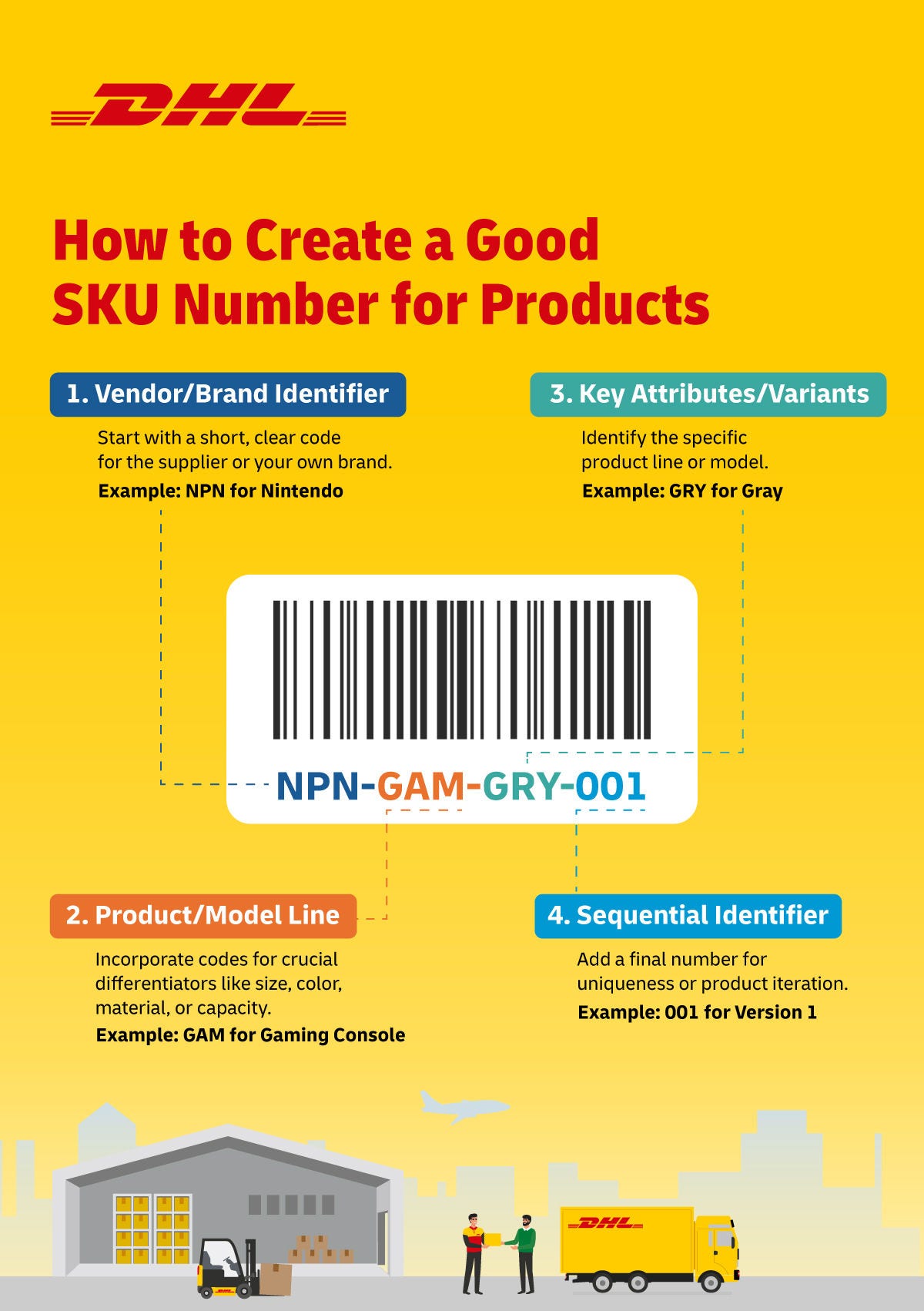
Here’s how to create SKU numbers for products, along with the key elements to include:
- Vendor/Brand Identifier: Start with a short, clear code for the supplier or your own brand (e.g., NPN for Nintendo, SON for Sony).
- Product/Model Line: Identify the specific product line or model (e.g., A7 for Alpha 7 Camera, TS for Technical Shirt).
- Key Attributes/Variants: Incorporate codes for crucial differentiators. This is where you track variants like size, color, material, or capacity (e.g., BLK-L for Black-Large, 512G for 512GB).
- Sequential Identifier: Add a final number for uniqueness or product iteration (e.g., 001, v2).
A well-constructed SKU number for a specific product might look like this: NPN-GAM-GRY-001 (Nintendo - Gaming Console - Gray - Version 001).
Common SKU mistakes to avoid
Even experienced entrepreneurs can fall into traps that undermine the entire SKU system, which answers the question, "What are common SKU mistakes to avoid?" An undermined system can lead to fulfillment errors and increased costs for your business.
Here are the top three SKU mistakes to avoid:
- Using confusing characters: Avoid letters that look like numbers (like the letter 'O' and the number '0', or the letter 'I' and the number '1'). Also, steer clear of symbols that confuse software or are hard to read quickly (such as dashes, slashes, or asterisks). This is essential because even automated systems can misinterpret these characters, causing errors in inventory management.
- Making them too long: While it's important for an SKU to be descriptive, keep them concise, typically 8–12 characters max. Long SKUs are prone to transcription errors during manual entry and can exceed field limits in some e-commerce platforms or shipping software.
- Duplication: This is a fatal flaw in an SKU strategy. Every distinct product variant (e.g., a shirt in blue-small vs. blue-medium) must have a single, unique SKU. Duplicating SKUs across different products disrupts the entire inventory system, resulting in stock mismatches, inaccurate sales data, and the frustration of shipping the wrong item to a customer.
From SKU to seamless global delivery
For businesses shipping from Japan, mastering the Stock Keeping Unit (SKU) is non-negotiable for scaling e-commerce operations and succeeding in competitive international markets. A robust SKU strategy is crucial for accurate inventory counts and efficient order picking. Ultimately, it helps minimize costly and time-consuming errors in international shipping.
As such, investing a small amount of effort in a logical and consistent SKU system minimizes expensive mistakes and significantly optimizes profitability.
Ready to streamline your inventory and eliminate cross-border shipping mistakes? Consider DHL’s overseas shipping services or open a DHL Express business account today to learn how their digital integration tools, like DHL Express Commerce, can link your SKU-based inventory directly to the fulfillment process for seamless, error-free global delivery.


 Share
Share
Similar Stories