#News&Insights


 Share
Share
Nairobi Sets the Pace: How Kenya’s Capital Stands Out in the Global Attractiveness Index
Share
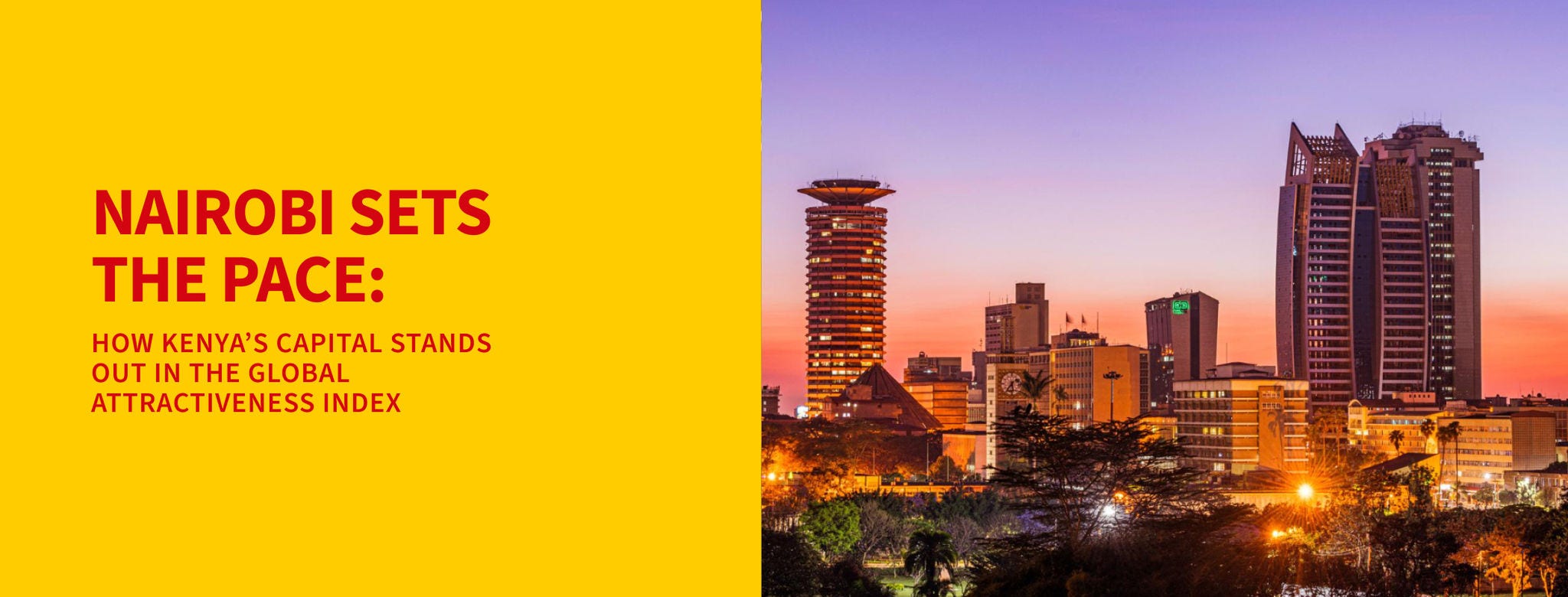
Nairobi is once again on the map; and this time, the numbers back it up. In the latest Global Attractiveness Index for Emerging and Fast-Growing Cities, Kenya’s heart and nerve centre outshines many of its peers, ranking among the top African cities shaping the continent’s future.
Nairobi features prominently in the new Global Attractiveness Index for Emerging and Fast-Growing Cities (GAI). The Index, developed by DHL Express Sub‑Saharan Africa and The European House – Ambrosetti, provides an objective, data‑driven assessment of the attractiveness of 80 cities across 80 countries, including their capacity to attract and retain resources across four dimensions: Economy, Environment, Social and Urban Infrastructure.
The Index provides an objective assessment of the competitiveness and attractiveness of 80 emerging cities across 80 countries.
With African cities representing nearly 34% of the sample, the 2026 GAI illustrates the continent’s growing role in reshaping global urban and economic geography.
The Beating Heart of Eastern Africa
Nairobi lands at 56th overall in the global rankings. But the story gets more interesting at home: within Africa, the city claims the 11th spot and rises to 6th in Sub-Saharan Africa. This is a powerful affirmation of Nairobi’s role as a launchpad for innovation, commerce, and creativity in the region.
A Green City in the Sun
What really puts Nairobi ahead of the pack is its environmental performance. Ranked 35th globally and an impressive 5th among African cities, Nairobi is proving that urban growth can go hand in hand with sustainability. The city’s clean air, reliable public transport, and abundant green spaces all contribute to a quality of life that is catching global attention.

Economic Strength Meets Urban Challenges
Nairobi’s economy is resilient and diverse, earning it the 39th spot worldwide and 9th in Africa. The city’s affordability and broad sector base make it a magnet for talent and investment. Still, it’s not without challenges. Social conditions and urban infrastructure lag behind, with rankings of 73rd and 65th respectively. High rates of informal settlements and gaps in sanitation services weigh down social progress, while patchy internet and limited sewerage networks hinder infrastructure growth.
Unlocking Nairobi’s Full Potential
The good news? The path forward is clear. Enhancing access to sanitation, expanding electricity, and reducing informal settlements could see Nairobi climb even higher in the rankings. These are practical steps, within reach, that can unlock new opportunities for everyone who calls this city home.
With African cities making up over a third of those evaluated, Nairobi’s journey offers a blueprint for what’s possible when ambition meets action. To see the full story and dig into the data, check out the complete Nairobi Attractiveness Index report.
Share
Similar Stories