It's a way to grow your business by adding a second production base in a new country while keeping your main base in China. This helps you avoid being too dependent on one location and lowers your risks from trade policy changes.

The Safety Net: The China Plus One Strategy is a helpful plan to keep your main production in China while adding a second base in a country like our neighbour, Vietnam, or even right here in Cambodia.
The Plus X Shift: In 2026, many businesses are moving to a China + X model. This simply means adding several extra hubs to spread your risk even further and build a stronger business.
Trade Perks: Using regional trade deals like the RCEP helps you move goods between these countries without paying high duties, which is a great advantage for Cambodian businesses.
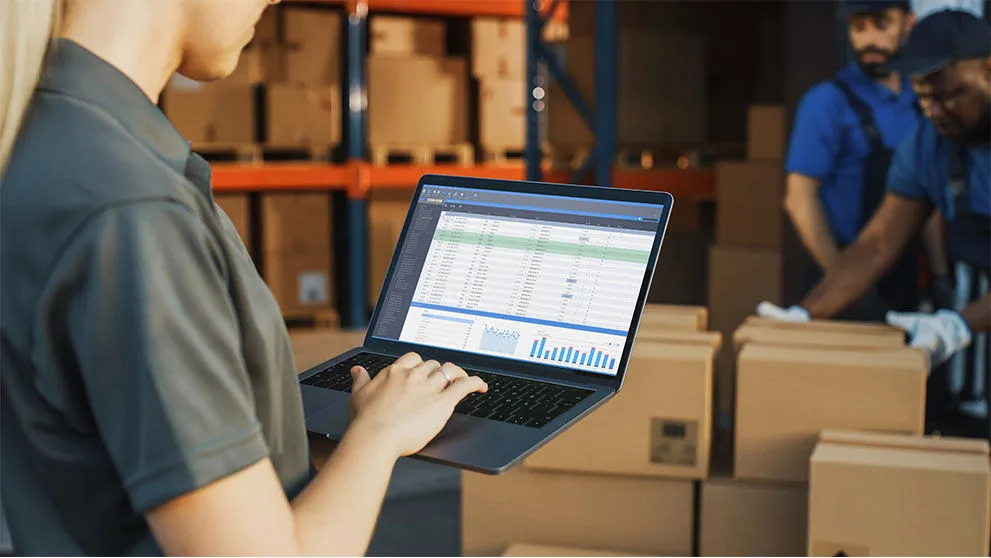
Total Control: To make this work smoothly, you need digital tools to see all your stock across all locations at once. We can help you set this up.
The China Plus One Strategy is about not putting all your eggs in one basket. If your business only relies on one country, a single change in trade laws or a local event like flooding can stop your sales completely. In 2026, building a strong and flexible network is the best way to protect your business as it grows. This guide explains in simple terms how to add new locations to your supply chain.
The reasons for growing supply chains in Asia have changed. It used to be just about saving money, but now it’s more about managing risk. Relying on a single country is a high-risk move in today's market. Plus, a new investment surge of over 508 trillion KHR (around $124 billion USD) is coming into Southeast Asia this year, creating many new opportunities.
Trade Risks: 72% of professionals say that changes in tariffs are the biggest threat to their profits this year.
Cheaper Labour: Wages in countries like Cambodia are often significantly lower than in China's major cities, which can help manage your costs.
New Customers: Millions of people across Southeast Asia are buying more goods. This means your new factory location can also become a new sales market for you.
Risk Spreading: Adding more sites means your business can keep running even if one location has a problem, for example, during the busy Khmer New Year period when things can slow down.
Moving to this model can mean more paperwork, which we know can be a headache. It's important to work with a partner who can give you a clear view of your cargo in every country. This helps you build a stronger supply chain without adding to your workload.
Choosing a second location depends on what you make and who you sell to. For Cambodian businesses, looking at neighbours like Vietnam or Thailand is a popular choice. In 2026, a few countries stand out as top choices for a second hub.
Feature | China (Main Base) | Vietnam / India / Malaysia (Plus X) |
|---|---|---|
Role | Making high-tech parts | Final assembly and basic parts |
Trade Benefit | Huge local supplier lists | Lower tax through local trade deals |
Cost Profile | High efficiency but higher pay | Lower pay but newer infrastructure |
Market Goal | Selling to the world and China | Selling to Asia and spreading risk |
Vietnam is a great example for the China Plus One Strategy in electronics. Many big tech companies have set up factories there. This creates a large group of suppliers, making it easier for you to find the parts and materials you need close to home.
Moving part of your production is a big step. New markets often have different rules and customs processes that can seem very complicated.
Origin Rules: You must understand which trade agreement offers the lowest tax rate for your product. For example, Cambodian agricultural exporters need specific documentation, like phytosanitary certificates, to benefit from trade schemes with partners like the EU.
Classification Risks: A mistake in your customs paperwork can lead to a significant fine, sometimes equivalent to over 41,000,000 KHR (around $10,000 USD).
GTS Support: We use our My Global Trade Services tools to help you find the right customs codes for your goods, making the process much simpler.
Local Experts: Our teams in Cambodia are your local guides. They understand the processes at the General Department of Customs and Excise (GDCE) and can help you avoid delays at the border, whether at Phnom Penh Airport or Sihanoukville Port.
Using these tools and our local knowledge ensures you pay the lowest possible duties when you move parts between your hubs. It's the best way to keep your prices competitive and your business running smoothly.
You cannot manage what you cannot see. If you have stock in three different countries, you need one simple digital view to keep track of everything.
Live Tracking: We provide a single, clear view in MyDHL+ so you can track all your shipments from all your hubs at once.
Fast Decisions: This information lets you quickly reroute your cargo if a problem, like a bad storm, affects one of your ports.
Customer Choice: You can use our On Demand Delivery (ODD) service to give your new customers in these countries more control over their deliveries, which they will appreciate.
Smooth Handoffs: Having all your data in one place makes it much easier to pass customs audits with the GDCE.
Real-time information is the only way to manage a modern supply chain. It gives you the power to act quickly when things change, keeping your customers happy.
Use this simple 5-point check to see if your network is ready for next year. A proactive China Plus One Strategy needs regular check-ups to stay effective and protect your business.
Audit Area | Key Question | Expert Insight |
|---|---|---|
Trade Laws | Have you found the trade deal with the lowest tax? | Improving your tax structure helps your total costs stay low. |
Ports and Power | Does your new hub have the power and port space you need? | Checking infrastructure ensures your work never stops. |
Digital Tools | Are your systems linked with a global partner for live views? | Live data helps you find delays and fix them fast. |
Tax Limits | Are you using local duty-free limits to save money? | Using these thresholds can lower costs for small sales. |
Emissions | Are you using green warehousing to meet your goals? | Lowering your emissions helps you meet new environmental laws. |
Setting up a second hub is a smart move that protects your business's future. You don't have to navigate these new rules by yourself. If you only rely on one country, you're leaving your 2026 profit at risk.
Take a look at your current trade routes and factory locations. If your costs are going up or your deliveries are slowing down, it's time for a change. We are here to help you map out your new locations and secure your business for 2027 and beyond.
It's a way to grow your business by adding a second production base in a new country while keeping your main base in China. This helps you avoid being too dependent on one location and lowers your risks from trade policy changes.
Plus X is the next step. It means your business has more than one extra hub. For example, you might have your main factory in China and smaller assembly sites in Cambodia, Vietnam, and Thailand.
The RCEP is a trade deal between 15 countries in the Asia-Pacific region, including Cambodia. It creates a single set of rules for taxes, which makes it much easier and often cheaper to move your products between different hubs in the region.
You can use MyDHL+ to see all your shipments in one place. It gives you live information on where your goods are, whether they're in China, Cambodia, or any other hub in your supply chain network.


 Share
Share