You should use MyGTS to check classification codes and make sure all devices are registered with the TGA before you ship. Providing accurate documentation, including UDI labels and ARTG inclusion numbers, keeps the clearance process moving.


 Share
Share

A delayed implant can cost a patient their procedure window. Get it right, and the hospital never knows how close it came. DHL Express moves surgical implants and diagnostic equipment into Australia every day, because local hospitals can't afford to wait. Here's how to keep your medical device supply chain moving without compromising patient care.
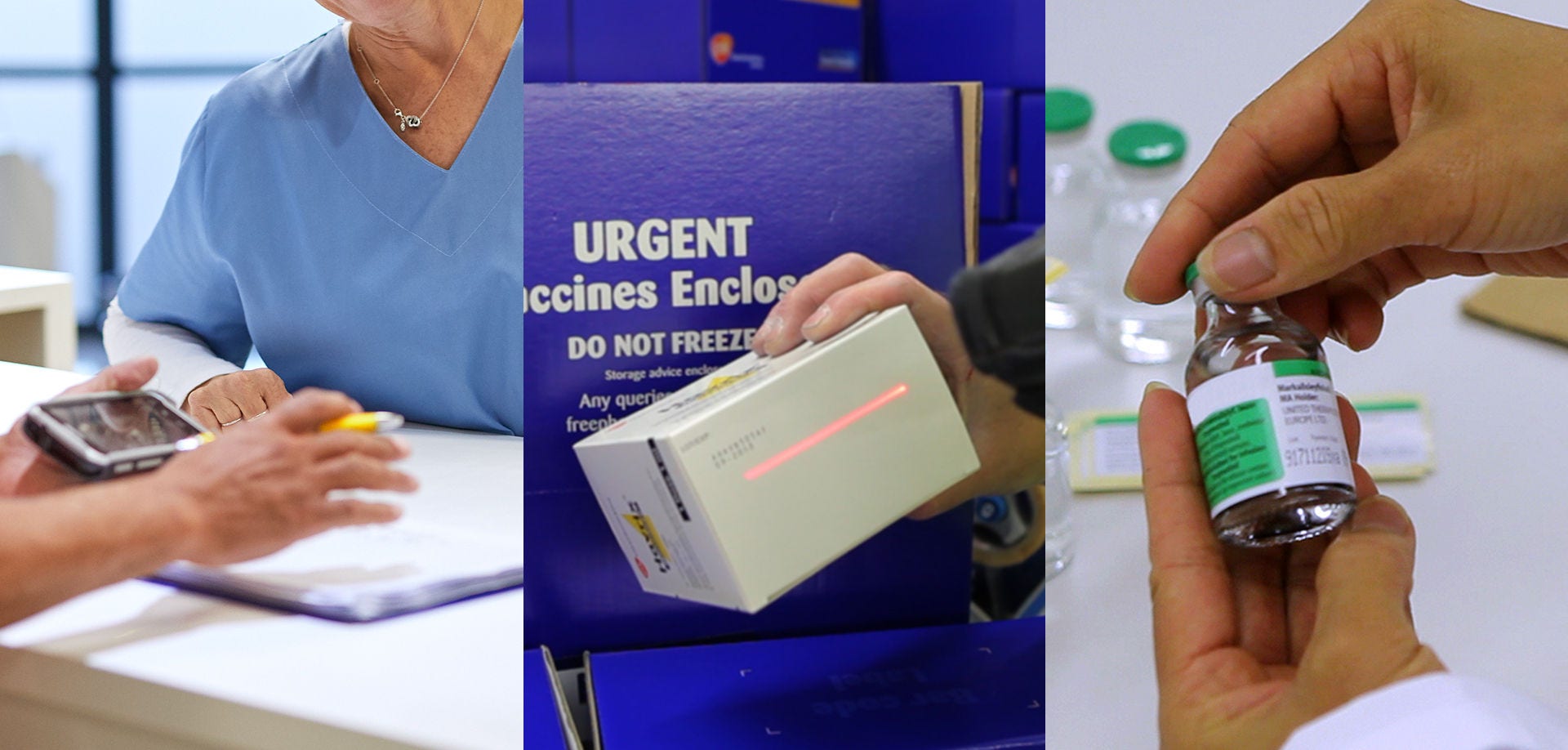
Medical device shipments face strict regulatory checks to protect patient safety. You need full tracking records and must follow national rules correctly to clear customs. Miss a single paperwork step and your shipment can be held at the border.
DHL Express can help you check permits and licences before your shipment arrives, so your paperwork is in order well before the plane lands. Keeping these records accurate is critical for a clean audit trail, especially if you're shipping from a regional hub like Singapore.
These four checks catch most delays before they happen:
These forms can be complex, so always confirm the latest import rules with the destination authority before you ship.
Customs systems use Unique Device Identification (UDI) barcodes to check the legitimacy of your medical cargo. Printing errors or missing scanning numbers can lead to product holds or audits at the border.
Your team can use My Global Trade Services (MyGTS) to check specific medical product classifications and required labelling codes against destination rules before shipping. For goods valued at or below the de minimis threshold of AUD 1,000, there are generally no duties or taxes to pay at the border, but it's always worth checking the specific rules on the Australian Border Force (ABF) website.
These steps keep your barcodes valid all the way to the border:
Clear label management cuts the risk of costly customs inspection delays.
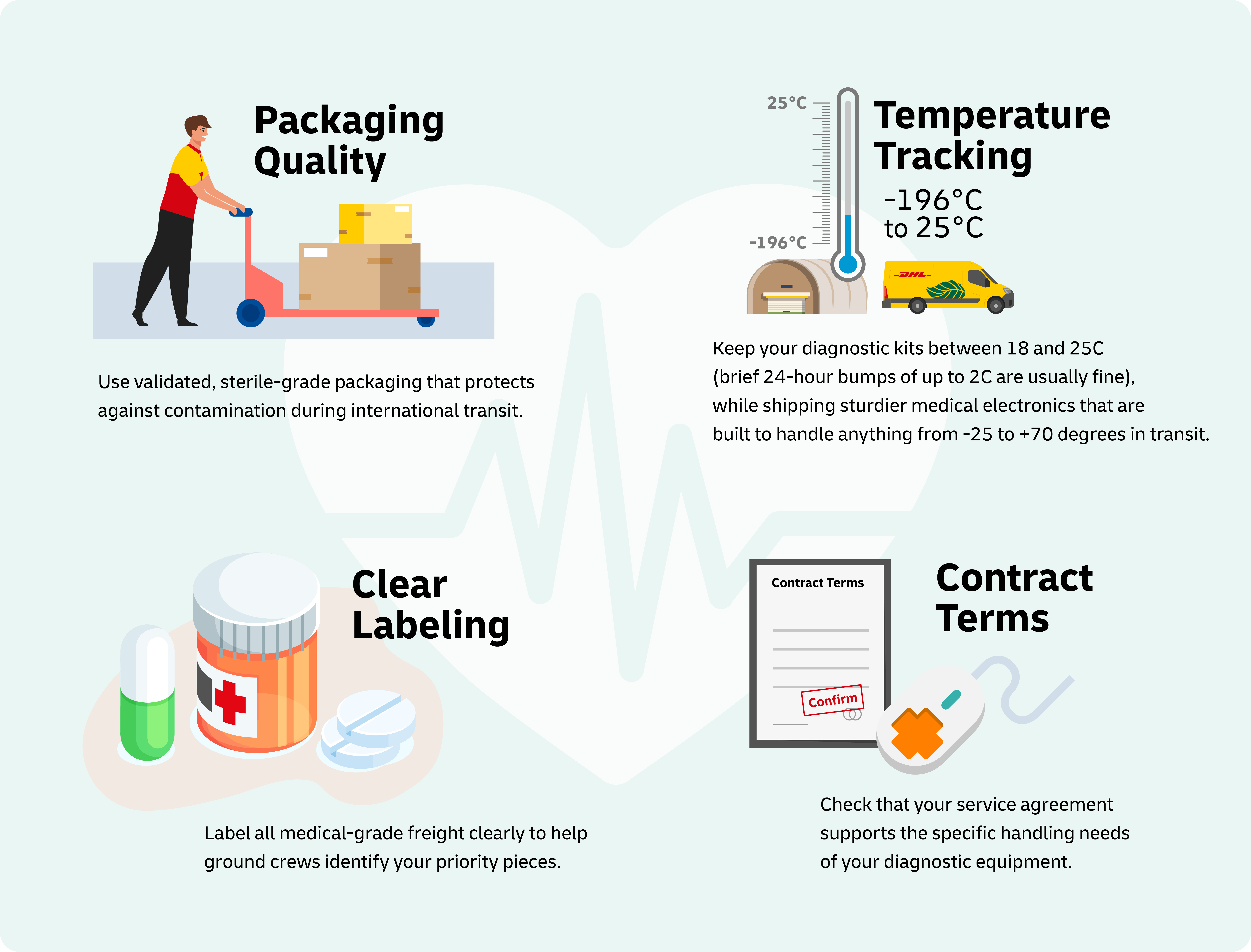
Rough handling or a sudden temperature change during shipping can knock sensitive diagnostic equipment out of clinical specification before it reaches the hospital. You need the right environmental protections for your high-value medical gear.
DHL Express provides priority handling for sensitive healthcare shipments, subject to contractual agreement and market availability, to help maintain the conditions your equipment needs in transit.
These checks protect your equipment from the moment it leaves your facility:
Delayed surgical kits disrupt hospital schedules and put patient care at risk. A reliable delivery window is crucial for replenishment. Your supply chain needs to be fast and predictable to keep up with today's clinical demands.
Options like DHL Express 9:00 give you a high-priority, early morning delivery window for critical healthcare goods, so parts arrive ahead of the morning surgical list.
Weigh these three factors when you're planning delivery:
Capacity tightens fast during the Christmas and New Year period, so build that into your priority booking windows.
Effective medical device logistics comes down to precise regulatory documentation and reliable transit windows. DHL Express supports this with tools like MyGTS for classification checks, our Permits and Licences service for customs readiness, and priority services like DHL Express 9:00 for time-critical deliveries.
Talk to our healthcare logistics specialists today to align your surgical shipment schedule with the right customs and delivery services.
You should use MyGTS to check classification codes and make sure all devices are registered with the TGA before you ship. Providing accurate documentation, including UDI labels and ARTG inclusion numbers, keeps the clearance process moving.
DHL Express 9:00 is a strong option for time-critical deliveries, giving you an early morning window built for hospital replenishment. That timing means parts land before the start of the clinical day, right when the first cases need them.
Sterility depends on high-quality, validated packaging that shields contents from environmental risks like temperature swings and rough handling. DHL Express supports this with priority handling for sensitive healthcare shipments, subject to contractual agreement and market availability.
UDI labels act as a digital passport for your medical products during customs inspections. Missing or incorrect data can trigger product holds, so it's essential to check labels against destination rules before you dispatch.
We support your documentation readiness through our Permits and Licences customs service. While your company remains responsible for final compliance, like ensuring your products are on the ARTG, our team can help get your paperwork organised and ready for submission to customs authorities.
Share