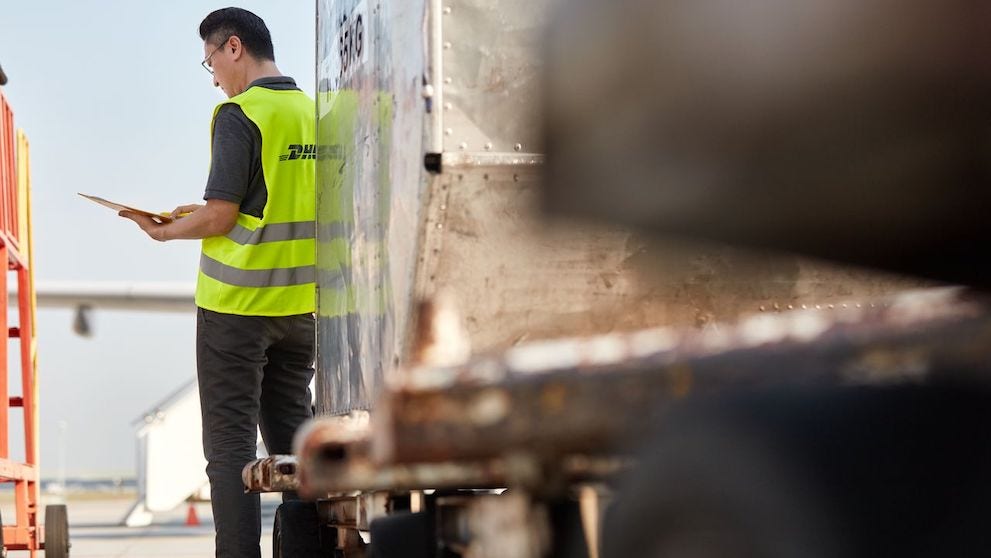
We use specialised ground handling and secure facilities in our global air network. Select locations follow TAPA standards to help protect high-value cargo from theft during transit, which is critical for a major hub like Hong Kong.


 Share
Share

Elite Security Support: High-value chip shipments stay secure through specialised ground handling and tracked facilities, which is crucial for transit through a major hub like Hong Kong International Airport.
Shifting Trade Lanes: Supply chains are realigning toward Southeast Asian hubs and the Greater Bay Area, leveraging Hong Kong as a critical transshipment point in a "China + X" resilience strategy.
Physical Protections: Sensitive wafers benefit from specialised air handling and packaging solutions to help protect integrity upon arrival.
Regulatory Support: Navigating Hong Kong's strategic goods controls requires accurate documentation and restricted party screening to avoid delays with the Customs and Excise Department.
The global chip supply chain faces constant pressure from market swings and rising security threats. As a sophisticated trading hub, Hong Kong demands a logistics strategy as precise as the technology you produce. This guide explores how to secure your high-value assets and maintain speed in a shifting trade environment.
Chip theft is a global challenge that requires a multi-layered security approach to protect your bottom line, particularly for goods moving through the world's busiest cargo airport.
Global Cargo Risks: High-tech theft is a worldwide issue targeting easy-to-sell components.
High-Value Targets: Criminals focus on logic chips and high-end GPUs for grey markets.
Financial Impact: Losing a single pallet can represent a loss of millions of dollars in capital.
High-Standard Handling: We use specialised handling procedures and secure ground handling in our air network to safeguard your shipments.
Select TAPA Certification: Parts of our network follow the standards set by the Transported Asset Protection Association, providing an extra layer of confidence.
We focus on protecting your cargo through secure facilities and verified hand-offs. This helps reduce the risk of interference during the most sensitive parts of the journey, from a factory in the Greater Bay Area to a customer in Europe.
A single micro-crack in a silicon wafer can ruin an entire production batch. These wafers are incredibly sensitive to vibration and temperature changes.
Industry Standards: Logistics must be precise to meet strict manufacturing needs.
Vibration Management: Air-based transport helps minimise exposure to the rougher shocks found in standard road freight.
Temperature Stability: Maintaining a steady environment helps prevent material expansion issues.
Value-Added Sensors: DHL SmartSensor is an optional tool available for applicable shipments to track environmental data.
Detailed Monitoring: These sensors act as a digital shield for your cargo, helping you see how it was handled throughout its journey.
These specialised tools are customisable based on your specific needs. They provide the data your quality assurance teams need to verify the integrity of the wafers upon arrival.
Semiconductor manufacturing operates on thin margins and depends on a constant flow of components to keep machines running, with any delay during peak seasons like the lead-up to Lunar New Year creating significant risk.
Priority Loading: Our time-definite import and export services help your components move faster through Hong Kong International Airport with predictable delivery windows.
Network Speed: DHL Express 9:00 and 12:00 services provide next-possible-business-day delivery to support just-in-time schedules across the region.
Real-Time Visibility: Track your shipment at every stage through MyDHL+ so your teams can plan around confirmed arrival times.
| Service Aspect | Standard Freight | DHL Semiconductor Support |
|---|---|---|
Speed | 3 to 5 business days | DHL Express 9:00 / 12:00 - next possible business day |
Priority | Standard cargo loading | High-standard ground handling |
Capacity | Subject to market availability | Priority access to air network |
Visibility | Milestone tracking | Real-time tracking and sensors |
Back-end operations like testing are moving to Southeast Asia as part of the "China + X" strategy, positioning Hong Kong as an essential, stable hub for managing these complex new flows.
New Corridors: These shifts create a complex web of transport across emerging markets, often funnelled through Hong Kong's world-class port and airport facilities.
Greater Bay Area Integration: Hong Kong's role as the key logistics gateway for the Greater Bay Area is more critical than ever, facilitating the movement of high-tech components.
ASEAN Growth: Investment continues to flow into Southeast Asian nations, increasing the volume of components and finished products transiting through Hong Kong.
The Hong Kong Hub: As a free port with minimal customs delays, Hong Kong remains the central point for regional distribution, high-value inventory warehousing, and trade finance.
Managing this shift requires local expertise in corridors connecting mainland China, Taiwan, and Southeast Asia. This regional realignment means you must build resilience through a hub where customs processes are efficient and predictable.
Chips are often classified as dual-use goods with civilian and military applications. In Hong Kong, compliance with the Import and Export Ordinance (Chapter 60) for strategic commodities is non-negotiable.
Customs Holds: If your paperwork is inaccurate or incomplete, the Customs and Excise Department (香港海關) can hold your shipment. For strategic goods, this means ensuring you have the required licences from the Trade and Industry Department.
Documentation Support: MyDHL+ helps you prepare your shipping documents and perform basic compliance checks, streamlining the process.
Receiver Screening: It is vital to check your receivers against global sanctions lists in real-time.
Strategic Goods Licensing: You must manage local import and export licences for any items listed on Hong Kong's Strategic Commodities Control List. Failing to do so can result in significant fines and imprisonment.
As a free port, Hong Kong does not levy customs tariffs on most goods, so there is no de minimis value threshold to consider for duties. However, this does not exempt shippers from strict documentation and licensing requirements for controlled goods. Accurate data entry is the best way to keep your chips moving.
Resilience is built through end-to-end visibility. If you cannot see your shipment, you cannot manage the risk.
Risk Monitoring: We use advanced risk monitoring platforms to track global events like typhoons or strikes that could impact operations at Hong Kong International Airport.
Real-Time Data: These tools help us find alternative routes before a disruption hits your cargo.
Diversified Modes: You should avoid relying on a single lane for your most critical parts. Consider multi-modal options that leverage Hong Kong's sea and air connections.
Digital Trails: Moving away from paper helps speed up customs clearance with authorities like the C&ED and reduces the chance of manual errors.
Data-driven logistics is the only way forward for the chip industry. The cost of unplanned downtime in a fabrication plant is too high to leave your visibility to chance.
Managing chip logistics in 2026 requires a mix of technical care and regulatory speed. With the right partner, you can turn a volatile supply chain into a stable business asset. Speak to a DHL specialist today to check your security protocols and move your chips with confidence.
We use specialised ground handling and secure facilities in our global air network. Select locations follow TAPA standards to help protect high-value cargo from theft during transit, which is critical for a major hub like Hong Kong.
We use specialised handling and high-standard packaging to help minimise vibration and temperature variation throughout the journey.
DHL Express 9:00 and 12:00 services provide next-possible-business-day delivery to help your manufacturing schedules stay on track. This is essential for just-in-time supply chains connected through Hong Kong.
MyDHL+ helps you with your shipping documents and basic checks, but ECCN classification requires your own technical review. For shipments to, from, or through Hong Kong, you are responsible for ensuring compliance with the Strategic Commodities Control List under the Import and Export Ordinance.
It is a resilience strategy where companies add new production or sourcing nodes in other countries (like those in ASEAN) while maintaining a base in China. This helps manage risks and brings production closer to new consumer markets, often leveraging Hong Kong as a key logistics and trading hub for these diversified supply chains.
Share