1 – The Observatory of Economic Complexity, October 2025
2 – Enterprise Singapore, July 2025
3 – Enterprise Singapore, July 2025
4 – Enterprise Singapore, July 2025
5 – The Observatory of Economic Complexity, October 2025
6 – Freshdi, August 2025

For Indonesian businesses looking to expand their market reach, Singapore represents a highly accessible and lucrative export gateway. The close geographical proximity and deep-rooted cultural ties between the two nations translate into a highly favorable trade environment. As one of Indonesia's top trading partners, Indonesian exports to Singapore consistently amount to a substantial $15.8 billion annually1, underscoring the strong and proven demand for Indonesian products.
Capitalizing on this strong bilateral relationship requires more than just high-quality products; it demands mastery of the export process. This guide provides a clear roadmap on how to successfully export your goods to Singapore, covering everything from identifying key products to expertly navigating complex logistics, ensuring your Indonesian business thrives in this critical regional hub.
Singapore’s role as a strategic export market for Indonesian businesses is defined by its status as a major regional hub for logistics, finance, and re-export. With approximately 400 global traders and over 200 global banks present2, Singapore offers unparalleled access to source and destination markets. Its infrastructure is unmatched, boasting over 200 shipping lines connecting to 600 ports worldwide and more than 100 airlines serving 100 countries3, making it an ideal entry point for Indonesian products aiming for a global reach.
This strong connectivity is further enhanced by an extensive Free Trade Agreement (FTA) and Double Taxation Agreement (DTA) network4, which allows businesses to invest and trade freely with major economies around the world. The strong trade relationship between Singapore and Indonesia translates into simplified processes and a shared cultural familiarity. This effectively reduces communication barriers and administrative friction, giving Indonesian exporters a clear competitive advantage when establishing a regional footprint.
Singapore’s market demand is highly diverse, creating immense opportunities for Indonesian exporters across multiple sectors. While bulk commodities like petroleum gas ($1.86B) and refined petroleum ($1.36B) remain top export goods, high-value items such as broadcasting equipment, jewelry and gemstones, as well as medical instruments also command a significant share5.
Beyond these major categories, the market for consumer-oriented products is equally robust. There is high demand for Indonesian-made items like rolled tobacco, perishable goods, and seasoning and sauces like sweet soy sauce, innovative sambal varieties, and traditional spice blends6. This highlights the growing opportunity for Indonesian businesses in a diverse range of sectors, from high-value electronics to everyday consumer goods that appeal directly to Singapore’s diverse population.
Successfully shipping goods from Indonesia to Singapore requires meticulous preparation and strict adherence to established administrative procedures. This ensures your products clear Indonesian customs efficiently and arrive smoothly at their destination.
Accurate and complete export documentation is critical for ensuring smooth customs clearance from Indonesia. These documents formally identify the goods, the parties involved, and the shipment's commercial value.
When creating your checklist, make sure you have the following key documents:
While Singapore is known for its open trade policies, understanding its import regulations is crucial for compliance. Unlike many countries, Singapore does not levy customs duties on the majority of imported goods. Instead, customs duties are imposed on only a few specific dutiable goods, including:
For all goods, the Harmonized System (HS) code is essential. Using the correct HS code ensures proper classification of your product, which is vital for accurately determining any applicable duties and Goods and Services Tax (GST). Always remember that while a courier service can provide valuable guidance on procedures, it is ultimately the exporter’s responsibility to fully understand and comply with the regulations of the destination country.
You should also check if your shipment is affected by the De Minimis rule. Singapore has a S$400 De Minimis value for low-value imports that exempts them from the Goods and Services Tax (GST).
However, this only applies if the supplier or importer is not registered for GST in Singapore. If your business is registered in Singapore, you will need to pay GST at the point of importation.
The accurate declaration of your shipment's value is paramount because Singapore customs authorities rely on this figure to correctly assess potential duties and the mandatory Goods and Services Tax (GST). Exporters must ensure absolute consistency between the declared value and the commercial invoice, as discrepancies will cause delays. Under-declaring the value when shipping them poses significant risks, potentially leading to fees, fines, legal action, or outright shipment seizure. Conversely, over-declaring may unnecessarily increase the amount of GST and duties payable. Maintaining absolute transparency and accuracy is the only way to ensure your goods are cleared quickly and without penalty.
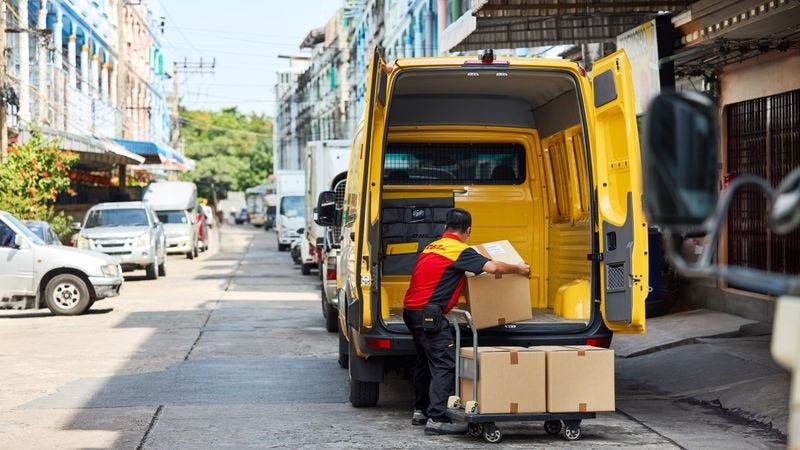
Navigating the complexities of documentation, customs compliance, and ensuring timely delivery can be challenging when exporting from Indonesia. This is where partnering with a trusted international express courier like DHL Express provides a powerful solution, leveraging its deep industry knowledge and strong presence in both Indonesia and Singapore.
DHL Express offers crucial support to streamline the entire shipping process, ensuring your goods move efficiently. We simplify compliance through expert customs clearance services, meticulously handling complex procedures to ensure a seamless cross-border journey. We also provide essential guidance on packaging best practices to protect your goods during transit. Most importantly, our robust DHL tracking package system provides real-time visibility, giving you peace of mind from pickup to final delivery. With flexible service options catering to every need, from urgent documents to heavy parcels, we are your essential partner for reliable cross-border trade.
Singapore represents a significant and accessible export opportunity for Indonesian businesses, but capturing this growth hinges entirely on proper preparation, including rigorous documentation and strict adherence to customs regulations. While these complexities can seem daunting, with a reliable logistics partner, they become fully manageable.
By choosing DHL Express, you gain a strategic ally whose expertise simplifies customs, accelerates transit, and ensures the secure delivery of your goods. We provide the vital link that transforms logistical challenges into a clear competitive advantage, allowing your business to thrive internationally.
Ready to seize the opportunities in Singapore? Open a DHL Express business account now and simplify your exports today for a fast and secure shipping experience.
1 – The Observatory of Economic Complexity, October 2025
2 – Enterprise Singapore, July 2025
3 – Enterprise Singapore, July 2025
4 – Enterprise Singapore, July 2025
5 – The Observatory of Economic Complexity, October 2025
6 – Freshdi, August 2025


 Share
Share