Businesses importing goods from China to Ireland need to get four things right: shipping method, customs documentation, duties and VAT, and transit times. With Irish imports from China totalling €11.8 billion in 20241, the trade relationship between the two countries is significant and continues to grow.
This guide, with insights from DHL Express, breaks down everything Irish importers need to know in 2026, from freight forwarding options and shipping costs to customs duty, documentation and a practical import checklist.
How to ship goods from China to Ireland?
There are four primary methods for shipping goods from China to Ireland, each suited to different timelines, budgets and cargo types.
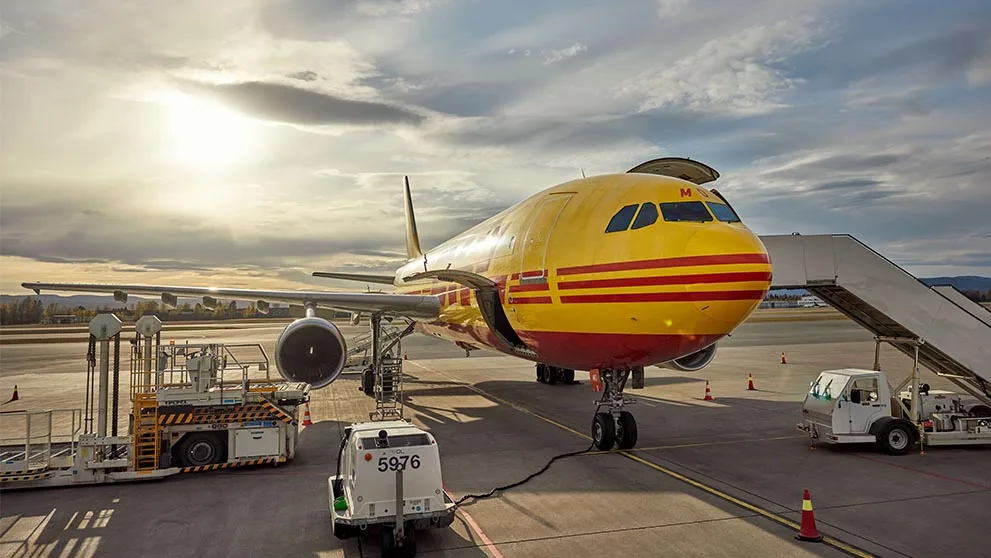
Express delivery: This is the fastest option, ideal for urgent parcels, samples or small commercial shipments.
Air freight: Ideal for time-sensitive stock that doesn't qualify for express but still needs to arrive quickly. It suits mid-weight shipments where speed matters more than cost per kg.
Sea freight: The most economical choice for large, heavy or bulky cargo. Goods travel by container from Chinese ports such as Shanghai, Shenzhen or Ningbo to Dublin Port or Cork.
Multimodal (sea plus road): Combines ocean transport with overland haulage for the European leg, offering a middle ground between timelines and costs.
Which shipping method is right for your business?
The right shipping method depends on how urgently goods are needed, how much is being shipped and what the budget allows. The table below provides a quick comparison.
Method | Best for | Speed | Cost level | Key considerations |
Express | Urgent parcels, samples, small commercial shipments | Fastest (typically 2–5 days) | Highest per kg | Integrated customs clearance; full door-to-door tracking; ideal for lightweight, high-value items |
Air freight | Time-sensitive stock, mid-weight shipments | Fast (typically 5–10 days) | Higher cost, but more economical than express for heavier loads | Requires freight forwarding coordination; airport-to-airport unless door delivery is arranged |
Sea freight (FCL/LCL) | Bulk orders, heavy goods, large volumes | Slower (typically 30–40 days) | Most economical for larger shipments | Longer lead times; requires port handling and onward transport; best when planned well in advance |
Multimodal (sea + road) | Cargo arriving via EU hub ports | Moderate (varies by routing) | Mid-range | Combines ocean and road freight; may offer flexibility on European routing |
For many small and medium-sized businesses, a combination of methods works best. Express or air freight can keep fast-moving products in stock while sea freight handles larger replenishment orders.
What about heavy or oversized shipments?
Heavy and bulky cargo follows different rules to standard parcels. The threshold matters too. Once individual pieces go past roughly 70 kg they usually need to be palletised, and very large or dense items may move as freight rather than parcel.
A lot of what Irish businesses import from China falls into this bracket: machinery, equipment, appliances, bulk stock. The choice isn't only sea versus air. Express carriers also handle heavyweight cargo, usually up to around 1,000 kg per piece and 3,000 kg per shipment, with size limits of roughly 300 x 200 x 160 cm per piece. That makes express worth considering for heavy goods that are urgent or high in value, where waiting several weeks for a container doesn't really work. For large loads that aren't time-sensitive, sea freight is still the cheaper route.
A few practical things help any heavy shipment go smoothly. Get accurate weights and dimensions before you book, because volumetric weight often decides the price. Palletise anything over 70 kg. And pack on sturdy pallets that can be forklifted and will hold up to stacking. DHL Express carries heavyweight shipments within these limits on its large items service, with customs clearance and delivery built into one door-to-door rate.
What affects shipping time from China to Ireland?
There are several factors that influence how long it takes for goods to travel from China to Ireland. Understanding these helps with inventory planning and setting realistic expectations for customers.
Origin city and port in China: Shipping from a major hub like Shanghai or Shenzhen is typically faster than from inland cities that require domestic transport to reach the port or airport.
Destination in Ireland: Dublin Port handles the majority of Ireland's freight, so shipments routed there tend to clear more quickly. Deliveries to more remote locations add final-mile transit time.
Shipment size and weight: Larger consignments, particularly those using less-than-container-load (LCL) sea freight, may take longer due to consolidation at origin and deconsolidation at destination.
Customs clearance: Incomplete or inaccurate documentation is one of the most common causes of delay. With the enforcement of the EU's Import Control System 2 (ICS2)2, all consignments undergo safety and security risk analysis, and shipments with vague or incomplete data may be flagged for additional controls.
Peak-season demand: Seasons such as Chinese New Year (January/February), the Golden Week holiday (October), and the pre-Christmas shipping rush (September to November) drive higher volumes and can stretch transit times.
Final-mile delivery: The last leg from port or depot to the delivery address adds time, particularly for destinations outside major urban centres.
Transit times across shipping modes
The right shipping method depends on how urgently goods are needed, how much is being shipped and what the budget allows. The table below provides a quick comparison.
Shipping mode | Estimated transit time | Notes |
Sea freight (FCL) | 30–40 days | Direct sailings from major Chinese ports to Dublin; routing via the Cape of Good Hope (due to ongoing diversions) can add time |
Sea freight (LCL) | 35–45 days | Consolidation and deconsolidation add several days compared to FCL |
Air freight | 5–10 days | Airport-to-airport; add time for collection, customs clearance and final delivery |
Express shipping | 2–5 days | Door-to-door with integrated customs clearance; the fastest option for urgent shipments |
Road freight (European leg or full overland) | A few days (EU leg only); up to 25 days (full overland from China) | Used for the final stretch within Europe, or as a full overland route (road/rail from China) offering a middle ground between sea and air |
Sea freight
Current shipping route diversions around the Cape of Good Hope can push some sailings closer to 40 to 50 days. Full container loads tend to be quicker than shared containers, which require extra handling at both ends.
Air freight
Direct routes from major Chinese airports (Beijing, Shanghai, Guangzhou) sit at the faster end of the range. Shipments routed through transit hubs may add a day or two.
Express shipping
DHL Express offers integrated customs clearance and full tracking, making express delivery particularly suited to time-critical commercial shipments and product samples.
Road freight
When sea freight arrives at a continental hub port such as Rotterdam or Antwerp, goods are trucked to Ireland, typically adding a few days. The full overland China-to-Europe route (road or rail combined with trucking) can take up to 25 days, offering a middle ground between sea and air on both cost and speed.
How much does it cost to ship from China to Ireland?
When shipping from China to Ireland, the costs depends on a range of variables, including:
Shipment weight and dimensions: Carriers charge based on either the actual weight or the volumetric weight (calculated from the package dimensions), whichever is greater. Bulky but lightweight goods can cost more than expected if volumetric weight applies.
Service level: Express delivery costs more per kg than standard air freight, which in turn costs more than sea freight. The trade-off is speed.
Fuel and seasonal surcharges: Carriers adjust pricing based on fuel costs and seasonal demand. Rates can shift significantly in a short window3. Building a buffer into freight budgets helps absorb these fluctuations.
Customs duties and VAT: Import duties and Irish VAT add directly to the total cost (see the customs duty section below for full details).
Insurance: Cargo insurance adds a small percentage to the total cost but protects against loss or damage during transit.
Customs brokerage and clearance fees: Professional customs clearance services carry their own charges, though they can save time and reduce the risk of errors.
Storage and demurrage: If goods are not collected promptly after arrival, port or warehouse storage fees apply.
Delivery address: Final-mile delivery costs vary depending on whether the destination is a city-centre business address or a more rural location.
Other costs to factor in
Freight charges are only part of the picture. To understand the true cost of importing goods from China to Ireland, businesses should calculate their total landed cost: the full price of getting a product from the supplier's door to yours.
A simple way to think about it:
Landed cost = Product cost + Freight charges + Insurance + Customs duty + Import VAT + Other fees (handling, storage, brokerage)
For example, a €10,000 order of electronic components will also incur sea freight charges, an insurance premium, applicable duties, 23% import VAT (calculated on the customs value plus duty), and brokerage fees. Calculating this figure early prevents margin erosion and enables like-for-like supplier comparisons, since a lower product price from one factory may not translate into a lower landed cost.
Customs duty and import VAT in Ireland
Because China sits outside the European Union, all goods imported from China into Ireland are subject to EU customs formalities. Irish importers need to be aware of both customs duty and import VAT.
Customs declarations: Ireland's Revenue Commissioners require that all goods imported from outside the EU be declared through the Automated Import System (AIS). This electronic declaration must be submitted before goods can be released for delivery. Import VAT and customs duty are payable at the point of import.
EORI number: Every business importing goods into Ireland (or any EU member state) must hold a valid EORI (Economic Operators Registration and Identification) number. This unique reference is required for all customs interactions and should be obtained before the first shipment arrives.
Import VAT: Ireland's standard VAT rate is 23%4, which applies to most imported goods. Import VAT is calculated on the CIF value (the cost of the goods plus insurance and freight) plus any applicable customs duty. VAT-registered businesses can typically reclaim import VAT through their VAT returns. Reduced rates apply to certain categories of goods, so it is worth checking the applicable rate for your specific products.
Customs duty rates: Duty rates vary depending on the product classification (HS code), the origin of the goods and the declared customs value. As an EU member state, Ireland applies the EU's Common Customs Tariff. Some Chinese goods may also attract anti-dumping duties where the EU has identified unfair trade practices in specific product categories.
De minimis threshold: Goods with a customs value of €150 or less are generally exempt from customs duty, though import VAT still applies to commercial consignments regardless of value.
Documents you need to prepare
Smooth customs clearance depends on accurate, complete documentation. Before shipping goods from China to Ireland, importers should ensure the following are in order.
Commercial invoice: Issued by the supplier, this details the goods being shipped, their value, the buyer and seller, and the terms of sale. It forms the basis for customs valuation.
Packing list: A detailed breakdown of the shipment contents, including quantities, weights and dimensions for each package.
Air waybill or Bill of Lading: The transport document issued by the carrier. An air waybill covers air and express shipments; a Bill of Lading covers sea freight.
EORI number: Required for all customs declarations in Ireland (see the customs duty section above for details).
Commodity/HS code: The correct Harmonised System code for each product determines the applicable duty rate. Misclassification can result in overpaid duties or customs queries.
Certificate of origin: Required in some cases to confirm where the goods were manufactured. This may be needed to determine applicable tariff rates or to satisfy specific regulatory requirements.
Product-specific licences or certificates: Certain goods (such as food products, medical devices, electronics or chemicals) may require additional compliance certificates, safety markings (such as CE marking for the EU market) or import licences. Some product categories exported from China also require China Compulsory Certification (CCC) as part of the export process, so importers should confirm with their supplier that all origin-country compliance is in order.
In 2026, the EU's ICS2 system requires that goods descriptions on customs filings be specific and commercially meaningful5. Generic terms such as "parts," "goods", or "samples" are flagged or rejected, so accuracy in documentation is more important than ever.
Import checklist for 2026
Use this checklist to stay on track when planning an import shipment from China to Ireland.
Confirm supplier details. Verify the supplier's business credentials, confirm pricing and agree on production and shipping timelines.
Classify your goods. Identify the correct HS code for each product. This determines duty rates and any specific regulatory requirements.
Check for restrictions. Confirm that the goods are not prohibited or restricted for import into Ireland/the EU. Some products require special licences or certificates.
Prepare your documentation. Gather the commercial invoice, packing list, transport document (air waybill or bill of lading), certificate of origin (if required) and any product-specific certificates.
Confirm your EORI number is active. Ensure the business holds a valid EORI number registered with Irish Revenue before the shipment arrives.
Agree on Incoterms®. Confirm with the supplier which Incoterms® apply to the transaction (such as FOB, CIF or DDP). This determines who is responsible for freight costs, insurance and customs clearance at each stage.
Estimate your total landed cost. Calculate product cost, freight, insurance, customs duty, VAT and any handling or brokerage fees to understand the full import cost before committing.
Choose the right shipping service. Select express, air freight or sea freight based on urgency, volume and budget.
Ensure goods are packed correctly. Proper packaging protects against damage and ensures compliance with carrier requirements. Clear labelling speeds up handling at every stage.
Track the shipment. Use carrier tracking tools to monitor progress from dispatch through to delivery in Ireland.
Keep import records. Retain all customs declarations, invoices and transport documents. Irish Revenue may request these for audit purposes, and good records make future shipments easier to manage.
Ready to ship from China to Ireland?
Importing from China to Ireland involves multiple moving parts, from selecting the right freight option and preparing documentation to managing customs clearance and calculating the true cost of landing goods. Having a reliable logistics partner simplifies the process.
DHL Express offers international delivery services with built-in customs expertise, real-time shipment tracking and dedicated support for businesses shipping across borders. With a DHL Express business account, importers benefit from preferential shipping rates, streamlined customs processing and access to one of the world's largest logistics networks.
Whether the need is express delivery for urgent orders or guidance on customs documentation, DHL Express helps Irish businesses import with confidence.
References
Central Statistics Office, accessed June 2026
Irish Tax and Customs, accessed June 2026
Seatrade Maritime News, accessed June 2026
Irish Tax and Customs, accessed June 2026
trans.info, accessed June 2026


 Share
Share
Similar Stories