Strict adherence to shipping documents abroad will prevent delays in Israel. Most customs delays are due to problems with shipping paperwork. How do we make sure that the shipper abroad has included everything that is required? In terms of customs, the responsibility for the integrity of the paperwork lies with you, the importers. Missing information or documents not attached can cause delays in release and unnecessary expenses. To avoid this, it is necessary to make sure that the shipper abroad complies with the requirements of the Israel Customs.
How do you get the sender used to working correctly?
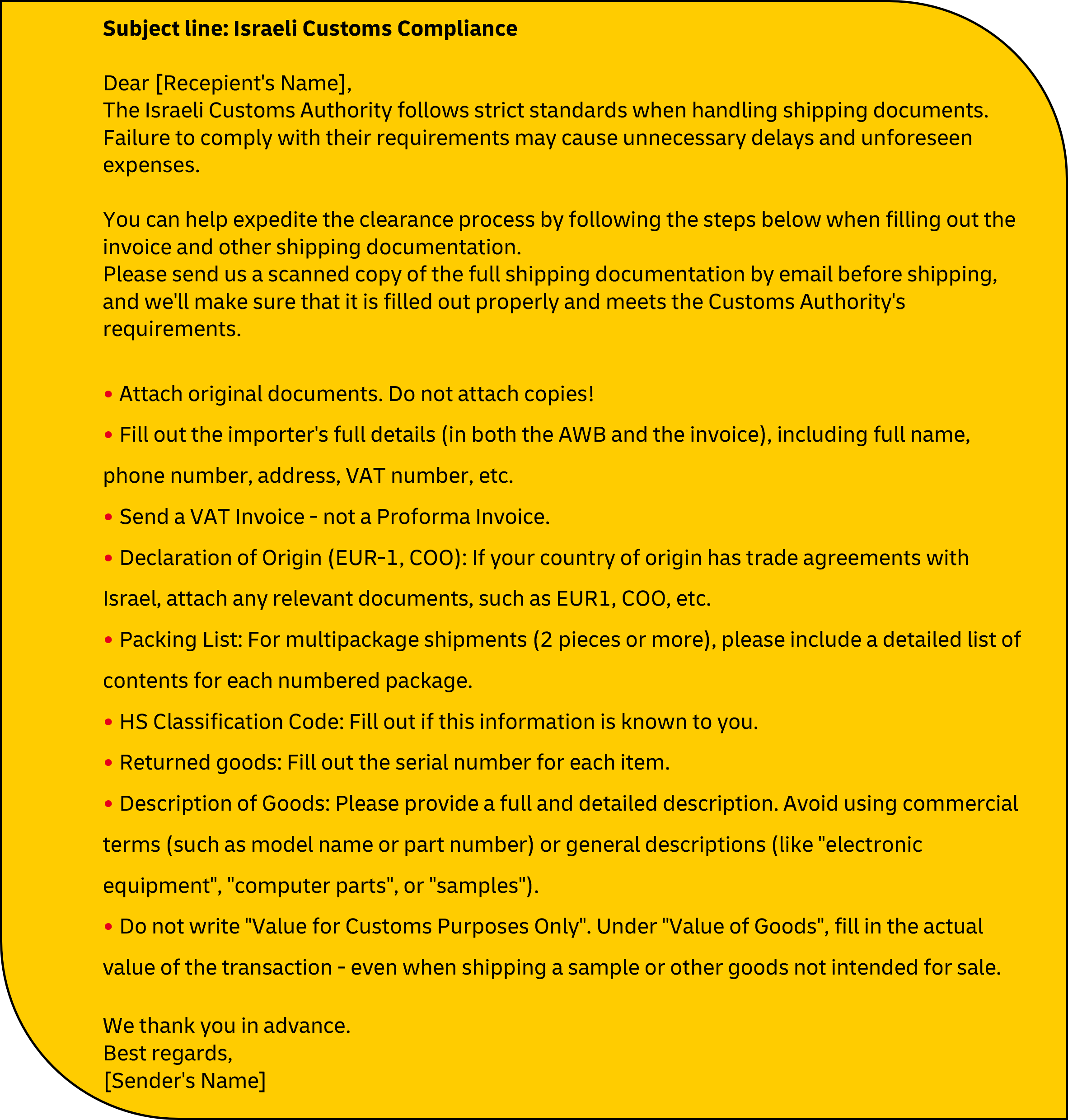
- Send the overseas supplier a clear and detailed list of instructions regarding shipment paperwork: if possible, include these requirements in the contractual agreement as part of the shipping terms, and adhere to them from the very first shipment!
- Demand that the contact details of the importer (your) on the paperwork (invoice) be complete and correct: contact name, company name, phone number, etc.
- Demand to receive and confirm that the shipment paperwork has been scanned before the shipment is issued.
- Make sure to attach original paperwork and not copies. (It is recommended to attach additional copies within the shipment).
- Make sure you attach an invoice and not a pro forma account, (especially for transactions over $1,000).
- Preference documents/declaration of origin: When shipping from a country that has trade agreements with Israel, acceptable and valid preference documents (EUR1, COO, etc.) must be attached.
- Packing List: When shipping with 2 packages or more, a detailed and numbered list of the contents of each package must be attached.
- Classification of customs details: It is recommended to indicate on the invoice and invoice, if known.
- Returned Export: Indicate the serial number of each item in the shipment and make sure that the import paperwork states that it is a return shipment.
- A complete and clear description of goods should be provided: this way the classification will be more accurate and will not require contacting the recipient for more information. Professional terms/language that are common between you and the supplier such as model number/part number only, or general descriptions such as "electronic equipment", "computer parts", "samples" – are not enough.
- Avoid specifying "Only Customs for Value" on the account. In the "Value of goods" field in the INVOICE, specify the value of the transaction. If it is a sample or goods that are not for sale, the value of the product must be indicated.
- Make sure you meet your requirements and report any exceptions, delays, or additional costs incurred to the sender.
Please note!
Even if the customs is paid by the shipper overseas, and even if the problems with the shipment paperwork are not your fault, customs sees you as the address, expects you to provide documents and missing information in case of non-conformity or non-compliance with customs regulations.
The following is an example of a list of instructions for sending abroad in English – for your use:
Our team of import experts is at your disposal for any questions by email: ilcsi2@dhl.com


 Share
Share
Similar Stories