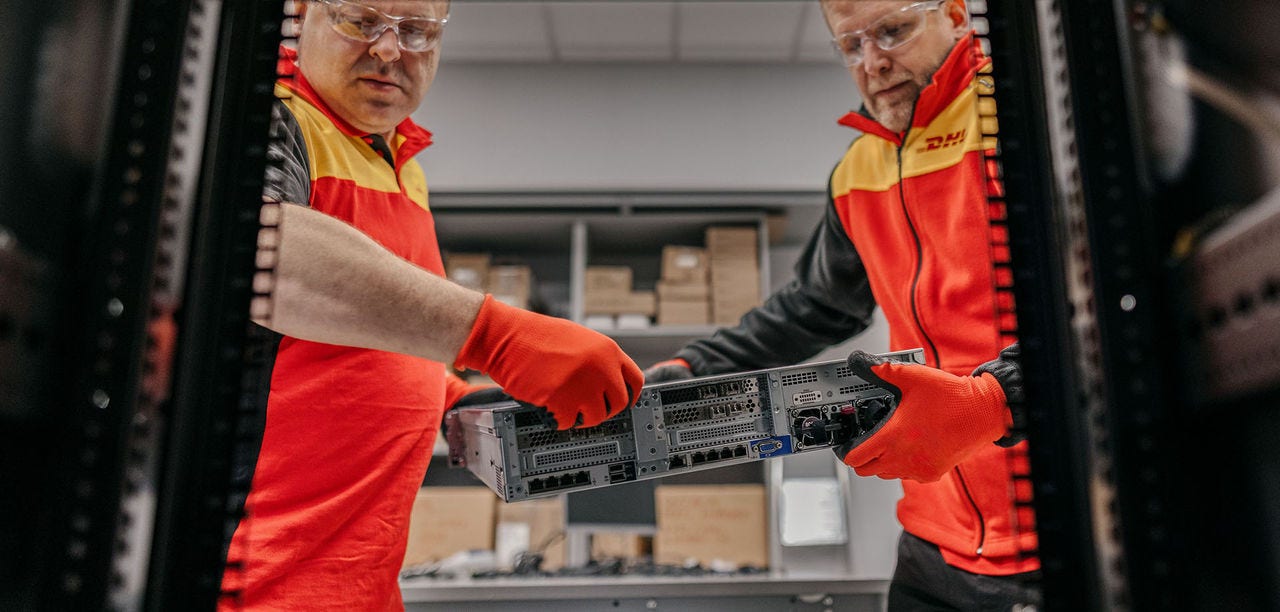
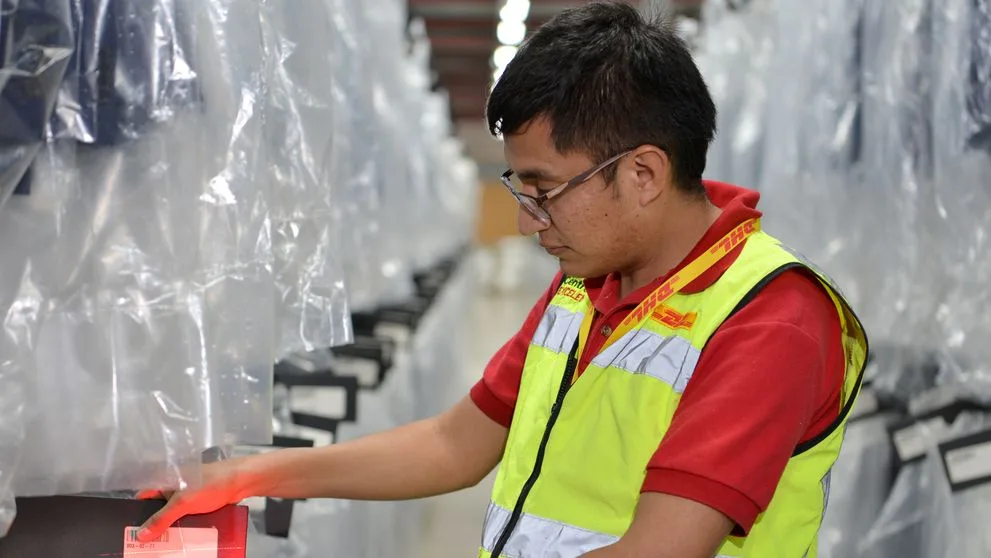
We utilize specialized ground handling and secure facilities in our global air network. Certain locations comply with TAPA standards and work to protect high-value cargo from theft during transport.


 Share
Share

Advanced Security Support: Specialized ground handling and tracked facilities, where available, keep high-value semiconductor shipments secure.
Shifting Trade Routes: Supply chains are being reorganized toward Southeast Asian hubs as part of a broader "China Plus X" resilience strategy. In Japan, there is increased investment in domestic manufacturing bases, particularly in Kyushu's "Silicon Island" and the Tohoku region.
Physical Protection: Sensitive wafers utilize value-added solutions such as smart sensors to help monitor environmental conditions.
Regulatory Support: Managing dual-use (military and civilian) regulations requires accurate documentation and restricted party screening, which are key to avoiding customs delays.
The global semiconductor supply chain constantly faces market volatility and growing security threats. This requires a logistics strategy that is as precise as the technology being manufactured. This guide explains how to keep high-value assets secure and maintain speed in a changing trade environment.
Semiconductor theft is a global challenge that requires a multi-layered security approach to protect your bottom line.
Global Cargo Risk: High-tech product theft occurs worldwide, with easily resellable components being targeted.
High-Value Targets: Criminals focus on logic chips and high-performance GPUs that are traded on the grey market.
Financial Impact: Losing a single pallet can result in capital losses worth millions of dollars.
High-Standard Handling: DHL implements specialized handling procedures and secure ground handling in our air network.
TAPA Certification: Parts of the DHL network comply with standards set by the Transported Asset Protection Association (TAPA).
We focus on protecting your cargo through secure facilities and verified handover processes. This reduces interference risk during the most sensitive stages of transport.
A single microscopic crack in a silicon wafer can compromise the quality of an entire production batch. These wafers are extremely sensitive to vibration and temperature changes.
Industry Standards: Logistics must meet strict manufacturing requirements with precision.
Vibration Management: Air transport helps minimize exposure to the strong impacts seen in standard land transport.
Temperature Stability: Maintaining stable environmental conditions helps prevent material expansion issues.
Value-Added Sensors: DHL SmartSensor is an optional tool available for applicable shipments to track environmental data.
Detailed Monitoring: These sensors function as a digital recorder for your cargo, providing visibility into handling conditions during transport.
These specialized tools can be customized based on your specific needs. They provide the data your quality assurance teams need to verify wafer integrity upon arrival.
Semiconductor manufacturing operates on tight profit margins and depends on a steady supply of components to keep machines running.
Downtime Costs: In Japan, manufacturing bases such as those in Kyushu and the Tohoku region, even a four-hour delay could shut down an entire assembly factory.
Line Shutdowns: When production lines stop, the business could suffer significant financial costs.
Priority Loading: We provide priority loading and unloading services to help your parts move more quickly.
Dedicated Support: Fixed-space contracts and charter flight arrangements ensure we support your parts transport even when air transport capacity is tight.
Service Aspect | Standard Freight | DHL Semiconductor Support |
|---|---|---|
Speed | 3 to 5 business days | Same Day Jetline or time-definite services |
Priority | Standard cargo loading | High-standard ground handling |
Capacity | Subject to market availability | Priority access to air network |
Visibility | Milestone tracking | Real-time tracking and sensors |
We offer time-definite services for urgent shipments such as Express 9:00/10:30/12:00. This ensures your cargo is delivered by the set time on the next available business day, helping to bridge the gap between manufacturing facilities and assembly sites.
Post-processing operations such as assembly and inspection are relocating to Southeast Asia and India as part of a broader "China Plus X" resilience strategy.
New Transport Corridors: These changes are creating more complex transport networks across emerging markets.
Japan's Domestic Resurgence: In Japan, with government support, new semiconductor factories are being built by both domestic and foreign companies in regions such as Kyushu's "Silicon Island", the Tohoku region, and Hokkaido.
Growing Importance of Domestic Logistics: This increases the importance of domestic transport of materials and manufacturing equipment, as well as land transport to Narita Airport, a key international hub for completed products.
Japan's Role in Asia: Japan continues to play a central role in the Asia-wide supply chain, particularly as a globally important supplier of semiconductor materials and manufacturing equipment.
Managing this change requires regional expertise. This regional restructuring means building resilience in markets where customs processes are still developing.
Semiconductors are often classified as dual-use goods with both civilian and military applications. Compliance is one of the greatest risks to your schedule.
Customs Holds: If there are deficiencies in submitted documents, cargo can be held by authorities for weeks. In Japan, depending on product classification, such as pharmaceuticals and quasi-pharmaceutical products, prior approval from agencies such as the Ministry of Health, Labour and Welfare is mandatory, and strict reviews are conducted.
Documentation Support: MyDHL+ helps support the preparation of shipping documents and basic compliance checks.
Restricted Party Screening: It is extremely important to verify in real-time that the receiver is not on international sanctions lists.
Domestic Permits: In Japan, the import and export of dual-use goods fall under the jurisdiction of the Ministry of Economy, Trade and Industry (METI), and advance approval must be obtained in accordance with the Foreign Exchange and Foreign Trade Act (FEFTA).
Japan's duty-free threshold for low-value goods is when the total assessed value is 10,000 yen or less. Shipments exceeding this amount are generally subject to customs duties and consumption tax. In Japan, all commercial cargo must be pre-declared through NACCS (the Export-Import and Port-related Information Processing System) via an authorized customs broker. Accurate data entry is the best strategy for ensuring smooth transport of your semiconductors. Additionally, during long holiday periods such as Golden Week (late April to early May) or Obon (mid-August), operations at Japan's Customs are reduced, making advance planning even more critical.
Resilience is built through end-to-end visibility. If you cannot see your cargo status, you cannot manage the risk.
Risk Monitoring: We use advanced risk monitoring platforms to track global events such as typhoons or strikes.
Real-Time Data: These tools help identify alternative routes before disruptions affect your cargo.
Transport Mode Diversification: For the most critical components, you should avoid relying on a single transport lane.
Digital Trail: Moving away from paper-based processes accelerates customs clearance and reduces the possibility of manual errors.
Data-driven logistics is the only path forward for the semiconductor industry. The cost of unplanned downtime in a manufacturing plant is far too high to leave visibility to chance.
Managing semiconductor logistics in 2026 requires both technical consideration and regulatory speed. With the right partner, you can transform a volatile supply chain into a stable business asset. Speak to a DHL specialist today to confirm your security protocols and ensure confident transport of your semiconductors.
We utilize specialized ground handling and secure facilities in our global air network. Certain locations comply with TAPA standards and work to protect high-value cargo from theft during transport.
We use specialized handling and high-standard packing methods to minimize vibration. Additionally, on specific routes, shippers can use DHL SmartSensor, a value-added service, to monitor environmental data in real-time.
Time-definite international delivery or Same-day delivery are the fastest services DHL provides. Our goal is to place your cargo on the next available flight, supporting the maintenance of your manufacturing schedules.
MyDHL+ assists with the creation of shipping documents and basic checks, but ECCN (Export Control Classification Number) classification requires your own technical verification. It is an essential tool for managing the documentation required for dual-use goods transport.
This is a resilience strategy where companies maintain their base in China while adding new nodes to their supply chain. It helps with risk management and enables production closer to new consumer markets in Asia and India.
Share