#LogisticsAdvice


 Share
Share
Shipping Large or Heavy Items: Tips for Safe International Delivery
7 min read
Share

Shipping heavy items internationally is more complex than many businesses realize. Larger shipments pass through more handling points, facilities, and checks, increasing the risk of damage, delays, and costly rework if they are not prepared correctly.
In November 2025 alone, Japan exported around US $731 billion worth of goods and imported approximately US $714 billion1, underscoring how critical reliable logistics is, especially for heavy and bulky shipments that require specialized handling.
This practical guide walks you through best practices for shipping large items, with clear, actionable tips to reduce transit risks, protect your goods, and ensure they arrive in excellent condition.
What is considered a heavy, bulky, or oversized shipment?
Not all large shipments are treated the same. In international logistics, shipments are classified as heavy, bulky or oversized based on weight, size, and handling requirements.
Knowing the differences between these 3 classifications is critical for businesses shipping heavy packages. Identifying the right classification for your shipment helps you choose the correct shipping solution, avoid unexpected charges, and prevent handling issues.
Heavy shipments
Heavy shipments are defined primarily by weight and how safely they can be handled. Parcels in this category typically include:
- Weight threshold: Items weighing over 23 kg are considered heavy by DHL Express.
- Pallet requirements: Shipments under 70 kg may travel without a pallet. Shipments above 70 kg may be required to be palletized. Check with your logistics service provider for exact details.
- Manual handling limits: Safety regulations may require mechanical assistance once certain weight limits are exceeded.
Bulky and palletized shipments
Bulky shipments are defined by size, shape, or stability rather than weight alone. These shipments commonly involve:
- Palletized items: Goods that must be placed on a pallet due to their dimensions or fragility.
- Standard pallet dimensions: The maximum pallet size is 300 × 200 × 160 cm.
- Handling and fee impact: Exceeding standard dimensions can lead to additional handling steps and surcharges.
Oversized or non-standard shipments
Oversized shipments exceed standard weight or size limits and require tailored solutions.
This category typically includes:
- Weight and size: Single items over 500 kg or shipments that cannot be palletized.
- Examples: Industrial machinery, large reels, or specialized equipment.
- Custom handling needs: May require bespoke crates, custom pallets, or specialist loading equipment.
Because of their complexity, oversized shipments benefit from early planning and customized handling from the start.
Common risks when sending large parcels or bulky items
Heavy and bulky shipments face unique risks that can affect safety, integrity, and timely delivery. Knowing how to ship large items and understanding the risks involved can help you take preventive measures:
- Damage during handling: Large weight and size increase the risk of crushing, impacts, and abrasions.
- Transit stress: Vibration, tilting, and shock during transport can damage the packaging and contents if items are not properly secured.
- Environmental factors: Moisture, temperature changes, and humidity can warp wooden crates or corrode metal parts.
Best practices for protecting items when sending heavy parcels internationally
Proper packaging and securing of heavy or bulky shipments when shipping to Japan or out of the country can prevent damage, reduce delays, and protect your investment.
Follow these best practices to ensure your items arrive safely.
1. Use crates for large items
Crates are recommended for large or irregular items to provide maximum structural protection. For moderately heavy items, palletization alone may suffice, but always inspect reused crates for damage before packing.
2. Secure heavy items on pallets correctly
Use standard pallet sizes to avoid oversized surcharges and ensure compatibility with overseas shipping services.
Wooden pallets are strong, reusable, and compliant with international treatment standards, while plastic pallets offer humidity resistance and corrosion protection, albeit at a higher cost.
3. Stack and stabilize properly
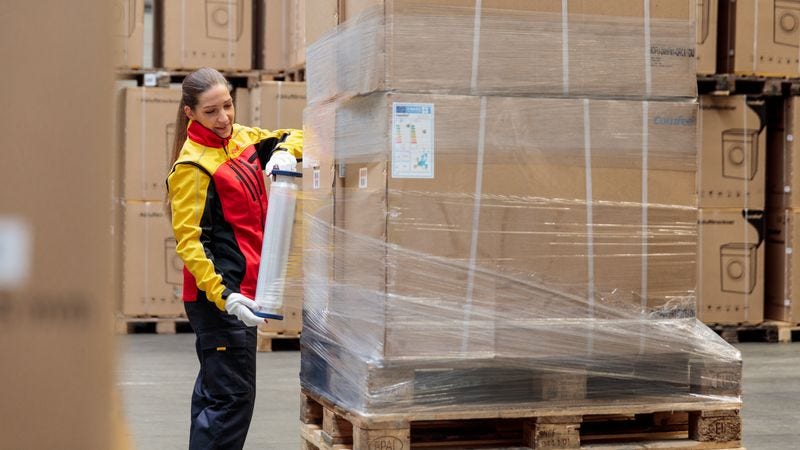
Stack boxes corner-to-corner and edge-to-edge to maximise stability. Use heavy-duty strapping and shrink-wrap to prevent movement during transit, and avoid overhang or uneven weight distribution, which can compromise safety and handling.
4. Add reinforcement for vulnerable points
Protect edges and corners with edge protectors, and use paperboards to distribute weight evenly across the pallet. For cylindrical or irregular items, such as reels or engines, use bracing to prevent sideways movement and maintain load stability.
Packaging considerations for international air shipping
Air transport introduces additional forces and handling challenges that can impact load integrity. Key points to address include:
- Maintain proper weight distribution: Evenly distribute weight across the pallet or crate to prevent tipping.
- Ensure load integrity: Reinforce items with strapping, bracing, and shrink-wrap to prevent movement during transit.
- Avoid packaging errors: Under-protected or improperly secured shipments may be rejected at check-in. Inadequate packaging can also trigger additional inspections, handling fees, or delays.
Preparing heavy shipments for customs and handling
Proper preparation is key to smooth customs clearance and safe handling of heavy shipments. Pay attention to the following:
- Clear labeling: Ensure packages are labeled accurately for handlers and customs officers.
- Accurate weights and dimensions: Providing precise measurements helps avoid reweighing, surcharges, or delays.
- Declarations: Misdeclarations can lead to clearance delays. Accurate and transparent documentation protects your shipment and your business.
When standard packaging is not enough for shipping heavy packages
Some heavy or bulky shipments require more than conventional crates and pallets. Custom solutions ensure your items are protected, compliant, and ready for international transport.
Custom crating for high-value or irregular items
Tailored crates are designed to fit your shipment precisely, reducing movement during transit and providing better protection for sensitive or high-value goods.
These solutions are particularly valuable for long-haul routes or fragile equipment, where extra security can prevent costly damage.
Custom pallets and non-standard dimensions
Adjustable or oversized pallets allow for irregularly shaped or unusually heavy items to be transported safely.
While these custom solutions improve stability and protection, shippers should be aware that non-standard dimensions may incur additional handling fees.
Express vs. traditional freight for heavy items: Which is right for you?
While oversized and bulky shipments were once the exclusive domain of freight forwarders, Heavyweight Express shipping is rapidly gaining popularity. Businesses increasingly need faster transit times, fewer handling points, and simpler customs processes to keep supply chains agile.
Heavyweight Express shipping allows companies to move heavy and bulky items quickly without sacrificing security or reliability, making it an attractive alternative to traditional freight.
The table below highlights key differences to help you decide which option suits your shipment needs:
| Factor | Heavyweight Express | Traditional Freight Forwarding |
When to use | Time-critical shipments, urgent machine parts, or high-value items | Bulk shipments, standard inventory restocking, non-urgent deliveries |
Transit speed | Days, door-to-door | Weeks, often port-to-port |
Handling | Fewer touchpoints, trained personnel, lower risk of damage | Multiple transfers, higher chance of handling damage |
Customs & documentation | Handled by provider, simpler process | Requires more coordination and paperwork |
Cost considerations | Premium for speed and security | Usually lower, but longer lead times |
Why choose Heavyweight Express over traditional freight?
Choosing Heavyweight Express over traditional freight makes sense when time, security, and simplicity matter. Consider these advantages:
- Speed to market: When downtime or missed deadlines cost more than the shipping fee, express delivery ensures your heavy parts arrive in days, not weeks.
- Enhanced security: Fewer hand-offs reduce the risk of handling-related damage.
- Customs expertise included: Express shipping simplifies customs clearance, reducing the administrative burden.
Scenarios: When to choose Express over traditional freight
Express delivery heavy item shipping is ideal for situations where speed, protection, and reliability directly impact your business outcomes. Common scenarios include:
- Critical downtime: When industrial machines or parts need urgent replacement, every hour counts. Express delivery is often much faster than freight.
- High-value, low-volume equipment: Sensitive medical or laboratory equipment benefits from reduced handling, lowering the risk of damage.
- Inventory gaps & seasonal surges: Bypass long sea freight times to restock quickly during peak demand.
- Prototypes & sample testing: Engineers can test heavy prototypes or material samples immediately to maintain production schedules.
Consult logistics experts early to save time and cost
Heavy shipments can be complex, with unique requirements for packaging, handling, and compliance. Consulting experienced couriers early ensures your heavy item shipping is planned correctly from the start, reducing delays or costly adjustments.
Experts can advise on the right crates, pallets, and securing methods for your cargo, helping prevent damage during transit. They also provide guidance on customs documentation, weight restrictions, and regulatory compliance.
How DHL Express supports heavy and bulky shipping from Japan
DHL Express specializes in shipping large and heavy items internationally from Japan. With years of experience in handling bulky and oversized shipments, we provide solutions designed to keep your goods safe, secure, and on schedule.
Specialized handling and trained personnel
Our logistics network is equipped with the right equipment and trained personnel to handle heavy and oversized items. Every touchpoint is designed to minimize damage, while our staff follow best practices for lifting, securing, and transporting large shipments.
End-to-end visibility and tracking
DHL Express offers complete shipment visibility, letting you monitor your heavy packages at every stage. This reduces uncertainty and allows you to proactively manage issues.
Optional shipment insurance for added protection
DHL Express takes the utmost care in handling your valuable shipments. However, international transport can involve unforeseen events, and standard liability coverage under our terms and conditions of carriage may not fully cover high-value or particularly sensitive items.
For added peace of mind, DHL Express offers optional Shipment Insurance, available to all customers. This provides additional coverage beyond standard liability, helping protect your investment and ensuring that, in the unlikely event of loss or damage, you have enhanced financial protection.
Confidently ship heavy items with DHL Express
For customers looking at how to mail large packages overseas, heavy shipments don’t have to be a source of stress. With careful planning, the right packaging, and professional expertise, you can turn a complex logistics challenge into a smooth, predictable process.
Take the next step in safeguarding your heavy shipments. Open a DHL Express Business Account today and access reliable, efficient solutions tailored for shipping large and heavy items from Japan.
Share