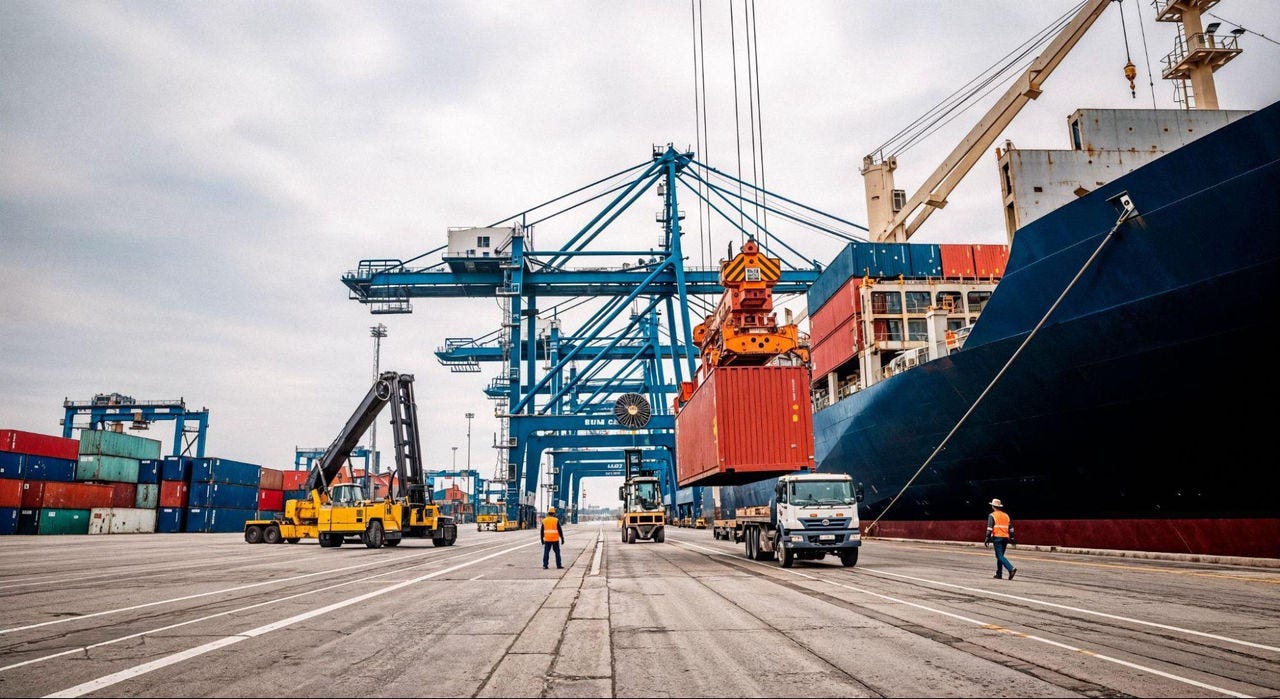
February marks the first full month under Nigeria’s revamped tax system, bringing a wave of change for businesses nationwide.
Companies are adjusting to new filing rules, recalculating tax liabilities, and rethinking cost structures. For importers, the challenge goes deeper: landed costs, already a tricky figure to pin down, have become more unpredictable than anticipated during the planning phase.
The Nigeria Tax Act 2025 took effect on January 1, 2026. Alongside it, three complementary laws, the Nigeria Tax Administration Act, Nigeria Revenue Service Act, and Joint Revenue Board Act, have collectively overhauled the country’s tax landscape in the most significant way since independence. On paper, merging more than 60 separate taxes into a single framework promises simplicity and clarity. The reality during these early weeks has been far more complex.
What’s Different at the Border
Importers find themselves at the crossroads of multiple tax categories, feeling the ripple effects of reforms from various angles. Corporate Income Tax (CIT) has shifted to a tiered system: businesses with turnover below ₦100 million are exempt, those earning ₦100 million to ₦1 billion pay between 15-20%, and larger companies face a 30% rate. The newly introduced Development Levy, set at 4% on assessable profits, replaces several older levies but demands fresh calculations that are still being integrated into finance systems.
Value Added Tax (VAT) remains at 7.5%, but the rules around it have changed. Businesses can now claim input VAT on services and fixed assets—a welcome update in theory. In practice, it requires more detailed expense tracking and documentation, pushing many companies to overhaul accounting processes mid-quarter to capture eligible recoveries.
Capital Gains Tax has surged from 10% to 30% for companies, tripling the tax burden on asset disposals. For importers occasionally selling equipment or restructuring, this is a significant adjustment. Added to this, tax on digital asset gains introduces new considerations for businesses dealing with cryptocurrency settlements.

Shifting Landed Cost Calculations
Estimating landed costs has always involved some guesswork.
The formula, CIF (Cost, Insurance, Freight) plus import duties, surcharges, CISS fees, ETLS levies, and VAT, features variables that fluctuate. Exchange rate swings between quotation and clearance can cause substantial shifts, even when other factors remain steady.
While customs duties themselves remain unchanged, the new tax regime alters the financial backdrop. Corporate tax treatments vary by company size, affecting operational strategies and resource allocation. A minimum effective tax rate of 15% for large multinationals adds pressure on pricing models. Meanwhile, Controlled Foreign Company rules have some businesses reevaluating import routes through offshore entities.
The real challenge for importers isn’t any single policy but the combined effect of adjusting multiple financial processes at once. Payroll departments are recalculating PAYE under progressive personal tax brackets. Finance teams are transitioning from the Consolidated Relief Allowance to the new Rent Relief system. Compliance officers are navigating mandatory Tax ID requirements for transactions, all while managing ongoing shipments and business activities.
First Filings Under the New Regime
Companies with January year-ends are leading the way in filing returns under the new system. Early feedback from tax professionals reveals gaps in readiness that weren’t obvious during the transition. The Nigeria Revenue Service’s digital platform supports submissions, but legacy data formats don’t easily fit the new requirements.
Smaller companies exempt from CIT still face reporting obligations to prove eligibility, annual turnover must be under ₦100 million, with fixed assets below ₦250 million. The administrative workload hasn’t disappeared; it’s simply shifted.
Medium and large importers wrestle with calculating the Development Levy. The 4% applies to assessable profits, but defining assessable profit under the consolidated tax laws involves navigating complex legal language. Some businesses thought they had it figured out in December, only to find nuances in February forcing recalculations.

Exchange Rate Volatility Adds Pressure
Naira fluctuations add another layer of uncertainty to landed costs.
Import duties are calculated on CIF values converted at the Central Bank’s official rate on the payment date. Cargo quoted in January might clear in February at a markedly different exchange rate. While the new tax framework isn’t the cause, it compounds financial complexities amid currency risk.
Importers who budgeted for 2026 based on late 2025 assumptions are revisiting their forecasts. Changes in corporate tax calculations affect capital availability for imports. Companies with foreign exchange allocations secured before January now face shifting Naira costs as both tax rules and exchange rates evolve.
Adjusting to the New Reality
Most businesses support the goal of simplifying Nigeria’s tax system by consolidating dozens of levies into one framework. The challenge lies in the rollout. The six months between the June 2025 signing and January 2026 implementation seemed sufficient, until the reality of updating ERP systems, retraining teams, and interpreting new regulations in real time set in.
Importers working with seasoned customs brokers and tax advisors have navigated the transition more smoothly. Professionals who studied the new laws in the latter half of 2025 are guiding clients through compliance and calculations with confidence. Those who waited until January are now playing catch-up, with shipments stuck at ports accruing demurrage fees.
Landed cost volatility is expected to persist into Q1 as markets fully adjust. Exchange rate fluctuations are inevitable, regardless of tax policy. What businesses can control is how well they understand the new tax calculations and how quickly they adapt internal processes. February’s experiences are already highlighting who prepared thoroughly, and who underestimated the scale of change. By March, the chaos should settle into a new normal, though routine in Nigeria’s import scene always carries its own surprises.


 Share
Share
Similar Stories