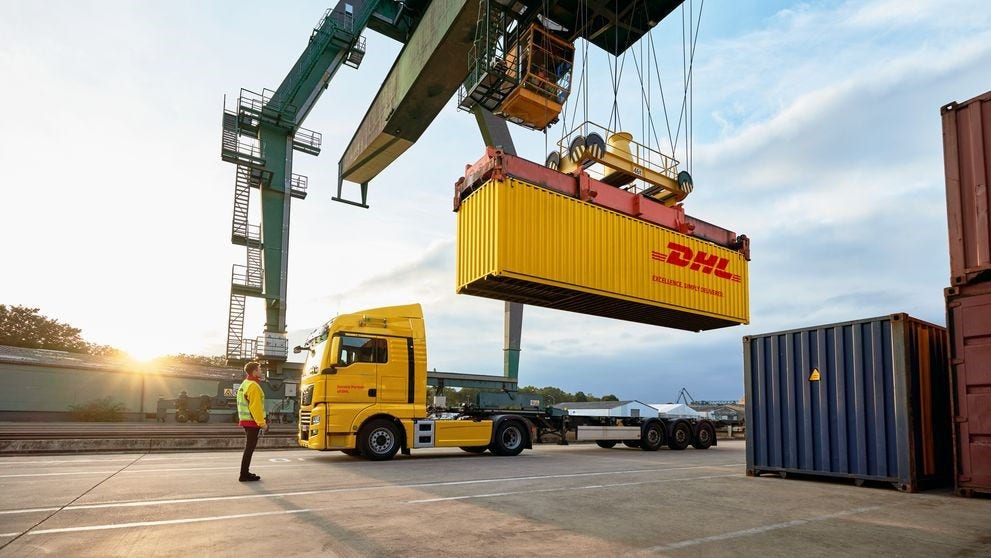
Vietnam is no longer just a manufacturing hub. It's fast becoming one of Asia's most strategic logistics centers. With the government targeting a top-tier position in regional supply chain networks, the country's logistics sector is evolving at remarkable speed1. Yet this "new normal" is anything but static. Businesses that fail to keep pace with the latest trends in the logistics industry risk being left behind in one of Southeast Asia's most competitive markets.
The DHL Logistics Trend Radar 7.0 — now in its 7th edition — benchmarks the most significant social, business, and technology shifts reshaping global supply chains. For Vietnam-based businesses, five of these recent trends are especially critical heading into 2026.
“The DHL Logistics Trend Radar is an invaluable strategic resource for our customers and logistics community. It empowers our customers and us to stay competitive in a demanding landscape.” - Katja Busch, CCO and Head of DHL Customer Solutions & Innovation
1. AI in logistics
AI is no longer a buzzword. In Vietnam, it's becoming law. With the Law on Artificial Intelligence No. 134/2025/QH15 (AI Law), adopted on 10 December 2025, and effective from 1 March 2026, the country formally recognizes AI as a regulated tool for autonomous decision-making. This legislation marks a turning point for how businesses must approach adoption, and for logistics operators, it raises both the stakes and the opportunity2.
On the ground, the impact is already visible. At Tân Cảng Cát Lái Port, one of the region's busiest container terminals, AI-powered smart port capabilities are already transforming cargo movement, enabling faster processing times and tighter coordination between logistics companies and shipping agents3. Meanwhile, AI-powered customs clearance tools, including DHL Express chatbots, are helping Vietnamese SMEs navigate complex HS codes and tax declarations instantly — a game-changer for exporters managing high-volume international shipping.
AI route optimization is also enhancing last-mile delivery across Hanoi and Ho Chi Minh City (HCMC), analyzing live traffic data to ensure faster, more reliable fulfilment4. Businesses willing to invest now will be best positioned to lead.
2. Digital twins: Building a "virtual Vietnam" for smarter logistics
In January 2026, the launch of dedicated AI and Digital Twin Centres in Hanoi signaled that this technology has arrived in Vietnam, and it's not just for large multinationals5. Digital twins allow businesses of any size to create a virtual replica of their supply chain and simulate real-world scenarios before committing resources6.
Think of it as a logistics stress test. A Vietnamese SME can model the impact of congestion at Cát Lái Port, a Tết holiday order surge, or a last-minute warehouse rerouting — all in a risk-free digital environment. This gives businesses the confidence to optimize warehouse layouts and delivery routes before going live — reducing costly trial-and-error in the real world.
As one of the emerging trends in logistics gaining traction across Southeast Asia, digital twins represent a significant leap forward in supply chain resilience — something every business eyeing regional growth should explore.
3. The growth of green logistics
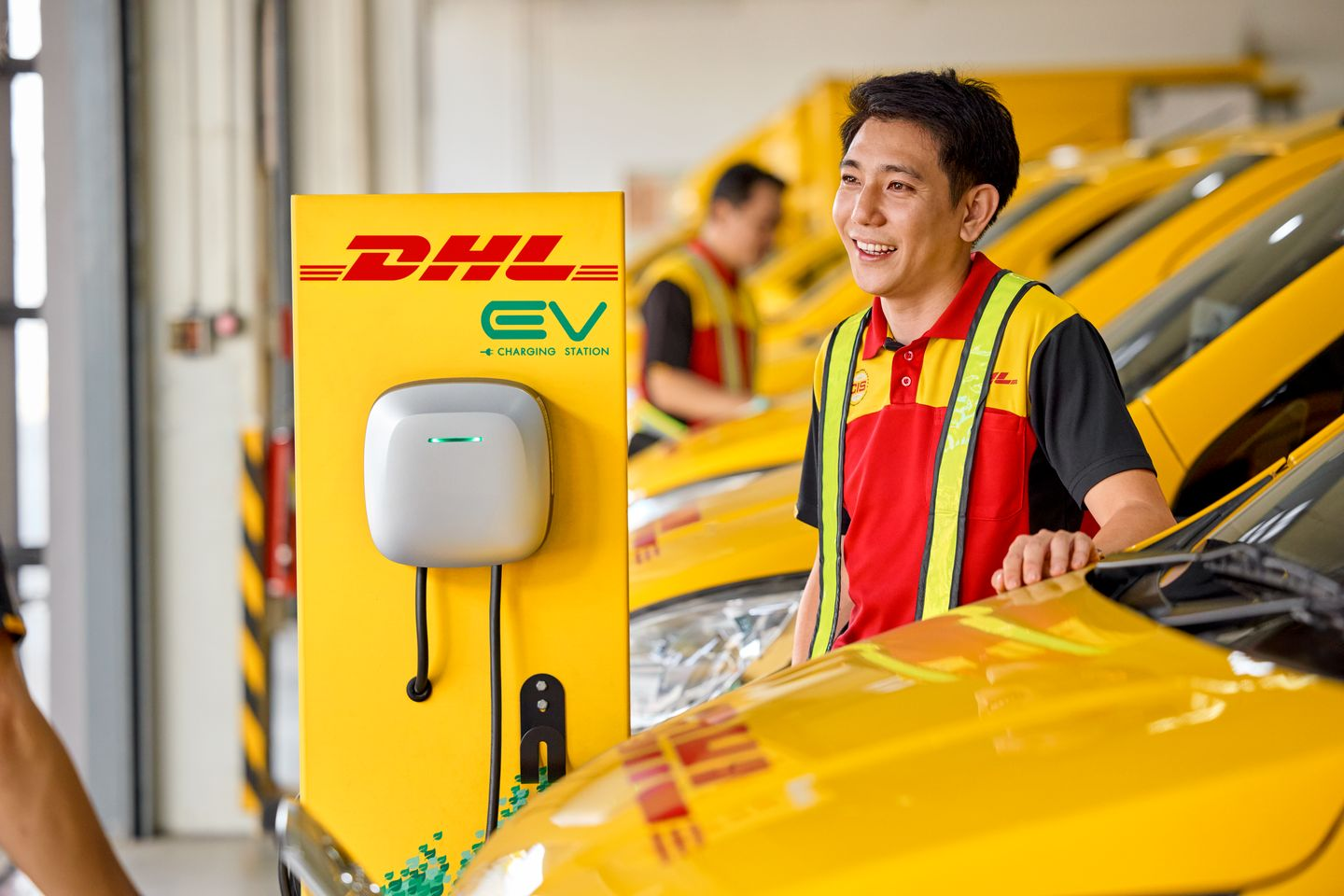
Sustainability is no longer optional for Vietnamese exporters — it's a market access requirement. As the EU's Carbon Border Adjustment Mechanism and US supply chain ESG standards tighten, green logistics has become essential for businesses that rely on export markets to survive and scale.
Vietnam's National Action Program for Green Transportation has set an ambitious target: 100% green energy vehicles by 2050. Already, electric delivery fleets are expanding across HCMC and Hanoi, supported by improving charging infrastructure7. The forecast for EV growth globally is equally striking — from under 45 million units in 2023 to 250 million in 2030 and 525 million in 2035.
Closer to home, Vietnam's e-commerce sector generates an estimated 332,000 tons of packaging waste annually, making the shift to circular economy practices both an environmental and reputational imperative8. DHL's GoGreen Plus service directly supports this transition, using sustainable aviation fuel (SAF) to reduce carbon emissions across international shipments and helping businesses offset their environmental footprint in a measurable, credible way.
4. Social commerce and Gen Alpha: The next frontier for retail logistics
Vietnam's social commerce scene is one of the most dynamic in the world. Shoppertainment — the fusion of entertainment and shopping on platforms like TikTok Shop — is growing at a 35% CAGR9, driven largely by KOCs (Key Opinion Consumers) whose authentic, peer-to-peer recommendations are reshaping purchase decisions. By 2026, Gen Alpha's preference for instant, mobile-first experiences is pushing retailers to rethink their entire fulfillment model.
These new trends in logistics demand hyper-local fulfillment capabilities and seamless omnichannel infrastructure. Flash sales can generate massive, unpredictable order spikes within minutes — and a slow logistics response means lost customers, fast. DHL Express Commerce (DEC) is built for exactly this environment, giving e-commerce businesses the agility to manage surge volumes, automate shipping workflows, and maintain delivery reliability even during Vietnam's peak shopping events.
Consumer behavior has changed permanently. The businesses that win will be those whose logistics can keep up.
5. Circular logistics and the rise of reusable packaging
Vietnam's retail sector is entering a new regulatory era. Stricter plastic waste legislation in 2026 is accelerating the shift toward circular logistics10 — a model where the delivery process doesn't end at the customer's door, but includes the structured pickup and recycling of packaging materials.
The insight here is that reverse logistics, once an afterthought, is now a competitive differentiator. Forward-thinking brands are redesigning their supply chains to incorporate return trips for reusable packaging, reducing waste while cutting costs over time. DHL GoGreen Plus supports this circular economy approach by optimizing return journeys and applying SAF across the product's entire delivery lifecycle — lowering the total carbon footprint from first mile to final return.
For businesses navigating Vietnam's evolving compliance landscape, this trend is clear: building circularity into logistics now is far less costly than retrofitting it later.
Make these logistics trends work for your business
These five areas — AI, digital twins, green logistics, social commerce, and circular logistics — represent the key trends in the logistics industry that will define competitive advantage in Vietnam through 2026 and beyond. Taken together, they paint a clear picture: the businesses that thrive will be those that treat their supply chain as a strategic asset, not a back-office function.
The DHL Logistics Trend Radar 7.0 provides a comprehensive look at all 40 trends reshaping global logistics, from the social and business shifts to the technology breakthroughs driving real transformation. It's an essential planning tool for any Vietnamese SME serious about competing in 2026.
Don't let your supply chain fall behind. Open a DHL Express business account today to leverage AI-driven tracking and green delivery to Vietnam and beyond.
Explore the Logistics Trend Radar 7.0 now!

Explore the Logistics Trend Radar 7.0 now!
Logistics trends to inform your business
Intrigued? Inspired? These examples are just a snapshot of the insights contained within the new edition of the DHL Logistics Trend Radar – which provides a comprehensive look at the social, business and technology trends radically changing supply chains and shaping the future of logistics. Discover more of the trends which could transform your business today, by exploring the interactive radar.
Start exploring


 Share
Share